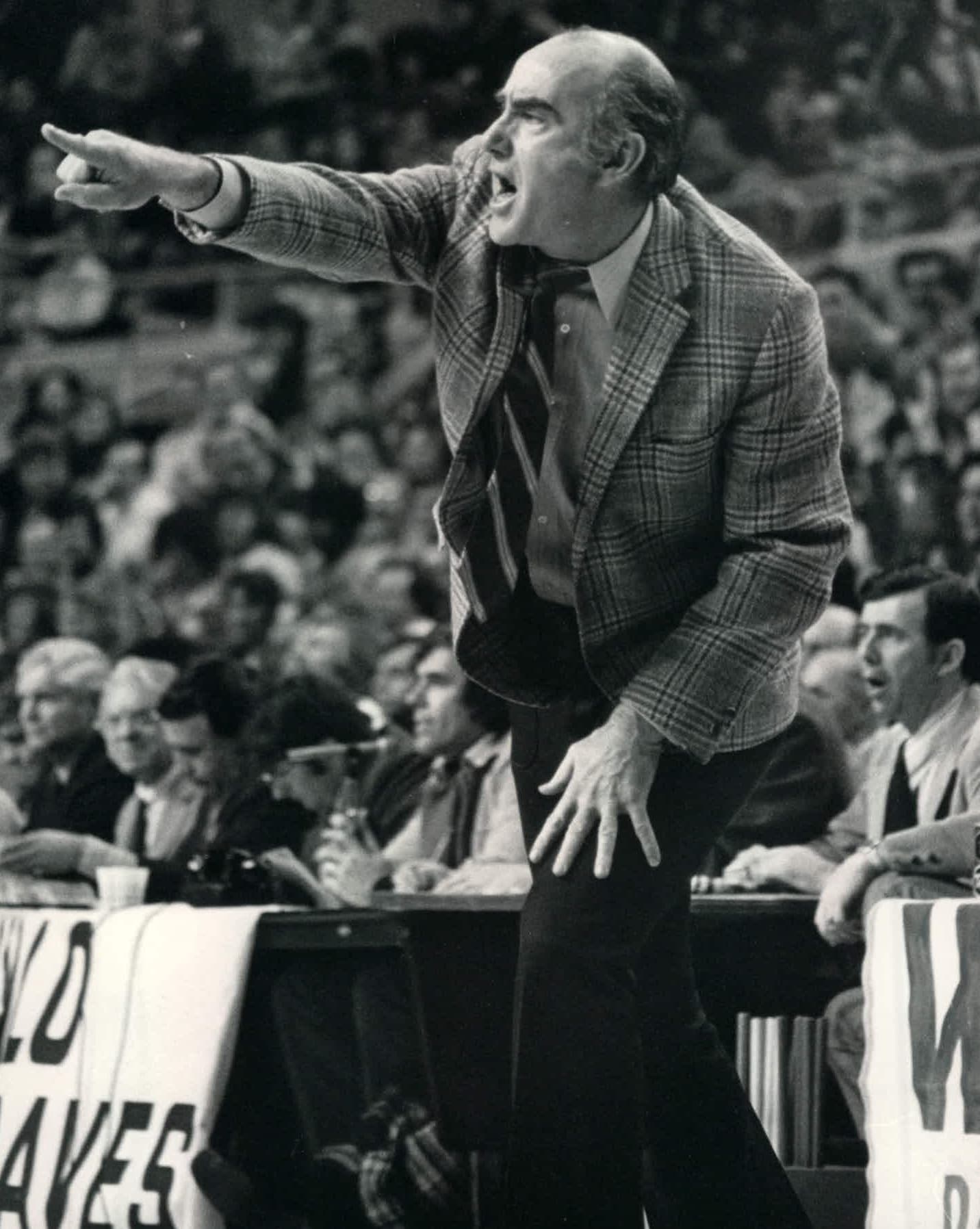
The greatest coaches in professional sports are remembered for what they build — not just what they win, though winning is part of it, but the systems and cultures and philosophies that make winning possible and that outlast the individual players who execute them. Jack Ramsay built something in Portland. He built a championship. He built a philosophy. He built the template for how the Trail Blazers wanted to play basketball, and that template endured long after his ten seasons in Rip City had concluded.
The #77 hanging in the Moda Center rafters is unusual — coaches' numbers are retired less frequently than players', and the decision to honor Ramsay this way reflects Portland's understanding that the 1977 championship was as much his achievement as any individual player's. You cannot tell the story of Rip City's finest moment without Jack Ramsay at the center of it. The franchise has made sure his number says so permanently.
From Philadelphia to Portland: A Basketball Mind in Search of the Right System
John T. Ramsay was born February 21, 1925, in Philadelphia, Pennsylvania — a city that gave him both his basketball foundation and his coaching philosophy. He attended St. Joseph's University, where he eventually became head coach and built the program into a nationally respected program over eleven seasons. His success at St. Joseph's led to the NBA, where he coached the Philadelphia 76ers (1968-72) and Buffalo Braves (1972-76) before arriving in Portland in 1976.
Ramsay was a deeply intellectual coach — a man who had earned a doctorate in education from the University of Pennsylvania and who approached the game as a problem to be solved rather than a competition to be survived. His basketball philosophy was built around player intelligence, ball movement, and the conviction that a team playing together at full commitment could defeat a team of superior individual talent playing as individuals. Portland would prove him right in 1977 in the most convincing possible fashion.
The 1977 Championship: Philosophy Proven at the Highest Level
When Ramsay arrived in Portland, he inherited a roster with the pieces of a championship team — Bill Walton, Maurice Lucas, Lionel Hollins, Dave Twardzik, and Bob Gross — that had not yet found the system to unlock their collective potential. His contribution was the system itself: a fast-breaking, ball-moving, defensively committed approach that demanded complete buy-in from every player and rewarded that buy-in with a cohesion most NBA teams never achieve.
The 1977 Finals demonstrated Ramsay's philosophy in its most extreme test. Down 0-2 to Philadelphia, with his team having lost both home games, Ramsay made the adjustment that changed the series: he gave Maurice Lucas the mandate to be physically assertive in the frontcourt, matching the 76ers' aggression rather than absorbing it. The decision unlocked Portland's defensive identity and changed the series' dynamics completely. Four consecutive wins followed. The championship was Portland's — and Ramsay's.
Ten Seasons, 453 Wins, and a Standard That Endured
Ramsay coached the Trail Blazers for ten seasons (1976-86), accumulating 453 wins and building the organizational culture that Portland has aspired to maintain ever since. His commitment to team-first basketball, player development, and the intellectual rigor of preparation set a standard that his successors have been measured against. The Blazers' best teams — both during his tenure and in the decades that followed — have played basketball that reflects his principles, even when the coaches implementing them never played for him.
After Portland, Ramsay coached the Indiana Pacers and New Jersey Nets before retiring as a coach. He transitioned into broadcasting, becoming a well-respected analyst for ESPN and NBA radio whose technical knowledge and ability to explain complex basketball concepts made him a trusted voice in the sport. He was inducted into the Naismith Memorial Basketball Hall of Fame in 1992 — recognition that placed him among the greatest coaches in basketball history.
Why the Trail Blazers Retired #77
Jack Ramsay passed away on April 28, 2014, having spent the final years of his life continuing to engage with basketball despite the health challenges of his 80s. His death was mourned throughout the coaching community and, particularly, in Portland — a city that understood it owed him its only championship.
The #77 in the Moda Center rafters answers a question that organizations sometimes struggle to answer: how do you honor the people who built the culture rather than the players who executed within it? Portland's answer is direct. You retire their number. You put it alongside the players they coached, the athletes whose brilliance they channeled into championship basketball. Jack Ramsay deserves to be in that company, because without his system, his adjustments, and his philosophy, the players whose numbers surround his might never have found their way to a championship.
Rip City's only championship was built on team-first basketball. Jack Ramsay invented Portland's version of that basketball. The franchise has honored the inventor with the same permanence it has used to honor the players who built on his foundation. That is the right call. That is what the #77 in the rafters means.
Enjoying this analysis?
Get more breakdowns like this delivered to your inbox.