This page contains affiliate links. We may earn a commission if you purchase through these links, at no extra cost to you. As an Amazon Associate I earn from qualifying purchases.
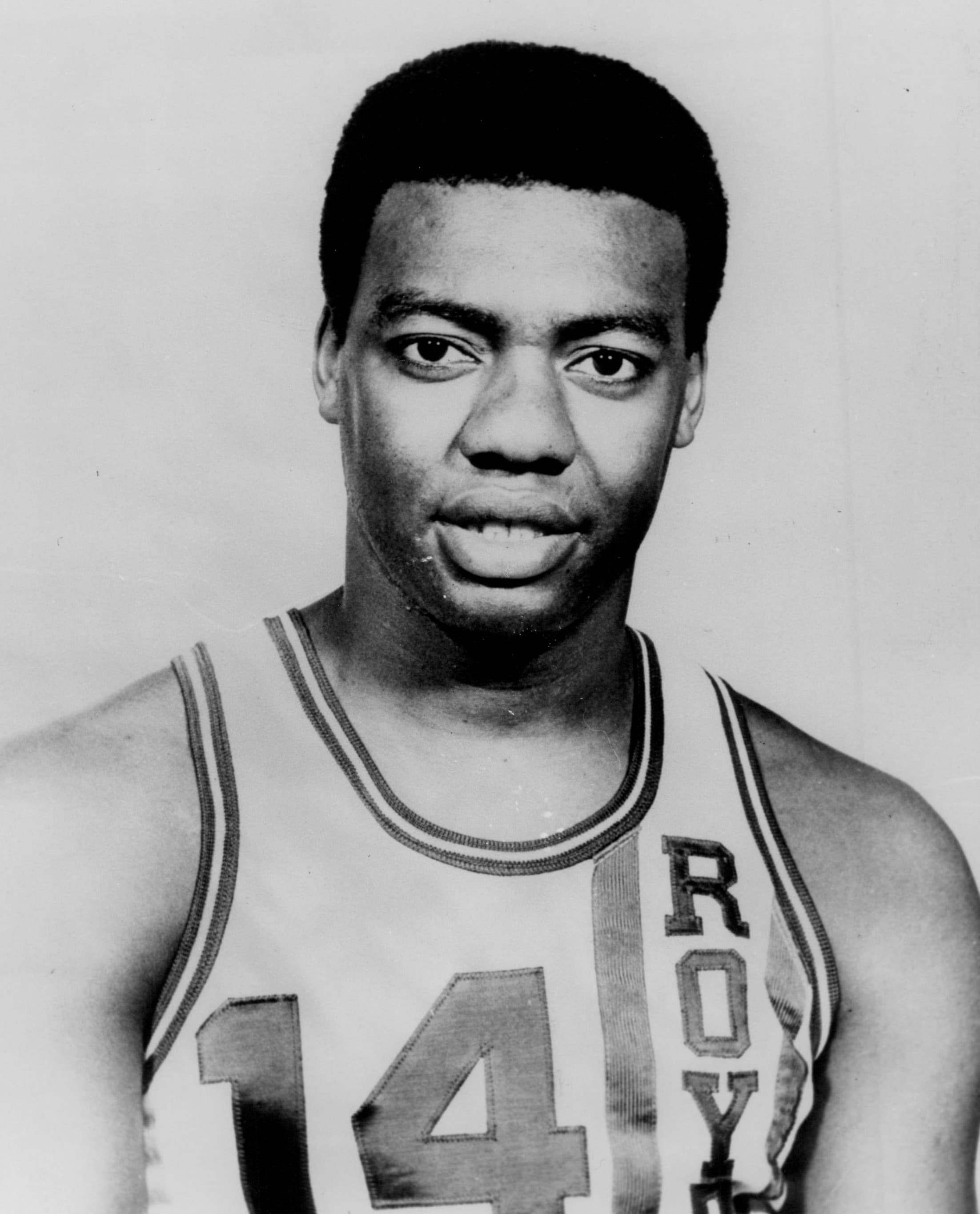
The Sacramento Kings retired Oscar Robertson's number 12 because the franchise's history — stretching from Rochester to Cincinnati to Kansas City to Sacramento — includes one of the greatest players who ever lived. In the 1961-62 season, playing for the Cincinnati Royals, Robertson averaged 30.8 points, 12.5 rebounds, and 11.4 assists per game across 79 games at age 23 — and he averaged a triple-double over his first five NBA seasons combined. The Cincinnati Royals selected him first overall in the 1960 NBA Draft via a territorial pick after he led the University of Cincinnati in scoring for three consecutive seasons. He was named All-NBA First Team nine times, won the 1964 MVP, made eleven All-Star Games, and was inducted into the Hall of Fame in 1980. When that franchise became the Sacramento Kings, the honor traveled with it — the minimum acknowledgment owed to a player of that magnitude.
Indianapolis, Crispus Attucks, and the Path to Cincinnati
Oscar Palmer Robertson was born November 24, 1938, in Charlotte, Tennessee, but grew up in Indianapolis, Indiana, where he attended Crispus Attucks High School. He became the first Black player to be named Indiana's Mr. Basketball, and led Crispus Attucks to back-to-back state championships — still among the most celebrated achievements in Indiana high school basketball history. Robertson then attended the University of Cincinnati, where he led the nation in scoring for three consecutive seasons, averaging 33.8 points per game over his college career and earning three consensus All-American designations.

The Cincinnati Royals selected him first overall in the 1960 NBA Draft using a territorial pick — a rule that allowed teams to claim players from their geographic region. Robertson arrived in the NBA fully formed, bringing the kind of complete game that coaches spend their entire careers trying to teach players to develop.

The Triple-Double Season and What It Meant
Robertson's 1961-62 season existed before the term triple-double was in common use. The concept of tracking double digits in three statistical categories simultaneously became retroactively understood through Robertson's career, which is to say that he invented the measuring stick by which subsequent guards would be evaluated. His 30.8 points per game that season would have led the league in most years. His 12.5 rebounds per game was a forward-caliber figure from a guard. His 11.4 assists per game was elite by any standard in any era.

What made Robertson's game so complete was not just the statistics but the method. He did not rely on speed or athleticism alone — at 6-foot-5, he was larger than most guards of his era, and he used that size to post up smaller defenders, to rebound over smaller players, and to create angles that guards his height simply did not have access to. His footwork, his passing vision, and his ability to read defensive coverages made him the blueprint for the modern point guard position.

The Robertson Rule and a Legacy Beyond Basketball
Robertson's impact extended far beyond what he accomplished on the court. As president of the NBA Players Association, he challenged the league's reserve clause in a landmark antitrust lawsuit that became known as the Robertson Rule. The settlement, reached in 1976, fundamentally changed the economics of professional basketball and laid the groundwork for modern free agency. Robertson fought for players' rights at personal cost, representing the kind of principled leadership that defines legacy beyond athletic achievement.

He won his only NBA championship in 1971 with the Milwaukee Bucks, teamed with the young Kareem Abdul-Jabbar. He was inducted into the Hall of Fame in 1980 and named to the NBA 35th, 50th, and 75th Anniversary Teams.

Why the Kings Retired #12
The Sacramento Kings retired Oscar Robertson's number 12 because the history of this franchise — stretching from Rochester to Cincinnati to Kansas City to Sacramento — includes one of the greatest basketball players who ever lived. Robertson's decade as a Cincinnati Royal produced statistical achievements that remain singular in the history of the sport, and honoring that with a retired number is the minimum acknowledgment the franchise owes to a player of that magnitude.

When fans look up at #12 in the rafters, they are looking at a number that belonged to the man who averaged a triple-double for an entire NBA season before it had a name. That is the standard the Sacramento Kings franchise has been connected to, through all its cities and all its names, since 1960. Oscar Robertson is the reason the history of this franchise matters the way it does.

Enjoying this analysis?
Get more breakdowns like this delivered to your inbox.