Why the Lakers Retired Jamaal Wilkes' #52: Silk, Three Championships, and the Quiet Excellence That Wins
Jamaal "Silk" Wilkes won three championships with the Lakers and played the smoothest basketball you've never heard enough about. His #52 represents what happens when talent and selflessness occupy the same jersey.
Diosh Lequiron
··11 min read·
M
Share
This page contains affiliate links. We may earn a commission if you purchase through these links, at no extra cost to you. As an Amazon Associate I earn from qualifying purchases.
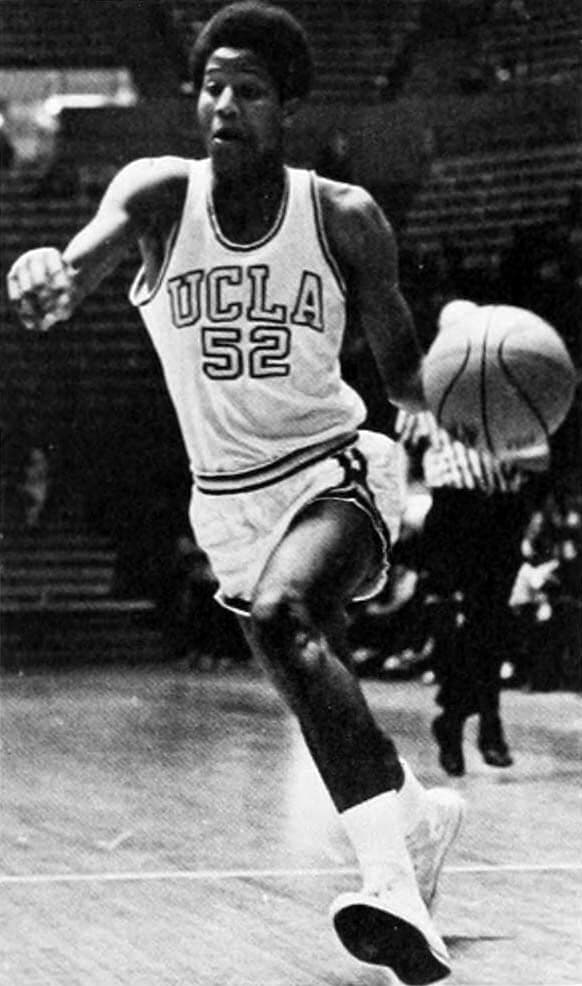
The Los Angeles Lakers retired Jamaal "Silk" Wilkes' #52 on December 6, 2012 — overdue by decades, which only emphasized the nature of his contribution. Wilkes had won a championship at every level before he turned 25: two consecutive NCAA titles at UCLA under John Wooden in 1972 and 1973, 1972-73 National Player of the Year, and an NBA championship and Rookie of the Year as a rookie with the Golden State Warriors in 1975. Across eight Lakers seasons he won three championships and made three All-Star teams, with a career average of 18.4 points on efficient shooting. In the Showtime offense he was the connective tissue: a 6'6" wing with a high-release, virtually unblockable motion who could produce 20 points without taking shots from Magic or Kareem. His finest season was 1981-82 — 22.0 points, 51.2% from the field. His number hangs as a reminder that winning basketball requires excellence at every position, not just the ones that make the front page.
The Winner's Resume
Before Wilkes even arrived in Los Angeles, he had already established himself as one of basketball's most natural winners. The resume reads like fiction:
Men's LeBron James Gold Los Angeles Lakers Fast Break Replica Jersey - Icon Edition
Two consecutive NCAA Championships at UCLA under John Wooden (1972, 1973)
Four-year college record: 111 wins, 10 losses
1972-73 National Player of the Year
NBA Championship as a rookie with the Golden State Warriors (1975)
Rookie of the Year honors
He had won a championship at every level before he turned 25. Winning wasn't something Wilkes pursued. It was something that happened around him — because he made the players around him better, because he filled the spaces that needed filling, because he subordinated ego to excellence.
The Showtime Role: The Silent Assassin
In the Showtime offense, everyone talked about Magic's passing, Kareem's skyhook, and Worthy's finishing. Wilkes was the connective tissue that made the machine run.
Josh Hart Los Angeles Lakers 2017-18 Panini Immaculate Collection Jersey Number Tri-Color Relic #JP-JHT #60/75 Card
At 6'6", he had a unique, high-release shooting motion — the ball originated from behind his head, making it virtually unblockable — and the ability to score in transition, from mid-range, and on the block. His game had no wasted motion. No unnecessary dribbles. No forced shots. No possessions where he held the ball too long. Just the ball moving through him and into the basket with a fluidity that earned his nickname.
During the 1980 championship season — the year of Magic Johnson's legendary Game 6 — Wilkes averaged 20.0 points and 6.4 rebounds. He was the Lakers' second-leading scorer and most consistent offensive option alongside Kareem. When Magic played center in the clinching Finals game, it was Wilkes who provided the offensive stability that kept the Lakers functional. The headline went to Magic. The foundation was Silk.
Unisex Nike LeBron James White Los Angeles Lakers Swingman Jersey - Association Edition
Peak Silk: 1981-82
Wilkes' finest individual season came in 1981-82: 22.0 points, 5.5 rebounds, 51.2% from the field (Basketball Reference). He was named an All-Star for the third time and was the Lakers' most efficient perimeter scorer. The team won 57 games and the NBA championship, defeating the 76ers in six games.
Men's Mitchell & Ness White Los Angeles Lakers Head Coach Pinstripe Mesh Full-Button Baseball Jersey
His 21.5 points in the 1982 playoffs (Basketball Reference) came with characteristic efficiency. In an offense built around Magic's distribution and Kareem's post play, Wilkes could produce 20 points without taking shots away from the primary options. He moved without the ball better than almost anyone in the league, found open spaces instinctively, and converted at elite percentages. He wasn't a second option. He was a 20-point scorer who played like a role player — and that combination is rarer than any highlight-reel move.
Three Rings
Wilkes earned his third Lakers championship in 1985, though knee injuries had begun limiting his role by that point. The 1985 title — a rematch victory over the Celtics — was a fitting capstone to his Lakers tenure. Eight seasons. Three championships. Three All-Star teams. A career average of 18.4 points on efficient shooting (Basketball Reference). No controversy. No drama. No seasons where his effort or commitment came into question.
Unisex New Era Black Los Angeles Lakers Sport Classics Capsule V-Neck Fashion Jersey
The consistency was remarkable. He never had a bad season. He never created a distraction. He never failed to contribute when healthy. In a sport that celebrates volatility and drama, Wilkes offered something rarer: steady, reliable, championship-caliber production, every night, for eight years.
Why the Lakers Retired #52
The Lakers retired Wilkes' #52 on December 6, 2012 — overdue by decades, which only emphasized the nature of his contribution. You didn't always notice what Silk was doing. But you always noticed when he was gone.
Women's Mitchell & Ness x DANNIJO Purple Los Angeles Lakers Fashion Baseball Jersey
His number hangs in the rafters as a reminder that winning basketball requires excellence at every position, not just the ones that make the front page. Championships are built by fifteen-man rosters, not by two superstars and a supporting cast of extras. Wilkes was never an extra. He was a three-time champion, a three-time All-Star, and the smoothest player on a team that defined smooth.
Men's Mitchell & Ness Shaquille O'Neal Gold Los Angeles Lakers 1996/97 Hardwood Classics Authentic Jersey
Jamaal "Silk" Wilkes: the quietest name in the loudest rafters, and worth every inch of that banner.
Scottie Pippen is the greatest example in basketball history of what it means to be exactly what your team needs. Without Pippen's #33, there is no second three-peat, no dynasty mythology, and arguably no six championships at all.
October 1, 1994: the Bulls retire #23 for the first time. Eighteen months later, Jordan faxed two words and they took it back down. The story of six championships, two three-peats, and the number that bent the gravity of basketball around itself.
Bob Love was the Chicago Bulls' first great offensive player — a jump-shooting artist who averaged 21 points a game and made three All-Star teams. But the story of why the Bulls retired his #10 has as much to do with what happened after basketball as during it.