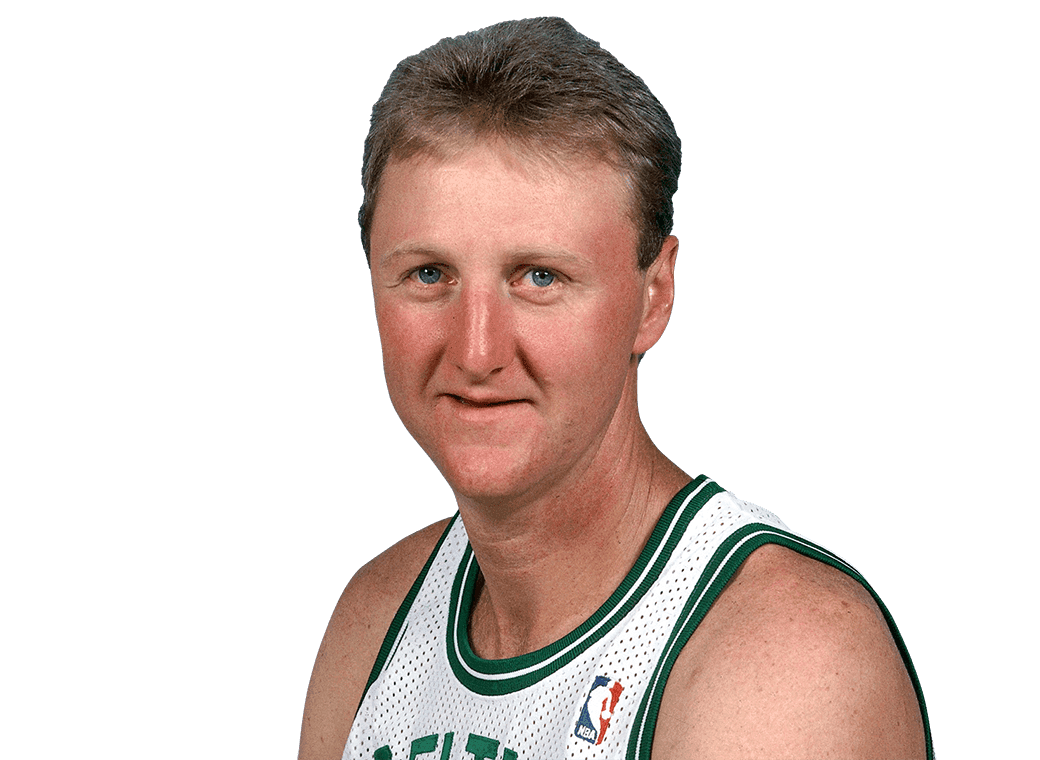
Larry Bird averaged 24.3 points, 10.0 rebounds, and 6.3 assists per game across his NBA career — numbers that make him one of the few players in history to rank in the top five all-time in scoring average at his position while also averaging double figures in rebounds and six assists per game. Those statistics describe a player who did everything that mattered in a basketball game, and did it from the small forward position at a time when small forwards were expected to do one thing well.
His three consecutive MVP awards from 1984 through 1986 remain one of the most sustained individual achievements in league history. The 1984-85 season was his peak statistical year: 28.7 points, 10.5 rebounds, and 6.6 assists per game on 52.2 percent shooting, with 42.7 percent from three. He had just won his second championship, his second Finals MVP, and his second league MVP. He was the most valuable player in basketball and had three of the four skills — shooting, rebounding, passing, and defending — at a level that contemporaries could not match.
His rivalry with Magic Johnson began in the 1979 NCAA Championship game, when Bird's Indiana State team lost to Johnson's Michigan State. The rivalry extended through the 1980s as Bird's Boston Celtics and Johnson's Los Angeles Lakers traded championships with a regularity that made the Finals a two-team competition for the decade. The rivalry is credited by league historians with restoring the NBA's commercial standing after the league had struggled through the 1970s with declining attendance and television ratings that led to Finals games being aired on tape delay.
Bird grew up in French Lick, Indiana, played at Indiana State University, and spent his entire 13-year professional career with the Boston Celtics. Back injuries ended his playing career in 1992. He later coached the Indiana Pacers to the 1998 NBA Finals and earned Coach of the Year honors.