
1977
Portland Trail Blazers
Series Flow
4
Wins
2
Losses
Regular Season
49–33
Win–Loss
Playoff Record
14–5
Win–Loss
Finals
4–2
vs Philadelphia 76ers
Finals MVP
Walton
Bill
Portland Trail Blazers
49–33Philadelphia 76ers
50–32The 1977 Philadelphia 76ers were a star-laden team built around Julius Erving — the greatest player of the ABA era who had signed with Philadelphia in 1976 after the leagues merged. With Dr. J, George McGinnis, Doug Collins, and Darryl Dawkins, the 76ers were widely expected to win the championship. Losing four straight games to Portland after winning the first two at Memorial Coliseum was one of the most shocking collapses in Finals history.
Finals MVP
Bill Walton
#32 · Center
18.5
PPG
19.0
RPG
5.2
APG
3.0
BPG
68.5
FG%
Bill Walton delivered what many historians consider the greatest individual Finals performance in NBA history. His 19.0 rebounds per game across six games against a Philadelphia frontcourt that included George McGinnis and Darryl Dawkins defied logic. In Game 6, he posted 20 points, 23 rebounds, 7 assists, and 8 blocks — a performance so dominant that Jack Ramsay called it the greatest single game he had ever witnessed. The 68.5% field goal percentage revealed a player who only shot when he had absolute certainty, and the 5.2 assists per game reflected a center who understood basketball more completely than anyone at his position ever had.
His 19.0 rebounds per game average in the 1977 Finals remains one of the most extraordinary statistical achievements in Finals history
23 rebounds and 8 blocks in the clinching Game 6 — a Finals record for rebounds in a championship-clinching game
First overall pick (1974) who delivered the championship Portland had built their franchise to win
His 68.5% field goal percentage across six Finals games reflected a player who operated at a level of paint mastery rarely seen
How the Series Unfolded
G1 · L
0–1
G2 · L
0–2
G3 · W
1–2
G4 · W
2–2
G5 · W
3–2
G6 · W
4–2
101
POR
107
PHI
Philadelphia came into Memorial Coliseum and stunned the Trail Blazers with a commanding performance that exposed Portland's vulnerabilities against a physical, veteran 76ers squad. Julius Erving was brilliant — cutting through Portland's defense and finishing with the aerial creativity that made him the most captivating player in basketball. Bill Walton was extraordinary (26 points, 20 rebounds, 8 assists), but the supporting cast around him couldn't match the 76ers' firepower. The Blazers struggled to contain Julius Erving's improvisation and George McGinnis' brute physicality, and Philadelphia left Portland with a lead and significant momentum.
Portland Trail Blazers
Bill Walton
26 pts · 20 reb · 8 ast · 6 blkStatistically dominant but couldn't carry Portland alone — an early indication that the Blazers needed their full team to compete with Philadelphia's talent.
PHI
Julius Erving
33 pts · 9 reb · 4 astDr. J was transcendent — his ability to score from every angle and altitude made Portland's defensive scheme look helpless in the opening game.
George McGinnis
22 pts · 12 rebThe ABA import used his enormous strength to battle Lucas and Walton physically, establishing the frontcourt matchup as Philadelphia's primary weapon.
89
POR
107
PHI
Philadelphia dominated from the opening tip, building a comfortable lead that Portland never seriously challenged. The Blazers looked disorganized and hesitant — none of the focused, fast-breaking basketball that had defined their regular season was present. Doug Collins attacked Portland's guards relentlessly, McGinnis was physical on the glass, and the 76ers' defensive scheme took Walton's supporting cast out of rhythm. Down 0-2 at home, the basketball world began writing Portland off. Jack Ramsay's response would define his coaching legacy.
Portland Trail Blazers
Bill Walton
19 pts · 17 reb · 4 blkContinued to fight but without sufficient support — his individual brilliance could not compensate for Portland's collective dysfunction in the first two games.
PHI
Doug Collins
25 pts · 6 astThe athletic guard was the most aggressive offensive player in the game — attacking Portland's backcourt and generating easy looks through relentless movement.
Julius Erving
26 pts · 7 rebPlayed with controlled aggression — the 76ers now controlled the series and Dr. J channeled his energy into protecting that advantage.
129
POR
107
PHI
In hostile territory, down 0-2, the Portland Trail Blazers played the finest basketball they had shown all season. Jack Ramsay made the adjustment that changed everything: Maurice Lucas was given explicit license to be physical with George McGinnis — to match the 76ers' physicality and establish that Portland would not be pushed around. The message was received. Portland's ball movement was relentless and precise, the fast break was fully engaged, and Walton orchestrated from the center like a conductor leading a symphony. The 22-point win in Philadelphia was a statement: the Blazers had found themselves, and the 76ers were about to face a different opponent for the remainder of the series.
Portland Trail Blazers
Bill Walton
20 pts · 18 reb · 7 ast · 3 blkThe most complete Walton performance of the series to that point — his passing unlocked Portland's offense completely and gave Philadelphia's defense no single player to focus on.
Maurice Lucas
27 pts · 11 rebDominated George McGinnis physically and established the frontcourt advantage that Portland would maintain for the rest of the series.
PHI
Julius Erving
18 pts · 8 rebBob Gross's defensive commitment began to limit Dr. J's opportunities — the series' most decisive individual matchup was tilting in Portland's favor.
130
POR
98
PHI
Portland produced the most dominant single game of the series — a 32-point demolition in Philadelphia that left the 76ers' home crowd stunned and rendered the remaining games a formality if the Blazers could maintain their intensity. Walton was unstoppable, Lucas was physical and efficient, and the ball movement created open shots that Portland converted at a remarkable rate. Jack Ramsay's fast-break philosophy was being executed at its absolute peak — the Blazers moved at a pace Philadelphia could not sustain, and every defensive adjustment the 76ers attempted was exploited before the half-time whistle. Two wins in two games on the road had completely reversed the series' narrative.
Portland Trail Blazers
Bill Walton
22 pts · 21 reb · 6 ast · 4 blkHis most complete two-way performance in Philadelphia — 21 rebounds on one end, 6 assists orchestrating the offense on the other, and 4 blocked shots protecting the paint.
Bob Gross
16 pts · 6 reb · 4 stlHeld Julius Erving in check while contributing on offense — his all-around game exemplified the team-first basketball that had carried Portland back from 0-2.
PHI
George McGinnis
12 pts · 8 rebCompletely neutralized by Maurice Lucas — the frontcourt battle was decided comprehensively, leaving the 76ers without their second most dangerous offensive weapon.
110
POR
104
PHI
Back in Portland, with Blazermania at a fever pitch and a packed Memorial Coliseum expecting a championship, the 76ers showed their pride — fighting to push the game deep into the fourth quarter and keeping the margin within striking distance until the final minutes. Julius Erving was magnificent in a losing effort, bringing Philadelphia back from a double-digit deficit multiple times and refusing to allow the Blazers a comfortable cushion. Portland's defense ultimately held, with Dave Twardzik and Lionel Hollins making the backcourt plays that maintained a lead the crowd refused to let slip away. One win from the championship, the Blazers now had to travel to Philadelphia for Game 6.
Portland Trail Blazers
Lionel Hollins
17 pts · 7 ast · 3 stlThe floor general who stabilized Portland when Philadelphia mounted its repeated fourth-quarter threats — his ability to slow the game's pace at critical moments kept the 76ers at arm's length.
Dave Twardzik
12 pts · 5 ast · 2 stlHis clutch decision-making in the fourth quarter — refusing turnovers, taking high-percentage shots, keeping Portland's offense organized under maximum pressure — was invaluable.
PHI
Julius Erving
32 pts · 9 rebThe most explosive Dr. J performance of the series — a reminder that Philadelphia's best player could impose himself on any game. Just not quite enough to force a Game 7.
109
POR
107
PHI
One of the greatest championship-clinching games in NBA history. Bill Walton was extraordinary beyond description — 20 points, 23 rebounds, 7 assists, and 8 blocked shots in a two-point victory that Portland had to earn on the road, against a desperate Philadelphia team that pushed the Blazers to the final seconds. Julius Erving gave everything, George McGinnis competed, and the 76ers battled with the full commitment of a team that understood this was their final opportunity. It wasn't enough. Lionel Hollins' steal and layup in the game's closing moments sealed the championship, sending a celebrating team back to Portland as the 1977 NBA champions — the first and only title in franchise history. The Rip City faithful would wait through the night at Memorial Coliseum for their team's return.
Portland Trail Blazers
Bill Walton
20 pts · 23 reb · 7 ast · 8 blkThe greatest individual performance in Finals history — 23 rebounds and 8 blocks on the road, in a two-point game, to clinch the championship. Jack Ramsay called it the greatest basketball he had ever witnessed.
Lionel Hollins
19 pts · 6 ast · 3 stlHis steal and layup in the final seconds sealed the championship — the most iconic single play in Blazers history, delivered on the road against a desperate opponent.
PHI
Julius Erving
28 pts · 8 rebDr. J refused to go quietly — 28 points with every move in his extraordinary repertoire, a dignified final chapter to a Finals appearance that deserved a better outcome for Philadelphia.
The Champions
20.3
PPG
10.3
RPG
51.2
FG%
Maurice Lucas was the enforcer who made Bill Walton's dominance possible. His physical presence alongside Walton neutralized George McGinnis — the 76ers' most dangerous frontcourt threat — while his scoring gave Portland a consistent second option that prevented defenses from collapsing entirely on Walton. The Walton-Lucas frontcourt was the most dominant two-man combination in the 1977 NBA Finals.
His physical presence alongside Walton created the most dominant frontcourt in the 1977 Finals
Averaged 20 points and 10 rebounds per game — elite numbers that kept defensive attention divided between him and Walton
15.2
PPG
5.5
APG
2.2
SPG
Lionel Hollins was the heartbeat of Portland's backcourt — an aggressive, intelligent point guard who disrupted the 76ers' guards on defense while delivering the ball to Walton at precisely the right moments. His steal and layup in the final seconds of Game 6 effectively sealed the championship, making him the player who delivered the most visceral moment of Portland's title run.
His steal and layup in the final seconds of Game 6 sealed the Blazers' first and only NBA championship
2.2 steals per game reflected his disruptive defensive impact on the 76ers' backcourt
10.8
PPG
4.2
APG
1.8
SPG
Dave Twardzik was the unsung floor general who gave Portland's backcourt its second dimension. His ability to run the offense when Hollins needed rest, his physicality defending the 76ers' guards, and his calm decision-making under pressure made him one of the quiet forces behind Portland's four consecutive wins after falling behind 0-2.
Provided crucial backcourt depth that allowed Portland's guards to sustain effort through six demanding Finals games
His defensive intensity set the tone for a Blazers team that was far more physically committed than their opponents anticipated
13.2
PPG
5.0
RPG
1.7
SPG
Bob Gross was Jack Ramsay's defensive ace — the small forward assigned to guard Julius Erving across the series. Holding Dr. J below his regular-season averages in a six-game Finals required a defender of exceptional commitment and intelligence, and Gross delivered. His offensive contribution — quietly efficient cutting and spot-up scoring — completed Portland's five-man rotation that gave the Blazers a quality option at every position.
Held Julius Erving below his season averages over six Finals games — a defensive assignment widely considered one of the most successful individual matchups in championship history
His all-around role as cutter, screener, rebounder, and defender embodied Jack Ramsay's team-first philosophy
They Pushed Us to the Limit
The 1977 Philadelphia 76ers were a star-laden team built around Julius Erving — the greatest player of the ABA era who had signed with Philadelphia in 1976 after the leagues merged. With Dr. J, George McGinnis, Doug Collins, and Darryl Dawkins, the 76ers were widely expected to win the championship. Losing four straight games to Portland after winning the first two at Memorial Coliseum was one of the most shocking collapses in Finals history.
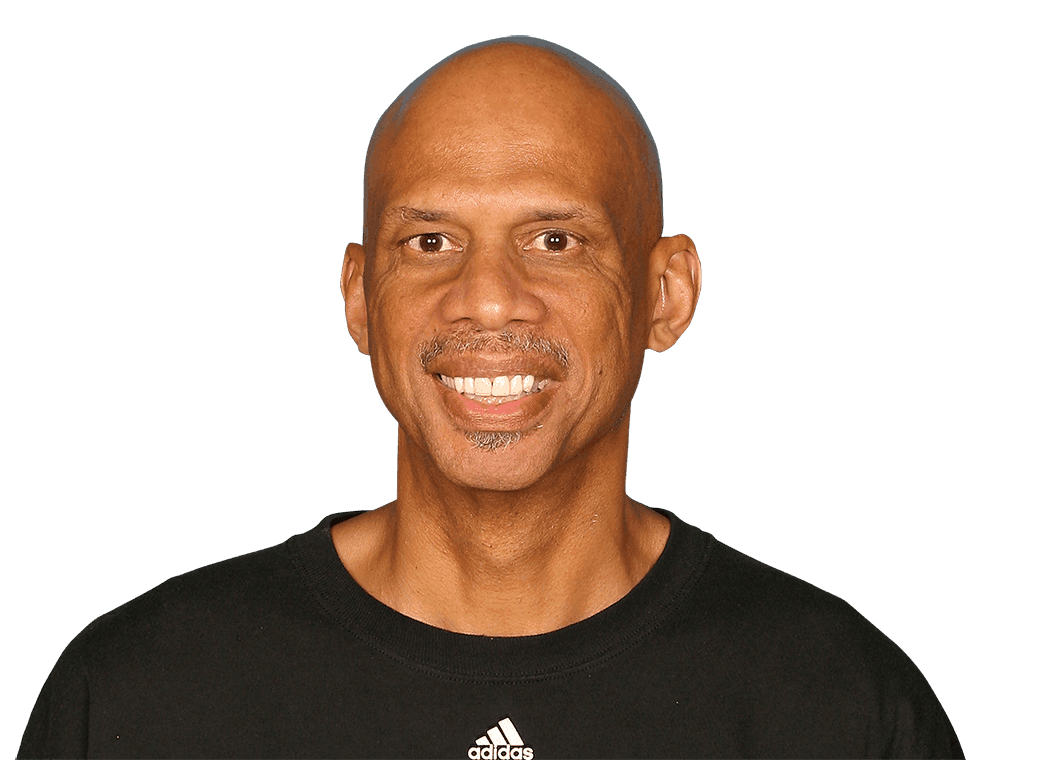
Julius Erving
#6 · Small Forward
21.6
PPG
7.8
RPG
3.5
APG
Dr. J was brilliant throughout the series — 21.6 points per game on extraordinary athleticism. Bob Gross's defensive commitment limited his impact in the decisive games, but Erving's performance was never the reason Philadelphia lost. His legacy remains untarnished by the outcome.
George McGinnis
#30 · Power Forward
18.0
PPG
10.3
RPG
The powerful ABA veteran was neutralized by Maurice Lucas in the series' decisive matchup. His dominance in Games 1 and 2 gave Philadelphia its early advantage, but Lucas's physical response changed the frontcourt battle completely from Game 3 forward.
History Written in 1977
Portland Trail Blazers
First team in NBA Finals history to win a championship after losing the first two home games — a comeback that has never been replicated
Bill Walton
23 rebounds and 8 blocks in Game 6 — a Finals record for rebounds in a championship-clinching game that stands nearly five decades later
Portland Trail Blazers
Only NBA championship in franchise history — defining the entire identity of Rip City basketball across generations of fans
Jack Ramsay
First and only NBA championship for one of basketball's most cerebral coaches — a vindication of team-first, fast-break basketball philosophy
Bill Walton
Finals MVP average of 19.0 rebounds per game — one of the most statistically extraordinary Finals performances in NBA history at any position
Bob Gross
Held Julius Erving — the most electrifying player in basketball — below his season averages in the decisive Games 3 through 6
Beyond the Box Score
The 1977 NBA Finals arrived during a moment of identity crisis for professional basketball. The ABA had merged with the NBA just one season earlier, and the new league was trying to prove that its unified product was worth the American sports public's attention. The Philadelphia 76ers were a symbol of the merger's promise — Julius Erving, the ABA's greatest ambassador, now competing in the NBA for the first time. Many expected Dr. J to lead Philadelphia to the championship and establish himself as the dominant force in the sport.
Portland's comeback from 0-2 was as much a story of coaching as talent. Jack Ramsay — a disciplined, intellectual coach who had studied basketball as deeply as any professional had — recognized that his team's identity was being suffocated by the 76ers' physicality. His adjustment before Game 3 gave Maurice Lucas explicit permission to be the enforcer the team needed, changing the frontcourt dynamic completely. The four consecutive wins that followed were basketball played exactly as Ramsay had always envisioned: fast, unselfish, and collectively devastating.
Bill Walton's health saga added a layer of tragedy to Portland's championship. He had already battled foot problems throughout his career, and the 1977 championship was the only full healthy season he would ever play. The following year, he fractured his foot, missed significant time, and the Blazers' championship window closed before it had fully opened. Portland's single championship exists as both a triumph and a reminder of what might have been if Walton had been able to sustain his health across multiple seasons.
"Blazermania" — the phenomenon that consumed Portland during the 1977 championship run — transformed the franchise's relationship with its city permanently. Portland had been a secondary sports market before 1977; after the championship, the Trail Blazers became the cultural center of gravity for an entire region. The nickname "Rip City," coined by broadcaster Bill Schonely years earlier, became a rallying cry that still resonates with Portland fans nearly five decades later. No single sporting achievement in Pacific Northwest history has had a more lasting impact on a community's identity.
The Full Story
Down 0-2 at home. The Philadelphia 76ers had Julius Erving. The Portland Trail Blazers had everything to lose and seemingly no path forward. What followed across four consecutive games — two in Philadelphia, one back in Portland, and the championship-clinching game in Philadelphia — was the most extraordinary comeback in NBA Finals history, built on team basketball executed at a level the sport had rarely witnessed.
Jack Ramsay's adjustment before Game 3 was simple in concept and revolutionary in execution: give Maurice Lucas the mandate to be physically dominant. The 76ers had come to Portland and imposed their will; Ramsay was going to impose Portland's. Lucas answered by neutralizing George McGinnis — the most powerful frontcourt player in basketball — and giving Bill Walton the space to orchestrate what became the most dominant individual Finals performance of the era.
Walton was unlike anything the 76ers had a scheme for. His 19 rebounds per game were the product of positioning so precise, timing so refined, and anticipation so advanced that even a frontcourt of McGinnis, Dawkins, and Caldwell Jones couldn't prevent him from controlling every missed shot. His 5.2 assists per game reflected a center who understood that basketball was not a solo act — that passing to the right teammate at the right moment was as valuable as any shot he could take.
Game 6 in Philadelphia gave the world its defining image of Walton's greatness. Twenty points. Twenty-three rebounds. Seven assists. Eight blocked shots. In a two-point game. On the road. To clinch the championship. Jack Ramsay called it the greatest basketball he had ever seen. Lionel Hollins' steal and layup in the final seconds sealed what had become, through four games of increasingly beautiful basketball, inevitable — Portland's first and only NBA championship, the crowning achievement of Rip City's extraordinary sports history.
Portland's championship carries the particular sweetness of impermanence. Bill Walton's foot broke the following season. The team's window closed. The Blazers would reach two more Finals with Clyde Drexler in 1990 and 1992, falling just short each time. The 1977 championship remains singular — a perfect season from a perfect team built by a brilliant coach around a transcendent center who was, for one extraordinary season, the best basketball player alive.
Share the Legacy
Send this page to a fellow Portland Trail Blazers fan. Let them relive every moment — game by game, play by play.