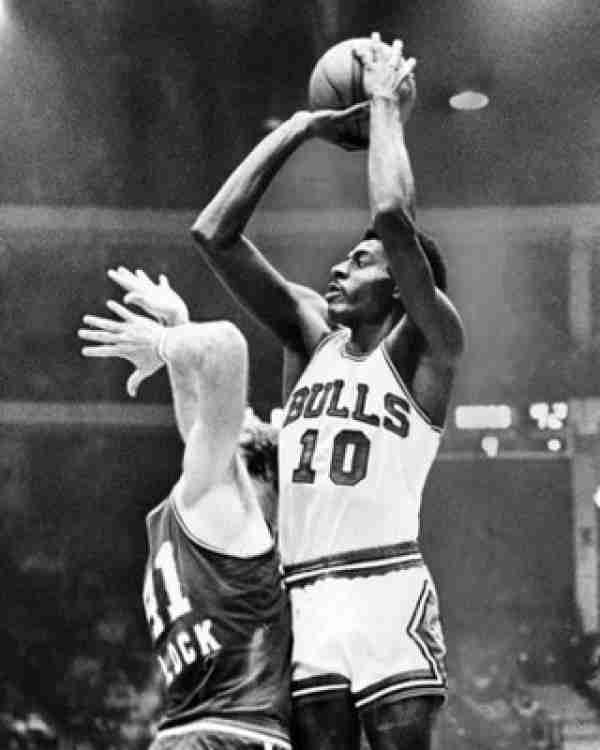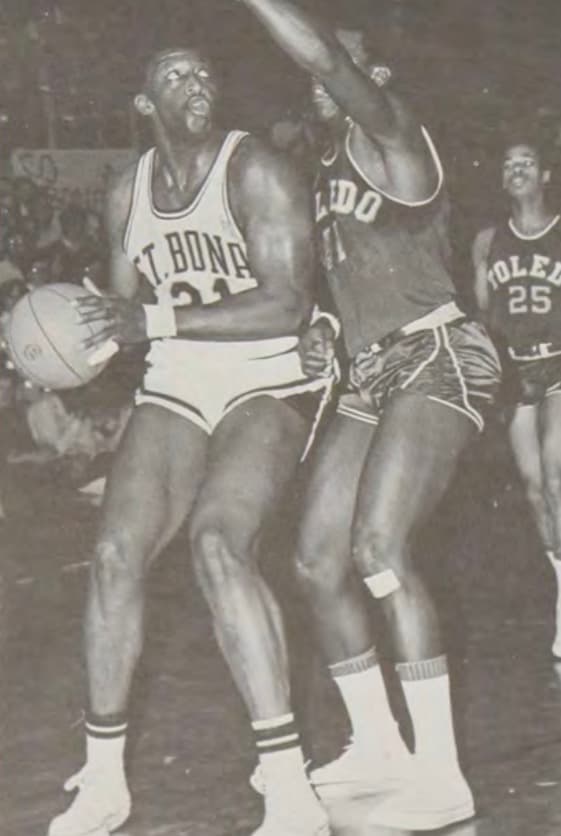
Bob Lanier came to Milwaukee in 1980 as a veteran center acquired from Detroit, a 6'11" left-handed scorer with a delicate touch, exceptional footwork, and a size 22 shoe — the largest in NBA history. He had spent the first nine seasons of his career in Detroit, averaging 22.7 points and 11.1 rebounds as the Pistons' franchise center during an era when Detroit was competitive but never championship-level. His arrival gave a rising Bucks team built around Sidney Moncrief the interior credibility it needed. Across four seasons in Milwaukee he averaged 17.3 points and 8.9 rebounds while providing veteran leadership and a post-up threat alongside the team's perimeter excellence. His Hall of Fame career — 19.1 points and 10.1 rebounds across 14 seasons, eight All-Star appearances, induction in 1992 — ended in Milwaukee. The Bucks retired his #16 to honor both the player and the era his presence represented: the franchise's years as a legitimate Eastern Conference contender in the early 1980s.
The Detroit Years and the Milwaukee Chapter
Lanier spent the first nine seasons of his career in Detroit, averaging 22.7 points and 11.1 rebounds per game as the Pistons' franchise center during an era when Detroit was competitive but never quite championship-level. His arrival in Milwaukee brought a proven All-Star to a Bucks team that needed interior credibility alongside the rising Sidney Moncrief and a roster that was approaching its competitive peak.
In four seasons with Milwaukee, Lanier averaged 17.3 points and 8.9 rebounds per game while providing the veteran leadership and interior scoring that gave the Bucks' offense a post-up threat alongside their perimeter excellence.
The Hall of Fame Standard
Bob Lanier's Basketball Hall of Fame induction in 1992 validated a career that statistics alone describe accurately: 19.1 points and 10.1 rebounds per game across 14 seasons, eight All-Star Game appearances, and a physical presence that made him one of the three or four most effective centers of the 1970s. His Milwaukee years added a championship-contending context to a career that had been spent in Detroit's rebuilding environment — he finally played for a team that was legitimately competing for a title.
- 8x NBA All-Star
- Basketball Hall of Fame inductee 1992
- 19.1 PPG career average
- Size 22 shoe — the largest in NBA history
Why #16 Is in the Rafters
The Bucks retired Bob Lanier's #16 to honor both the player and the era his presence represented — Milwaukee's years as a legitimate Eastern Conference contender during the early 1980s, when the franchise had the interior depth to compete with anyone. Lanier's Hall of Fame career ended in Milwaukee, and the franchise acknowledged that the final chapter of greatness deserves recognition alongside the middle chapters that establish it.
Cette analyse vous plaît ?
Recevez davantage d'analyses comme celle-ci dans votre boîte mail.