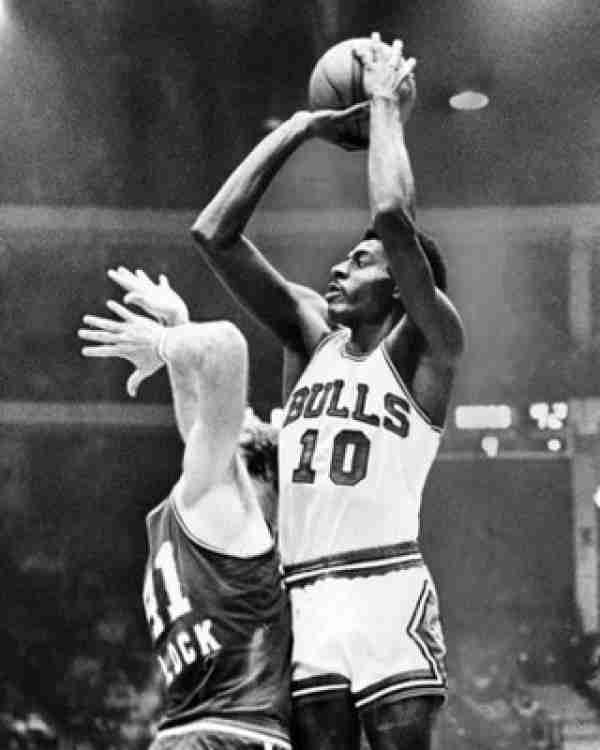
The Milwaukee Bucks retired Brian Winters' #32 to honor a player whose excellence has been somewhat lost to history but whose number tells you exactly what the franchise thought of what he gave them. Winters was never the biggest name on the roster, but across eight seasons — one of the longest tenures in franchise history — he was the competitive engine that kept Milwaukee relevant between the Kareem championship era and the Moncrief defensive era. Selected 11th overall in 1974 out of South Carolina, he arrived in 1975 with one of the quickest releases in the league and an elite mid-range game. He averaged 17.3 points per game in his peak seasons, made two All-Star Games in 1977 and 1978, and was the primary scoring option on rebuilding Bucks teams he helped push into the Eastern Conference Semifinals. #32 hangs in the rafters because that loyalty and production, delivered across a decade, earned permanent acknowledgment.
The Pure Shooter
Brian Winters arrived in Milwaukee in 1975 — the same summer Kareem was traded to the Lakers — as part of the franchise's reconstruction. Selected 11th overall in 1974 out of South Carolina, Winters was a crafty shooting guard with one of the quickest releases in the league, an elite mid-range game, and the competitive toughness of a player who understood his role and maximized it on every possession.
He averaged 17.3 points per game in his peak Milwaukee seasons, was named to two All-Star Games (1977, 1978), and was the primary scoring option on Bucks teams that were rebuilding after Kareem's departure while trying to maintain playoff relevance. He did more than maintain relevance — he helped Milwaukee reach the Eastern Conference Semifinals multiple times during his tenure.
Winters' shooting was not just accurate — it was fast. His release time on the mid-range jumper was among the shortest in the league, giving defenders almost no window to contest effectively. Against guards who needed a half-second to close out, Winters had already released the ball.
The Bridge Between Eras
The Milwaukee Bucks of the late 1970s could have been a lost decade — the years between one championship and the next competitive contending cycle. Winters prevented that narrative. He gave Milwaukee fans a legitimate offensive star to rally around, produced consistently at a level that kept the franchise in the playoff conversation, and provided the institutional continuity that organizations need when marquee players depart.
- 2x NBA All-Star (1977, 1978)
- Eight seasons with Milwaukee — one of the longest tenures in franchise history
- 17+ PPG in multiple seasons as primary scoring option
Why #32 Is in the Rafters
Brian Winters gave Milwaukee eight years of professional excellence, All-Star production, and the consistency that bridges the gaps between championship eras. His retirement ceremony honored a player whose contribution was exactly what the franchise needed at a moment when it needed it most — not a superstar inherited from a better team, but a player who grew into his best basketball entirely in Milwaukee. #32 is in the rafters because that kind of loyalty and production, delivered across a decade, deserves permanent acknowledgment.
Cette analyse vous plaît ?
Recevez davantage d'analyses comme celle-ci dans votre boîte mail.