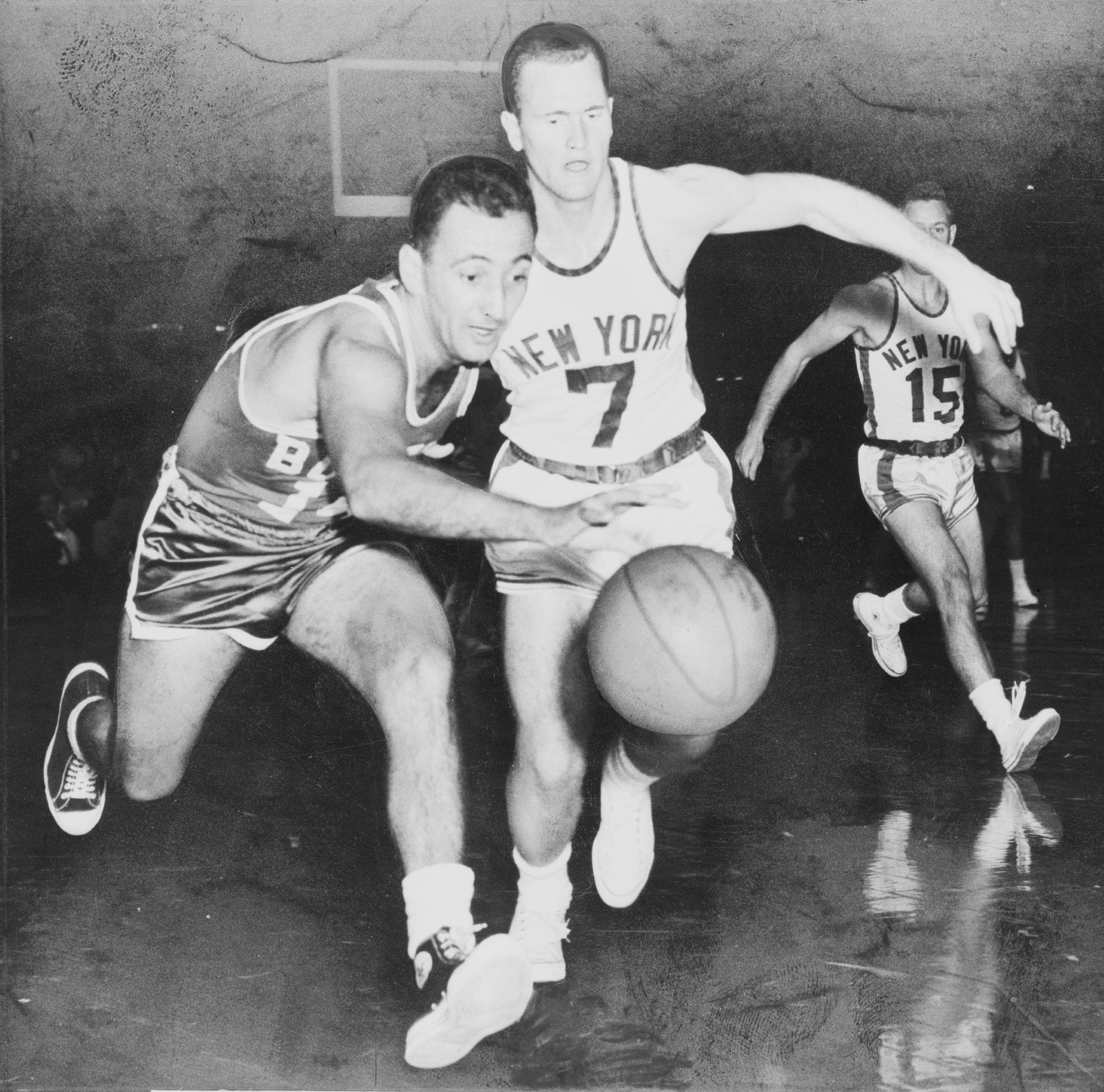
Bob Cousy's #14 hangs in the Boston Garden rafters as the number of the first great Celtic — the player who established the culture of unselfishness, intelligence, and team-first basketball that Bill Russell's arrival would elevate into dynasty. Cousy arrived in 1950, three years before Russell, and spent fourteen seasons in Boston, winning six championships in 1957, 1959, 1960, 1961, 1962, and 1963. He led the league in assists eight consecutive seasons between 1953 and 1960, was named to thirteen consecutive All-Star teams, and won the league's MVP in 1957. "The Houdini of the Hardwood" earned the nickname honestly, executing behind-the-back passes in traffic and no-look feeds that expanded the vocabulary of the sport. He was the architect of Red Auerbach's fastbreak offense in motion. When he played his final home game in March 1963, Boston Garden gave him a seventeen-minute standing ovation. His number honors the man who showed Boston what Celtics basketball was supposed to look like.
The Houdini of the Hardwood
Cousy arrived in Boston in 1950, three years before Bill Russell, and what he did in those early years was remarkable on its own terms. He led the league in assists eight consecutive seasons between 1953 and 1960. He was named to thirteen consecutive All-Star teams. He won the league's Most Valuable Player award in 1957. And he did it by playing a style the sport had never seen: creative, improvisational, beautiful.
The nickname "The Houdini of the Hardwood" was earned honestly. Cousy executed passes and ball-handling maneuvers that seemed physically impossible — behind-the-back passes in traffic, no-look feeds to cutters who hadn't quite arrived at the spot, left-hand dribble drives in an era when left hands were ornamental. He expanded the vocabulary of the sport in ways that coaches and players have been building on ever since.
The Dynasty Builder
The relationship between Bob Cousy and Red Auerbach was foundational to what the Celtics became. Auerbach's fastbreak offense required a point guard who could push pace, make instantaneous decisions, and find the open man before the defense recovered. Cousy was the architect of that system in motion — the player who turned Auerbach's philosophy into something Boston Garden could actually feel.
Six championships: 1957, 1959, 1960, 1961, 1962, 1963. Six times Cousy stood in that locker room with the hardware. And in March 1963, when he played his final home game in Boston, the crowd gave him a seventeen-minute standing ovation that reduced grown men to tears. Cousy himself could not finish his farewell speech. The Garden had never seen anything like it.
The Foundation of an Era
Bob Cousy's #14 hangs in the Garden rafters as a reminder that greatness does not require an asterisk. He was the first great Celtic — the player who established the culture of unselfishness, intelligence, and team-first basketball that Russell's arrival would elevate into dynasty. Every Boston Celtic who came after him played in a tradition he helped build. His number honors the man who, before the championships and the banners, showed Boston what Celtics basketball was supposed to look like.
Cette analyse vous plaît ?
Recevez davantage d'analyses comme celle-ci dans votre boîte mail.