Cette page contient des liens affiliés. Nous pouvons percevoir une commission si vous achetez via ces liens, sans frais supplémentaires pour vous. As an Amazon Associate I earn from qualifying purchases.
On a March night in 2006, the lights at the Delta Center dimmed and a banner bearing the number 32 rose slowly into the rafters, settling beside John Stockton's 12. Karl Malone stood at center court in a dark suit, a man built like a granite outcrop, and for once the most relentless competitor Utah had ever known had nowhere left to run. He had played 19 NBA seasons, scored more points than all but one human being who ever laced up sneakers, and never once held the championship trophy he chased from October to June for two decades. The crowd did not care. They stood and roared for the better part of ten minutes, because what they were celebrating was never really about a ring. It was about a man who delivered, night after punishing night, for 18 seasons in a small mountain market that the rest of the league barely noticed — and who made them believe a power forward could be the most reliable force in basketball.
The Steal of the 1985 Draft
Karl Malone came out of Louisiana Tech in 1985 carrying a body that scouts loved and a jump shot they did not trust. He was a physical marvel — 6-foot-9, carved from something harder than muscle — but the questions about his shooting touch and his free-throw stroke were loud enough that he slid all the way to the 13th pick. Twelve teams passed. The Utah Jazz, a franchise still searching for an identity in a city more associated with mountains than basketball, took the kid from Summerfield, Louisiana, and changed the course of their history.
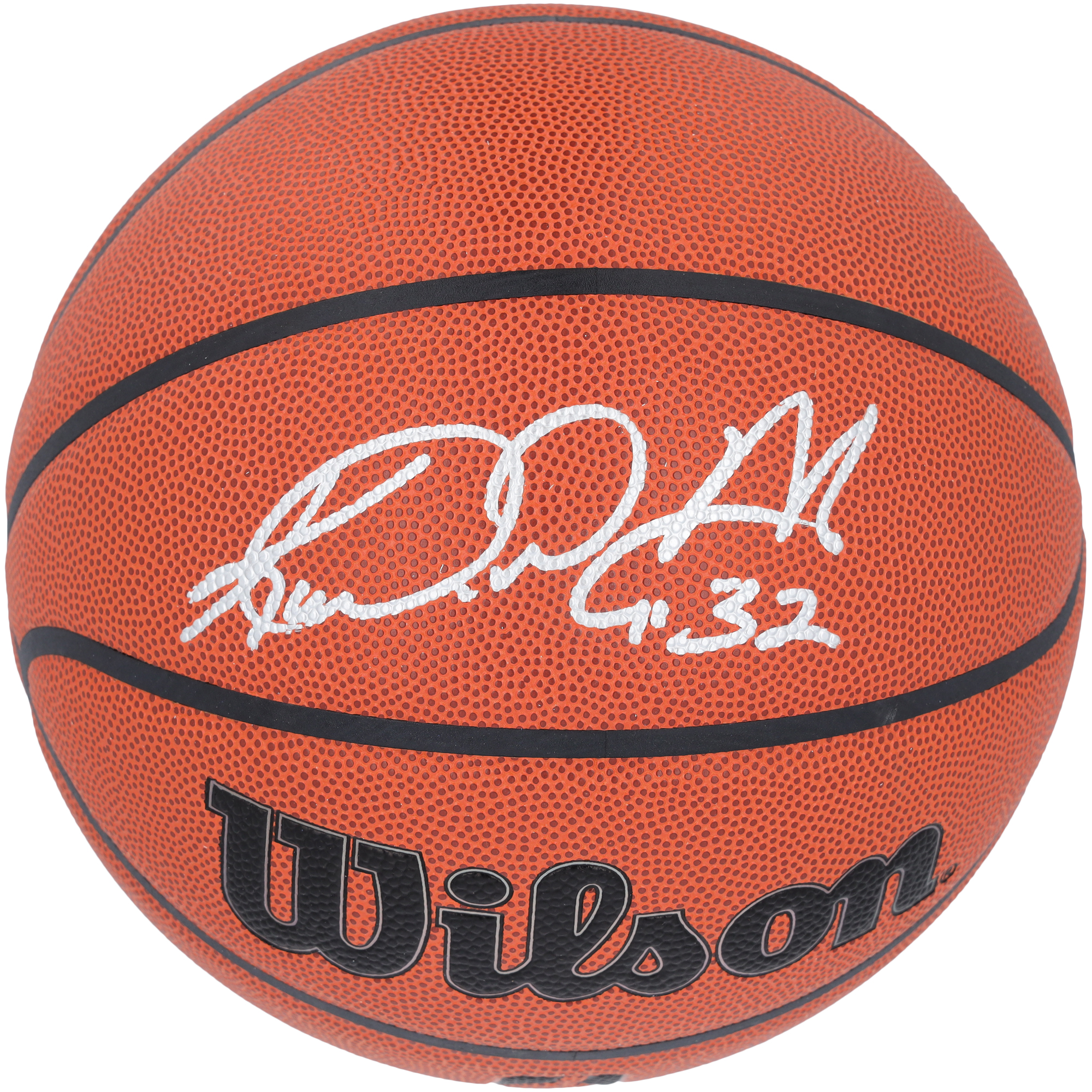
The doubts were not entirely wrong. Malone's outside shot was a work in progress, and his free throws would remain a lifelong project that he attacked with the same obsessive labor he brought to everything else. But what the scouts underrated was the engine inside him. He arrived in Utah determined to outwork every assumption made about him, and within two seasons he had transformed from a raw prospect into one of the most punishing interior scorers the league had ever seen. The draft "steal" label stuck because it was simply true. You can trace the entire modern identity of the Utah Jazz back to the night 12 franchises decided Karl Malone was not worth the gamble.
Stockton to Malone
The thing that turned Malone from a great scorer into an immortal was the man who threw him the ball. John Stockton, the Jazz's quiet, ruthless point guard, arrived in the same era, and together they built the most lethal two-man action in the history of the sport. The pick-and-roll — Stockton dribbling off Malone's screen, then feeding him on the dive — became so synonymous with Utah basketball that opposing defenses spent entire weeks preparing for it and still could not stop it. They knew exactly what was coming. It did not matter.

For 18 seasons, the two were inseparable on the floor, a partnership so durable it almost defied belief. Stockton would retire as the NBA's all-time leader in assists, and a staggering number of those assists landed in Malone's hands as he rolled to the rim or rose for that elbow jumper he had spent years perfecting. The two of them, run by a coach who demanded the offense be executed with religious precision, made the Jazz a contender every single year. To understand Malone's greatness you have to understand that it was never solitary — it was a conversation between two players who spoke the same silent language. The story of John Stockton's retired number 12 is the other half of this one; you cannot tell either without the other.
The Engine of Jerry Sloan's Offense
None of it works without the man on the sideline. Jerry Sloan coached the Jazz for 23 seasons, a tenure almost unheard of in professional sports, and he built an offense around discipline, physicality, and the pick-and-roll that Malone and Stockton ran to perfection. Sloan demanded toughness, and in Malone he had a player who embodied it — a power forward who treated every possession as a personal grievance to be settled in the paint.

Malone's nickname, "The Mailman," was born of his reliability: he delivered. Twenty points and ten rebounds a night became so routine that fans came to expect it the way they expected the sun. He missed almost no games across his 19 seasons, a feat of durability that is, in its own quiet way, as staggering as any scoring record. While other stars sat out with bumps and bruises, Malone showed up, every night, and absorbed punishment that would have ended lesser careers. That iron consistency was the foundation everything else was built on. The architecture of those teams — Sloan's system, Stockton's vision, Malone's force — produced a decade of contention, and the legacies of Jerry Sloan and his anchor are permanently braided together.
Back-to-Back to the Mountaintop's Edge
For all the regular-season dominance, the championship always lived one step beyond Malone's reach. The Jazz were perennial contenders through the 1990s, but the path to the Finals ran through a brutal Western Conference, and the path to a ring ran straight into Michael Jordan. In 1997, with Malone winning his first MVP award, Utah finally broke through to the NBA Finals — the first in franchise history. They had Stockton's three-pointer to thank for getting there, a dagger that sent Utah to the championship round and the building into delirium. Alongside Malone and Stockton stood Jeff Hornacek, the sharpshooting guard whose calm spacing made the Jazz's offense whole, and whose number 14 hangs as part of that same proud era.

The Finals themselves became the defining heartbreak of Malone's career. In Game 1 of the 1997 series, with the score tied and the reigning MVP at the free-throw line in the final seconds, Scottie Pippen leaned in and delivered a line that would echo for decades: "The Mailman doesn't deliver on Sundays." Malone missed both free throws. Jordan won the game on a buzzer-beater. It was the kind of moment that gets replayed forever, a single sentence that lodged itself into the mythology of a man who had delivered ten thousand times before.

The Mailman doesn't deliver on Sundays. — Scottie Pippen, 1997 NBA Finals
Utah pushed that series to its limit. They watched Jordan summon a legendary performance through illness in Game 5 — the famous "flu game" — and they fought to the end, but the Bulls prevailed. The following June, the Jazz returned to the Finals for a second straight year, more determined than ever, only to meet the same fate. In Game 6 of the 1998 series, with Utah a single defensive stop from forcing a Game 7, Jordan stripped Malone in the post, dribbled the other way, and rose over Bryon Russell for the shot that ended the Bulls dynasty's last dance. Malone watched it go in. Twice his Jazz had reached the summit, and twice the greatest player alive stood between them and the prize.
The Numbers Behind the Number
Strip away the heartbreak and the résumé is the stuff of legend. Karl Malone was not merely good for a long time — he was elite for an almost impossibly long time, and the ledger he left behind anchors his place among the greatest who ever played.
- Second-leading scorer in NBA history. Malone retired with 36,928 career points — second only to Kareem Abdul-Jabbar for nearly two decades, a perch he held until LeBron James finally passed him. For most of the modern era, the number two scorer in the entire history of professional basketball wore a Jazz jersey.
- Two-time NBA MVP. He won the league's highest individual honor in 1996–97 and again in 1998–99, twice being named the single best player in the game during the same years he was chasing Jordan's Bulls.
- Fourteen-time All-Star, with two All-Star Game MVP awards (1989 and 1993) — a perennial fixture in the league's showcase across three different decades.
- Eleven-time All-NBA First Team. The All-NBA First Team selection is reserved for the five best players in the world in a given season; Malone earned it eleven times, a testament to sustained excellence almost no one in history has matched.
- One of the most durable players ever. Across 19 NBA seasons he missed almost no games, showing up to absorb punishment in the paint with a consistency that became its own legend.
- Naismith Memorial Basketball Hall of Fame, Class of 2010, and a member of the NBA 75th Anniversary Team — formal recognition that he belongs in the sport's innermost circle.
The Final Chase
By 2003, after 18 seasons in Utah, Malone made a decision that broke a lot of hearts in Salt Lake City. He left the only franchise he had ever known to sign with the Los Angeles Lakers, joining a star-laden roster assembled for one purpose: the championship that had eluded him his entire career. It was the move of a man running out of time, and there was no shame in it. He had given Utah everything; now, at the end, he reached for the one thing he had never held.
It did not come. The 2003–04 Lakers reached the Finals as heavy favorites and were stunned by the Detroit Pistons, a team without a single superstar that played defense like a closed fist. Malone, hampered by a knee injury, could not deliver the ending the story seemed to demand. He retired after that season without a ring — the second-leading scorer in the history of the game, a two-time MVP, an eleven-time All-NBA First Team selection, and never once a champion. For a player whose entire identity was built on delivering, it remains the cruelest footnote in an otherwise flawless career.
Why #32 Hangs Forever
The Jazz did not retire Karl Malone's number 32 because he won them a title. They retired it because for 18 years he was the title they chased — the embodiment of everything a small-market franchise wanted to be: relentless, loyal, and impossible to ignore. His number hangs not as a monument to a trophy but as a monument to a standard. Night after night for nearly two decades, in a city the national broadcasts forgot, Malone delivered a level of excellence the league had rarely seen from his position, and arguably never seen with such durability.
He and John Stockton are the twin pillars of the franchise, two numbers raised side by side, inseparable in the rafters as they were on the floor. Around them hang the others who defined that golden era — Jeff Hornacek's 14, Jerry Sloan's banner, and Mark Eaton's number 53, the towering shot-blocker who anchored the defense of Malone's early years. Together they tell the story of a team that came within a Jordan jumper of immortality and built, in the trying, something that outlasts any single championship.

To see the full arc — the durability, the partnership with Stockton, the two-time MVP seasons, the Finals heartbreaks — visit the Karl Malone player profile and walk through a career measured not in rings but in something rarer: an unbroken, two-decade promise, kept. Karl Malone never won the championship he deserved. He won something else — the permanent, hanging gratitude of a city that knew, every single night, that the Mailman would deliver. That is why number 32 will hang in Salt Lake City forever.
Cette analyse vous plaît ?
Recevez davantage d'analyses comme celle-ci dans votre boîte mail.