Cette page contient des liens affiliés. Nous pouvons percevoir une commission si vous achetez via ces liens, sans frais supplémentaires pour vous. As an Amazon Associate I earn from qualifying purchases.
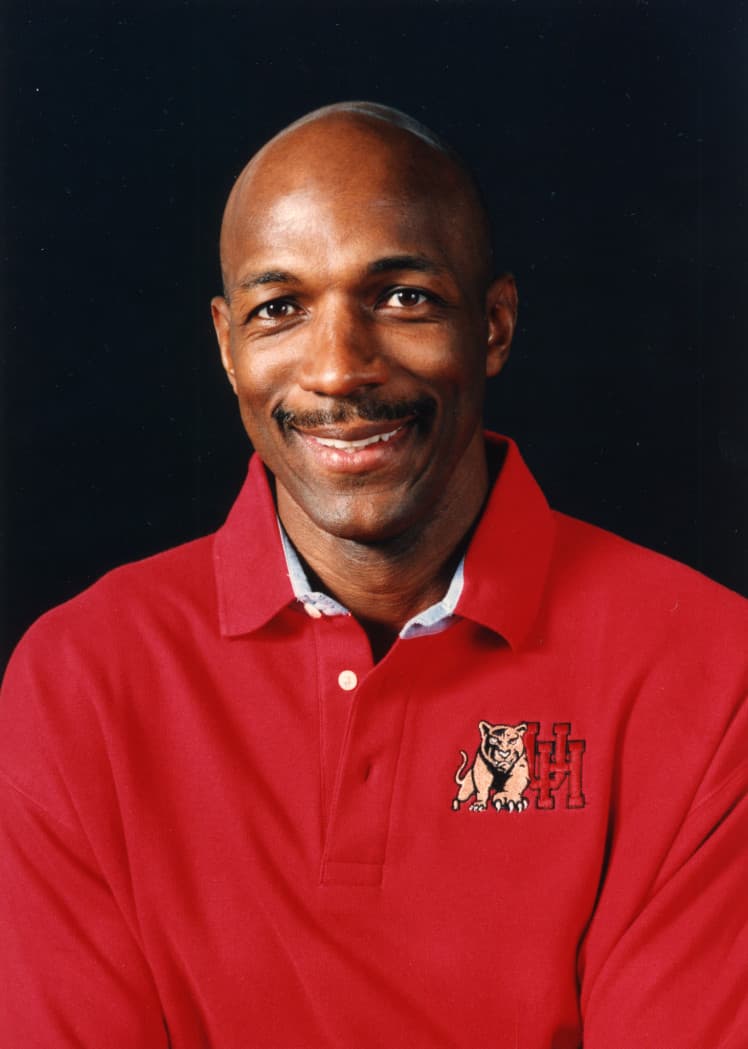
Clyde Drexler's #22 hangs in the Toyota Center rafters not only because of what he accomplished in Houston but because of what his arrival represented: the kid from Sterling High School who starred at the University of Houston on the legendary Phi Slama Jama teams alongside Hakeem Olajuwon, became one of the best players of his generation in Portland, and came home in the middle of his prime to win a championship. Born June 22, 1962, in New Orleans and raised in Houston, Drexler was drafted 14th overall by Portland in 1983, made the All-NBA First Team in 1992, and played on that summer's Dream Team. In February 1995 the Rockets acquired him for Otis Thorpe and a first-round pick, reuniting him with Olajuwon; Houston swept the Orlando Magic to win back-to-back titles. He retired after 1997-98, entered the Hall of Fame in 2004, and had his #22 retired by the Rockets in January 1999.
Growing Up in Houston
Clyde Drexler was born on June 22, 1962 in New Orleans but grew up in Houston, Texas. He attended Sterling High School, where he developed the explosiveness and creativity that would define his professional career. At the University of Houston, he teamed with Hakeem Olajuwon on the Phi Slama Jama squads that reached the Final Four in 1982 and 1983. The two of them had been great together in college. In 1995, they'd be great together for real.

Portland selected Drexler 14th overall in the 1983 NBA Draft. Over the next eleven seasons, he became one of the premier two-way players in the league — an All-Star in every full season he played, a player capable of scoring, defending, rebounding, and facilitating at an elite level. He was named to the All-NBA First Team in 1992 and was part of the Dream Team that summer. He finished as a runner-up in the 1992 NBA Finals against Michael Jordan's Chicago Bulls — a series that launched endless comparisons between the two.

The Return Home
In February 1995, with the Trail Blazers in transition and Drexler at a crossroads, the Rockets made a move that felt almost too good to be true. They acquired Clyde — at age 32, still one of the best players in the game — for Otis Thorpe and a first-round pick. Drexler was coming home, reuniting with Olajuwon, and joining a team that had won the championship the previous year.

The fit was immediate. Drexler provided offensive creation, defensive versatility, and veteran presence that gave the Rockets a second dimension they hadn't had. He averaged 21.5 points and 8.2 rebounds after the trade and elevated his game further in the playoffs. The Rockets went on to defeat the Orlando Magic in four games to win back-to-back championships. For Drexler, who had come so close in 1992, the ring completed something that had been missing.

The Hall of Famer
Drexler spent three seasons with the Rockets total, retiring after the 1997–98 season. He averaged 20.4 points, 6.1 rebounds, and 5.6 assists per game across his career. He was inducted into the Naismith Memorial Basketball Hall of Fame in 2004 and was named to the NBA's 50th Anniversary All-Time Team and later the 75th Anniversary Team. He is one of the fifty greatest players in NBA history by any reasonable measure.

After retirement, Drexler returned to the University of Houston as head coach from 1998 to 2000 and has remained a prominent figure in the city's basketball and business communities. His connection to Houston is the story of a person who left, became great, and came back to finish the job.

Why the Rockets Retired #22
The Rockets retired Clyde Drexler's #22 at halftime of a game in January 1999. The retirement honored three seasons of play, one championship, and a lifetime of connection to the city of Houston. Drexler is one of only a handful of players in NBA history to have his jersey retired by two franchises — Portland retired #22 as well — and he earned that distinction through sustained excellence across more than a decade at the highest level.

Number 22 in the rafters is for Clyde Drexler: the kid from Sterling High who became one of the fifty greatest players in the history of the sport, won a championship in his hometown, and gave Houston something it still talks about thirty years later.

Cette analyse vous plaît ?
Recevez davantage d'analyses comme celle-ci dans votre boîte mail.