Esta página contém links de afiliados. Podemos ganhar uma comissão se você comprar através desses links, sem custo adicional para você. As an Amazon Associate I earn from qualifying purchases.
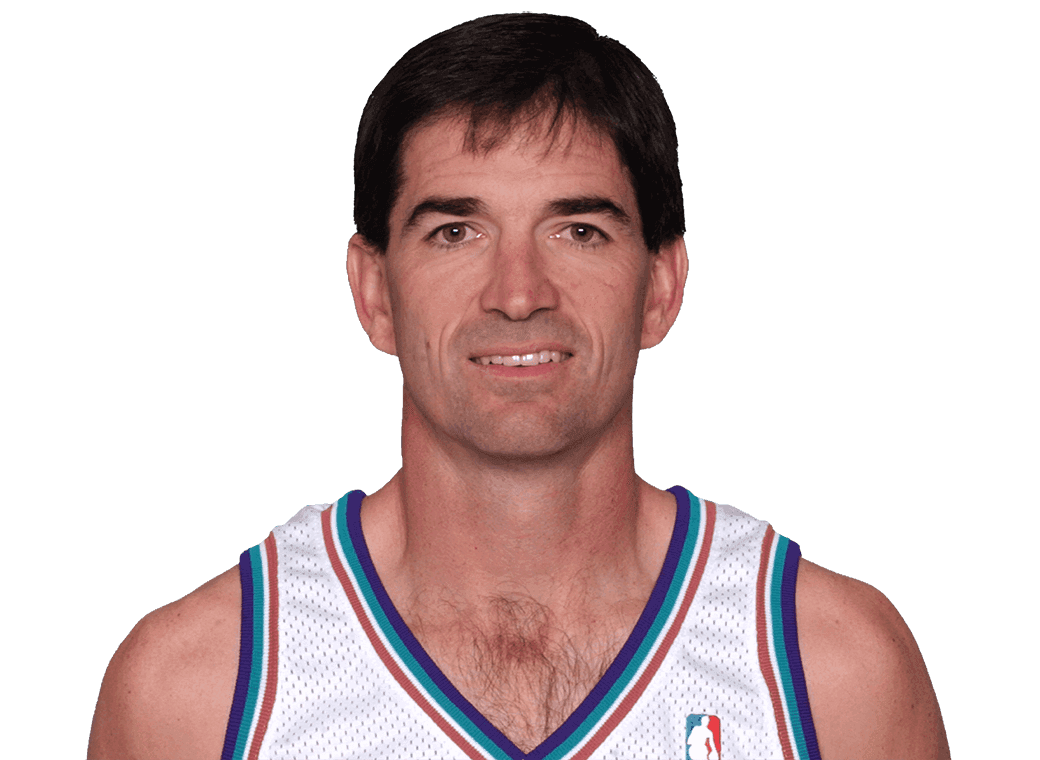
On the night of May 29, 1997, the Delta Center in Salt Lake City held its breath. The Utah Jazz and the Houston Rockets were tied in the final seconds of Game 6 of the Western Conference Finals, a franchise that had never reached the NBA Finals standing one possession from the edge of history. Karl Malone inbounded the ball to John Stockton, who dribbled once near the top of the key, rose with Charles Barkley closing fast, and released a three-pointer at the buzzer. It dropped clean. The Jazz won 103–100, and the building did not so much erupt as detonate. Stockton, who had spent thirteen seasons doing the quiet work of a floor general, had just authored the loudest moment in Utah Jazz history. He did not pump his fist or scream. He turned, half-smiled, and let his teammates bury him.
It was the most perfect single image of a career that almost never traded in single images. John Stockton was not a man of highlights. He was a man of accumulation — of assist after assist, of steal after steal, of season after season, all of it stacking into numbers so enormous that two decades after his retirement no one has come close to touching them. That shot over Barkley is how casual fans remember him. The record book is how history will.

A Sixteenth Pick Nobody Wanted
When the Jazz selected Stockton sixteenth overall in the 1984 NBA Draft, a portion of the Utah crowd booed. They had never heard of him. He had played his college basketball at Gonzaga, then a small, anonymous program in Spokane, Washington, decades before the Bulldogs became a national power. There were no televised tournament runs to study, no national reputation to lean on. He was a slightly built guard from a school nobody could place, and the fans wanted a name they knew. The 1984 draft has since become legendary — Hakeem Olajuwon went first, Michael Jordan third, Charles Barkley fifth — and tucked into the middle of it was a player who would outlast nearly all of them in the categories that define his position.
Stockton came off the bench as a rookie behind Rickey Green, learning the rhythms of the Jazz backcourt without complaint. He was not an instant phenomenon. He was a study in patience, waiting for the floor to open and the franchise to recognize what it had. There was a quiet stubbornness to the way he absorbed those early lessons — the sense of a player who had already decided exactly who he was going to be and was simply waiting for the minutes to prove it. When the Jazz finally handed him the keys, they never looked back, and neither did he.

The Pick-and-Roll That Defined a Franchise
By his fourth season, Stockton had the starting job, and the partnership that would define Utah basketball for nearly two decades was fully formed. Stockton and Karl Malone ran the pick-and-roll under coach Jerry Sloan with a precision that bordered on cruelty. Everyone in the building knew it was coming. Everyone on the opposing bench had game-planned for it. It worked anyway, night after night, year after year. Malone set the screen, rolled to the rim, and Stockton delivered the ball into his hands at the exact instant a defense couldn't recover — a bounce pass threaded through a closing window, a lob timed to the half-second.
The genius of it was its repetition. Sloan did not chase trends or reinvent his offense to chase aesthetics. He found two players who executed the fundamentals better than anyone alive and let them run the same actions until they became unstoppable. Stockton led the NBA in assists for nine consecutive seasons from 1988 through 1996, a streak of dominance at his craft that has no real parallel. He led the league in steals twice. He was the metronome of one of the most consistent winning operations in basketball, running the same actions alongside the same forward for eighteen seasons, most of them under the same coach.

Durable Beyond Belief
What made Stockton's accumulation possible was a body that simply refused to break. Over nineteen seasons, he missed only twenty-two games — and most of those came from a single knee injury early in the 1997-98 campaign. He played all eighty-two games in seventeen different seasons. For a point guard absorbing contact on every screen, fighting through picks on defense, and logging heavy minutes for a contender, that durability is almost incomprehensible. He was not a fragile artist; he was a blue-collar craftsman who clocked in every single night.
His game matched that ethic. Stockton kept wearing short shorts long after the rest of the league had moved to the baggy style, an unfashionable holdout who seemed almost defiantly indifferent to image. He was listed at six feet and 175 pounds, unremarkable to look at, the antithesis of flash — an assassin disguised as an accountant. He set bone-rattling screens, took charges, and dug into ball-handlers with a tenacity that drew the quiet fury of opponents who couldn't shake him. There was nothing pretty about how he beat you. There was only the result.

The Number That Will Never Be Caught
This is where John Stockton stops being a very good player and becomes a singular one. He retired as the NBA's all-time leader in assists with 15,806 — and the NBA's all-time leader in steals with 3,265. Both records still stand. Neither is remotely threatened. The gap between Stockton and the player in second place on each list is measured not in handfuls but in thousands. To overtake him in assists, a point guard would need to average ten assists a night, every night, for the better part of two decades, and stay healthy the entire time. The two metrics that most purely measure a floor general — how well he creates for others and how well he disrupts the other team — both belong to the same man, and they have belonged to him for over twenty years.

It is one thing to be the best at something. It is another to be so far ahead that the record becomes a kind of monument, a number that future generations will read about the way they read about feats they will never see repeated. Stockton owns two of them. He did it without ever leading the league in scoring, without ever being the franchise's most famous face, without raising his voice. He simply did the work, possession after possession, until the totals climbed past everyone who had ever played the game.
So Close, and the Ring That Never Came
The shot over Barkley sent the Jazz to the 1997 NBA Finals — the first in franchise history. There they met Michael Jordan's Chicago Bulls and lost in six. The following spring, Utah returned, earned the home-court advantage, and met the Bulls again. They lost again in six, the series ending on Jordan's famous final shot in Game 6. Back-to-back Finals, back-to-back defeats at the hands of the greatest team of the era. Stockton, Malone, Sloan, and the entire Utah project came as close to a championship as a team can come without ever holding the trophy.

And so the central tension of Stockton's legacy is this: the most statistically dominant point guard in the history of the sport, by the two measures that matter most for his position, never won an NBA title. There is no championship banner with his name on the parade route, no ring to flash on the highlight reels. For some players that absence becomes a stain. For Stockton it became something closer to proof — that greatness and glory are not the same thing, that a man can master a game completely and still be denied its ultimate prize by an accident of era. He played in the time of Jordan. So did a generation of brilliant players who went home empty-handed.
It would have been easy, in the years after those Finals, for Stockton to chase the ring elsewhere — to find a contender in need of a steady veteran hand and engineer a final act with a trophy at the end of it. Players do it all the time, and few would have begrudged him. He never did. He finished what he started in Salt Lake City, retiring in 2003 as a member of the only franchise he had ever known. The ringless ending was, in its own way, the most Stockton thing about him: he valued the work and the place over the prize. The number that would have completed the picture for everyone else was apparently the one number he was least concerned with collecting.

The Numbers Behind the Number
- 15,806 career assists — the NBA's all-time leader, a record that still stands by an enormous margin more than two decades later.
- 3,265 career steals — also the NBA's all-time leader, the second of his two untouchable records.
- 9 consecutive seasons leading the NBA in assists (1988–1996), with two seasons leading the league in steals.
- 10× NBA All-Star, a fixture of the Western Conference roster across his prime.
- 19 seasons, all with the Utah Jazz — one of the most complete one-franchise careers in the history of American team sports.
- Missed only 22 games in 19 seasons, playing all 82 games in 17 different seasons.
- 1992 Dream Team — a gold-medal Olympian alongside Jordan, Magic, and Bird in Barcelona.
- Naismith Memorial Basketball Hall of Fame, Class of 2009, enshrined in the same class as Michael Jordan.
- NBA 75th Anniversary Team — named among the greatest players in league history.
Why #12 Hangs Forever
When the Jazz raised John Stockton's #12 to the rafters, they were not commemorating a single shot or a single season. They were retiring the number of the man who, more than anyone, was the franchise — the constant who never asked to leave, never chased a bigger market, never imagined his career anywhere but Salt Lake City. He and Karl Malone are the twin pillars of the organization, two numbers hanging side by side because their greatness was never really separable. The pass and the finish. The screen and the roll. You cannot tell the story of one without the other.
Around them hang the other names that made those years sacred: Jeff Hornacek, the steadying shooter on those Finals teams; Mark Eaton, the towering anchor of the defenses that came before; and the coach who held it all together, Jerry Sloan, who stood on the Utah sideline for nearly the entirety of Stockton's career and whose own number hangs among his players. It was a culture built on discipline and repetition, and Stockton was its purest expression.
The number hangs there now for the same reason the records still stand — because what Stockton did was so thorough, so quietly total, that no one has been able to undo it. Two decades of mastery, no ego, no flash, no exit, no ring, and two all-time records that may outlive everyone reading this. That is what #12 means in Utah. Not a moment. A monument. The floor general who measured his greatness one assist at a time, until the count climbed higher than anyone in the history of the game and simply stayed there.
Curtindo esta análise?
Receba mais análises como esta na sua caixa de entrada.