Esta página contém links de afiliados. Podemos ganhar uma comissão se você comprar através desses links, sem custo adicional para você. As an Amazon Associate I earn from qualifying purchases.
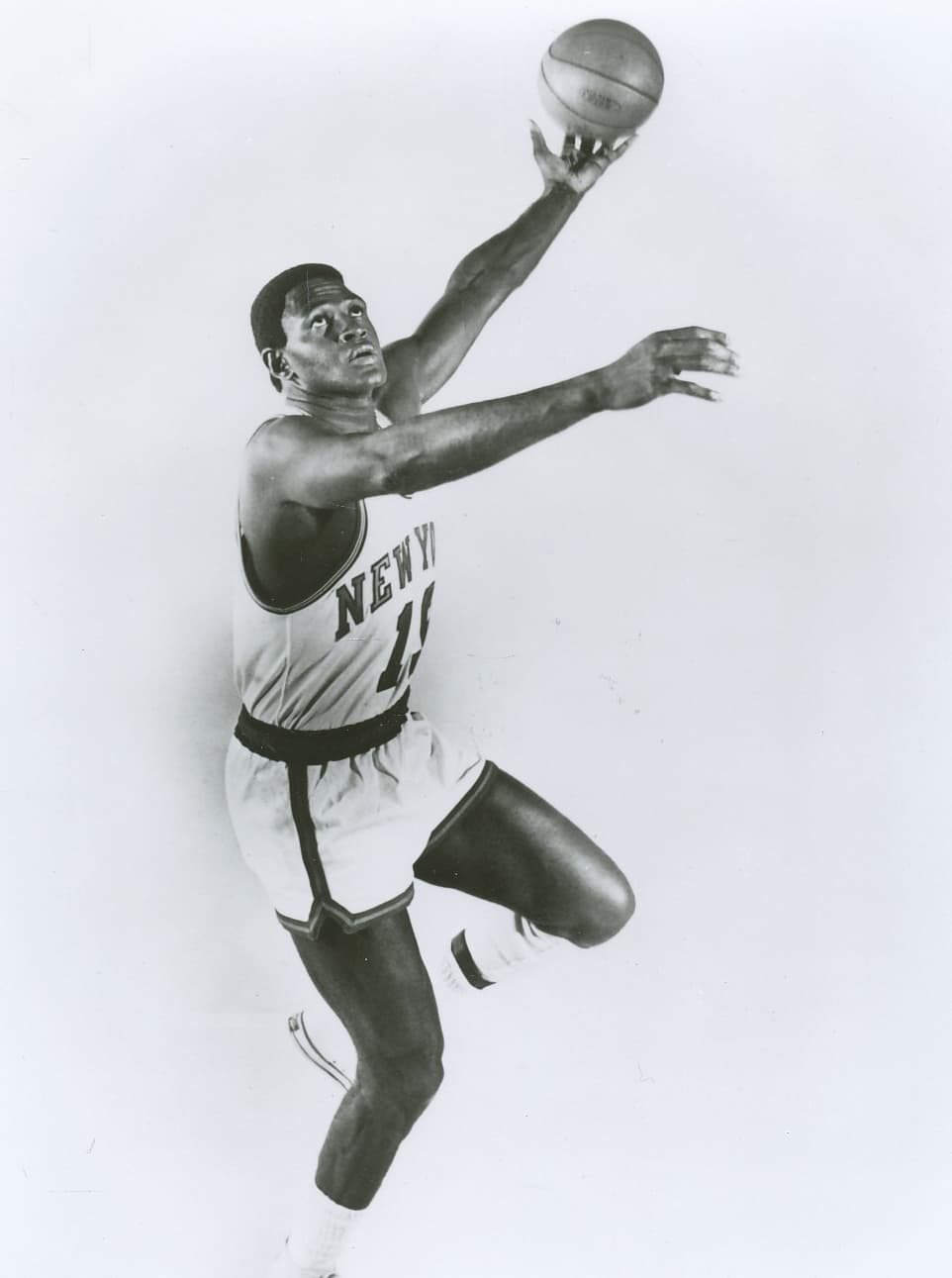
Before the tip-off of Game 7 of the 1970 NBA Finals, Madison Square Garden fell silent as 19,500 people held their breath. Then Willis Reed, captain of the New York Knicks, limped out of the tunnel on a torn thigh muscle, scored the first two baskets, and Walt Frazier did the rest in a 113-99 win for New York's first NBA Championship. Reed Jr., born June 25, 1942, in Bernice, Louisiana, averaged 26.6 points and 21.3 rebounds at Grambling State before the Knicks drafted him in the second round in 1964; he won Rookie of the Year immediately. In 1969-70 he won three MVP awards in one season — regular season, All-Star Game, and Finals. He earned Finals MVP again in 1973, the only Knick to win it twice, playing through chronic knee pain. His #19 was retired in 1976, an acknowledgment that he redefined what it meant to be a Knick.

The Captain's Journey
Willis Reed Jr., born June 25, 1942, in Bernice, Louisiana, grew up in a small town where basketball was both escape and identity. At Grambling State University, he averaged 26.6 points and 21.3 rebounds per game — numbers that announced a player of uncommon quality. The Knicks selected him in the second round of the 1964 NBA Draft, and Reed immediately validated the pick by winning Rookie of the Year. Within six seasons, he was the best player on the NBA's best team.
In 1969-70, Reed won three MVP awards in one season: the regular season MVP, the All-Star Game MVP, and the Finals MVP. No player in NBA history had accomplished that trifecta, and only a handful have done it since. He was the anchor of Red Holzman's championship team — the center of gravity around which Frazier, DeBusschere, Bradley, and Barnett orbited with precise, beautiful efficiency.

Game 7 and the Legend
Reed had torn his thigh muscle in Game 5. The medical staff gave him little chance of playing in Game 7. Through the night before the deciding game, team physician James Parkes developed a cocktail of painkillers and anti-inflammatory drugs that Reed demanded be administered so he could take the floor. The Knicks did not know until moments before tip-off whether their captain would appear. When he did, the legend was born.

Reed only scored 4 points on the night. But his two opening baskets — both medium-range jumpers, delivered on a leg that should not have been able to support his weight — sent a psychological shockwave through the Los Angeles Lakers that Frazier's offensive brilliance then exploited. The Knicks won by 14. Reed wept at the final buzzer, carried off the court by teammates who understood they had witnessed something unrepeatable.
The Second Championship
Reed's knees never fully recovered from 1970. He played the next three seasons managing chronic pain, maintaining his defensive command through force of will rather than full physical capability. In 1973, he was named Finals MVP again for the second time — an honor that recognized his leadership and interior presence as much as his diminished counting statistics. Becoming the only Knick to win Finals MVP twice was a fitting capstone for a career defined by giving everything available.

Why the Knicks Retired #19
Willis Reed's #19 was retired in 1976 — three years after his second championship and the year after his final NBA season. The retirement was not merely a tribute to production. It was an acknowledgment that Reed had redefined what it meant to be a Knick: the captain who played through pain, who led by example, who willed the franchise's greatest moments into existence through character as much as talent. Every player who has worn a Knicks uniform since has played in the shadow of that limp. Some have come close to matching it. None have surpassed it.


Curtindo esta análise?
Receba mais análises como esta na sua caixa de entrada.