Bu sayfa ortaklık bağlantıları içermektedir. Bu bağlantılar üzerinden satın alma yaparsanız, size ek maliyet olmaksızın komisyon kazanabiliriz. As an Amazon Associate I earn from qualifying purchases.
The vertical jump has a mythology problem: programs promise 10 to 16 inches in 30 days, players gain two inches if they are lucky, and assume they have hit their ceiling — they usually have not. This article explains what jumping ability actually is — the product of muscular force, rate of force development, and elastic energy returned by the tendons through the stretch-shortening cycle — and why most programs fail by training one factor and ignoring the others. It lays out the evidence-based prescription: build a strength base first (the NSCA recommends squatting 1.5x bodyweight before high-intensity plyometrics), then progress through low-, medium-, and high-intensity plyometrics over 12 weeks, with depth jumps as the gold-standard exercise. It explains what produces gains — intensity over volume, full rest between sets, consistency across 12-16 weeks — and what wastes time, like ankle weights. The realistic outcome: 3-6 inches with patient programming.
Related: Add 4–6 Inches to Your Vertical Jump in 8 Weeks
What Jumping Ability Actually Is
Your vertical jump is a product of two factors working together: the force your muscles can produce (strength), and the speed at which they can produce it (rate of force development). Power is the combination of these two qualities. A player who is very strong but slow to generate force will not jump as high as a player who produces slightly less peak force but generates it faster.
There's a third factor that connects the two: elastic energy storage and return. Your tendons — particularly the Achilles tendon and patellar tendon — function like springs. When you land or dip before jumping, these tendons store elastic energy that is returned during the upward phase of the jump. Well-conditioned tendons with good elasticity can add 20-30% to your jump height purely through this elastic contribution. This is called the stretch-shortening cycle, and training it is different from training raw strength.
Most jump programs fail because they train one of these factors and ignore the others. Understanding all three tells you why the training prescription that actually works looks the way it does.
The Strength Foundation: Why You Can't Skip This
The National Strength and Conditioning Association's position on jump training is unambiguous: plyometric training — the explosive jumps and bounds that develop rate of force development — requires an adequate strength base to be both safe and effective. Their recommendation, widely cited in sports performance literature, is that an athlete should be able to squat 1.5 times their bodyweight before beginning high-intensity plyometric work.
This isn't a conservative safety recommendation — it's a performance recommendation. Tendons and joints that aren't prepared for the forces of repeated explosive jumping absorb those forces differently than strong, conditioned connective tissue. The injury risk is real, but the limiting factor before injury is often simply that underprepared athletes don't get the gains the program promises because their tissues can't absorb and return elastic energy efficiently.
If you're a basketball player without a strength training background, spend 8-12 weeks building your squat and single-leg strength before beginning jump-specific training. Three to four sets of squats, split squats, and Romanian deadlifts twice a week — progressing the load each session — creates the foundation that makes everything that follows more effective.
Plyometric Training: The Right Progression
Plyometrics — explosive jumps, bounds, depth jumps — are the primary training tool for developing the rate of force development and stretch-shortening cycle efficiency that translates to higher jumps. But the progression matters enormously.
Phase 1: Low-Intensity Plyometrics (Weeks 1-4 after establishing strength base)
Begin with low-box jumps (12-18 inches), skipping, and ankle hops. The goal is not maximum effort — it's learning to land properly, absorbing force through bent knees and hips rather than locking out, and developing basic reactive ability. Jump training done with poor landing mechanics builds explosive athletes who injure themselves. Before adding intensity, master the landing.
Phase 2: Medium-Intensity Plyometrics (Weeks 5-8)
Introduce bounding, single-leg hops, and box jumps with a focus on minimizing ground contact time. "Ground contact time" is the duration your feet are in contact with the floor between jumps. Shorter ground contact time means faster elastic energy return — your tendons are more spring-like. Measuring your ground contact time (a smartphone slow-motion camera works) gives you objective feedback on whether your training is improving reactive ability.
Phase 3: High-Intensity Plyometrics (Weeks 9-12)
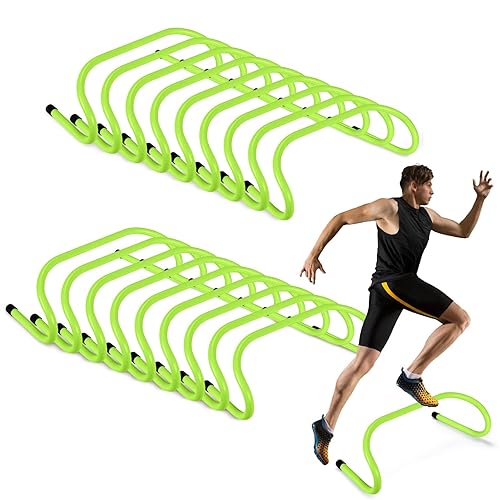
Depth jumps — stepping off a box and immediately jumping as high as possible upon landing — are the gold standard plyometric exercise for maximum jump height development. The pre-loading from the box drop amplifies the stretch-shortening cycle beyond what standard jumps can achieve. Research consistently shows depth jump training produces the largest gains in vertical jump height of any single plyometric exercise.
Box height for depth jumps should be 12-24 inches. Higher is not better. The NSCA recommends that if you cannot jump higher than the box you're stepping off of, the box is too high — the muscles are spending energy absorbing the larger landing impact rather than redirecting it into the jump.
"The depth jump is the single most effective plyometric exercise for vertical jump development when performed correctly. Box height matters. Ground contact time matters. Quality of execution matters more than volume. Five perfect depth jumps outperform fifteen sloppy ones." — NSCA Essentials of Strength Training and Conditioning, 4th edition
What Actually Produces the Gains
Research on vertical jump training identifies three training variables that most reliably predict improvement:
- Intensity over volume. Six to eight high-quality jumps with maximum intent produce more adaptation than twenty moderate-effort jumps. Your nervous system improves by being asked to fire maximally, not repeatedly at a submaximal level. The "jump until you're tired" approach trains endurance, not explosiveness.
- Adequate rest between sets. Jump training requires 2-3 minutes of rest between sets — more than most athletes allow. The energy system that powers explosive jumps (the ATP-phosphocreatine system) takes 2-3 minutes to substantially replenish. Jumping with incomplete recovery is jumping at a reduced intensity, which means reduced adaptation.
- Consistency over 12-16 weeks. The neuromuscular adaptations that produce lasting vertical jump gains require 12-16 weeks of consistent training to fully express. Programs that promise 12 inches in 30 days are selling physiologically impossible timelines. Real gains — 3-6 inches is achievable for most athletes with proper programming over 12-16 weeks — come from sustained, progressive, patient training.
What Doesn't Work (And Why)
Ankle weights for jump training: the added resistance changes your jumping mechanics, training a movement pattern that doesn't exist when the weights are removed. They also load the ankle joint in ways it isn't designed to handle during ballistic movements, creating injury risk without the training benefit. There is no peer-reviewed evidence supporting ankle weights for vertical jump development.
Jump training without strength training: you're trying to develop elastic energy storage in tendons that don't have the muscular support to use it safely or effectively. The gains are real but limited, and the injury risk is disproportionate.
Training to failure on jumps: unlike strength training where failure-set training has legitimate applications, jump training done to failure produces degraded mechanics in later reps, which at best trains poor movement patterns and at worst causes injury. Stop each set while quality is maintained.
A Realistic Timeline
Frequently Asked Questions
How long does it actually take to increase your vertical jump?
For an untrained athlete: 8 weeks of strength work followed by 12–16 weeks of progressive plyometric training to realistically expect 3–5 inches of measured vertical improvement. Athletes who already have a strength base can begin plyometrics sooner and may see larger gains. Programs promising 12 inches in 30 days are selling a physiologically impossible timeline — the neuromuscular adaptations that produce lasting jump gains require 12–16 weeks of consistent training to fully express. The genetic ceiling varies (largely tied to the ratio of fast-twitch to slow-twitch muscle fibers), but almost no one is training close to their ceiling, so almost everyone has meaningful room to improve.
Do I need to lift weights before starting plyometrics?
The NSCA's recommendation is that an athlete should be able to squat 1.5 times their bodyweight before beginning high-intensity plyometric work. This is a performance recommendation as much as a safety one. Tendons and joints that are not prepared for repeated explosive jumping cannot absorb and return elastic energy efficiently — the gains will be muted and the injury risk elevated. If you are a basketball player without a strength training background, spend 8–12 weeks building your squat and single-leg strength (squats, split squats, Romanian deadlifts twice a week, progressing the load) before adding jump-specific work.
How many depth jumps should I do in a workout?
Six to eight high-quality depth jumps with maximum intent per session, with 2–3 minutes of rest between sets. The ATP–phosphocreatine energy system that powers explosive jumps takes 2–3 minutes to substantially replenish, so jumping with incomplete recovery means jumping at a reduced intensity — which means reduced adaptation. Five perfect depth jumps outperform fifteen sloppy ones (per the NSCA Essentials of Strength Training and Conditioning, 4th edition, quoted earlier in this guide). The "jump until you're tired" approach trains endurance, not the rate of force development that actually raises your ceiling.
Do ankle weights increase your vertical jump?
No. There is no peer-reviewed evidence supporting ankle weights for vertical jump development, and there are two reasons to avoid them. First, the added resistance changes your jumping mechanics — you train a movement pattern that does not exist when the weights come off, so the gains do not transfer. Second, ankle weights load the ankle joint in ways it was not designed to handle during ballistic movements, creating injury risk without the training benefit. The same logic kills training to failure on jumps: degraded mechanics in late reps train poor patterns at best and cause injury at worst. Stop while quality is maintained.
What is "ground contact time" and how do I measure it?
Ground contact time is the duration your feet are in contact with the floor between jumps in a plyometric exercise. Shorter contact time means faster elastic energy return — your tendons are functioning more like springs, less like absorbers. For depth jumps, the target is under 0.25 seconds: step off the box, land, and explode upward in roughly a quarter of a second. A smartphone slow-motion camera (most phones default to 240 fps) gives you objective feedback frame-by-frame on whether your training is improving reactive ability. Tracking it over a 12-week block tells you what the scale and the vertec cannot: whether your nervous system is actually adapting.
An untrained athlete who commits to 8 weeks of strength work followed by 12-16 weeks of progressive plyometric training can realistically expect 3-5 inches of measured vertical improvement. Athletes who already have a strength base can begin plyometrics sooner and may see larger gains. The ceiling for individual improvement varies with genetics — specifically, the ratio of fast-twitch to slow-twitch muscle fibers, which is largely inherited. But almost no one is training close to their genetic ceiling, which means almost everyone has meaningful room to improve regardless of where they're starting.
Related guides
Bu analizi beğendiniz mi?
Bunun gibi daha fazla içeriği doğrudan gelen kutunuza alın.