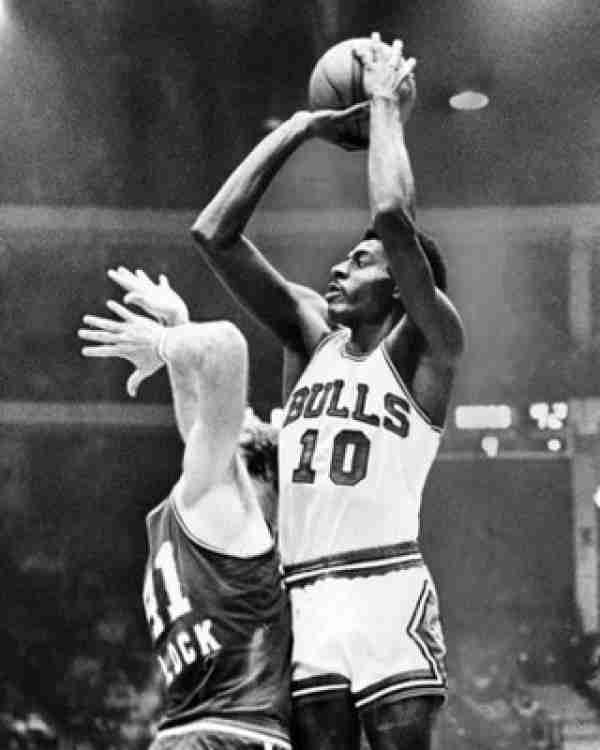
Dick Barnett had a shooting form unlike anything the NBA had seen: as he released the ball, both feet kicked back and upward toward his backside, somehow producing one of the most reliable jump shots of the late 1960s and early 1970s. He called it "Fall back, baby," and opponents called it unguardable. Richard Barnett was born October 2, 1936, in Gary, Indiana, starred at Tennessee State University, and was drafted by the Syracuse Nationals in 1959 before the Knicks acquired him in 1965. In New York, Red Holzman's system rewarded players who made the right play, and Barnett fit precisely — a shooting guard who could defend, cut, and score efficiently without demanding the ball. He started both the 1970 and 1973 championship backcourts alongside Walt Frazier, averaging 15.3 points during the 1969-70 title season. Barnett retired after 1973-74 with two championships in nine Knicks seasons and later earned a doctorate from Fordham. His #12 was retired in 1990.
A Long Road to the Garden
Richard Barnett was born October 2, 1936, in Gary, Indiana. He starred at Tennessee State University — a historically Black institution that produced multiple NBA players during an era when many programs remained segregated — before being drafted by the Syracuse Nationals in 1959. He played for Syracuse, the Los Angeles Lakers, and the Syracuse/Philadelphia franchise before the Knicks acquired him in 1965. By then, Barnett was 29 years old and had spent six seasons developing the complete professional's toolkit.
In New York, Barnett found the environment that matched his skills precisely. Holzman's system rewarded players who made the right play, moved without the ball, and accepted their role within the team architecture. Barnett was built for exactly this — a shooting guard who could defend, cut, and produce efficiently from his spot without demanding the ball.
The Championship Knick
In both the 1970 and 1973 championships, Barnett was the starting shooting guard alongside Walt Frazier in what became one of the most defensively capable backcourts in league history. He guarded the opposition's second-best perimeter player while Frazier handled the primary threat, freeing Clyde to roam, gamble for steals, and apply the pressure that generated turnovers. Barnett's reliability on this end allowed the scheme to function.
Offensively, his 'fall back, baby' jumper was a consistent weapon that defenses had no clean answer for. He averaged 15.3 points per game during the championship season of 1969-70 — productive numbers for a player whose primary responsibility was defensive. He retired after the 1973-74 season, having won two championships in nine Knicks seasons.
After Basketball
Barnett pursued academia after retiring, earning a doctorate from Fordham University and teaching courses on sport and society. His intellectual engagement with the game he played — the broader social and historical contexts of basketball — mirrors the thoughtfulness he brought to his professional career. He was, in the fullest sense, one of the championship Knicks' most complete individuals.
Why the Knicks Retired #12
Dick Barnett's #12 was retired in 1990, seventeen years after his final championship season. The delay does not diminish the recognition — it simply reflects the difficulty of scheduling ceremony for a player whose contributions were always more visible in the winning than in the headlines. Two championships. Nine Knicks seasons. A doctorate from Fordham. A shooting form that no one has replicated and no one has forgotten. Fall back, baby.
Bu analizi beğendiniz mi?
Bunun gibi daha fazla içeriği doğrudan gelen kutunuza alın.