Why the Lakers Retired James Worthy's #42: Big Game James and the Showtime Finishing Touch
James Worthy's 36-16-10 triple-double in Game 7 of the 1988 Finals remains one of the greatest closeout performances in NBA history. His #42 represents clutch excellence across 12 Showtime seasons.
Bu makale İngilizceden otomatik olarak çevrilmiştir.View original
Diosh Lequiron
··12 dk okuma·
M
Share
Bu sayfa ortaklık bağlantıları içermektedir. Bu bağlantılar üzerinden satın alma yaparsanız, size ek maliyet olmaksızın komisyon kazanabiliriz. As an Amazon Associate I earn from qualifying purchases.
The Los Angeles Lakers retired James Worthy's #42 on December 10, 1995, because he embodied the franchise's championship DNA. Selected first overall in the 1982 Draft, Worthy played twelve seasons exclusively with the Lakers and won championships in 1985, 1987, and 1988, a top-three contributor in each title run. As the Showtime offense's primary wing finisher, his spinning layup off the break — absorbing contact, finishing with either hand — was a shot defenders knew was coming and could not stop. "Big Game James" was an understatement: his career playoff scoring average of 21.1 points jumped 3.5 points from the regular season, and across 52 Finals games he averaged 22.0 points on 54.4% shooting without a bad series. In Game 7 of the 1988 Finals against Detroit he produced 36 points, 16 rebounds, and 10 assists — the most complete statistical performance in any Finals Game 7 — and was named Finals MVP. That reliability is why #42 hangs in the rafters.
The #1 Pick Who Delivered
Worthy was selected first overall in the 1982 Draft out of North Carolina, where he'd won an NCAA Championship under Dean Smith. In that title game against Georgetown, Worthy scored the go-ahead basket in the final minute — a moment of clutch performance that wasn't a glimpse of things to come. It was the things to come.
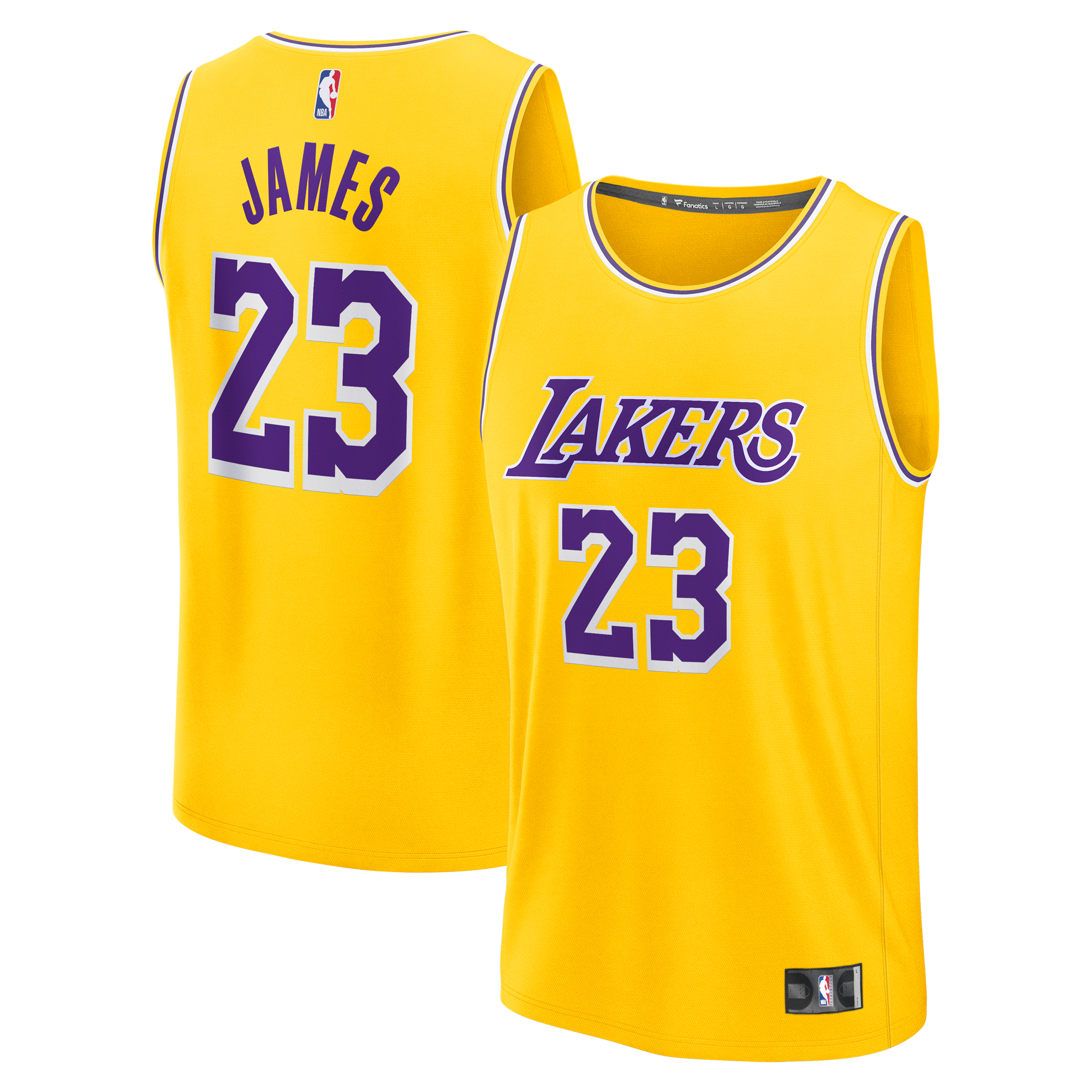
Men's LeBron James Gold Los Angeles Lakers Fast Break Replica Jersey - Icon Edition
He stepped into a Lakers team that had just won the championship. He contributed immediately: 13.4 points in 77 games, an athletic wing presence that the Showtime offense desperately needed. His speed at 6'9" — unusual for a power forward — made him the perfect complement to Magic's passing and Kareem's half-court dominance.
The Finisher
In the Showtime offense, Worthy's role was specific and devastating: primary wing finisher on the fast break. Magic grabbed a rebound, pushed upcourt, and found Worthy streaking on the wing or filling the lane. His combination of speed, leaping ability, and body control allowed him to finish plays that other forwards simply could not.
James Worthy Los Angeles Lakers Autographed Wilson Authentic Series Indoor/Outdoor Basketball with "3x Champ" Inscription
His signature: a spinning layup off the break — absorbing contact, adjusting mid-air, finishing with either hand. Defenders knew it was coming. They couldn't stop it. The body control required to execute that move at full speed, through contact, on a consistent basis was genuinely rare. Worthy didn't just finish fast breaks. He made fast breaks an art form.
Worthy's career regular-season average: 17.6 points on 54.2% shooting. His career playoff average: 21.1 points. (Basketball Reference) That 3.5-point jump from regular season to playoffs wasn't coincidence. It was character. The bigger the game, the better James Worthy played.
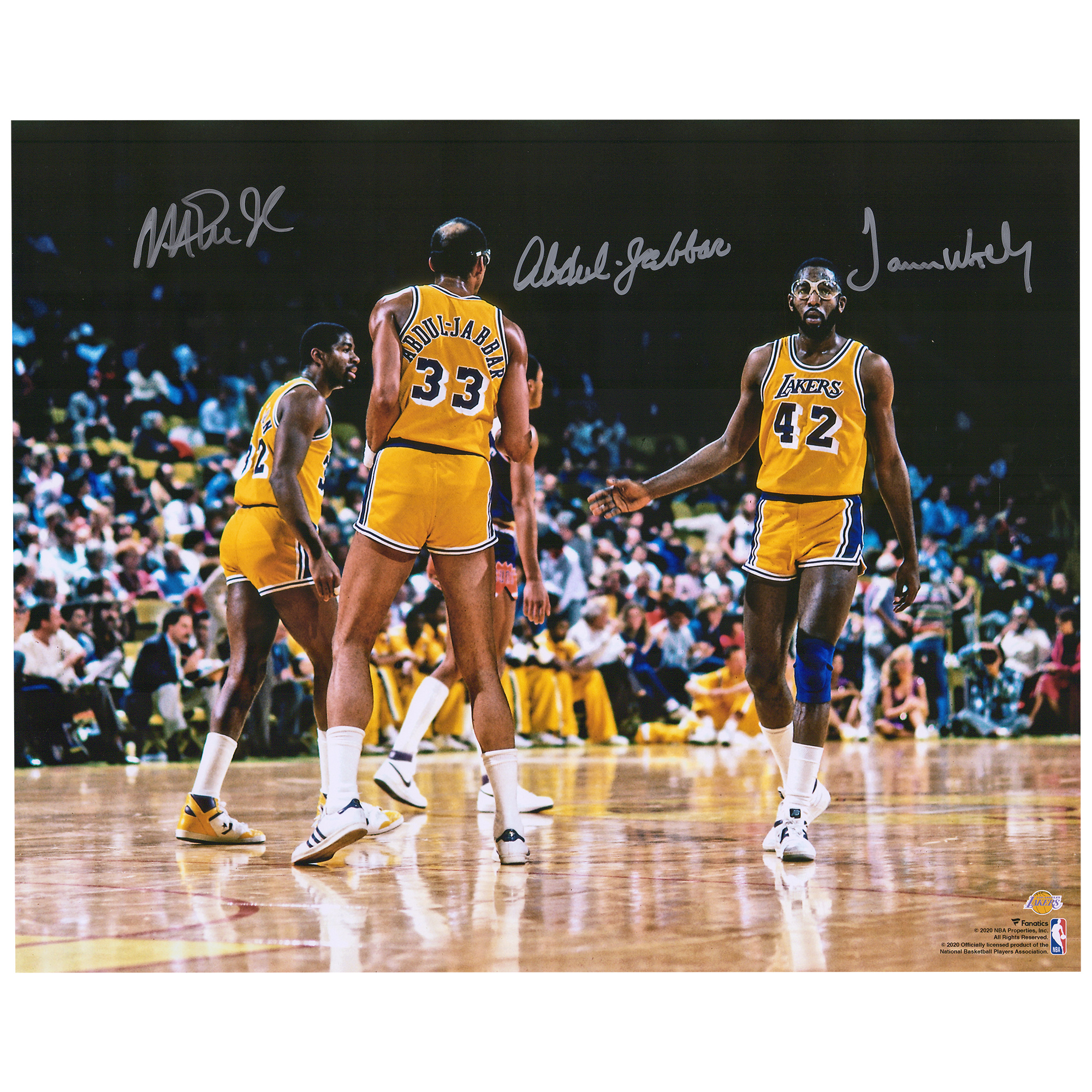
James Worthy Kareem Abdul-Jabbar & Magic Johnson Los Angeles Lakers Multi-Signed 16" x 20" Photograph
The 1988 Finals: The Masterpiece
The 1988 Finals against Detroit were Worthy's defining series. The Lakers' quest for back-to-back titles against the Bad Boys required seven games of the most physically demanding basketball of the Showtime era. And in the game that mattered most — Game 7, at home, for the championship — Worthy produced a performance for the ages.
Kareem Abdul-Jabbar, Magic Johnson & James Worthy Los Angeles Lakers Autographed Wilson Authentic Series Indoor/Outdoor Basketball
36 points on efficient shooting. 16 rebounds — more than any Lakers big man. 10 assists — playmaking that you don't expect from a power forward, especially not in a Game 7. Lakers 108, Pistons 105. Worthy was named Finals MVP.
The image of Worthy celebrating — arms raised, exhausted, triumphant — is one of the defining frames of the Showtime era. He didn't just close the series. He authored the exclamation point.
James Worthy Los Angeles Lakers Autographed 8" x 10" 1984 NBA Finals Dunk Photograph
Three Championships, Zero Bad Series
Worthy won championships in 1985, 1987, and 1988. In each title run, he was a top-three contributor. Across 52 career Finals games: 22.0 points on 54.4% shooting (Basketball Reference). He never had a bad Finals series. Not one. The consistency was almost mechanical — regardless of opponent, regardless of pressure, Worthy delivered his best precisely when it mattered most.
He played 12 seasons exclusively with the Lakers, retiring after the 1993-94 season. Knee injuries shortened his final years, but his peak — roughly 1985 through 1991 — was sustained excellence as both a scorer and a two-way player.
James Worthy Los Angeles Lakers Autographed Wilson Authentic Series Indoor/Outdoor Basketball with "HOF 2003" Inscription
Why the Lakers Retired #42
The Lakers retired Worthy's #42 on December 10, 1995, because he embodied the franchise's championship DNA. First overall pick who exceeded expectations. Showtime Laker who won three rings. Finals MVP who produced the most complete Game 7 in history. And twelve years of loyalty — one franchise, one jersey, one unwavering commitment.
Josh Hart Los Angeles Lakers 2017-18 Panini Immaculate Collection Jersey Number Tri-Color Relic #JP-JHT #60/75 Card
"Big Game James" wasn't just a nickname. It was a guarantee. When the Lakers needed a bucket in the fourth quarter, when the series was on the line, when the championship hung in the balance, James Worthy delivered. That reliability, in the highest-stakes moments, across a twelve-year career — that's why #42 hangs in the rafters.
Scottie Pippen is the greatest example in basketball history of what it means to be exactly what your team needs. Without Pippen's #33, there is no second three-peat, no dynasty mythology, and arguably no six championships at all.
October 1, 1994: the Bulls retire #23 for the first time. Eighteen months later, Jordan faxed two words and they took it back down. The story of six championships, two three-peats, and the number that bent the gravity of basketball around itself.
Bob Love was the Chicago Bulls' first great offensive player — a jump-shooting artist who averaged 21 points a game and made three All-Star teams. But the story of why the Bulls retired his #10 has as much to do with what happened after basketball as during it.