May 31, 1999. Portland. Western Conference Finals, Game 2. The Spurs trailing by one point with seconds left, Sean Elliott catching a pass just above the three-point line on the left sideline with his right heel barely behind the arc. He rises, releases, and the ball arcs through the net. The Rose Garden goes silent. San Antonio goes electric. The shot that saved the Spurs' season — the Memorial Day Miracle — is one of the most iconic moments in franchise history.
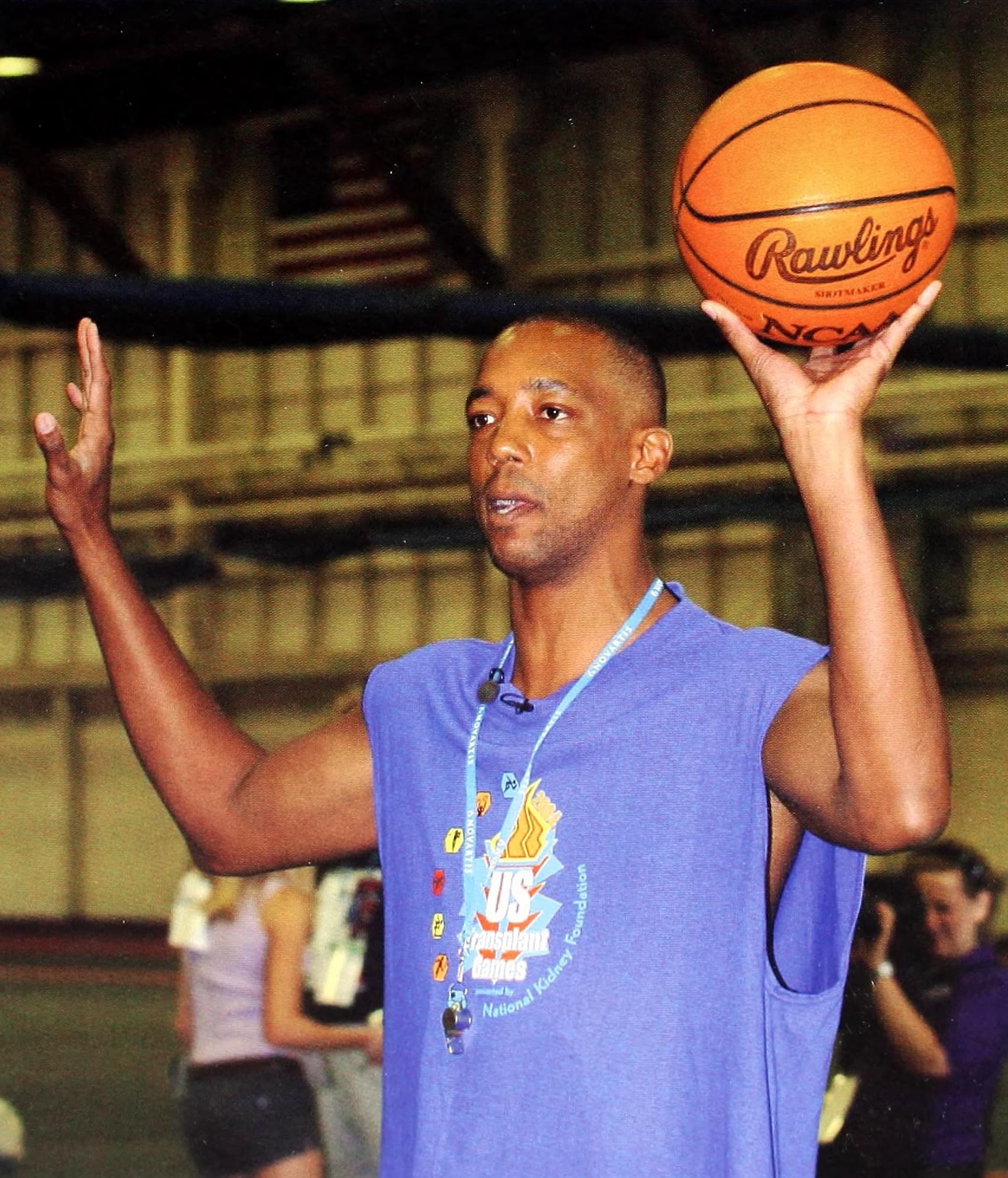
What makes Elliott's legacy remarkable is that he achieved it under impossible circumstances. He played the 1998-99 season with a degenerating kidney, received a kidney transplant from his brother Noel in April 1999, and then returned to professional basketball the following season — one of the first major athletes to play in a professional sports league after a kidney transplant. Sean Elliott was not just a Spur. He was a story about what human resilience looks like when it wears a basketball uniform.
The Arizona Pedigree and Early Career
Elliott arrived in San Antonio as the third overall pick in the 1989 NBA Draft, fresh off a Player of the Year award at the University of Arizona. He was a smooth small forward with an advanced offensive game — versatile enough to play on or off the ball, reliable enough to be a second or third option on a playoff team. His first stint with the Spurs (1989-1993) established him as a solid professional, but the franchise traded him to Detroit in 1993 as part of a roster rebuild.
The Detroit years were productive but not transformative. Elliott averaged 16 points per game in his best season with the Pistons, establishing himself as a starter-caliber player. When the Spurs brought him back in a trade for Dennis Rodman in 1994, they were getting a more complete player — one who had spent time in a different system and returned to San Antonio with sharper instincts and greater appreciation for what he had.
The Two-Tour Spur and His Defining Role
Elliott's second stint with the Spurs was where his legacy crystallized. Playing alongside David Robinson and then alongside the young Tim Duncan, he found a role that suited him perfectly: the reliable perimeter scorer who could create his own shot and hit the big one when it mattered. He was not the Spurs' best player in those years. He was, on many nights, their most important one.
His ability to work off screens, his mid-range reliability, and his willingness to take contested shots in late-game situations made him invaluable. Gregg Popovich trusted him with the ball in critical moments because Elliott had proven, repeatedly, that he could handle that pressure. In an era before analytics, Elliott was the kind of player coaches valued for reasons that showed up in winning percentage rather than box scores.
The Memorial Day Miracle
The 1999 Western Conference Finals against the Portland Trail Blazers was a war. The Spurs had survived the first round and the second round through grit and defensive excellence, but Portland presented a genuine challenge with Rasheed Wallace, Damon Stoudamire, and a deep supporting cast. Game 2 in Portland was slipping away in the final seconds when the Spurs ran a play for Elliott in the corner.
The catch-and-shoot from the left corner sideline three-pointer, with his heel brushing the line and Rasheed Wallace's hand in his face, represents everything great about clutch basketball: the shot selection, the execution, the composure. Elliott hit it cleanly, sending the game to the Spurs and ultimately sending San Antonio to the NBA Finals, where they defeated the New York Knicks for their first championship. Without that shot, the 1999 Spurs might be remembered as a talented team that fell short. With it, they are champions.
Why the Spurs Retired #32
The Spurs retired Sean Elliott's #32 in 2005, a recognition of a career that combined consistent excellence with one transcendent moment and an inspiring off-court story. Elliott gave San Antonio eleven seasons across two stints, averaging 14.9 points per game for his career while being the kind of teammate and professional that championship organizations are built around.
His kidney transplant and return to professional basketball elevated him beyond athletics. He showed that human beings can overcome the kind of adversity that has nothing to do with an opponent or a game clock. #32 belongs in the rafters because Sean Elliott, over two stints and one unforgettable shot, gave San Antonio everything he had — and then, when everything he had was threatened, he found more.
Bu analizi beğendiniz mi?
Bunun gibi daha fazla içeriği doğrudan gelen kutunuza alın.