In basketball, the point guard sets the tone. He dictates pace, distributes the ball, and communicates what a team is about before anyone else touches it. For twelve seasons, Kevin Johnson told the world that the Phoenix Suns were explosive, fearless, and impossible to contain. His first step was among the quickest ever seen at the position. His floater was a work of art. And his competitive drive — the kind that refused to acknowledge the word "enough" — made him the heartbeat of the most exciting Suns teams Phoenix had ever seen.
KJ, as he was universally known, arrived in Phoenix via a trade from Cleveland that cost the Suns almost nothing and gave them everything. He stayed for twelve years. He made the All-Star team three times. He was there the night the Suns came within one shot of an NBA championship. And the number 7 he wore on his back became synonymous with what Phoenix basketball aspired to be: fast, intelligent, and relentlessly competitive.
From Sacramento to the Valley: A Trade That Made History
Kevin Johnson was born March 4, 1966, in Sacramento, California — a city that would later claim him as its mayor, but which first produced him as one of the most gifted point guard prospects of his generation. He developed at the University of California, Berkeley, where four seasons under coach Bob Campanale established him as an elite collegiate guard averaging over 14 points and 8 assists per game. The Cleveland Cavaliers selected him seventh overall in the 1987 NBA Draft.
The trade to Phoenix in 1988, which sent Johnson along with Mark West and Tyrone Corbin to the Suns in exchange for Larry Nance and Mike Sanders, is one of the most consequential deals in franchise history. Johnson arrived in the desert as a 22-year-old with an extraordinary first step and the basketball intelligence to use it mercilessly. Within his first two seasons, he had made the All-Star team and established himself as one of the premier point guards in the Western Conference.
The Art of the First Step: KJ at His Peak
What made Kevin Johnson special was the combination of speed, body control, and finishing ability that no defender of his era had a reliable answer for. His first step off a jab or shot fake was so quick that even the best defensive point guards in the league found themselves half a step behind before the play developed. And once he was in the paint — which happened, it seemed, on every possession where he chose to attack — he was nearly impossible to stop.
The signature weapon was his floater: a shot released high above the defense with a touch so soft it seemed to defy physics. Backed by players like Dan Majerle and later Charles Barkley, Johnson operated in a system that maximized his gifts — the pick-and-roll was his cathedral, and he was its high priest. He averaged 17.9 points and 9.1 assists per game across twelve seasons in Phoenix, numbers that place him in the company of the finest point guards of his era. Three All-Star selections — 1990, 1991, and 1994 — confirmed what Suns fans already knew.
The 1993 Finals and the Near Miss
The pinnacle of Johnson's playing career came during the Suns' 1993 championship run alongside Charles Barkley. Phoenix finished 62-20, the best record in the NBA, and KJ was a co-architect of everything that made that season special. In the playoffs, he performed at his absolute best — driving defenses to the breaking point, distributing the ball to Barkley and Majerle with precision, and scoring when the Suns needed it most.
The NBA Finals against Michael Jordan's Bulls was a six-game series that came down to John Paxson's three-pointer in the final seconds of Game 6. Johnson's performances throughout that series were among the most competitive of his career — including a crucial overtime performance in Game 3 that gave Phoenix hope the series had turned. The championship remained one shot away. He never got another chance quite like that one. But for one extraordinary season, he and Barkley gave Phoenix something the franchise had never had: a legitimate reason to believe the title was theirs to lose.
Why the Suns Retired #7
Kevin Johnson gave Phoenix twelve seasons of excellence, three All-Star appearances, and the kind of franchise-defining point guard play that most teams never get to experience. He was the face of the Suns through their transition from good team to legitimate contender, the player that opponents schemed to stop and that fans came to the arena to watch. The number 7 is retired not because of longevity alone — though twelve seasons with one franchise is extraordinary — but because of what those twelve seasons represented.
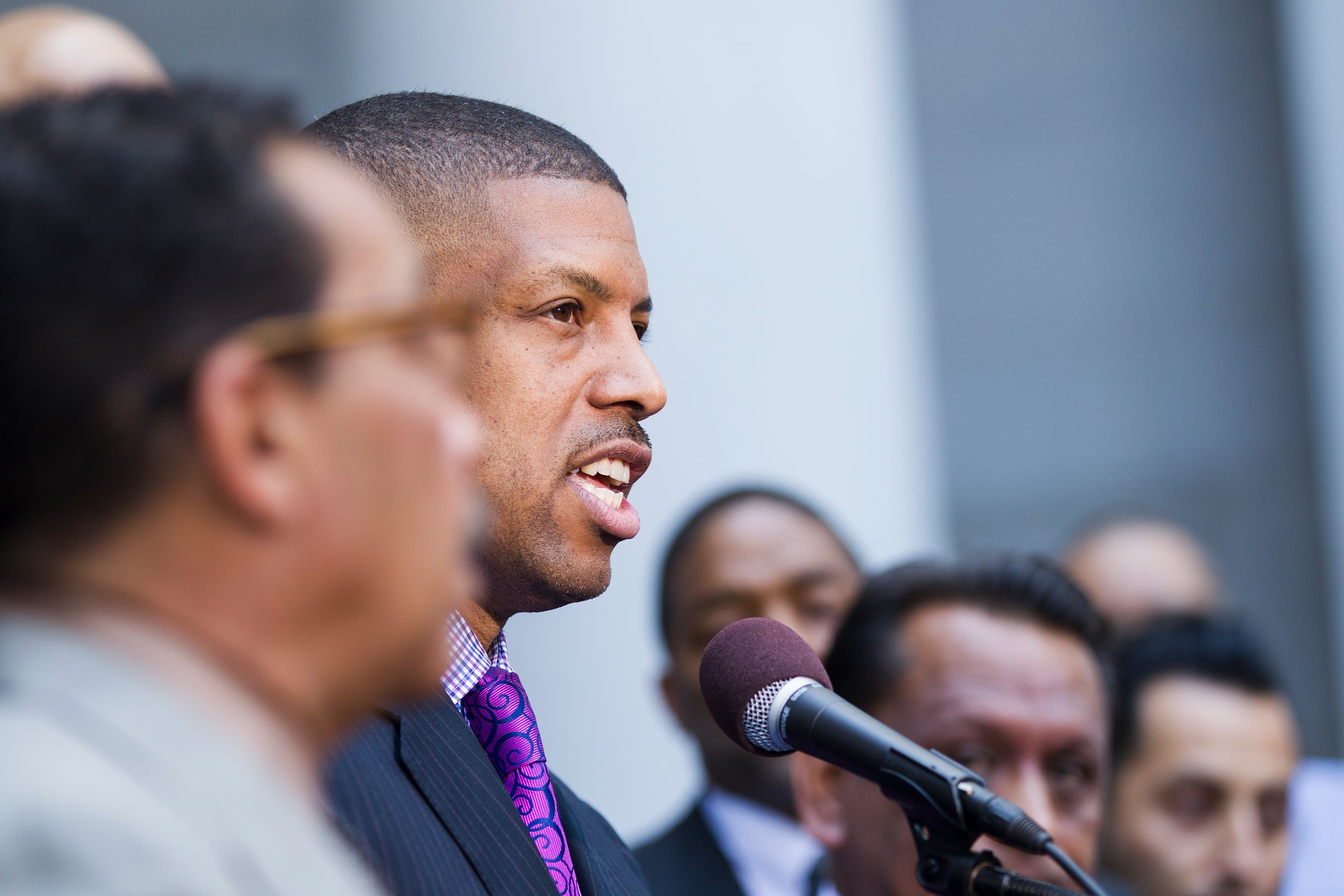
He represented Phoenix as authentically and completely as any player in franchise history. He ran the offense. He set the tone. He refused to let the Suns be ordinary when they could be extraordinary. After retirement, he returned to his hometown of Sacramento and served two terms as mayor — a civic leader who cared about communities the way he cared about winning basketball games. The Suns recognized what they had in KJ while he was playing, and they honored it correctly by retiring his number. #7 belongs in the rafters because Kevin Johnson belongs in the conversation about the greatest players ever to represent the Phoenix Suns — and that conversation begins and ends with him in it.
Bu analizi beğendiniz mi?
Bunun gibi daha fazla içeriği doğrudan gelen kutunuza alın.