Diese Seite enthält Affiliate-Links. Wir erhalten möglicherweise eine Provision, wenn Sie über diese Links kaufen, ohne zusätzliche Kosten für Sie. As an Amazon Associate I earn from qualifying purchases.
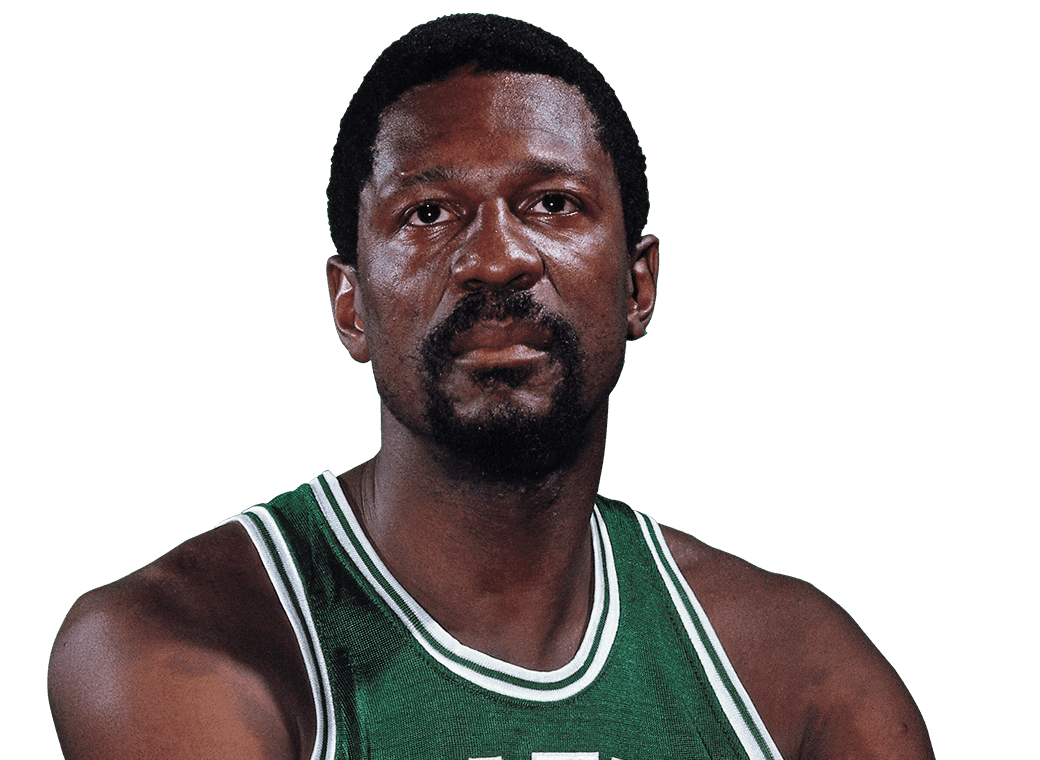
April 29, 1969. Game 7 of the NBA Finals, the Forum in Los Angeles. The Lakers had hung thousands of balloons in the rafters, ready to drop them the moment they finally beat Boston, and a victory script had been left on every press-row seat. Bill Russell saw the balloons during warmups and said almost nothing. He was thirty-five years old, in his final season, coaching the team he was about to lead onto the floor and playing center against Wilt Chamberlain on the other end. Boston won by two. The balloons never fell. Russell walked off the Forum floor with his eleventh championship in thirteen seasons and then, quietly, without a press conference or a farewell tour, retired. He had never been interested in the goodbye. He was interested in the winning, and no one in the history of the sport has ever done more of it.
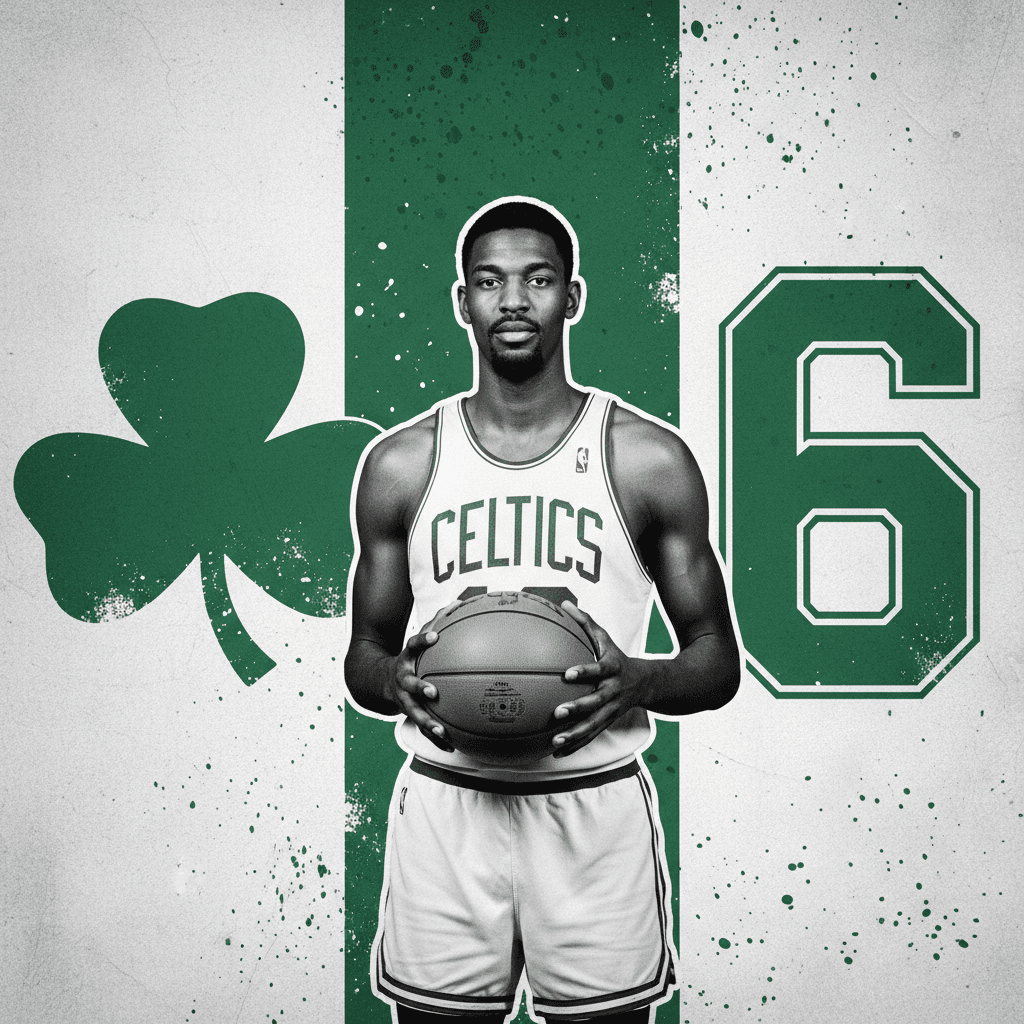
Decades later, in August 2022, the NBA retired #6 across every team in the league — the second time in history a single number was given that league-wide honor. By then the man who wore it was gone, having died that July at eighty-eight. The number went up in arenas in cities Russell never played in, worn by players who were not born when he stopped playing. The story of #6 is not really the story of a number at all. It is the story of what winning looks like when it is built on something other than scoring.
Two Titles, One Gold Medal, and a Trade That Built a Dynasty
Before Boston, there was San Francisco. William Felton Russell arrived at the University of San Francisco as a gangly, raw center and left it as the most disruptive defensive force the college game had seen. He led the Dons to back-to-back NCAA championships in 1955 and 1956, a 55-game winning streak built almost entirely on the radical premise that a center could win games without scoring — by blocking shots, controlling the glass, and frightening shooters out of their own offense. In the summer of 1956 he captained the United States Olympic team to a gold medal in Melbourne. He had won at every level he had ever played, and he had done it the same way each time.

Red Auerbach understood what that meant before almost anyone else did. The Boston Celtics did not have a high enough draft position to take Russell in 1956, so Auerbach traded Easy Ed Macauley — an established All-Star and a Boston favorite — along with the draft rights to Cliff Hagan, to the St. Louis Hawks for the rights to draft Russell. It looked, at the time, like a gamble on a player who could not shoot. It was, in retrospect, the single most consequential personnel decision in the history of American professional sports. Auerbach was not adding a scorer. He was installing the foundation of a defense that would not lose for more than a decade.
The Center Who Changed What Defense Was
When Bill Russell entered the league, blocking a shot was considered a foul more often than a skill, and rebounding was something tall men did by accident. Russell turned both into a science. He did not swat shots into the third row to hear the crowd react; he tipped them to himself or to a teammate, turning a defensive stop into the start of a fast break in a single motion. He studied the angles of where missed shots would fall and arrived there before the ball did. He read an offense the way a chess player reads a board — eliminating options before they were even attempted, positioning himself so that the most dangerous pass was the one no one dared to throw.

His career rebounding average sat at 22.5 per game, a figure that belongs to a different era of the sport and will almost certainly never be approached again. But the rebounds were only the visible part. The invisible part was the way an entire opposing offense reshaped itself around the knowledge that Russell was waiting at the rim. Drives were abandoned. Shots were rushed. Layups that would have been automatic against any other team were left short or banked too hard. He defended not just the man in front of him but the idea of attacking the basket at all.
Eleven Rings in Thirteen Years
The numbers of the dynasty are so large they stop feeling real. Eleven NBA championships in thirteen seasons. The first arrived in 1957, Russell's rookie year, decided in a double-overtime Game 7 against the same St. Louis Hawks that had traded him away — a fitting opening note for a career built on making other teams regret their decisions. Then came a brief interruption, and after it, the streak that defines him: beginning in 1959, the Celtics won eight consecutive titles, a run of sustained dominance that no franchise in any major North American sport has ever matched.

Inside that streak were the championships that defined an era. The 1962 Finals went the full seven games against the Lakers, settled in overtime after Frank Selvy missed a baseline jumper at the end of regulation that would have won Los Angeles the title. The 1964 Celtics may have been the most complete defensive team Russell ever anchored. By 1965, the dynasty had become so routine that the drama moved to the conference finals, where John Havlicek's steal of an inbounds pass against Philadelphia produced one of the most famous radio calls in sports history. Through all of it, Russell was the constant — the one player on the floor in every Game 7 the Celtics played, and they won every single one.
The Rivalry That Measured Him
You cannot understand Bill Russell without understanding Wilt Chamberlain, and you cannot understand the difference between dominating a sport and winning at it without understanding the two of them together. Chamberlain was bigger, stronger, and statistically overwhelming — he scored 100 points in a game, averaged 50 a season, and put up rebounding and scoring numbers that often dwarfed Russell's own. On most nights, the box score said Chamberlain won. The standings, almost always, said Russell did.

They met in the playoffs again and again, and the pattern rarely changed: Chamberlain filled the stat sheet, and Russell's team advanced. It was the clearest case study the sport has ever produced of the gap between individual brilliance and collective victory. Russell did not need to outscore Chamberlain. He needed to make the four other men on the floor better than the four around Wilt, and he needed to take the one shot, grab the one rebound, or block the one attempt that decided a close game. He did it for more than a decade. The respect between the two men was real and lasting, but the verdict of those series was never in doubt.
The First Black Head Coach in American Pro Sports
In 1966, Red Auerbach retired from coaching and named Russell as his successor. With that, Russell became the first Black head coach in a major North American professional sport — a distinction that reached far beyond basketball, into the center of the American civil rights story unfolding around him. He did not treat it as ceremonial. He coached and played at the same time, the only player-coach in NBA history to win a championship, and he won two of them: the title in 1968, and then the improbable final run in 1969, when an aging Celtics team that had finished fourth in the regular season went into the Forum and refused to let the balloons fall.
To do this while also coaching — managing rotations, drawing up plays in huddles, and substituting himself in and out of the most important games of the year — is a feat that has no real parallel in modern professional sport. Russell carried the franchise on the floor and ran it from the bench at the same time, and he did not lose when it mattered.
More Than Basketball
Russell's relationship with Boston was never the simple romance the city's other champions enjoyed. He endured racism that never matched the hero worship the town gave its white stars, and he refused to perform gratitude for an audience he felt had not earned it. He marched, he spoke, and he stood with Muhammad Ali and other athletes at moments when doing so carried real cost. He once described himself as playing for the Celtics, not for Boston — a distinction the city took decades to fully understand, and one Russell never softened to make others comfortable.

"The most important measure of how good a game I played was how much better I'd made my teammates play." — Bill Russell
That sentence is the whole philosophy in one line. Russell's greatness was never about what he accumulated. It was about what he enabled — the open shot a teammate got because Russell's screen was set perfectly, the easy basket created by a blocked shot turned into a fast break, the confidence five other men played with knowing the rim behind them was guarded. The civil rights leadership and the basketball were never separate things. Both came from the same refusal to accept the role that others had written for him.

The Numbers Behind the Number
- 11 NBA championships in 13 seasons (1957, 1959–1966 eight in a row, 1968, 1969) — the most of any player in NBA history
- 5× regular-season Most Valuable Player — one of only a handful ever to reach that mark
- 22.5 rebounds per game for his career, a figure from another era of the sport
- 12× NBA All-Star
- The only player-coach in NBA history to win a championship — and he won two
- First Black head coach in any major North American professional sport (1966)
- Back-to-back NCAA champion at the University of San Francisco (1955, 1956) and 1956 Olympic gold medalist
- Undefeated in his career in winner-take-all Game 7s
- The NBA Finals Most Valuable Player award now bears his name
- Naismith Memorial Basketball Hall of Fame; #6 retired league-wide by the NBA in 2022
None of these lines captures the thing itself. Russell's scoring was modest by the standards of a marquee center; he was never the leading scorer on his own team for most of his career, and he did not care. He measured himself in titles and in stops, in the quiet arithmetic of a teammate getting a better shot because of something he had done a half-second earlier. The Finals MVP award carrying his name is the league's permanent admission that the most valuable thing a player can do in the championship round is the thing Russell did better than anyone: win.
Why #6 Hangs Forever
Boston raised Bill Russell's #6 to the Garden rafters long before the rest of the league caught up. For decades it hung there alongside the other numbers that tell the story of what a Celtic is supposed to be — names that defined the franchise across generations. Then, in 2022, the NBA did something it had only done once before: it retired the number everywhere, in every building, for every team. No player in the league will ever wear #6 again.

The reasoning was simple, and it was the same reasoning Boston had reached half a century earlier. Some numbers are not about honoring a single player. They are about acknowledging that something happened in the sport that will never happen again — and that the number which witnessed it deserves to be treated accordingly. Eleven championships in thirteen years. Eight in a row. A perfect record in elimination Game 7s. A man who coached and won at the same time, who carried the weight of being first while never once losing the thing he was there to do.
The number hangs in Boston in the same rafters as Bob Cousy's #14, John Havlicek's #17, and Larry Bird's #33 — each its own chapter in what makes the Boston Celtics the most decorated franchise in the sport. None of them, alone, is the franchise. Together they are its spine. And #6 is the number that spine was built around — the one that turned a team into a dynasty, and a dynasty into the definition of what winning is supposed to mean.
Gefällt Ihnen diese Analyse?
Erhalten Sie weitere Analysen wie diese direkt in Ihr Postfach.