Diese Seite enthält Affiliate-Links. Wir erhalten möglicherweise eine Provision, wenn Sie über diese Links kaufen, ohne zusätzliche Kosten für Sie. As an Amazon Associate I earn from qualifying purchases.
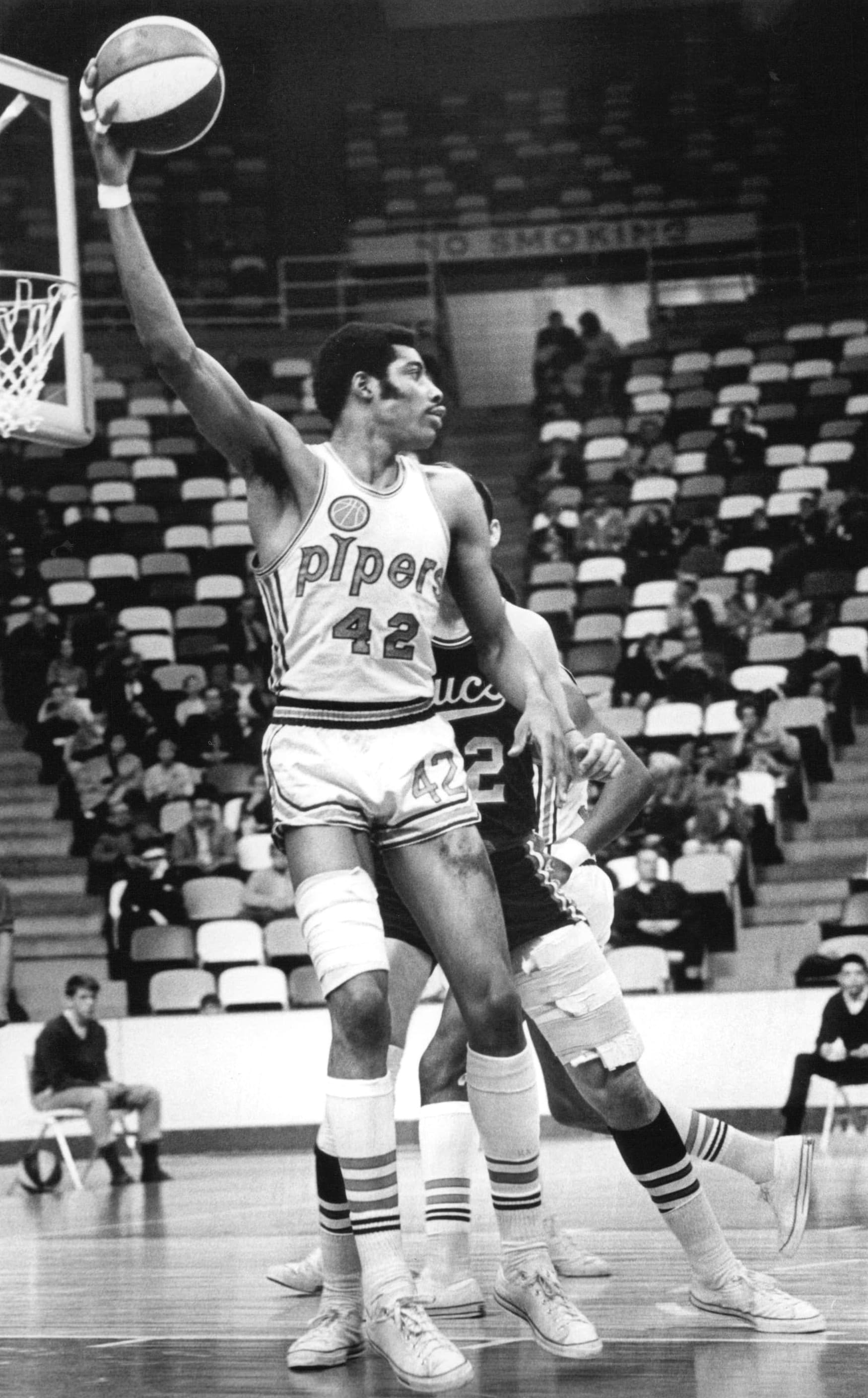
The Phoenix Suns retired Connie Hawkins's number 42 to honor a story of injustice and resilience no other retired number in franchise history can match. "The Hawk" was a 6'8" forward from Bedford-Stuyvesant, Brooklyn, who could handle like a guard and hang in the air while defenders landed. Caught on the periphery of a 1961 gambling scandal despite doing nothing wrong, he was blacklisted by the NBA between ages 19 and 26. He dominated the ABA, winning the 1968 championship and MVP with the Pittsburgh Pipers, then filed a lawsuit, settled for $1.3 million, received a formal apology, and was reinstated at age 27. Phoenix selected him in the 1969 expansion, and even past his physical prime he made the All-Star team in each of his first four NBA seasons, averaging over 20 points and leading Phoenix to the 1970 playoffs. Number 42 acknowledges what was taken and what he still gave.
Brooklyn's Gift: The Years Before the NBA
Cornelius Lance Hawkins was born July 17, 1942, in the Bedford-Stuyvesant neighborhood of Brooklyn, New York — one of the most fertile grounds for basketball talent in the history of the sport. On the playgrounds of Bed-Stuy, Hawkins developed gifts that observers from that era consistently described as unprecedented: a 6'8" forward who could handle the ball like a guard, pass from impossible angles, and hang in the air while the defense landed before finishing with a touch that seemed to defy physics. Those who played against him on the playgrounds — many of whom became NBA players themselves — said he was the best they had ever seen.
He briefly attended the University of Iowa before being caught in the periphery of a 1961 gambling scandal. He had done nothing wrong — he had not bet on games, he had not taken money to affect outcomes, he had simply known people who were involved in gambling. The NBA blacklisted him anyway, robbing him of the professional years between ages 19 and 26 when an athlete is typically at the peak of his physical powers.

The ABA Years and a Lawsuit That Changed Everything
Hawkins played in the short-lived American Basketball League and then dominated the ABA from 1967 to 1969, winning the ABA championship with the Pittsburgh Pipers in 1968 and being named the league's MVP. The quality of his play — even after years away from elite competition — was so obviously transcendent that the injustice of his NBA banishment became impossible to ignore. He filed a lawsuit against the NBA in 1969, settled for $1.3 million, received a formal apology from the league, and was reinstated at age 27.

Phoenix selected him in the 1969 expansion, and the Suns got a first-look at what the basketball world had been missing. Hawkins made the All-Star team in each of his first four NBA seasons, averaging over 20 points per game as a Sun and leading Phoenix to the playoffs in 1970. Even diminished by the stolen prime years, even playing at 27 when he should have been approaching 30 in terms of NBA experience, he was an All-Star. The mind cannot fully process what he might have been at 21 or 23 or 25.

Why the Suns Retired #42
Retiring Connie Hawkins's #42 is one of the most meaningful acts in Phoenix Suns franchise history, because it acknowledges something beyond statistics. It says: we see what was taken from this man. We see that he still gave us something extraordinary despite what was taken. We see that his gifts — the hang time, the touch, the basketball intelligence that those who witnessed it called generational — belonged in a professional basketball arena, and that the years he spent fighting to get there were years the NBA owes him and cannot repay.
Hawkins was inducted into the Naismith Memorial Basketball Hall of Fame in 1992 and named to the NBA's 50th Anniversary Team in 1996. He passed away in October 2017, but his legacy — both as a basketball player and as a man who fought an institutional injustice and won — endures. #42 at Footprint Center is part of that legacy. It always will be.

Gefällt Ihnen diese Analyse?
Erhalten Sie weitere Analysen wie diese direkt in Ihr Postfach.