
2006
Miami Heat
Series Flow
4
Wins
2
Losses
Regular Season
52–30
Win–Loss
Playoff Record
16–7
Win–Loss
Finals
4–2
vs Dallas Mavericks
Finals MVP
Wade
Dwyane
Miami Heat
52–30Dallas Mavericks
60–22 (Regular Season)The 2005-06 Dallas Mavericks entered the Finals as the favorites — a 60-win team built around Dirk Nowitzki's unique offensive game, with Jason Terry as a dangerous secondary scorer and a defensive identity that Avery Johnson had constructed around the principle of limiting opponents' best players. They had beaten the Spurs and the Suns to reach the Finals. They won the first two games on the road. The series had every appearance of a team collecting the championship their regular season had earned. What happened in Games 3 through 6 — Dwyane Wade's four consecutive dominant performances — was not something any preparation could have anticipated. Dallas competed hard. Their defense worked as designed. Wade simply operated above the level the defense was designed to contain.
Finals MVP
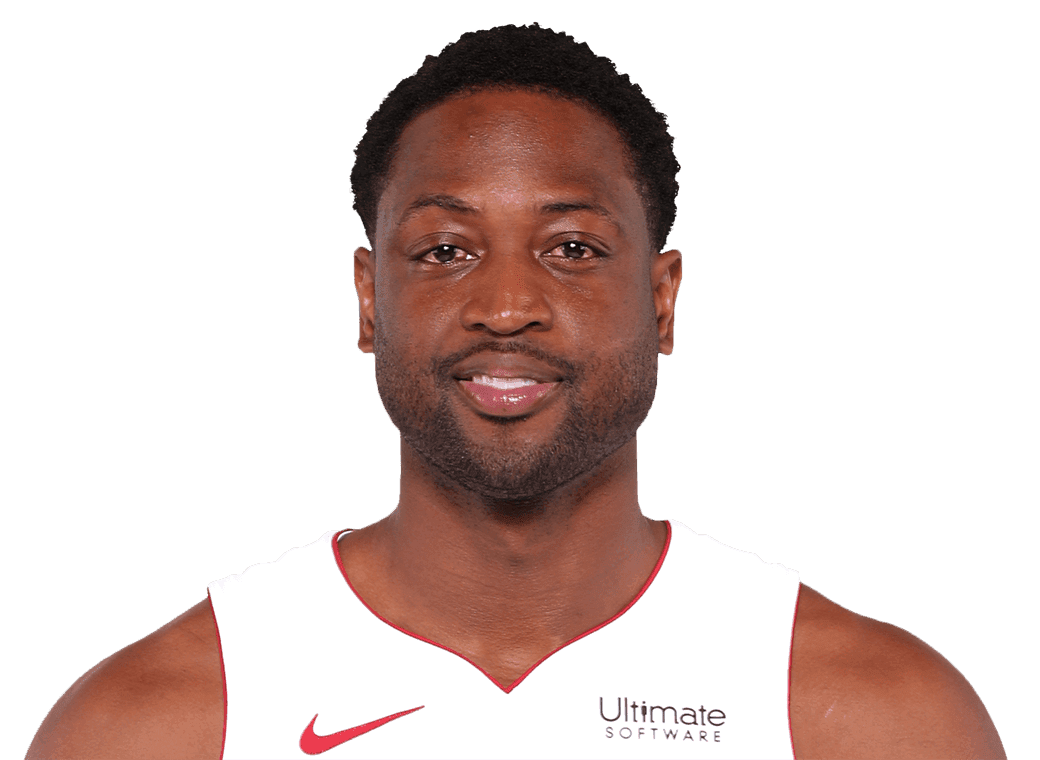
Dwyane Wade
#3 · Guard
34.7
PPG
7.8
RPG
3.8
APG
1.7
STL
97 attempts
FT
Dwyane Wade's 2006 NBA Finals performance is one of the most extraordinary individual series in championship history. Down 0–2 to a Dallas team that had been the best in the Western Conference all season, Wade averaged 34.7 points per game while attacking the basket with a relentlessness that bent the officials' attention, drew 97 free-throw attempts across six games, and produced three consecutive game-winning or game-decisive plays that turned a series that appeared lost into a championship that felt inevitable. In Game 3, he scored 42 points and finished in overtime. In Game 4, 36 points. In Game 5, 43 points — including a layup and two clutch free throws in the final minute. In Game 6, 36 more. The Mavericks' defense had no answer. Pat Riley, who had come out of the front office to take over the team midseason, had never seen anything quite like it. Miami's first championship was built on Wade's extraordinary will.
Averaged 34.7 PPG across the Finals — the highest scoring average by any Finals MVP in the previous two decades
Attempted 97 free throws in 6 games — a Finals record for a single series, reflecting the relentlessness with which he attacked the Dallas defense
Led the Heat to four consecutive wins after falling 0–2 — only the third team in NBA Finals history to overcome an 0–2 deficit and win the championship
His Game 5 performance — 43 points, including the decisive plays in the final minute — is considered one of the three or four greatest individual Finals games ever played
How the Series Unfolded
G1 · L
0–1
G2 · L
0–2
G3 · W
1–2
G4 · W
2–2
G5 · W
3–2
G6 · W
4–2
80
MIA
90
DAL
The 2006 NBA Finals opened in Dallas with the Mavericks immediately demonstrating why they had gone 60–22 in the regular season. Dirk Nowitzki dominated the interior from his unique angle — a 7-footer operating off the dribble from the elbow, a shot geography that Miami's scheme had no reliable answer for. He scored 26 points with a physical confidence that suggested Dallas had the matchup advantages to win the series comfortably. Dwyane Wade had 28 points but the Heat's supporting cast was uneven, and Dallas's home court — one of the league's loudest — amplified every Maverick run. Miami finished the game looking like a team outmatched by an opponent that had been building toward a championship for years.
Miami Heat
Dwyane Wade
28 pts · 8 reb · 2 astWade competed hard but couldn't overcome the combined force of Dallas's championship-caliber roster. His performance established the foundation of what he was about to do to this team.
DAL
Dirk Nowitzki
26 pts · 16 reb · 4 astThe German virtuoso announced that Dallas had the dominant individual player of the series — his combination of size, skill, and shot selection gave Miami no credible defensive answer.
Jason Terry
21 pts · 4 ast · 5-9 from threeTerry's three-point shooting off the bench gave Dallas a second scoring option that Miami's defense had not adequately prepared for, extending leads at critical moments.
85
MIA
99
DAL
Dallas put Miami in a 0–2 hole that had ended the championship aspirations of most teams that had found themselves in it. Dirk Nowitzki had another clinical performance — 29 points, 12 rebounds — and the Mavericks' transition offense punished every Miami turnover efficiently. The basketball world began writing the series' conclusion: Dallas was simply better. Avery Johnson's defensive game plan accounted for Wade's drives with multiple layers of help, and Miami's three-point shooting — a requirement for any team trying to beat Dallas's offense — was cold. Pat Riley's demeanor after the game carried the specific quality of a man recalibrating. Somewhere between the final buzzer and the charter flight back to Miami, the plan changed.
Miami Heat
Dwyane Wade
21 pts · 5 reb · 4 astWade was contained better in Game 2 — Dallas's help defense forced him into mid-range situations rather than the paint, limiting the free-throw generation that would define the series' remainder.
DAL
Dirk Nowitzki
29 pts · 12 reb · 5 astTwo dominant games in two nights made Nowitzki the clear favorite for Finals MVP in everyone's estimation — a performance that appeared to be defining the series.
Jason Terry
14 pts · 3 ast · 4-7 FGTerry continued his efficient offensive output off the bench, giving Dallas a scoring cushion that felt unassailable at the time.
98
MIA
96
DAL
This is the game that saved the series and changed the basketball world's understanding of who Dwyane Wade was. Down 13 points in the fourth quarter, Miami — fueled by a home crowd that refused to accept elimination — staged one of the great comebacks in Finals history. Wade took over completely: attacking every possession, drawing fouls with a relentlessness that made Dallas's defense look helpless, making the decisive plays in overtime that converted a likely 0–3 series deficit into a 1–2 hole that suddenly felt manageable. His final line — 42 points, 13 rebounds, 4 assists — does not capture the quality of the pressure under which those numbers were produced. The series was alive. Miami's arena had given the team something it could carry to Dallas.
Miami Heat
Dwyane Wade
42 pts · 13 reb · 4 ast · OTThe comeback game that announced Wade to the world — 42 points in overtime, from down 13 in the fourth quarter, with every crucial play in regulation and extra time falling to a player who simply refused to lose.
Gary Payton
8 pts · 7 ast · key floor managementPayton's veteran presence helped Miami keep possession and control pace during the comeback — his experience managing game situations without needing to score was essential when the game's weight shifted.
DAL
Dirk Nowitzki
34 pts · 9 rebAnother dominant performance — 34 points — that simply was not enough to withstand what Wade had decided to do. Nowitzki left the court having played a great game and having lost a series the basketball world had handed him.
98
MIA
74
DAL
Game 4 was the game where the series' momentum became visible as a physical force. Dallas came to Miami with a 2–1 series lead and left down 2–2, having been demolished by 24 points in a game that was not particularly close despite the final score's apparent drama. Wade's 36 points came with a devastating efficiency — 12-of-22 shooting, 12-of-12 from the free throw line — and Dallas's defense began to display the specific quality of teams that are being broken psychologically. Every time Avery Johnson's scheme tried to stop Wade from reaching the paint, he found a different angle. Every time the scheme tried to force him left, he was right. Miami's home court roared from the opening tip and never relented. Two days after the series' turning point, the turning was complete.
Miami Heat
Dwyane Wade
36 pts · 10 reb · 5 ast · 12-12 FTWade's perfect 12-of-12 from the free throw line encapsulated why Dallas had no clean answer — every foul committed trying to stop his drives converted directly to points.
Shaquille O'Neal
17 pts · 12 reb · 3 blkO'Neal's dominance in the paint gave Miami the interior control that freed Wade's drives — Dallas had to choose which threat to prioritize, and on this night, both were uncontrollable.
DAL
Dirk Nowitzki
19 pts · 11 reb · 6-18 FGFor the first time in the series, Dallas's defense visibly affected Nowitzki's rhythm — his shooting percentage dropped and the Mavericks' collective confidence showed the first cracks.
101
MIA
100
DAL
The single greatest individual performance of the 2006 Finals and one of the greatest in any Finals in the modern era. Dallas, with its home crowd returning and the championship in its building, led by 2 points with 9.8 seconds remaining. Wade drove, converted a layup to tie. He was fouled. He made the free throw. Miami led by 1. Dallas inbounded with 1.9 seconds. The buzzer sounded. Wade's 43-point performance — delivered in a hostile arena, against a team that had been the Western Conference's best all season — produced the largest single-game swing of the series and gave Miami a 3–2 lead that the series would not survive. American Airlines Center was silent when it should have been celebrating. Dwyane Wade had driven through their best defense on the most important possession of the year.
Miami Heat
Dwyane Wade
43 pts · 4 reb · 4 ast · game-winning FTsThe defining performance of the series — 43 points in Dallas, including a game-tying layup and the championship-winning free throw with 9.8 seconds remaining, delivered in the home of a team that had expected to be celebrating a championship.
DAL
Jason Terry
22 pts · 5 astTerry kept Dallas in the game with his perimeter shooting, but his team's inability to stop Wade's final drive negated everything he contributed on the offensive end.
Dirk Nowitzki
30 pts · 13 rebNowitzki competed with 30 points and 13 rebounds — every bit of his extraordinary talent on display — and the game still went against him because Wade produced something his preparation could not account for.
95
MIA
92
DAL
Miami closed out their first NBA championship at home, in front of a crowd that had believed in this team since the third quarter of Game 3. Wade scored 36 points — his fourth game of 36 or more in the final four games of the series — and the Heat won by 3 in a game that was tighter than the score suggests. Dallas, to their credit, competed until the final buzzer: Nowitzki scored 29 in his last game of the series. But the momentum that had shifted in overtime in Game 3 never shifted back. Pat Riley, who had left the front office midseason to coach a team he believed could win, stood at center court in his suit, trophy in hand. Shaquille O'Neal won his fourth championship. Gary Payton won his first and only. And Dwyane Wade, three years out of Marquette, had just played the greatest individual Finals in a generation.
Miami Heat
Dwyane Wade
36 pts · 10 reb · 5 astChampionship-clinching performance — 36 points in the closing game of a series he had personally turned from a near-sweep into a legacy. The four consecutive 36+ point games from Games 3–6 are without precedent in modern Finals history.
Udonis Haslem
15 pts · 11 rebThe hometown kid delivered one of his best games of the series in the most important one — providing the rebounding and interior pressure that kept Dallas from generating second-chance opportunities.
DAL
Dirk Nowitzki
29 pts · 8 rebNowitzki ended the series with 29 points in a losing effort — a fitting final image for a player who competed brilliantly throughout and was beaten by something singular: Dwyane Wade at the absolute peak of his powers.
The Champions
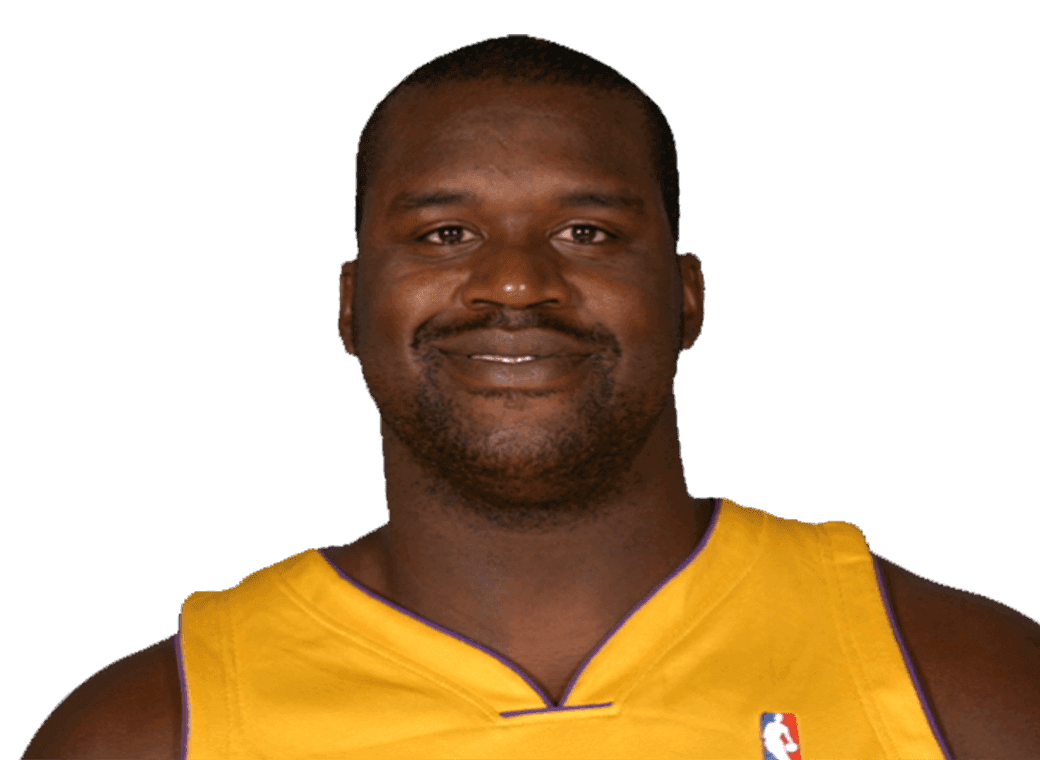
Shaquille O'Neal
#32 · Center
13.7
PPG
10.0
RPG
1.2
BLK
57.9
FG%
Shaquille O'Neal, in the final great contribution of his championship career, was the physical immovable object that opened every driving lane Dwyane Wade needed to do his work. O'Neal at 34 was not the unstoppable force of his 2000–2002 Laker prime — his points were down, his conditioning had been publicly questioned, and Pat Riley had taken over the team in part to manage a roster built around a guard rather than its center. But O'Neal's value in this series was never purely statistical. He set the tone physically from the opening possession of Game 3, the game that turned the series. He drew double teams that freed Wade for driving lanes. He protected the rim in moments when Dallas threatened to take control. And he anchored a Miami team that needed to believe it could win a championship for a Hall of Famer who had done it three times before and knew exactly what it took.
Won his fourth NBA championship — becoming one of only nine players in NBA history to win four or more titles
His interior dominance in Games 3–6 drew defensive attention that created the driving lanes Wade exploited for 34.7 PPG
His final championship season — at age 34, with a rebuilt Miami team — validated the franchise's investment and completed one of the great careers in basketball history
Gary Payton
#20 · Guard
7.2
PPG
4.5
APG
1.3
STL
Gary Payton brought championship experience and defensive credibility to Miami's backcourt — a 37-year-old Hall of Famer who had never won a title despite a career's worth of elite play. His defensive assignment on Jason Terry and his secondary ball-handling alongside Wade gave Miami the backcourt depth to compete in a Finals against a Dallas team with multiple perimeter threats. Payton's professionalism and championship hunger were tangible in the locker room — a player who communicated that winning was the only acceptable outcome.
Won his first and only NBA championship in the final season of his career — ending a legendary career in the way every competitor dreams
His defensive experience guarding Jason Terry across the series limited Dallas's second scorer at critical moments in Games 4–6
Alonzo Mourning
#33 · Center
4.5
PPG
4.0
RPG
1.2
BLK
Alonzo Mourning's contribution to the 2006 championship was earned over the entire arc of his career — through two Defensive Player of the Year awards, through a kidney transplant, through the comeback that medicine had said was not possible. In the Finals, he was Miami's energy center off the bench: a shot-blocker, a rebounder, and a physical presence who gave Pat Riley the luxury of managing O'Neal's minutes without sacrificing interior toughness. The championship was the final chapter of one of the Heat franchise's defining stories — the player who had helped build the organization's identity receiving the ring his career deserved.
Won the championship in the final season of his career as a regular contributor — completing a journey from defensive franchise cornerstone to kidney transplant recipient to NBA champion
His rim protection off the bench in Games 3–6 gave Pat Riley flexibility to limit O'Neal's minutes while maintaining Miami's defensive identity
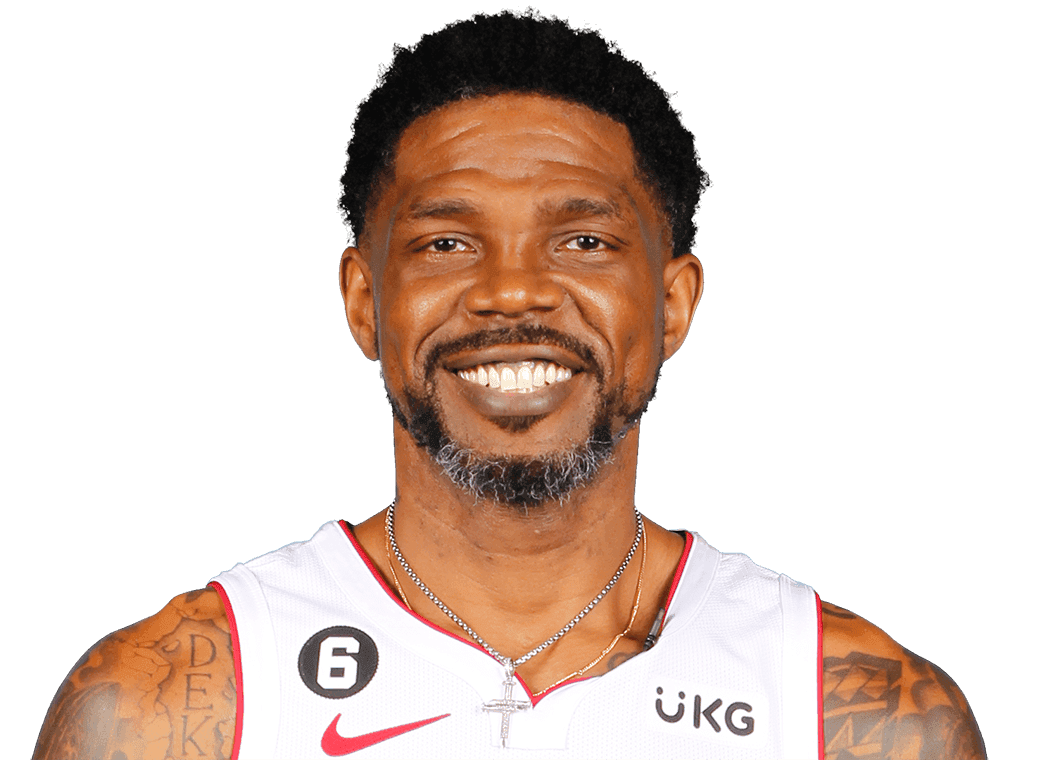
Udonis Haslem
#40 · Forward
8.5
PPG
8.3
RPG
52.8
FG%
Udonis Haslem — undrafted, South Florida-raised, and as pure a Heat Culture player as the franchise has ever produced — provided the rebounding and interior physical presence that Dallas could not fully account for while committing its defensive attention to Wade and O'Neal. His Game 3 rebounding performance in overtime gave Miami the second-chance opportunities that helped seal a win the team had no business winning. Haslem's championship was personal in a way that few players' are — a hometown kid winning it all in the building he had dreamed about playing in since he was a child.
Led the team in rebounding in multiple games — his interior work consistently generated the second possessions that kept Miami competitive during the comeback from 0–2
As a South Florida native and undrafted player, his championship represented one of the most personally meaningful wins in the Heat's roster
They Pushed Us to the Limit
The 2005-06 Dallas Mavericks entered the Finals as the favorites — a 60-win team built around Dirk Nowitzki's unique offensive game, with Jason Terry as a dangerous secondary scorer and a defensive identity that Avery Johnson had constructed around the principle of limiting opponents' best players. They had beaten the Spurs and the Suns to reach the Finals. They won the first two games on the road. The series had every appearance of a team collecting the championship their regular season had earned. What happened in Games 3 through 6 — Dwyane Wade's four consecutive dominant performances — was not something any preparation could have anticipated. Dallas competed hard. Their defense worked as designed. Wade simply operated above the level the defense was designed to contain.
Dirk Nowitzki
#41 · Forward
22.8
PPG
10.6
RPG
3.0
APG
Nowitzki averaged 22.8 PPG and 10.6 RPG across 6 games — an extraordinary performance that was not enough against a Wade series for the ages. His 2011 championship would come five years later, directly against Miami, providing the resolution his career required.
Jason Terry
#31 · Guard
18.7
PPG
3.7
APG
46.2
3P%
Terry's scoring off the bench was Dallas's most dangerous secondary threat — his 18.7 PPG across the series proved that Dallas had the firepower. Wade's performance was the variable no scouting report had accurately projected.
Jason Kidd
#5 · Guard
6.3
PPG
7.0
APG
1.5
STL
Kidd orchestrated Dallas's offense and provided defensive pressure on the perimeter, but Miami's attack through Wade rather than the arc limited his defensive impact on the outcome.
History Written in 2006
Miami Heat
First NBA Championship in franchise history — the first title won by a team from South Florida, completing an 18-year journey from expansion franchise to champion.
Dwyane Wade
Averaged 34.7 PPG in the Finals — the highest scoring average by a Finals MVP since Jerry West in 1969, and the highest by any player in a Finals since Michael Jordan's 1993 series.
Dwyane Wade
Attempted 97 free throws in 6 Finals games — a record for a single championship series, reflecting the frequency and conviction with which he attacked Dallas's defense.
Miami Heat
Only the third team in NBA Finals history to overcome an 0–2 deficit and win the championship — joining the 1969 Boston Celtics and 2016 Cleveland Cavaliers.
Shaquille O'Neal
Won his fourth NBA championship — one of only nine players in NBA history to win four or more titles as a primary contributor.
Gary Payton
Won his first and only NBA championship in what proved to be his final NBA season — ending a Hall of Fame career on the highest possible note.
Alonzo Mourning
Won his first championship after a kidney transplant recovery — completing one of the most remarkable comeback stories in NBA history.
Dwyane Wade
Scored 36+ points in four consecutive Finals games (Games 3–6) — a sustained scoring performance without precedent in modern championship basketball.
Beyond the Box Score
The 2005-06 Miami Heat season began in dysfunction and ended in a championship parade. Shaquille O'Neal's arrival in 2004 had not immediately produced results — the team's 2005 playoff run ended in the second round against Detroit, and by December 2005, head coach Stan Van Gundy's relationship with the front office had deteriorated to the point where he resigned. Pat Riley, operating as team president after stepping away from coaching, took over on December 12, 2005. The move was internally disruptive but externally clarifying: Miami now had a four-time championship coach running a roster that, talent-wise, was capable of winning.
Dallas's path to the Finals had been the most convincing résumé of any Western Conference team in years. Their 60 wins were the most in franchise history. They had beaten San Antonio — the defending champions — and Phoenix on their way to their first Finals appearance. Dirk Nowitzki had matured into the most complete offensive big man in basketball. The case for Dallas to win the championship was coherent, well-argued, and based entirely on actual performance. It was also completely wrong, because the case did not account for what Dwyane Wade was prepared to do starting in overtime of Game 3.
The officiating in Games 3 through 6 became the most controversial element of the series' legacy. Dallas's 97 free-throw attempts compared to Miami's 97 attracted significant scrutiny, and the distribution — concentrated in Wade's final four games — produced accusations of manipulation that the league never formally addressed. The controversy has followed the series ever since. What the record shows is that Wade attacked the basket on a historic number of possessions and drew fouls at a rate that reflected either the most aggressive free-throw hunting in Finals history or a defensive breakdown by Dallas of extraordinary proportions. Almost certainly it was both.
Pat Riley's championship at age 61 completed a coaching legacy that had begun with the Showtime Lakers in 1982 and extended through five titles with four different iterations of elite teams. His willingness to leave the executive suite midseason — putting his reputation on the line for a team he believed in — was widely viewed as the decisive factor in Miami's competitive recalibration after the 0–2 deficit. Dwyane Wade, in the years afterward, consistently credited Riley's arrival with changing the team's psychological approach to winning. In professional basketball, conviction from the bench travels to the court in ways that statistics cannot measure.
The Full Story
They were down 0–2 when Pat Riley walked into the film room in Dallas and told his team something he had told previous teams before turning series around. The precise words are private. What is known is that Miami flew back to South Florida with a different energy than they had flown out with. They came home knowing that Game 3 had to be different. And then Dwyane Wade made it different, personally, on his own terms, with 42 points in overtime against a team that had been the Western Conference's best all season.
What Wade did in Games 3 through 6 of the 2006 NBA Finals has no clean parallel in modern championship basketball. Four consecutive games of 36 points or more. Ninety-seven free throw attempts across six games — a single-series record. A game-tying layup and a championship-winning free throw in the final seconds of Game 5 in Dallas. A closing performance of 36 points in the championship-clinching Game 6. The statistical catalog is remarkable. More remarkable is the context: down 0–2, against a team that had every reason to believe the series was theirs, Wade willed a championship into existence through a combination of physical gifts and competitive will that the basketball world had not seen at that intensity since Michael Jordan's peak.
Around Wade were the pieces that made the championship possible. Shaquille O'Neal — older, reduced from his peak, but still the most physically imposing center in the Eastern Conference — drew the double teams that freed every driving lane. Gary Payton, in the final season of a Hall of Fame career, won his first ring. Alonzo Mourning, who had undergone a kidney transplant three years earlier and had been told by doctors that competitive basketball was finished for him, won his first championship. Udonis Haslem, undrafted and South Florida-raised, rebounded in the fourth quarter of Game 3 when rebounding was the only thing that kept the comeback alive.
Pat Riley accepted the Larry O'Brien Trophy in his characteristic suit, in front of a Miami crowd that had waited eighteen years for this. He had been an executive who became a coach again because he believed this team had the talent and the character to win, and because Dwyane Wade in particular was a player he understood could perform at the highest level under the greatest pressure. The belief was justified in the most complete way possible. The 2006 Miami Heat are inseparable from what Wade did in those four games. And what Wade did in those four games is inseparable from what Miami will always have been his.
Share the Legacy
Send this page to a fellow Miami Heat fan. Let them relive every moment — game by game, play by play.