
2012
Miami Heat
Series Flow
4
Wins
1
Losses
Regular Season
46–20
Win–Loss
Playoff Record
16–7
Win–Loss
Finals
4–1
vs Oklahoma City Thunder
Finals MVP
James
LeBron
Miami Heat
46–20Oklahoma City Thunder
47–19 (Regular Season, lockout-shortened)The 2011-12 Oklahoma City Thunder were one of the most exciting young teams in NBA history — Kevin Durant and Russell Westbrook forming the most athletically gifted backcourt-forward combination in the league, with James Harden providing elite scoring off the bench. They had beaten the Lakers and the Spurs to reach the Finals. Their energy was genuine, their talent was extraordinary, and their best basketball — had the series extended to six or seven games — might have produced different results. But Miami's experience, LeBron's transformative individual performance, and the Big Three's collective balance proved to be the difference that a young team, in its first Finals, could not overcome.
Finals MVP
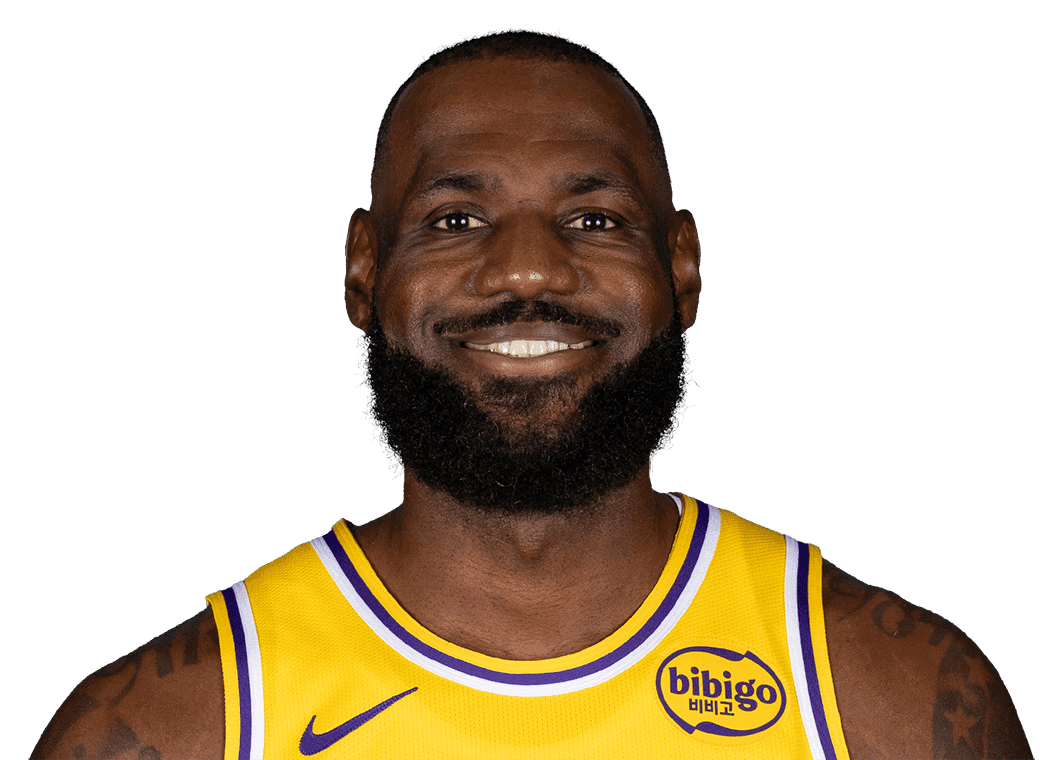
LeBron James
#6 · Forward
28.6
PPG
10.2
RPG
7.4
APG
1.8
STL
53.2
FG%
LeBron James's 2012 NBA Finals performance was the culmination of what his entire 2012 postseason had been building toward — a complete player operating at the apex of his capabilities, averaging 28.6 points, 10.2 rebounds, and 7.4 assists against a Thunder team that had Kevin Durant and Russell Westbrook and was considered, entering the series, a legitimate challenger. LeBron had answered all of the questions asked of him over the previous twelve months. His 2011 passive fourth-quarter performance against Dallas had prompted a full year of analysis, criticism, and self-examination. The 2012 postseason — and specifically his 28.6-10.2-7.4 Finals performance — was his answer: complete, unambiguous, and delivered on the most visible stage in basketball. He was 27 years old and the best player alive, and the championship in his hands was what he had moved to Miami to get.
Averaged 28.6 PPG, 10.2 RPG, and 7.4 APG in the Finals — one of the most complete statistical performances by a Finals MVP in the shot-clock era
His 2012 postseason averaged 30.3 PPG, 9.7 RPG, and 5.6 APG — widely considered the greatest individual playoff run in the modern era
First NBA championship after 9 professional seasons — arriving in Miami specifically to win what Cleveland could not provide
The performance answered the 2011 Finals collapse directly — same opponent's arena, different result, different player
How the Series Unfolded
G1 · L
0–1
G2 · W
1–1
G3 · W
2–1
G4 · W
3–1
G5 · W
4–1
94
MIA
105
OKC
Oklahoma City opened the Finals with a statement that their youth and athleticism were not going to be intimidated by Miami's experience or LeBron's presence. Kevin Durant scored 36 points against defensive coverages that the Thunder had specifically designed to neutralize everything Miami threw at them. Russell Westbrook added 27 points and the Oklahoma City crowd — in the franchise's first Finals appearance — provided an atmosphere that matched the product on the floor. LeBron's 30 points were excellent but insufficient; Dwyane Wade had one of his least effective nights of the postseason; and the Heat left Chesapeake Energy Arena having been beaten clearly. The series, to the basketball world observing it, suddenly had a new favorite.
Miami Heat
LeBron James
30 pts · 9 reb · 4 astA dominant individual performance that wasn't enough — LeBron competed at his level and Miami still lost by 11, which established the difficulty of the task ahead.
OKC
Kevin Durant
36 pts · 8 reb · 4 astThe best version of Durant in a pressure situation — technical, ruthless, and impossible to contain one-on-one. His performance announced that Oklahoma City had the best individual scorer in the series.
Russell Westbrook
27 pts · 8 ast · 5 rebWestbrook's explosive backcourt play gave Oklahoma City a second creation threat that Miami couldn't load up on while focusing defensive attention on Durant.
100
MIA
96
OKC
Miami leveled the series in Oklahoma City with a performance that demonstrated the Big Three's collective capability — LeBron's 32 points leading a balanced effort in which both Wade and Bosh contributed efficiently. The Heat's defensive adjustment — focusing on taking the middle away from Westbrook and forcing Durant into more difficult shot positions — reduced Oklahoma City's offensive flow from the Game 1 pace. LeBron's control of the game's tempo in the fourth quarter was the key variable: he scored 8 of his 32 in the final period and made the defensive rotations that kept the Thunder from converting any late run. Miami won by 4 in a building that had just witnessed what appeared to be the Thunder's series.
Miami Heat
LeBron James
32 pts · 9 reb · 6 astLeBron's fourth quarter — 8 points and two critical defensive plays — defined why Miami was able to win in a building where they had lost just two days earlier.
Chris Bosh
16 pts · 9 reb · 2 blkBosh's interior work — rebounding, blocking shots, and spacing the floor for LeBron's drives — was the quiet tactical adjustment that made Miami's defense and offense function simultaneously.
OKC
Kevin Durant
32 pts · 8 rebAnother 32-point performance from Durant that was not enough — the pattern established that Miami had found a way to compete even when Durant was at his best.
91
MIA
85
OKC
Miami's home court did exactly what home courts do in championship series — it amplified the Heat's defensive intensity and created the energy that the Big Three needed to produce a focused, coherent team performance against a young Thunder team that had not experienced a Finals environment in front of a hostile crowd. LeBron's 29 points, 14 rebounds, and 5 assists across 45 minutes was the most complete game of the series — offense, rebounding, defense, and the sixth sense for the right play at the right moment that defines his game at its highest. The Heat led at halftime and held the lead throughout the second half, turning a series they had trailed into a 2–1 advantage.
Miami Heat
LeBron James
29 pts · 14 reb · 5 astThe most complete game of the Finals — 29 points, 14 rebounds, and 5 assists across 45 minutes, covering every dimension of basketball at the highest level with the series in genuine balance.
Shane Battier
17 pts · 3-5 from threeBattier's shooting in this game created the floor spacing that allowed LeBron's drives to go unimpeded — his defensive coverage of Durant simultaneously limited OKC's primary scorer.
OKC
James Harden
12 pts · 4 ast · off benchHarden's bench production gave Oklahoma City the closest thing to a scoring run in the second half, but Miami's defensive rotations — especially LeBron's help coverage — shut every run down before it became dangerous.
104
MIA
98
OKC
One win from a championship, Miami played with the controlled aggression of a team that had been in this position before and understood precisely what winning required. LeBron's 26 points were his lowest of the series but his efficiency — 12-of-21 from the field — was the reflection of a player taking exactly the shots his positioning earned rather than hunting numbers. Wade added 20 points and Bosh, increasingly confident with each game, contributed 16 points and 8 rebounds. Oklahoma City's youth showed in the fourth quarter: two consecutive scoring droughts during Miami runs that built leads the Thunder couldn't close. The Heat were three quarters away from a championship at the start of the fourth period.
Miami Heat
LeBron James
26 pts · 12 reb · 5 astLeBron's game management in this match — taking correct shots, distributing to open teammates, making the defensive rotation at the rim — is what elite fourth-quarter play looks like when pressure requires accuracy over volume.
Dwyane Wade
20 pts · 9 reb · 4 astWade's 20-point second scoring option gave Miami the balance that Oklahoma City's defensive scheme could not address when it concentrated resources on LeBron.
OKC
Kevin Durant
28 pts · 10 rebDurant competed with another excellent line — 28 points and 10 rebounds — but Miami's collective structure found ways to slow his impact in transition and limit his rhythm in the half-court.
121
MIA
106
OKC
The championship-clinching game came in Oklahoma City — on the Thunder's home floor, in front of their first Finals crowd, against a young team that had given Miami the most competitive five-game series of the postseason. LeBron James played the championship-closing game with 26 points, 11 rebounds, and 13 assists — a triple-double that rendered the box score almost inadequate for what it captured. Wade added 23. Bosh was excellent. The final score was 121–106, and the outcome felt decisive rather than surprising: the Heat had been the better team in four of the five games, and in the one game Oklahoma City had won, the margin reflected youth and home court more than genuine superiority. LeBron James, nine years after being drafted by Cleveland, held the Larry O'Brien Trophy in his hands for the first time.
Miami Heat
LeBron James
26 pts · 11 reb · 13 astChampionship-clinching triple-double — the completeness of LeBron's game at its apex, doing everything a championship requires in the single most important performance of his career to that point.
Dwyane Wade
23 pts · 6 reb · 3 astWade delivered the championship-winning performance his Big Three partnership required — 23 points as the second offensive option, ensuring Oklahoma City could not collapse entirely on LeBron.
OKC
Kevin Durant
32 pts · 11 rebDurant played the series of his professional life to that point — averaging 30.6 PPG across five games — and still lost. Miami's collective was simply better than any individual on the other team.
The Champions
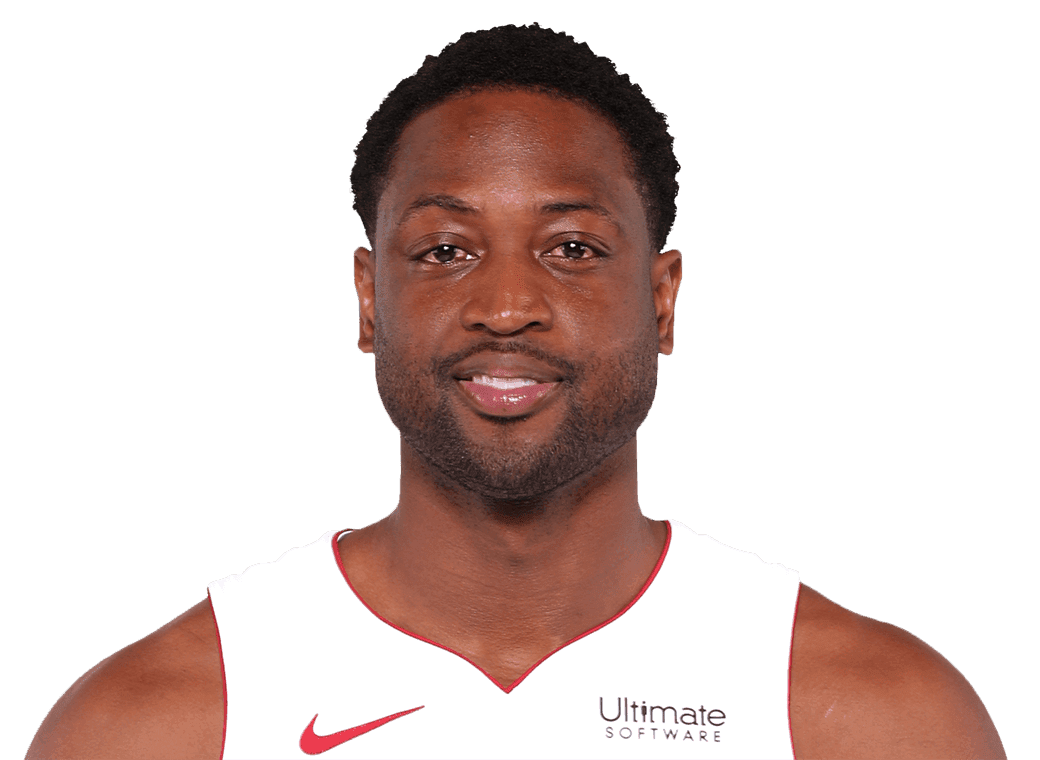
Dwyane Wade
#3 · Guard
22.6
PPG
5.0
RPG
4.4
APG
1.6
STL
Dwyane Wade in 2012 was a different player than the Wade of 2006 — older, more deliberate, sharing offensive creation with the best player in the world. The adjustment required genuine basketball intelligence: understanding how to remain a dangerous scoring threat while deferring to LeBron's dominance without becoming predictable or passive. His 22.6 PPG reflected the equilibrium he found — present enough to keep Oklahoma City's defense from loading up entirely on LeBron, assertive enough in the moments Miami needed his scoring. The partnership between Wade and LeBron in the 2012 Finals was the most convincing version of the Big Three's potential, with both superstars operating at high efficiency and Chris Bosh providing the spacing that made everything else work.
Won his second NBA championship — first as a co-equal partner to another superstar, demonstrating the basketball intelligence to thrive in a shared-star system
His 22.6 PPG maintained the dual offensive threat that prevented Oklahoma City from collapsing entirely on LeBron's drives
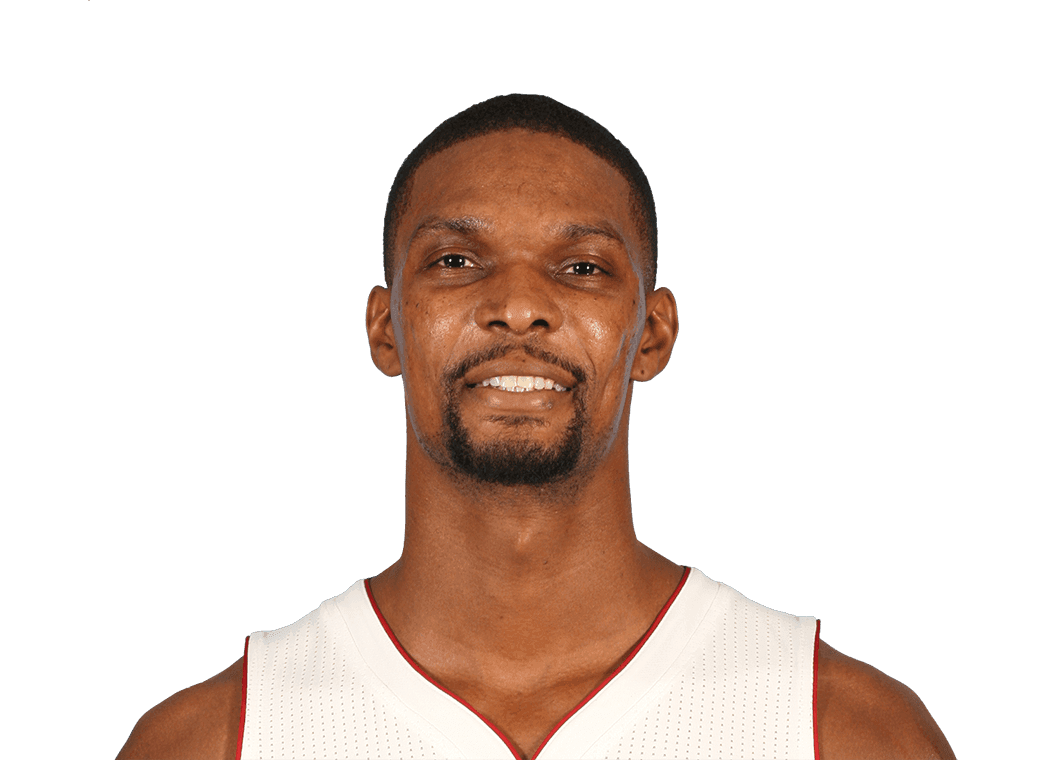
Chris Bosh
#1 · Forward
17.2
PPG
8.0
RPG
46.2
3P%
1.4
BLK
Chris Bosh's 2012 Finals performance is the definitive answer to those who questioned whether his sacrifice of scoring statistics in Miami was worth it. His transformation from a 22-PPG all-star scorer in Toronto to a 17-PPG stretch four who shot 46.2% from three in the Finals — spacing the floor, protecting the rim, creating mid-post angles that complemented both LeBron's drives and Wade's pull-ups — made the Big Three's collective offensive efficiency possible in ways that statistics cannot fully capture. His championship meant he had made the right choice. The execution validated the theory.
Shot 46.2% from three — the three-point shooting that opened the lanes through which LeBron and Wade drove Oklahoma City's defense to exhaustion
His transformation from primary scorer to stretch-four exemplar was completed in the 2012 Finals — the championship validating the sacrifice entirely
Shane Battier
#31 · Forward
11.6
PPG
2.8
3PM
52.6
3P%
Durant coverage
DEF
Shane Battier's 2012 Finals performance was one of the most impactful role-player series in recent championship history — not for his scoring average, but for the specific defensive assignment he accepted: covering Kevin Durant on the perimeter while shooting 52.6% from three in five games, making 2.8 threes per game at that efficiency as a 33-year-old designated role player. His "no-middle" defensive coverage of Durant — forcing the scoring champion to the non-dominant hand and away from his preferred angles — limited Durant's effectiveness in ways that showed up in his shooting percentages and shot selection. Battier won his championship as the prototype of a player whose value to winning exceeds what any individual statistical line can communicate.
Shot 52.6% from three in the Finals — the three-point accuracy that made Miami's offense harder to guard by requiring Oklahoma City to respect him on every possession
His defensive strategy against Kevin Durant — "no middle" positioning forcing Durant to non-preferred angles — was the tactical signature of Miami's defensive game plan
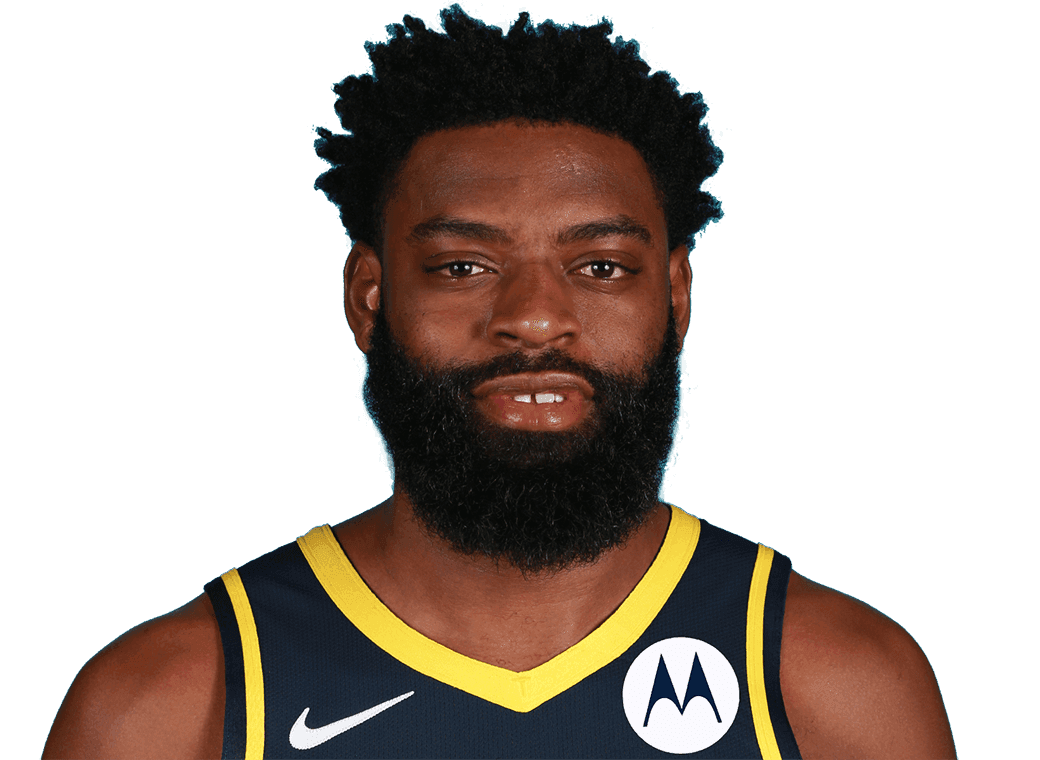
Mario Chalmers
#15 · Guard
11.2
PPG
4.2
APG
44.4
3P%
1.8
STL
Mario Chalmers — whose 2008 national championship-winning three-pointer at Kansas had already written him into one college basketball legend — provided the secondary guard play that allowed LeBron and Wade to operate off the ball. His 11.2 PPG, 4.4 APG, and 1.8 steals reflected a player who understood his role precisely: defend Russell Westbrook with competitive attention, create secondary offense when the Heat's stars drew double teams, and keep possession moving in Miami's half-court system.
His defensive pressure on Russell Westbrook — combined with the collective scheme built around LeBron's ability to guard Westbrook on possessions — limited Westbrook below his season averages in critical games
Shot 44.4% from three — maintaining the floor spacing that OKC's defense had to respect alongside Battier and Bosh
They Pushed Us to the Limit
The 2011-12 Oklahoma City Thunder were one of the most exciting young teams in NBA history — Kevin Durant and Russell Westbrook forming the most athletically gifted backcourt-forward combination in the league, with James Harden providing elite scoring off the bench. They had beaten the Lakers and the Spurs to reach the Finals. Their energy was genuine, their talent was extraordinary, and their best basketball — had the series extended to six or seven games — might have produced different results. But Miami's experience, LeBron's transformative individual performance, and the Big Three's collective balance proved to be the difference that a young team, in its first Finals, could not overcome.
Kevin Durant
#35 · Forward
30.6
PPG
9.8
RPG
2.4
APG
Durant averaged 30.6 PPG in the Finals — a scoring performance that would have won most series. Against the Big Three's collective, it was not enough. He would win the championship three years later with Golden State.
Russell Westbrook
#0 · Guard
27.8
PPG
6.6
APG
5.8
RPG
Westbrook's explosive scoring alongside Durant gave Oklahoma City the dual-threat dynamic that most championship defenses struggle to contain. Miami's scheme managed both threats more effectively than any team had during Oklahoma City's playoff run.
James Harden
#13 · Guard
12.4
PPG
3.6
APG
38.1
3P%
Harden's production off the bench gave Oklahoma City a third scoring option that Miami had to account for. His performance in this Finals was his last as a Thunder player — he was traded to Houston in October 2012 in a deal that reshaped both franchises.
History Written in 2012
LeBron James
Won his first NBA championship in his ninth professional season — the culmination of The Decision, the move to Miami, and one of the most scrutinized career chapters in modern sports history.
LeBron James
His 2012 playoff averaged 30.3 PPG, 9.7 RPG, and 5.6 APG across 23 games — widely considered the greatest individual postseason performance of the modern era.
Miami Heat
The 2011-12 lockout-shortened season produced one of the most efficiently constructed championship runs in NBA history — a 46-20 regular season team finishing 16-7 in the playoffs.
Shane Battier
Shot 52.6% from three in the Finals while executing a defensive scheme against Kevin Durant that reduced his effectiveness below his season averages in critical moments.
Chris Bosh
His voluntary transformation from primary scorer in Toronto to stretch-four in Miami was validated by the championship — one of the most intelligent individual adaptations in NBA history.
Beyond the Box Score
The 2010–11 NBA season had ended with one of the most painful nights of LeBron James's career. The Miami Heat — in their first Finals, against the Dallas Mavericks — lost in six games, with LeBron's passive fourth-quarter performances becoming the central subject of basketball analysis for the following twelve months. The criticism was specific, sustained, and fair: the best player in the world had not played like it when the games mattered most. What the criticism missed, and what the 2012 postseason demonstrated conclusively, is that LeBron James was listening to every word.
The 2011-12 season was shortened to 66 games by a labor lockout that began in July 2011 and ended with a new collective bargaining agreement in December. The compressed schedule suited Miami — Pat Riley's and Erik Spoelstra's conditioning-based system gave the Heat physical advantages over teams whose preparation was disrupted by the shortened training camp. Miami went 46-20 and entered the playoffs as the Eastern Conference's dominant team, though Indiana's second-round series pushed the Heat to six hard games and established that the path to the championship was not going to be smooth.
Oklahoma City's youth — Durant was 23, Westbrook was 23, and Harden was 22 — was the quality that made them dangerous and the limitation that, in the end, constrained them. Their first Finals appearance produced two of the greatest individual scoring runs in recent championship history (Durant's 30.6 PPG, Westbrook's 27.8 PPG) and still produced a loss, because the team surrounding those performances could not match the collective execution of a Miami group that had been built for exactly this purpose. James Harden was traded to Houston the following October, ending Oklahoma City's version of that particular team.
The Full Story
A year after the most scrutinized professional performance of his career, LeBron James played the 2012 postseason with the accumulated focus of a man who had spent twelve months converting criticism into fuel. Every question about his fourth-quarter competitiveness, every commentator who had suggested he lacked the championship gene, every moment of the 2011 Finals where he had not been himself — all of it became motivation he channeled into the most dominant playoff run of the modern era.
The 2012 Finals against Oklahoma City was the definitive version of the Big Three working as its architects had imagined. LeBron as the primary creation, defensive anchor, and series-defining force. Wade as the secondary scorer and second-best defender on the court. Bosh as the spacing four who opened the floor, protected the rim, and made plays that no traditional power forward would have been comfortable making. The combination was genuinely difficult to beat — Oklahoma City had two of the five best players in the series and still lost in five games, which communicated something important about collective execution versus individual excellence.
LeBron's performance in Game 5 — 26 points, 11 rebounds, 13 assists — told the complete story of what ''basketball player'' can mean when the word is applied to its highest possible standard. He did not pad statistics. He made plays. He governed the game's tempo, read every defensive adjustment, found the correct pass to the correct teammate in every relevant situation, and defended Kevin Durant in the crucial moments when Durant had the ball and the game was in genuine balance. The triple-double was the result of basketball intelligence meeting physical gifts in a context that drew the best from both.
LeBron James accepted the Larry O'Brien Trophy in Oklahoma City — in the building where the Thunder had spent two seasons building toward this moment — and everything that had been written about his career in the previous twelve months became the context for a different conclusion. The championship was not only a basketball result. It was a statement about character, about resilience, about what a competitor does with the lowest moment of his public career. He moved to Miami to win. He won. The answer was yes.
Share the Legacy
Send this page to a fellow Miami Heat fan. Let them relive every moment — game by game, play by play.