This page contains affiliate links. We may earn a commission if you purchase through these links, at no extra cost to you. As an Amazon Associate I earn from qualifying purchases.
Most players practice shooting by standing at the three-point line and launching, which builds confidence but not game-ready skill — in a game you catch on the move, off screens, off the dribble, contested, and fatigued. This guide builds shooting from mechanics upward through game-speed situations across three phases. Phase 1 mechanics uses one-hand and two-hand form shots at three feet to isolate and rebuild the release — the drill Steph Curry runs before every game. Phase 2 trains the catch: 5-spot shooting (sprint between five arc positions, three makes each) for relocation and spot-up shooting, screen simulation (curl a cone, plant the outside foot, square, catch, shoot) for coming off screens, and the transition pull-up for a balanced stop off the dribble. Phase 3 adds pressure and fatigue with beat-the-clock, post-sprint shooting, and contested closeouts. A weekly tracker confirms whether your percentages are actually improving or staying flat.
Phase 1: Mechanics (The Foundation)
One-Hand Form Shots
3 feet from the rim. Shooting hand only — off hand behind your back. Focus purely on: ball on finger pads, elbow under the ball, wrist flick, follow through held. 20 makes each hand. This isolates your release and rebuilds it every session.
Steph Curry, the greatest shooter in NBA history, does this before every game. It is not optional for anyone at any level.
Two-Hand Form Shots
Same position, 3 feet. Add the guide hand. The guide hand touches the ball but does not push it. If your shot veers left or right, your guide hand is applying force. Practice until the ball goes straight with minimal guide-hand involvement.
Free Throw Routine
Develop a pre-shot routine: dribble pattern, breath, focus point, shoot. Repeat the exact same routine on every free throw. Consistency in routine produces consistency in result. Shoot 20 free throws with your routine. Track your percentage. Anything under 70% means your mechanics need more form shot work before extending range.
Phase 2: Catch-and-Shoot (Game Situation)
5-Spot Shooting
5 spots around the three-point line: corner, wing, top of key, wing, corner. 3 makes at each spot before rotating. Sprint to each spot — no walking. The sprint simulates the movement of coming off a screen or relocating in offense.
Screen Simulation
Set a cone or chair at the elbow. Start at the block. Sprint around the cone (simulating coming off a screen), plant your outside foot, square your shoulders to the basket, catch (from a rebounder or imagined pass), and shoot. The plant-and-square is the skill. If you rush this, your shot will be off balance in games.

Transition Pull-Up
Start at half court. Dribble at game speed, pull up at the free throw line. The stop must be sudden and balanced. No fading, no leaning. 10 from the right side, 10 from the left. If you fade away on more than 2, slow down your approach speed.
Phase 3: Pressure and Fatigue
Beat the Clock
1 minute. How many makes from your weakest spot? Track weekly. The time pressure adds mental stress that simulates late-game shooting situations. Your mechanics under time pressure reveal your true shooting ability — not relaxed practice shooting.
Post-Sprint Shooting
Full-court sprint, catch at the wing, shoot. Rest 10 seconds. Repeat 10 times. Your shooting percentage will drop 15-25% compared to fresh shooting. The gap between your fresh percentage and fatigued percentage tells you how much your conditioning affects your shooting in game situations.
Contested Close-Outs
A partner or coach sprints at you with a hand up as you catch and shoot. The contest forces you to shoot with a faster release and higher arc — both necessary game adjustments that cannot be practiced alone.
Shooting Tracker
| Spot | Week 1 | Week 2 | Week 3 | Week 4 |
|---|---|---|---|---|
| Right Corner 3 | __/20 | __/20 | __/20 | __/20 |
| Right Wing 3 | __/20 | __/20 | __/20 | __/20 |
| Top of Key 3 | __/20 | __/20 | __/20 | __/20 |
| Left Wing 3 | __/20 | __/20 | __/20 | __/20 |
| Left Corner 3 | __/20 | __/20 | __/20 | __/20 |
| Free Throws | __/20 | __/20 | __/20 | __/20 |
Track your percentages weekly. A 5% improvement over 4 weeks means your practice is working. Flat percentages mean you need to change something — either the drill difficulty or your mechanics.
Frequently Asked Questions
What is the best drill for catch-and-shoot improvement?
The 5-spot shooting drill in this guide is the foundational catch-and-shoot reps. Sprint between five spots around the three-point line — corner, wing, top of key, wing, corner — and make 3 from each before rotating. The sprint matters as much as the shot. Walking between spots trains a shot you only have when you are standing still and rested, which is not a shot you have in games. Pair the 5-spot drill with the screen simulation (sprint around a cone, plant outside foot, square shoulders, catch, shoot) and you are training the two most common catch-and-shoot setups: relocation and coming off a screen.

Why does my shot go left or right consistently?
It is almost always your guide hand. The guide hand should touch the ball without pushing it; if your shot veers consistently, your guide hand is applying force at release and rotating the ball off-axis. The fix is the two-hand form shot drill at three feet from the rim — slow reps, focused on the ball going straight through the rim with minimal guide-hand involvement. Once the ball goes straight from three feet, extend the distance one foot at a time. Skipping back to your normal range before the guide-hand habit is rebuilt just re-grooves the same miss.
How many shots should I take per day?
Quality over count. Twenty makes of one-hand form shots from three feet (each hand) builds more than 200 unfocused threes from your spot. The sequence in this guide — Phase 1 mechanics, Phase 2 catch-and-shoot, Phase 3 pressure-and-fatigue — is structured the way it is because rep volume without mechanics is just polishing your existing flaws. Steph Curry, the greatest shooter in NBA history, does the one-hand form shot drill before every game. If it is not optional for him, it should not be optional for anyone else either.
Why does my shooting percentage drop late in games?
Conditioning. Run the post-sprint shooting drill — full-court sprint, catch at the wing, shoot, rest 10 seconds, repeat 10 times — and your percentage will drop 15–25% compared to fresh shooting. The size of that gap tells you how much your conditioning is affecting your shot in real game situations. The fix is not more shots; it is closing the conditioning gap so your fresh and fatigued percentages converge. A player whose fresh number is 45% and whose fatigued number is 30% has a conditioning problem disguised as a shooting problem.
What free throw percentage should I be aiming for, and what does it mean if I'm under it?
Seventy percent is the floor that signals your mechanics are stable enough to extend range. Under 70% with your routine in place is a mechanics-needs-work signal — go back to one-hand form shots before adding more jump-shot range work. Over 70% means your free-throw foundation is solid; the next gain comes from the routine consistency itself (same dribble pattern, same breath, same focus point, same release every time). Track 20 free throws with your routine in every session and the percentage will tell you whether your underlying form is holding up under repetition.
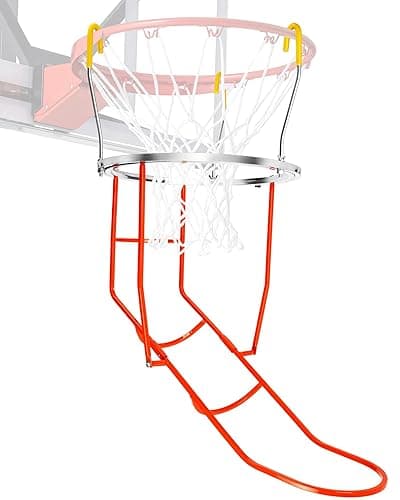
Back to the main guide: Basketball Drills Practice Guide. For a shooting rebounder to double your shot volume, see Training Equipment guide.
Enjoying this analysis?
Get more breakdowns like this delivered to your inbox.