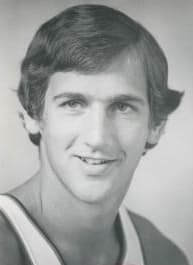
Paul Westphal, born November 30, 1950, in Torrance, California, left two indelible marks on Phoenix Suns history: first as the most electric and creative guard of the mid-1970s who led the franchise to its first NBA Finals, and later as the head coach who piloted the most celebrated Suns team in franchise history to another Finals appearance. No individual has contributed to Phoenix's most significant basketball moments in as many capacities as Westphal.
Selected 10th overall in the 1972 NBA Draft by the Boston Celtics, Westphal served as a talented reserve on Boston's 1974 NBA championship team under coach Tommy Heinsohn — learning the habits of winning from a legendary Celtics organization before the trade to Phoenix in 1975 that would define his legacy. In the desert, freed from a reserve role, Westphal became one of the most unstoppable guards in the NBA. His ability to score from anywhere on the court — off the dribble, from mid-range, in the open floor — his creativity in the pick-and-roll, and his fearless competitiveness made him a genuine superstar.
The 1975-76 season was Westphal's masterpiece as a player. He led Phoenix to a stunning 42-40 regular season record and through a dramatic playoffs that culminated in the NBA Finals against the Boston Celtics — a series that produced Game 5, widely recognized as one of the greatest games in basketball history. The triple-overtime classic showcased Westphal's brilliance at its peak, and though the Suns ultimately fell to the Celtics in six games, Westphal's reputation was forever established.
He earned five NBA All-Star selections across his career (1975, 1977, 1979, 1980, 1982), won an Olympic Gold Medal with the US team in 1976, and played with the sophistication and creativity that separated elite players from merely good ones. After playing days in Seattle and New York, Westphal returned to Phoenix as a player briefly, then built a second Phoenix legacy as head coach of the 1992-1996 Suns — including the team's second Finals appearance in 1993 with Charles Barkley. His coaching career extended to Sacramento and beyond, cementing a career that touched Phoenix Suns history at every meaningful juncture.