

Offensive Game
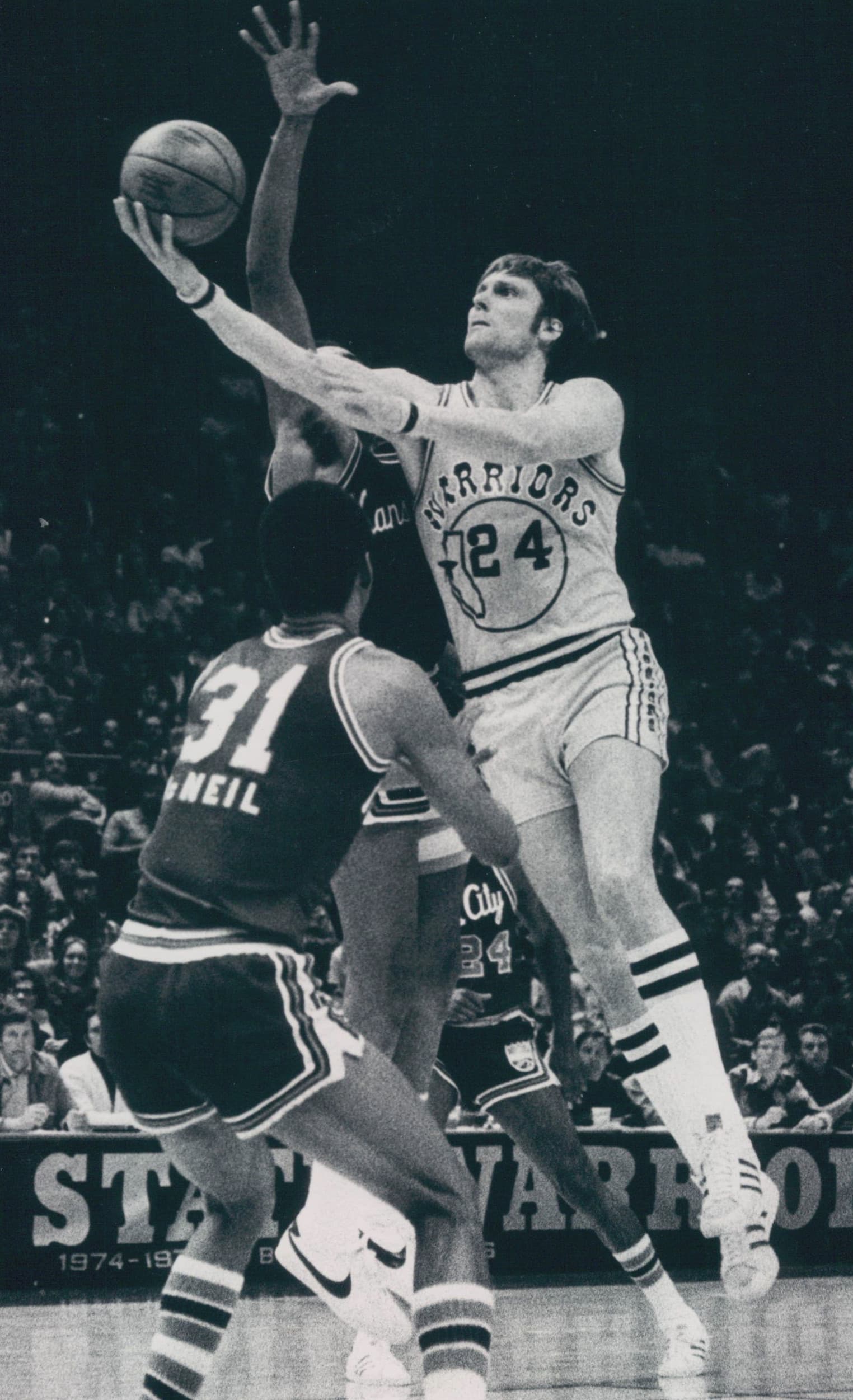
One of the elite scorers in NBA history. Led the league in scoring at 35.6 PPG in 1966-67. An underhanded free-throw specialist who converted at 90% for his career — among the highest marks ever recorded.
Career Journey
San Francisco Warriors
1965-1967
Oakland Oaks (ABA)
1968-1969
Washington Caps (ABA)
1969-1970
New York Nets (ABA)
1970-1972
Golden State Warriors
1972-1978
Houston Rockets
1978-1980
1975 NBA Champion & Finals MVP
Led the Golden State Warriors to a sweep of the Washington Bullets in the 1975 Finals at 29.5 points per game.
Scoring champion across three leagues
The only player to lead the NCAA, ABA and NBA in scoring per game.
Hall of Fame (1987)
A 12-time All-Star across the ABA and NBA, inducted in 1987; famous for his underhand free throws.
Rick Barry was one of basketball's great pure scorers and its most stubborn individualist, the man who kept shooting free throws underhand while everyone laughed and made nearly 90% of them. A brilliant small forward with a quick release and a genuine passing gift, he led the NBA in scoring in 1967, then jumped to the upstart ABA, becoming the only player to lead the NCAA, ABA, and NBA in scoring in a season. His masterpiece came in 1975, when he dragged an underdog Golden State team to a stunning Finals sweep of Washington and took home Finals MVP. Barry's competitive edge rubbed teammates and opponents the wrong way, but it was inseparable from his greatness. A 12-time All-Star across both leagues, he entered the Hall of Fame in 1987.
Offensive Game
One of the elite scorers in NBA history. Led the league in scoring at 35.6 PPG in 1966-67. An underhanded free-throw specialist who converted at 90% for his career — among the highest marks ever recorded.
Defensive Game
Underrated defender for his era. Capable of guarding multiple perimeter positions, competed hard on that end, and understood defensive positioning from his foundational basketball education.
Intangibles
Brilliant basketball mind who understood spacing, positioning, and matchup exploitation decades before those concepts were widely discussed. His Finals MVP performance in 1975 reflected total mastery of game situations.
Personal Life & Family
Partner
Pam Barry
Children (5)
Parents & Siblings
Off the Court
Youth basketball development programs across the country
Hall of Fame legacy programs promoting NBA history education
Did You Know?
Barry shot free throws underhanded — the so-called 'granny shot' — and converted at 90.0% for his career, one of the highest marks in NBA history and a technique that modern analytics increasingly suggest is biomechanically superior to the conventional overhand method.
Three of his sons — Scooter, Jon, and Brent Barry — all played in the NBA, making the Barrys one of the most impressive basketball families in professional sports history. Canyon Barry also played professionally.
His 35.6 points per game scoring title in 1966-67 placed him alongside Oscar Robertson and Wilt Chamberlain as the most prolific scorers of the NBA's pre-modern era.
The 1975 Warriors championship sweep of Washington is considered one of the greatest upsets in Finals history — a 48-win team defeating a 60-win Bullets squad in four straight games, led by Barry's 29.5 PPG Finals MVP performance.
Career Honors
NBA Champion (1975)
NBA Finals MVP (1975)
NBA scoring champion (1966-67)
8x NBA/ABA All-Star
All-NBA First Team (4x)
Naismith Memorial Basketball Hall of Fame (1987)
NBA 50th Anniversary All-Time Team
Official Jerseys

449.99
Check Price on NBA Store
54.99
Check Price on NBA Store
101.24
Check Price on NBA Store
105.00
Check Price on NBA Store
59.00
Check Price on NBA Store
83.24
Check Price on NBA Store
693.99
Check Price on NBA Store
59.99
Check Price on NBA Store
206.00
Check Price on NBA Store
1299.99
Check Price on NBA StoreGolden State Warriors · Official
399.99
Check Price on NBA StoreAffiliate link · Disclosure
99.99
Check Price on NBA StoreAffiliate link · Disclosure
152.00
Check Price on NBA StoreAffiliate link · Disclosure
Shop · Worldwide
This page contains affiliate links. We may earn a commission if you purchase through these links, at no extra cost to you. As an Amazon Associate I earn from qualifying purchases.
All articles
Rick Barry led the Warriors to a stunning 1975 championship sweep, averaged 35.6 PPG in 1967, and shot 89.3% from the free throw line using his famous underhanded technique. Here is why #24 belongs in the rafters.
Golden State Warriors
Golden State Warriors
Subscribe for in-depth player analysis and stat breakdowns delivered to your inbox.


