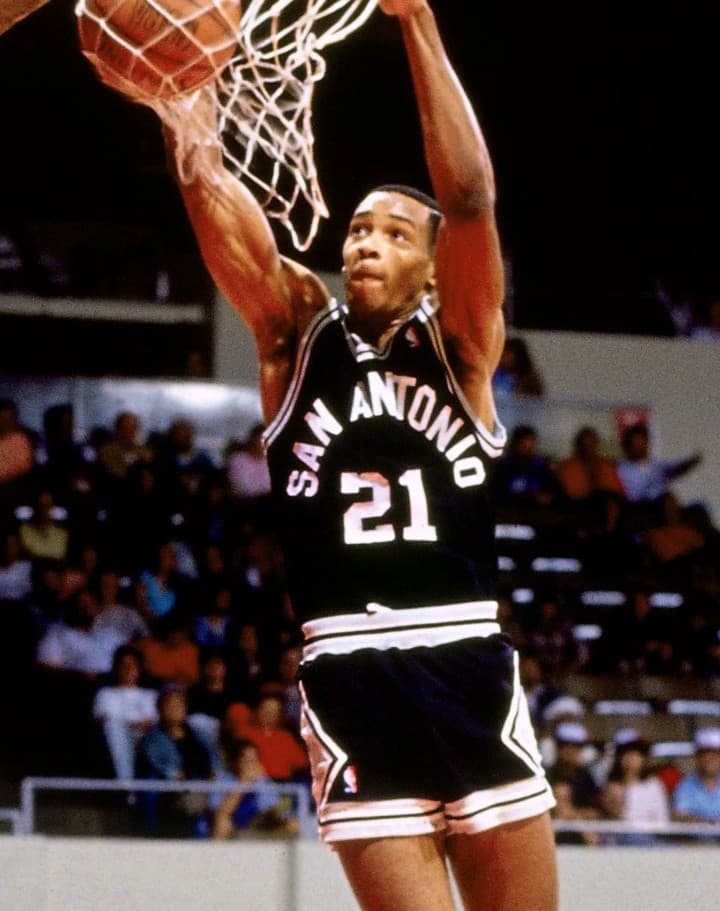
Tim Duncan spent 19 seasons with the San Antonio Spurs and won five championships — in 1999, 2003, 2005, 2007, and 2014 — across a span that included three different coaching eras, four different starting point guards, and the full arc of the NBA from the pre-analytics era through the statistical revolution. No other player in history has won championships in as many different decades as Duncan: his 1999 title came during the lockout-shortened season when he was 22, his 2014 championship came when he was 37 and the Spurs ran the most efficient offense in the league.
His nickname — "The Big Fundamental" — captured the appeal and undersold it simultaneously. The label acknowledged that Duncan built his game on footwork, positioning, and two-handed technique rather than athleticism or flash. What it did not capture was the competitive intelligence behind those choices: Duncan understood where the ball would be on every possession before the play developed, communicated defensive assignments to teammates who could not see what he saw from the elbow, and used the glass with a precision that made 15-foot bank shots reliable instead of occasional.
In 2002-03, his first back-to-back MVP season, Duncan averaged 23.3 points, 12.9 rebounds, 3.9 assists, and 2.9 blocks per game. The blocks and the rebounding describe the same quality: he was almost always in the right position. His three Finals MVP awards — in 1999, 2003, and 2005 — acknowledge what the box scores recorded: Duncan elevated in every playoff series he played with the Spurs, and the Spurs won 50 or more games in every season he was healthy. Wake Forest produced one NBA player who defined an era without ever making a highlight reel.