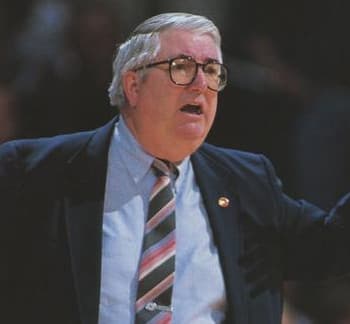
Frank Layden was a basketball coach from Brooklyn who became the most important figure in the early history of Utah Jazz basketball. He was not a tactician in the mold of the great X-and-O architects but a builder of culture and morale, and the Jazz retired his #1 for what he meant to the organization in its formative years rather than for any single achievement. Layden joined the Jazz in 1979 when the franchise relocated from New Orleans, serving first as scout and general manager, then taking over as head coach from 1981 to 1988. His record was 277-294, but he drafted Darrell Griffith, acquired John Stockton, and built the roster that would later thrive under Jerry Sloan. He resigned mid-season in 1988 citing exhaustion, facilitated Sloan's hiring, and stayed on as president. His relationship with the franchise spans five decades — longer than any other figure in Jazz history.
Building the Franchise in Utah
Layden joined the Jazz in 1979 when the franchise relocated from New Orleans, initially as a scout and general manager. By 1981 he had taken over as head coach, and from 1981 to 1988 he presided over the transformation of a franchise that had been, in New Orleans, a financial and competitive disaster into something that Salt Lake City was genuinely proud of.
His coaching record was 277-294 — not a winning record in the conventional sense. But coaching records are poor instruments for measuring what Layden accomplished. He drafted Darrell Griffith. He acquired John Stockton. He built the roster that would eventually, under Jerry Sloan, become one of the most successful franchises of the 1990s. He created the conditions under which everything that followed became possible.
The Coach Who Made the Culture
Layden understood that a basketball franchise in Salt Lake City needed to be something more than a team — it needed to be a civic institution that the community felt ownership of. He built that ownership through personality, humor, and an almost total lack of the arrogance that often accompanies people in positions of authority. He was funny, self-deprecating, and genuinely curious about the people around him. This made him beloved in a city that had every reason to be skeptical of professional basketball.
He resigned mid-season in 1988, citing exhaustion, and was replaced by Jerry Sloan — a transition he supported and facilitated. This, too, was characteristic: a leader who understood that the right move for the organization was more important than his own continuation in the role. The Jazz under Sloan would reach two Finals. The foundation Layden built is part of why.
After coaching, Layden stayed with the franchise as president, continuing to shape its culture and identity through the most successful period in its history. His relationship with the organization spans five decades — longer than any other figure in Jazz history.
Why #1 Is in the Rafters
The Jazz retired Frank Layden's #1 because the franchise understood that culture is built by people, not just players. Championships are won on courts, but the conditions that make championships possible are created in offices, in practice facilities, and in the daily decisions of leadership about what the organization stands for and how it treats the people inside it.
Layden created those conditions in Utah. He arrived when the Jazz were an afterthought — a franchise that had fled one city and was not yet at home in another — and he left them as a legitimate organization with a legitimate identity. The number in the rafters is the Jazz's acknowledgment that building something real requires the kind of work that does not show up in highlight reels, and that Frank Layden did that work as well as anyone in the franchise's history.
¿Te gusta este análisis?
Recibe más análisis como este en tu bandeja de entrada.