Esta página contiene enlaces de afiliados. Podemos ganar una comisión si compras a través de estos enlaces, sin costo adicional para ti. As an Amazon Associate I earn from qualifying purchases.
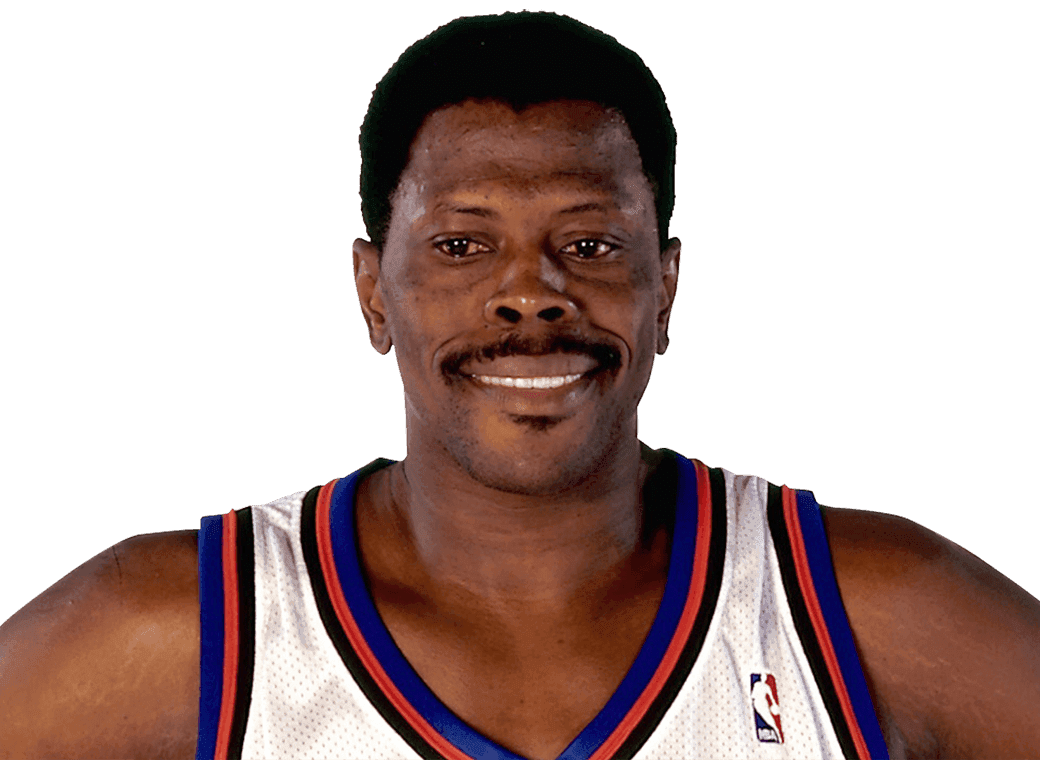
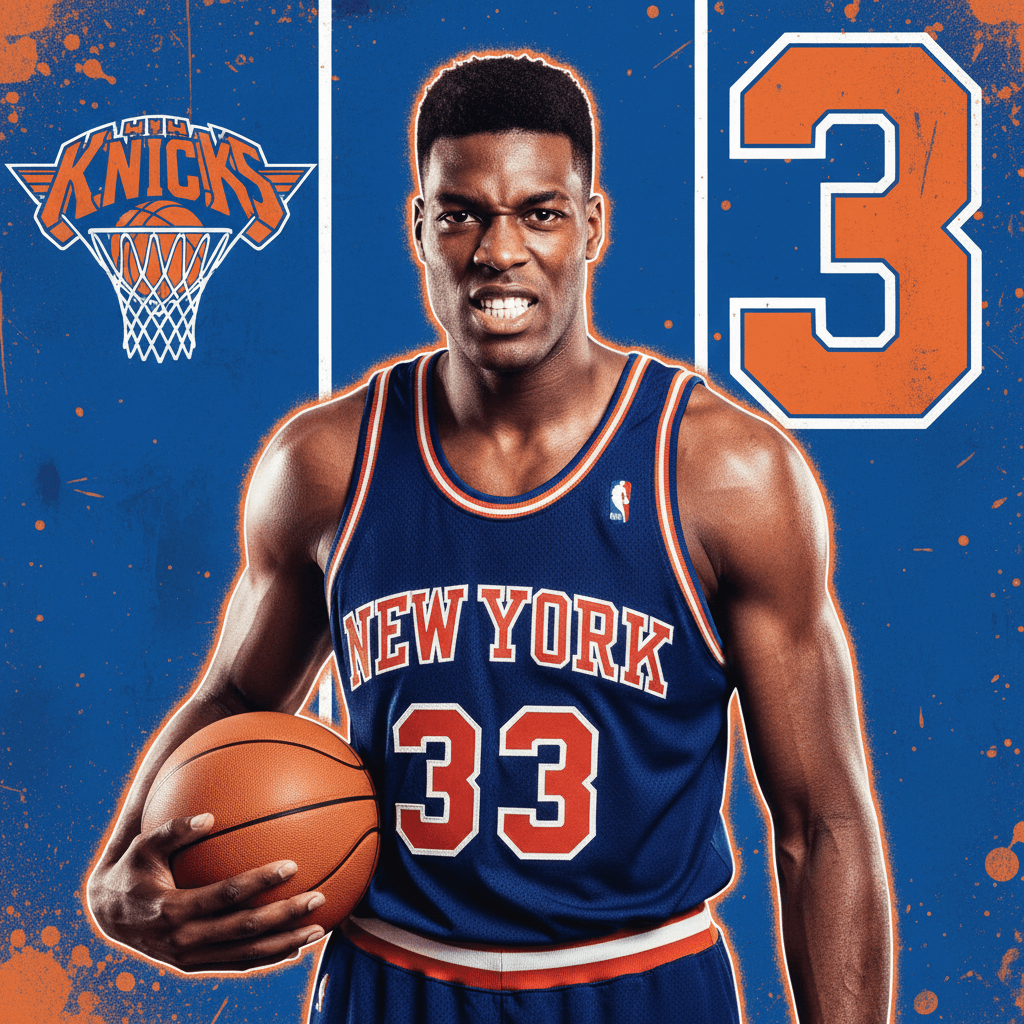
February 28, 2003. Madison Square Garden dimmed its lights for a man who had never given it a championship, and for once the building that booed him in the bad years had nothing in its throat but noise. Patrick Ewing walked to center court in a dark suit, and the number 33 rose toward the rafters on a banner the Knicks had decided would hang there as long as the franchise existed. He was a Seattle SuperSonic by then, then an Orlando Magic, a journeyman ending of a career that had belonged almost entirely to New York. None of that mattered to the crowd. They were not cheering a title. They were cheering fifteen winters of a man who had carried a championship-starved city on a pair of surgically repaired knees and never once asked to be carried back. The New York Knicks have not let another player wear #33 since. They never will.
He never won the ring. That is the first thing people say about Patrick Ewing, and it is the least interesting true thing you can say about him.
Kingston to Cambridge, Without a Word
Patrick Aloysius Ewing was born in Kingston, Jamaica, in the summer of 1962, and he came to the United States as a boy of around twelve, settling with his family in Cambridge, Massachusetts. He arrived speaking almost no English and knowing nothing of basketball — in Jamaica he had played cricket and soccer, the games of the island. The sport that would make him famous was a foreign language layered on top of a foreign language. He learned both at once, on the cold outdoor courts of Cambridge and in the gym at Cambridge Rindge and Latin School, where a coach saw a teenager who was already approaching seven feet tall and moving like someone half his size.

The accent stayed with him his whole life. So did the wariness — the sense, never fully shaken, of a kid who had been the outsider in every room before he was the most dominant person in it. By his senior year of high school he was the most recruited big man in America, and every program in the country wrote letters. He chose Georgetown, and he chose John Thompson, the towering Black coach who ran his program like a fortress and treated the protection of his players as a sacred duty. It was the right home for a young man who had spent years being stared at. Thompson did not hand him to the world. He made the world come through the door.
The Hoya Years and the Making of a Center
At Georgetown, Ewing became the defining college player of the early 1980s — not the most prolific scorer, but the most terrifying defender the college game had seen in a generation. He blocked shots like a man swatting flies off a table. He changed dozens more that the box score never recorded, because guards who saw him waiting at the rim simply stopped driving. The Hoyas reached three national championship games in his four years and won it all in 1984, beating Houston — and a young Hakeem Olajuwon, a name that would shadow Ewing's professional life — for the title. He left Georgetown as the Naismith College Player of the Year and the most coveted prospect basketball had produced since Kareem Abdul-Jabbar.

In 1985 the NBA introduced its draft lottery, a system invented in part to stop bad teams from losing on purpose to secure a player exactly like this one. The first envelope ever drawn belonged to the Knicks. New York — a proud franchise that had not contended seriously in over a decade — won the right to draft Patrick Ewing first overall. Some in the league cried conspiracy; the conspiracy theories have never died, and they never will, because the prize was too perfect. What is not in dispute is what the Knicks received: a franchise center, a cornerstone, the single most important player the building had housed since Willis Reed limped out of the tunnel in 1970.
Rookie of the Year, and the Long Climb
Ewing won Rookie of the Year in 1986, and then spent his first several seasons learning a hard truth: a great center is not, by himself, a great team. The Knicks of the late 1980s were thin and poorly built around him, and the playoff runs were short or nonexistent. He played through knee problems that would have shelved lesser men, posting roughly twenty points and ten rebounds a night with the kind of metronomic reliability that stopped being remarkable only because it never stopped. Across his career he averaged in the neighborhood of twenty-one points and ten rebounds a game, with elite shot-blocking numbers — but the per-game figures undersell him, because his real value was the door he closed. Teams did not score at the rim against prime Patrick Ewing. They settled, and they lost.

The turn came when Pat Riley arrived in 1991, fresh off the Showtime Lakers, carrying a philosophy that fit New York like a tailored coat: defend like your life depends on it, rebound everything, and make every possession a street fight. Riley built the team around Ewing's interior presence and a snarling perimeter defense, and the Knicks became the most physically punishing team in basketball. The era of the brutal, beautiful, grinding New York Knicks had begun, and Ewing was its beating heart.
The Riley Knicks: A Decade of War
From 1988 through 1996 the Knicks reached the postseason every single year, and for most of the 1990s they were a genuine title contender — the kind of team nobody wanted to see across the bracket. They were also, maddeningly, a team that kept running into history. Michael Jordan's Chicago Bulls stood in their path year after year, and the Knicks-Bulls playoff wars of the early nineties were among the most violent and emotional series the league has ever staged. Ewing went chest-to-chest with the greatest player alive and made him earn every inch. When Jordan left for baseball, the door cracked open. The Knicks pushed through it.

The 1994 run was the peak. With Jordan in a minor-league outfield, the Knicks fought through a bruising Eastern Conference, survived a seven-game war with Reggie Miller's Indiana Pacers — the series where Miller turned trash-talk into theater and the Garden into a pressure cooker — and reached the NBA Finals for the first time in twenty-one years. Ewing had carried them there. He was thirty-one years old, his knees already aching with the wear of a thousand collisions, and he had finally arrived at the doorstep of the thing he had chased since Kingston.
Seven Games From Forever
The 1994 NBA Finals matched Ewing against Hakeem Olajuwon — the same Houston center who had beaten his Georgetown team for the college title a decade earlier, the man who had gone first overall a year before Ewing did, destined to be his mirror and his measuring stick. It was two of the greatest centers of all time, in their primes, playing for everything, and it went the full seven games. Ewing was immense in the series, roughly nineteen points and a dozen rebounds a night, defending the rim on one end and Olajuwon on the other.

Game 7 was at Madison Square Garden. It should have been the night. Instead it became the cruelest single line in Knicks history: John Starks, the undrafted scrapper from Oklahoma whose nerve had defined the team's spirit all year, went 2-for-18 from the floor, 0-for-11 from three. Riley kept riding him. The shots kept clanging. Houston won 90-84, and Olajuwon walked off with the trophy that Ewing had spent nine professional seasons reaching for. There was no scapegoat in that locker room — Ewing never threw Starks under any bus, then or ever — but there was a finality. The window did not slam. It simply, quietly, began to close.
He kept playing at an All-Star level for years. The Knicks reached the Eastern Conference Finals again, fought their way back to the Finals in 1999 — only for a torn Achilles to take Ewing out before he could play in it. The basketball gods, who had given him a body built for the game and a will to match, withheld the one thing he wanted most. In 2000, after fifteen seasons in blue and orange, he was traded away. The goodbye, like so many in sports, came without ceremony and without a ring.

The Numbers Behind the Number
- #1 overall pick in 1985 — the first selection in the inaugural NBA Draft Lottery, which the Knicks won
- 1986 Rookie of the Year
- 11× NBA All-Star — a perennial fixture at the position through the 1990s
- Career averages of roughly 21 points and 10 rebounds per game, with elite shot-blocking
- One of the premier defensive centers of his era — All-NBA and All-Defensive honors across his prime
- Reached the 1994 NBA Finals (lost in seven to Houston) — the closest a Ewing-led Knicks team ever came
- NCAA national champion at Georgetown in 1984 under John Thompson; Naismith College Player of the Year
- Olympic gold medalist with the 1992 Dream Team, alongside Jordan, Magic, and Bird
- Naismith Memorial Basketball Hall of Fame, Class of 2008
- Named to the NBA 75th Anniversary Team — recognized among the greatest 75 players in league history
What the list cannot hold is the durability of the devotion. Ewing played fifteen years in the most demanding media market in American sports, in an era before load management, on knees that surgeons opened more than once, and he showed up. Every night, in a city that booed its heroes as readily as it cheered them, he gave New York the same thing: everything he had. The Garden never got its parade out of him. It got something rarer — a decade and a half of a man refusing to be anything less than the best center on the floor.
Why #33 Hangs Forever
The Knicks retired Patrick Ewing's #33 on February 28, 2003, and the decision was never really in question. The franchise did not raise the banner because he won them a title — he didn't. They raised it because, for fifteen years, he was the franchise. There is a version of basketball history, the shallow one, that measures a career by rings and stops counting. By that math, Ewing comes up empty. But championships are won by teams, and timing, and the cruel arithmetic of who else is alive in your era — and Ewing's era held Olajuwon, Jordan, David Robinson, and a young Shaquille O'Neal, a murderer's row of greatness that any one of them might have beaten in a different decade.

The ring belongs to circumstance. The number belongs to him.
#33 hangs in the Garden rafters for the countless nights he played hurt and dominated anyway, for the wars with Jordan's Bulls and Miller's Pacers, for the seven games against Houston that came one Starks jumper short of immortality, for the simple, unglamorous fact that a Jamaican kid who arrived in this country speaking no English became the most recognizable basketball figure New York produced for a generation. He hangs alongside the franchise's other immortals — Walt Frazier's #10, Willis Reed's #19, and Bill Bradley's #24 — the men of the championship teams Ewing grew up idolizing and chasing. They won the titles he never could. And yet his number hangs in the same air as theirs, treated with the same permanence, because the Knicks understood something the box score does not: greatness is not only what you win. Sometimes it is what you carry, for how long, against how much, without ever putting it down.

The General never got his crown. He got something the franchise decided was bigger — a number that will hang above the floor of Madison Square Garden for as long as there are Knicks to play beneath it.
¿Te gusta este análisis?
Recibe más análisis como este en tu bandeja de entrada.