Esta página contiene enlaces de afiliados. Podemos ganar una comisión si compras a través de estos enlaces, sin costo adicional para ti. As an Amazon Associate I earn from qualifying purchases.
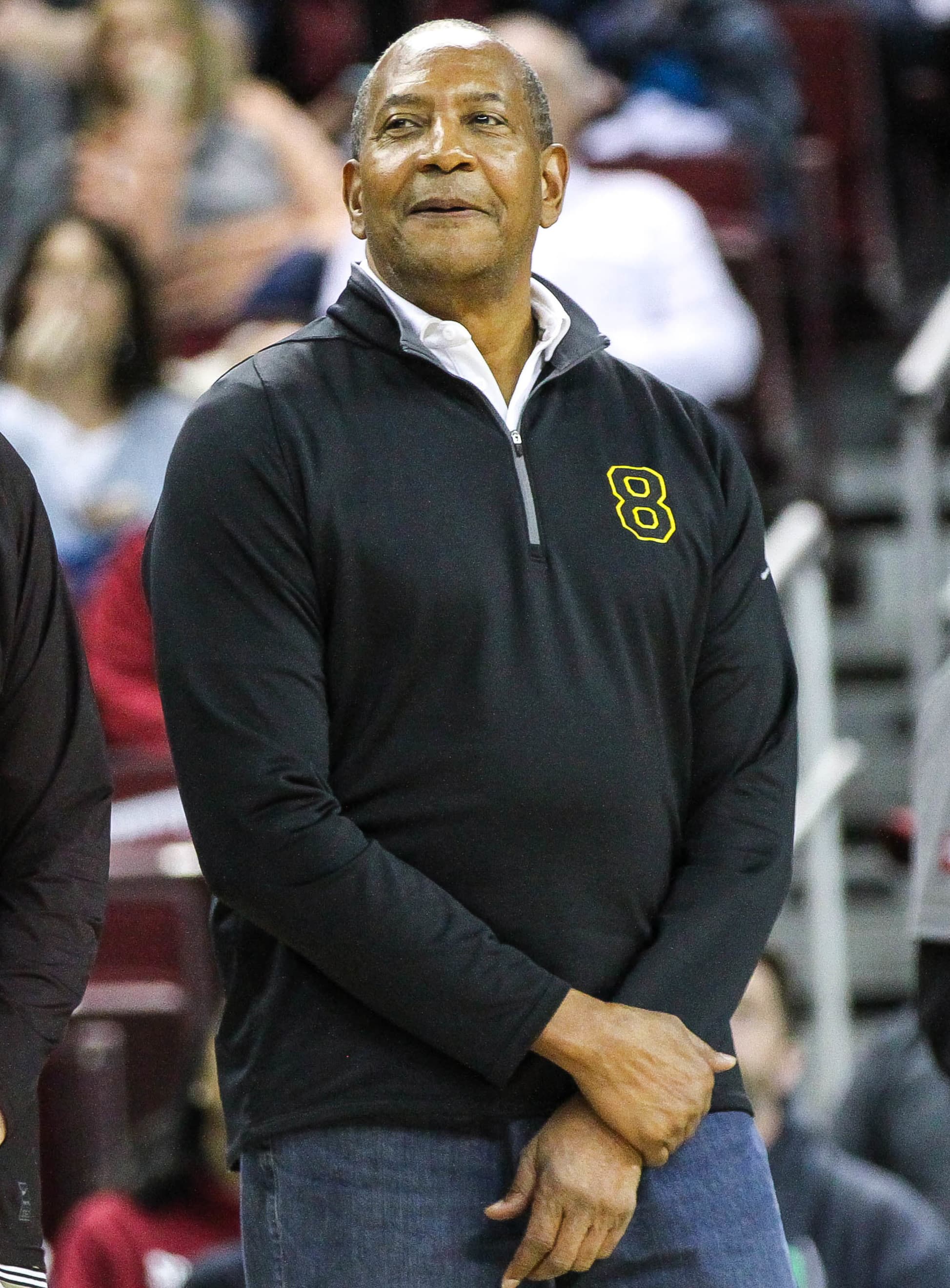
There is a particular kind of greatness that does not announce itself. No dunks to shake the arena, no crossovers to make highlight reels — just a relentless, rhythmic accumulation of points, night after night, season after season, until one day you look up and realize the man has scored more than anyone else in the entire NBA for an entire decade. That was Alex English. That was #2. That was the Denver Nuggets at their most essential.
English never won a championship. He never played in an NBA Finals. He was never the loudest name in the league. What he did was score — silky, precise, endlessly efficient — for eight consecutive seasons at a level no one else in the 1980s could match. The NBA's leading scorer of the decade. Eight All-Star appearances. A career that produced 25,613 points and a Hall of Fame induction that came as no surprise to anyone who watched him play.

The Architect of a Decade
Alex English arrived in Denver via trade in 1980, and what followed was one of the most sustained scoring runs in NBA history. From 1981-82 through 1988-89, English averaged at least 23 points per game every single season. He led the entire league in scoring in 1982-83 with 28.4 points per game, and was the NBA's top point producer across the full decade — more than Larry Bird, more than Magic Johnson, more than anyone.

What made English extraordinary was not one thing but the composition of his game. His mid-range jumper — taken from anywhere between 12 and 20 feet — was as pure and consistent as the league produced in that era. His footwork in the post was a clinic in angles and weight transfers. His running one-hander off glass became a signature shot that defenders knew was coming and still could not stop. English did not need an elaborate system. He needed the ball and a sliver of space, and the points would follow.
Under coach Doug Moe's wide-open, run-and-gun offense, English was the perfect centerpiece. Denver's Nuggets teams of the 1980s were famously high-scoring — opponents knew games would be in the triple digits, knew English would threaten 30 points, and knew there was no reliable way to prevent it. He shared the court with David Thompson, Kiki Vandeweghe, and Dan Issel during different stretches, but it was English who provided the consistent, year-in-year-out production that defined the franchise's most exciting era.

The Art of Consistent Excellence
English's consistency is undervalued in modern basketball discourse precisely because it was so quiet. He did not have the physical gifts that made David Thompson a sensation. He did not carry the cultural profile of Magic or Bird. What he carried was an absolute mastery of his craft — the ability to get to his spot, create his shot, and convert it at a rate that few players in history have sustained for as long as he did.
His footwork belonged to a different era's art form. English studied how to use the floor like a chess player studies the board. Each step was purposeful, each pivot calculated to create maximum disadvantage for his defender while positioning him for his best shot. The result was efficiency that modern analytics would celebrate — a player who maximized every touch, rarely forced a bad shot, and never let his team down by taking himself out of rhythm for the sake of spectacle.
He was also a poet — literally. During the height of his NBA career, English wrote and published a collection of poetry, a fact that drew admiration from people who understood that athletes were more than their sport. His intellectual engagement with basketball and with life outside the arena made him a singular figure in the 1980s NBA landscape.
What He Meant to Denver
The Denver Nuggets did not have a superstar attached to a major media market. They did not have LeBron or Jordan or Magic. What they had for ten years was Alex English — a player who showed up every night in a city that was still learning to love professional basketball, scored his points, and did it all over again. That kind of loyalty and consistency is not glamorous. It is the foundation on which everything else is built.
English gave Denver an identity during a decade when the franchise needed one. He gave the team a player worth coming to see, a highlight worth watching, a name worth mentioning alongside the great forwards of his era. That he did all of this without a championship, without a superteam, without the platform a larger market would have given him, speaks to both the unfairness of how basketball history distributes its attention and the undeniable quality of what he produced.
Why the Nuggets Retired #2
Alex English's #2 was retired in 1992 because the argument was overwhelming and the franchise knew it. When a player scores more points than anyone else in the NBA for an entire decade while wearing your jersey, that jersey stops belonging to the next player who comes along. It belongs to the man who defined it, permanently.

English was inducted into the Naismith Memorial Basketball Hall of Fame in 1997 — a recognition that placed him among the immortals of the game. But for Denver, the retirement of #2 came first, and it came because the Nuggets understood that what English gave them across the 1980s was not just production but identity. He was the franchise's purest expression of basketball excellence for ten years.

The number hangs in the rafters of Ball Arena as a reminder that greatness does not always arrive with fanfare. Sometimes it arrives with a mid-range jumper, a quiet footwork clinic, and 25,613 points accumulated the old-fashioned way: one elegant shot at a time.
¿Te gusta este análisis?
Recibe más análisis como este en tu bandeja de entrada.