Esta página contiene enlaces de afiliados. Podemos ganar una comisión si compras a través de estos enlaces, sin costo adicional para ti. As an Amazon Associate I earn from qualifying purchases.
On November 2, 2024, Vince Carter watched his #15 rise to the rafters of Scotiabank Arena — the first jersey the Toronto Raptors had ever retired, by a franchise that entered the NBA in 1995. Carter was selected fifth overall in the 1998 Draft by Golden State and immediately traded to Toronto, where his physical gifts earned him the nickname Half-Man Half-Amazing. His five-dunk performance at the 2000 Slam Dunk Contest in Oakland — windmills, a between-the-legs lob from cousin Tracy McGrady, the elbow dunk — gave the franchise a cultural moment regular-season wins cannot buy. He was the 1999 Rookie of the Year, a six-time All-Star, and the player who made basketball matter in a hockey-first country, with youth registration spiking nationwide. His 2004 departure fractured the relationship, but two decades of reconciliation followed. #15 hangs as the first chapter in a history that would not exist without the player who wore it.
Half-Man Half-Amazing
Vince Carter was selected fifth overall in the 1998 NBA Draft by the Golden State Warriors and immediately traded to Toronto — a transaction that the Raptors had engineered, acquiring the player they believed could transform a young franchise into something the basketball world would take seriously. Carter was twenty-one years old. He had played one season at North Carolina. He possessed a set of physical gifts that scouts had seen once, maybe twice, in a generation.

The nickname came quickly: Half-Man Half-Amazing. It was not hyperbole. In the 2000 Slam Dunk Contest at the All-Star Weekend in Oakland, Carter produced the single greatest dunk performance in the event's history — a sequence of five dunks that included a windmill from the free throw line, a between-the-legs on a lob from his cousin Tracy McGrady, and the elbow dunk that froze an arena full of NBA players who thought they had seen everything. The judges had no real choice. The crowd had no other verdict to give. Carter received three perfect scores, a rare event in a contest not designed for objectivity. He was twenty-two years old and had just redefined what the human body could do above the rim.
That performance did something for the Raptors that regular-season wins alone cannot accomplish: it gave the franchise a cultural moment. Vince Carter was not just a good young player. He was a phenomenon — someone whose highlights circulated through schoolyards and barbershops and early internet forums with a velocity that preceded the social media era and predicted everything it would become.

The Player Who Made Canada Care
Basketball in Canada in the late 1990s was a sport looking for an identity. Hockey was the national religion. The Raptors had existed for three seasons without producing a reason for casual fans to pay attention. And then Vince Carter arrived and made it impossible to look away.
His impact on basketball in Canada is not easily quantified but is immediately understood by anyone who was paying attention. Youth basketball registration spiked across the country. Kids who had never thought about the sport began watching games, wearing #15 jerseys, and attempting dunks on driveways from coast to coast. The Raptors sold out Scotiabank Arena — then known as the Air Canada Centre — with a consistency that no version of the team had achieved before. When the NBA held its All-Star Game in Toronto in 2016, league officials credited Carter's tenure, in significant part, for making that hosting opportunity possible. He had made Toronto a basketball city. He had made Canada a basketball country.

Carter was named the 1999 Rookie of the Year after averaging 18.3 points and 5.7 rebounds per game in his debut season. He made six All-Star appearances, was named to the All-NBA Second Team in 2000-01, and averaged over 20 points per game for three consecutive seasons during his prime years in Toronto. He was everything the franchise needed: a superstar, a spectacular, and an ambassador for a sport that was still earning its place in a hockey-first culture.
The Departure and the Reconciliation
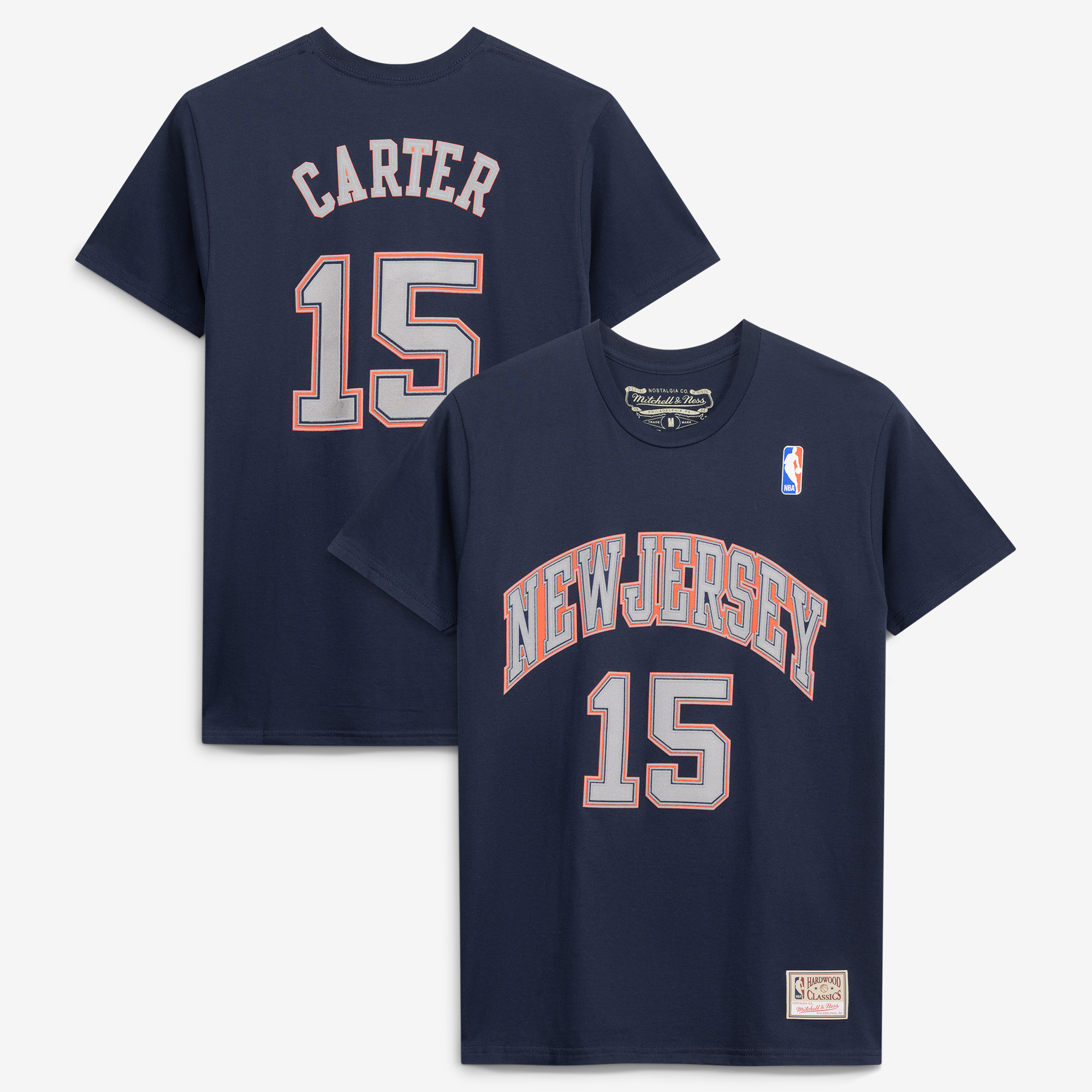
Carter's exit from Toronto in December 2004 was difficult. A trade to the New Jersey Nets — engineered partly at Carter's request — left the fan base feeling abandoned, and his returns to Scotiabank Arena were met with boos that lasted for years. The relationship was fractured in a way that felt permanent.
It was not permanent. Basketball cities, like the relationships that define them, are capable of repair when the love underneath the wound is real enough. Over time, as Carter continued playing — becoming the first player in NBA history to appear in games across five different decades — and as Toronto matured into a championship city, the hostility softened into something that felt closer to the truth. He had given the Raptors their identity. He had given Canada its basketball childhood. The trade was complicated. The legacy was not.

By the time Carter retired in 2020 — after 22 seasons, the longest career in NBA history — the reconciliation was complete. He returned to Toronto events to standing ovations. He spoke about the city with the genuine affection of someone who understood what those six seasons had meant, for the franchise and for him. The basketball world had caught up to what the Raptors always knew: Vince Carter was theirs. He would always be theirs.
22 Seasons, One Home
The full scope of Vince Carter's career is staggering: 22 seasons, eight teams, 1,541 games, 25,728 points. He played in the NBA from 1998 to 2020 — meaning he competed professionally in the 1990s, 2000s, 2010s, and 2020s, a span that encompasses four separate decades of professional basketball and the careers of players young enough to be his children. No player has ever maintained that kind of longevity at the professional level.

But it was always Toronto. The other stops — New Jersey, Orlando, Phoenix, Dallas, Orlando again, Sacramento, Atlanta, Memphis — were chapters in a career that began in Scotiabank Arena and ended with its conclusion understood: the Raptors were home. The number 15 was the number that mattered. The city that booed him and forgave him and loved him first was the city where the jersey would eventually hang.

Why #15 Belongs in the Rafters Forever
The case for retiring Vince Carter's number is not complicated. It rests on facts that speak for themselves: the Raptors' first legitimate superstar, the player who made basketball matter in Canada, the 1999 Rookie of the Year, the six All-Star selections, the 2000 Slam Dunk Contest performance that still circulates as the standard for what the event can be. These credentials are unambiguous.
But the deeper case is cultural, and it is the stronger one. Vince Carter did not just produce statistics. He produced a generation of Canadian basketball fans who grew up believing the sport was theirs, that a franchise in Toronto could produce something great, and that their country belonged in the conversation. That generation has now watched the Raptors win a championship, watched Canadian players fill NBA rosters, and watched the sport they fell in love with — because of a twenty-one-year-old from Daytona Beach with an elastic vertical — become part of the national identity.
Number 15 hangs in the rafters of Scotiabank Arena as the first in a history that would not have been possible without the player who wore it. Vince Carter made Toronto believe. The Raptors made it official on November 2, 2024. It was twenty years coming. It was exactly on time.
¿Te gusta este análisis?
Recibe más análisis como este en tu bandeja de entrada.