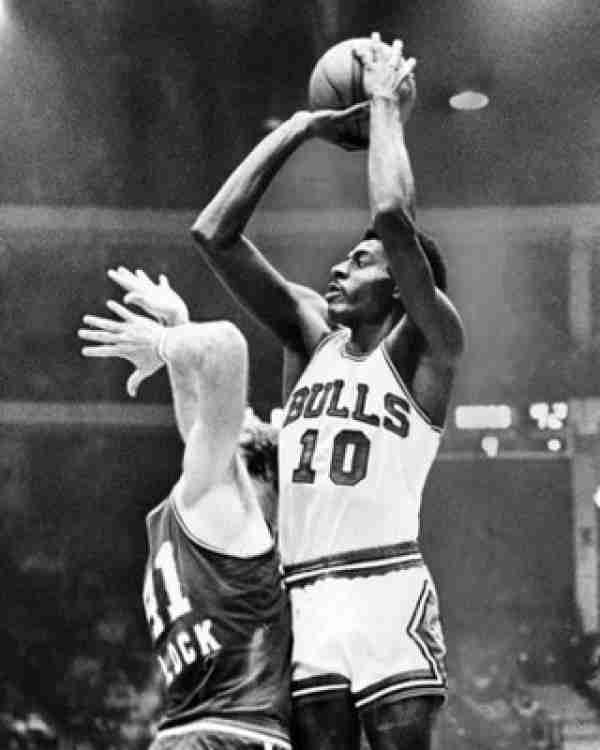
Before the Big Three. Before five championships. Before David Robinson. Before the AT&T Center. Before San Antonio was a basketball city that the rest of the country took seriously, there was James Silas — building the foundation that everything else would stand on. Silas was the Spurs' first offensive superstar, their first All-Star, and the first player who made opposing teams study their San Antonio tape with genuine concern.
Silas played for the Spurs during the franchise's ABA years and continued after the 1976 merger, when San Antonio joined the NBA. He was not around for the championships. He was around for something harder: the years when a franchise has nothing but potential and needs a player who can make that potential feel like a destination rather than a dream. Silas was that player for San Antonio, and the franchise has never forgotten it.
The ABA Years and Early Dominance
James Silas arrived in San Antonio via the Dallas Chaparrals, who became the San Antonio Spurs in 1973. The ABA was a wild, high-scoring league that valued individual brilliance, and Silas fit perfectly — a quick, skilled guard who could score off the dribble, create for teammates, and hit the big shot when the moment demanded it. His nickname, Captain Late, was earned through repeated clutch performances that defined his competitive identity.
In the ABA, Silas averaged over 20 points per game and established himself as one of the most reliable closers in professional basketball. He was the kind of player who wanted the ball in the final seconds — not because of ego, but because he had proven, repeatedly, that he could be trusted with it. The Spurs built their offensive identity around his ability to create and finish in tight situations.
Captain Late and the Art of Clutch
The Captain Late nickname was not just colorful — it was accurate. Silas possessed the composure under pressure that the greatest players share: an ability to slow the game down mentally in its most chaotic moments and make decisions that lesser players would rush. When the Spurs needed a basket in the final two minutes of a close game during the mid-1970s, Silas was the answer.
After the ABA-NBA merger in 1976, Silas continued to perform at a high level, averaging over 20 points per game again in 1976-77. Knee injuries eventually shortened his career and reduced his effectiveness, but his impact on the franchise during its formative years was already permanent. The winning culture, the expectation of professionalism, the belief that San Antonio could compete at the highest level — Silas helped establish all of it.
Setting the Foundation for What Came Next
It is difficult to connect Silas directly to the Spurs' championship era because of the time that separates them. But the connection is real: franchises that build winning cultures in their early years tend to retain those cultures. The professionalism, the competitive standards, and the fan expectations that Silas helped establish in San Antonio during the 1970s were part of the environment that Robinson, Duncan, Parker, and Ginobili inherited.
San Antonio became a basketball city in large part because of players like Silas who gave fans a reason to care during the early years. Without that foundational investment — without a star they could believe in when there were no championships to celebrate — the franchise might not have had the community support that sustained it through rebuilding years and funded the investments that eventually produced a dynasty.
Why the Spurs Retired #13
The Spurs retired James Silas' #13 in 1988, one of the earlier retired numbers in franchise history — a recognition that his contributions predated the championships but were no less essential to them. He was the Spurs' first genuine star, the player who gave the franchise its first real identity in both the ABA and the early NBA years.
Silas averaged 17.0 points and 5.5 assists per game over his career, numbers that translate favorably even against today's more expansive statistical context. But the numbers are secondary to what he represented: the belief, instilled in the franchise's earliest years, that San Antonio was a place where elite basketball could be played and celebrated. #13 belongs in the rafters because without James Silas, the Spurs' dynasty might never have had a foundation to build on.
¿Te gusta este análisis?
Recibe más análisis como este en tu bandeja de entrada.