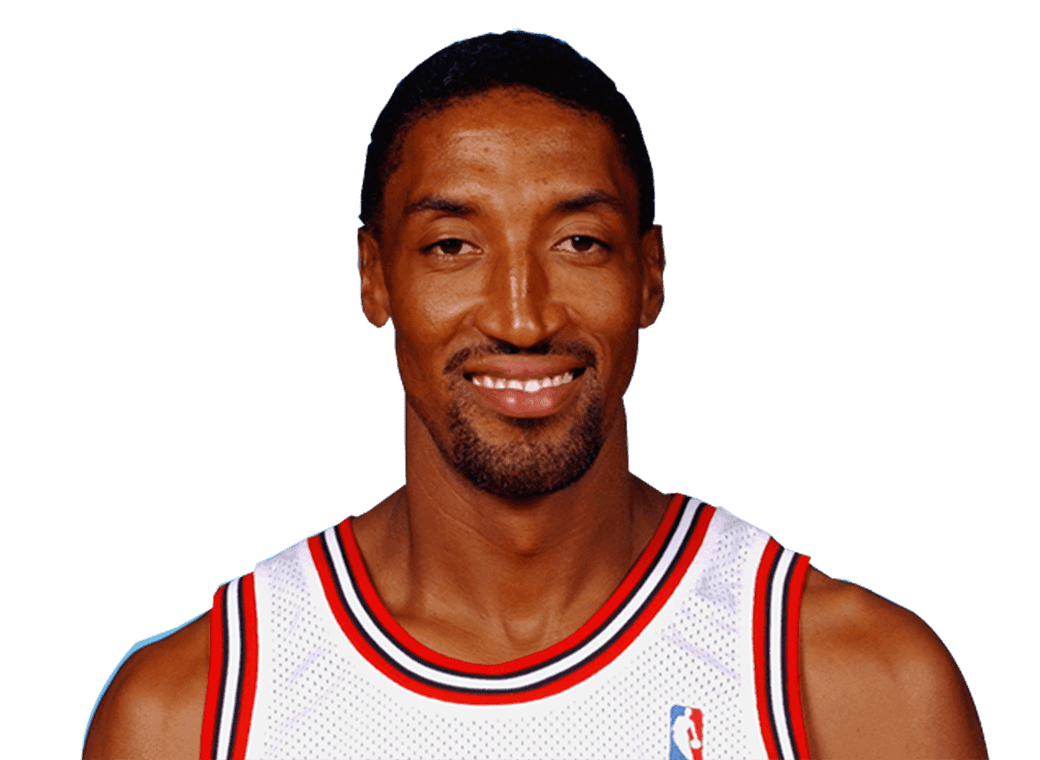
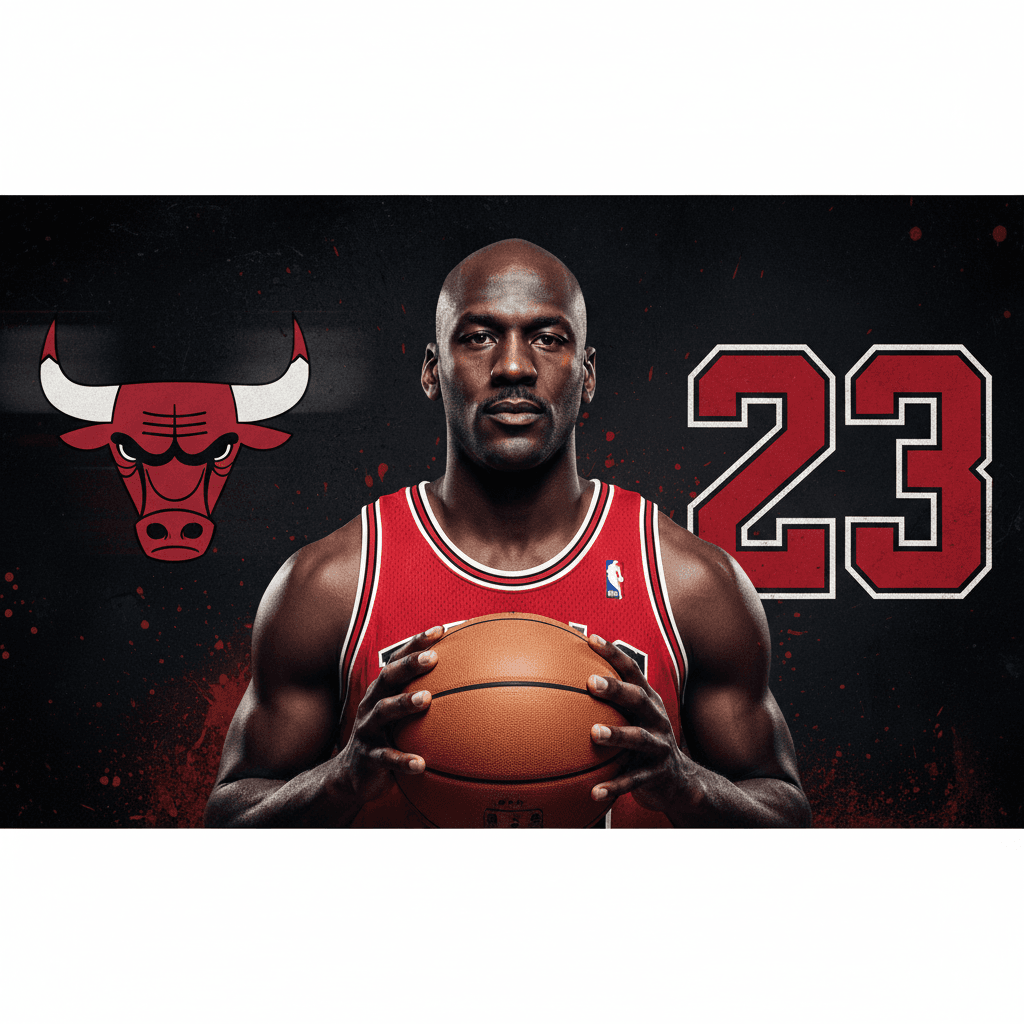
June 9, 1996. KeyArena is so loud the floor seems to shake. Down 0–3 in the NBA Finals to a Chicago Bulls team that won 72 games, the Seattle SuperSonics refuse to die — and the reason is a point guard who has spent the night crouched in Michael Jordan's chest, hands flicking at the ball, mouth never stopping. Gary Payton had asked for the Jordan assignment, and after Seattle clawed back to make it 3–2, Jordan's numbers had cratered under the pressure of a defender nobody could shake. The Sonics would lose the series, but they did not lose the building. For a generation of Seattle fans, that fight — that snarling, talking, suffocating refusal — is what #20 means. Payton was the heartbeat of the loudest era this franchise ever had, the greatest two-way point guard of the 1990s, and the only man at his position to ever be named the best defender in the entire league.
They called him "The Glove," and the nickname fit so completely that it eventually erased the man's first name in headlines. The story goes that during the 1993 playoffs, a relative watched Payton blanket Phoenix's Kevin Johnson — an elite, lightning-quick guard — and said he covered him "like a glove." It stuck because it was true. For more than a decade, Payton guarded the other team's best ball-handler the way a tailor fits a sleeve: tight, total, inescapable. And he did it while talking the entire time.
Oakland Toughness, Oregon State Polish
Payton came out of Oakland, California, and he carried the city's edge with him everywhere — a chip on the shoulder that never sanded down. At Oregon State, he turned himself from a regional prospect into a national name, putting up numbers that made him impossible to ignore and playing with a competitive fury that scouts either loved or feared. By the time the draft arrived, the question was not whether he could play but whether any team could handle the volume — the literal, audible volume — of his game.
The Seattle SuperSonics answered by taking him second overall in the 1990 NBA Draft. It was a bet on attitude as much as talent, and within a few seasons it would look like one of the smartest selections the franchise ever made. Payton did not arrive a finished star. His outside shot was a work in progress, and his rookie production was modest by the standards of what came later. But the defense was there from day one, and so was the mouth, and in Seattle both would become legend.
The Glove Tightens
What separated Payton from every other pesky guard of his era was that his defense was not a gimmick — it was a discipline. He picked up opposing point guards eighty-odd feet from the basket and refused to let them breathe. He fought over screens, jumped passing lanes, and used a low, wide, perfectly balanced stance that let him stay attached through any change of direction. The trash talk was not separate from the defense; it was part of it. Payton narrated his opponents' failures in real time, telling a man exactly what he was about to take from him and then taking it, and the psychological toll was as real as the physical one. Opposing guards spent forty-eight minutes being smothered and serenaded at once.
It is worth dwelling on how rare this skill set was, because the modern game has nearly bred it out. Payton played in an era of hand-checking, when a defender could ride a ball-handler with a forearm and a hip, and no one in the league weaponized that freedom more relentlessly. But he did not merely lean on the rules — he had the lateral quickness, the anticipation, and the sheer stubbornness to have been great in any era. He guarded scoring point guards, combo guards, and shooting guards alike, often taking the toughest backcourt assignment regardless of position. And he did it while still serving as Seattle's primary offensive engine, a two-way burden few players have ever carried for as long as he carried it.
The accolades followed the dominance. Payton was named to the NBA All-Defensive First Team nine times — a run of sustained excellence almost no perimeter player has ever matched. The crowning recognition came in 1995–96, when he was voted the NBA's Defensive Player of the Year. He remains the only point guard in the history of the award to win it. Centers win it. Power forwards and wing stoppers win it. One point guard ever climbed that mountain, and his number hangs in Seattle's memory because of it.
Payton to Kemp: The Sound of the 1990s
A defender that fierce would have been a star anywhere. What made him the face of a city was the offense he ran — and the man he ran it with. Alongside Payton rose Shawn Kemp, a high-flying, rim-rocking power forward whose leaping ability turned routine possessions into events. The two formed one of the most electric duos of the decade. Payton would push the ball, freeze the defense with his eyes, and loft a pass toward the rim that Kemp would catch above it and slam through with both hands. The Payton-to-Kemp alley-oop was not just a play; it was the signature sound of an era of Seattle basketball, the moment KeyArena went from loud to deafening.
You cannot tell the story of #20 without the man who wore #40. Payton and Kemp were the engine and the explosion, the point guard and the finisher, two players whose primes overlapped so perfectly that the franchise's golden decade is essentially the story of their partnership. Kemp's leaping and Payton's vision were a single instrument, and when both were healthy and dialed in, the SuperSonics were nearly impossible to watch without leaning forward.
The No. 1 Seed, and a Lesson in Heartbreak
The 1993–94 SuperSonics won 63 games and entered the playoffs as the No. 1 seed in the Western Conference — a juggernaut on paper. Then came one of the most famous upsets in league history. The No. 8 seed Denver Nuggets, given almost no chance, stunned Seattle in the first round, becoming the first eighth seed ever to knock off a top seed in a best-of-five series. The image of Denver's Dikembe Mutombo lying on the floor clutching the ball is etched into NBA lore, and Seattle was the team on the wrong side of it.
For Payton, the loss was a forge. The Sonics did not fold or rebuild; they came back harder. That capacity to absorb a brutal defeat and answer it the next season was as much a part of his identity as the defense. He took the franchise's pain personally, the way the best players always do, and he turned it into the fuel that carried Seattle to the doorstep of a championship.
1996: One Win From the Mountain
The 1995–96 SuperSonics were Seattle's best team. They won 64 games, rolled through the Western Conference, and reached the NBA Finals — the deepest this franchise would ever go with Payton in his prime. Waiting for them were the 72-win Chicago Bulls, the most celebrated regular-season team ever assembled, led by Michael Jordan at the height of his powers.
Seattle fell behind 0–3, and the series looked finished. Then Payton, who had been used sparingly on Jordan early, took the assignment full-time and changed the math. He hounded Jordan, made every catch a fight, and the Sonics won Games 4 and 5 to claw within 3–2. The dream of forcing a Game 7 was real for forty-eight more minutes. Chicago closed it out in Game 6, and the title went to Jordan. But Payton's defensive stand in that series — the way he refused to be intimidated by the greatest player alive — only deepened his standing in Seattle. A lesser competitor disappears down 0–3. Payton went and grabbed the best player in the world by the jersey.
The Numbers Behind the Number
- 1995–96 NBA Defensive Player of the Year — the only point guard ever to win the award, the single fact that defines his career.
- Nine-time NBA All-Defensive First Team — one of the most decorated perimeter defenders the league has ever seen, a near-unbroken run of being recognized as the best at his position on that end.
- Nine-time NBA All-Star and nine-time All-NBA selection — proof that "The Glove" was an elite two-way force, not merely a stopper.
- No. 2 overall pick, 1990 NBA Draft, out of Oregon State — a franchise cornerstone from the moment he arrived in Seattle.
- 1996 NBA Finals appearance — led the SuperSonics to within two wins of a title against the 72-win Bulls.
- Two Olympic gold medals with Team USA (1996 and 2000) — recognized among the very best his country had to offer.
- Naismith Memorial Basketball Hall of Fame, Class of 2013, and a member of the NBA 75th Anniversary Team — permanent enshrinement among the all-time greats.
- NBA champion (2006) — won his lone title late in his career with the Miami Heat alongside Dwyane Wade and Shaquille O'Neal, after his Seattle years were behind him.
Beyond Seattle, and the Ring That Came Late
Payton was traded away from Seattle in 2003, and the city felt it. He had been the constant — the player you set your watch by, the voice you heard over the crowd. He chased a championship through the back end of his career, and he finally caught one in 2006 with the Miami Heat, sharing a backcourt and a frontcourt with Wade and O'Neal. It was a deserved coda for a competitor who had given everything and never quite reached the summit in his prime.
But the ring he won in Miami does not change where his story lives. The basketball — the era, the noise, the alley-oops, the stand against Jordan — happened in Seattle. Payton is a SuperSonic in the way a few players belong wholly to one city, and no later jersey could rewrite that. When he was enshrined in the Hall of Fame in 2013, it was Seattle's golden decade he carried up the stage with him.
Why #20 Hangs Forever
There is a particular ache in the story of Gary Payton's #20, because the team he defined no longer plays in the city that loved it. The SuperSonics relocated in 2008 and now play as the Oklahoma City Thunder, and the franchise honors Payton's number even as the heart of his story remains a thousand miles to the northwest. For Seattle fans, #20 is not only a tribute to a Hall of Fame point guard — it is a keepsake of a team and an era that were taken away. To honor the number is to honor the SuperSonics themselves: the green and gold, the roaring KeyArena nights, the swagger of a city that believed it had the best team in basketball.
No number tells that story better. Payton's #20 carries the memory of the Payton-to-Kemp connection that powered the run to the 1996 Finals, the partnership immortalized alongside Kemp's own #40. It carries the only Defensive Player of the Year trophy ever held by a point guard. It carries the snarl, the talk, the refusal to back down from anyone, up to and including Michael Jordan in his absolute prime. The franchise has moved, the building has changed names, the era has passed — but the number endures, because some players become the franchise itself. Gary Payton was Seattle basketball. That is why #20 hangs forever.
¿Te gusta este análisis?
Recibe más análisis como este en tu bandeja de entrada.