Ang pahinang ito ay naglalaman ng mga affiliate link. Maaari kaming kumita ng komisyon kung bibili ka sa pamamagitan ng mga link na ito, nang walang dagdag na gastos sa iyo. As an Amazon Associate I earn from qualifying purchases.
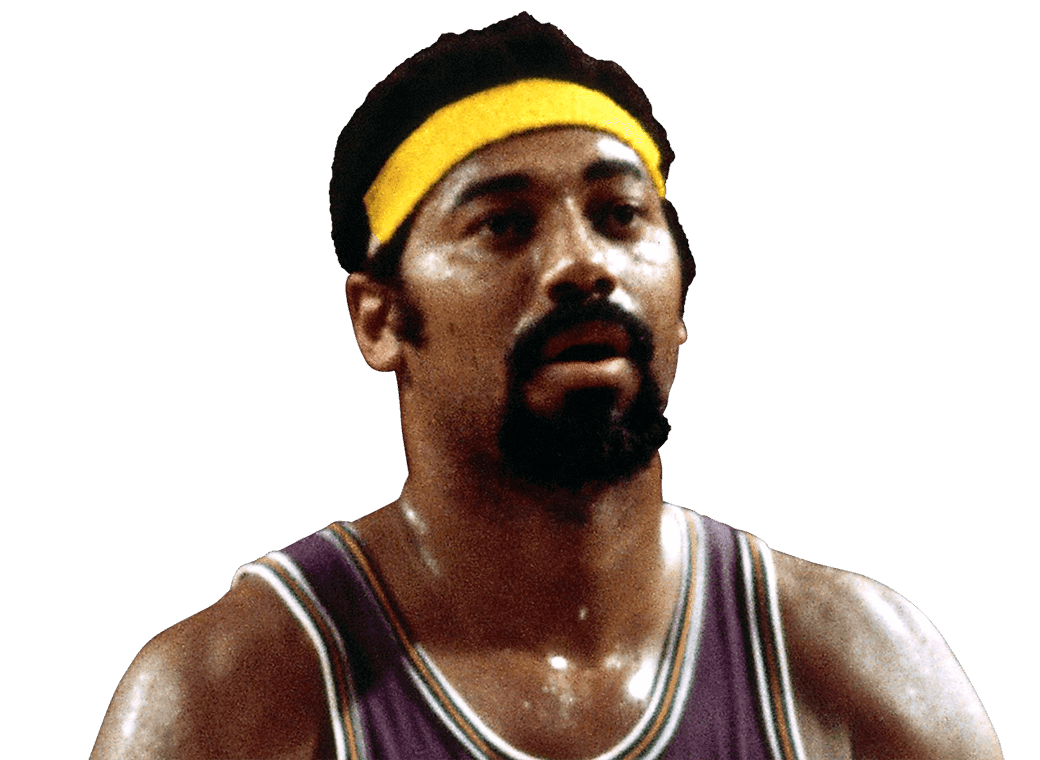
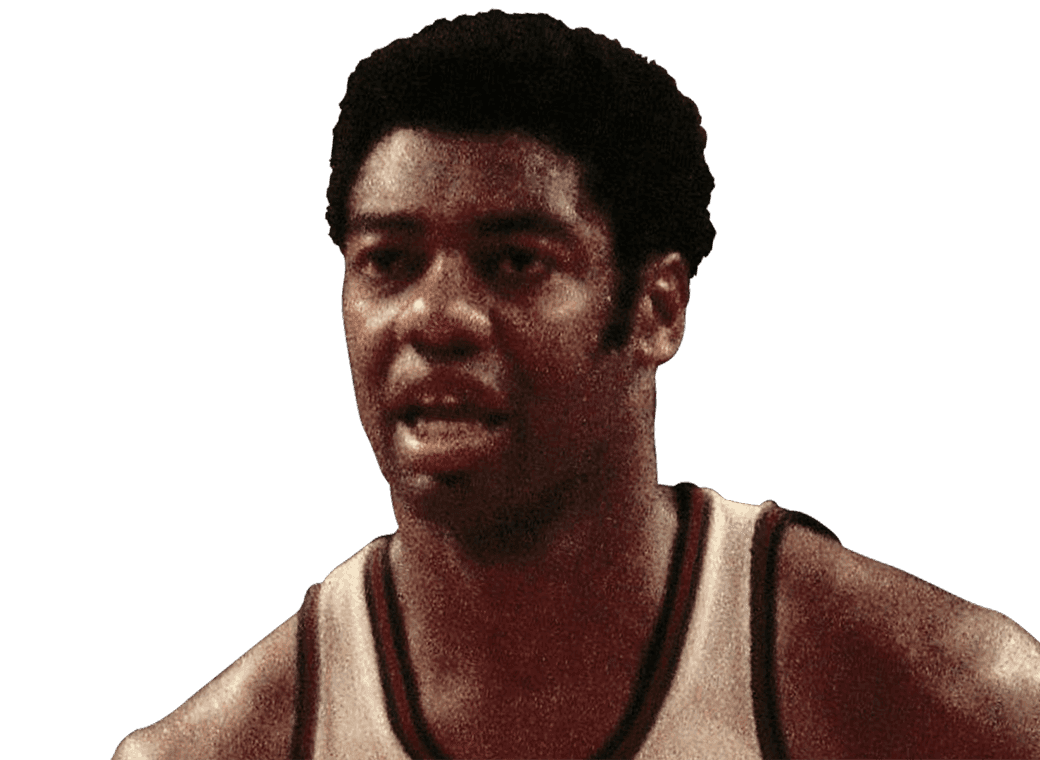
March 2, 1962. A converted hockey rink in Hershey, Pennsylvania, fewer than 5,000 people in the seats, no television cameras and no national radio feed — and on that ordinary Friday night, against the New York Knicks, Wilt Chamberlain of the Philadelphia Warriors scored 100 points in a single game. There is no film of it. The only evidence is a box score, a handful of newsmen's accounts, and a posed locker-room photograph of Chamberlain holding a torn piece of paper with "100" scrawled across it. For decades the number sounded like a typo, a tall tale told by men who had aged into unreliable witnesses. It was none of those things. It happened, it remains the single-game scoring record in NBA history more than sixty years later, and it is the reason #13 hangs from the rafters of Chase Center even though the Golden State Warriors never won a championship while he wore it.
The Big Dipper from Philadelphia
Wilton Norman Chamberlain grew up in Philadelphia, a city that would claim him twice — first as a schoolboy phenomenon at Overbrook High and later as the franchise centerpiece who put professional basketball on the back pages and then the front. He was tall before tall was a strategy, and by the time he left the University of Kansas he was already a national curiosity: a seven-footer who could run, who could leap, who moved like a guard trapped in a center's frame. The Philadelphia Warriors held his draft rights through a now-extinct mechanism called the territorial pick, which let a team claim a local star in exchange for its first-round selection. They claimed him the moment the rules allowed it. Nobody in the front office knew exactly what they were getting, because nothing like him had ever walked into the league before.
He disliked the nickname "Wilt the Stilt" — it made him sound like scaffolding — and preferred "the Big Dipper," for the way he had to dip his head through doorways. The name fit the man better. He was not a rigid post; he was a force of motion, and the league he entered in 1959 had no vocabulary for him.

A Rookie Year That Rewrote the Rules
Chamberlain did not arrive and improve. He arrived and dominated, immediately, in a way rookies are not supposed to. In the 1959-60 season he averaged 37.6 points and 27.0 rebounds per game — figures that would headline a Hall of Fame career and that he produced in his first professional months. He was named Rookie of the Year and, in the same breath, co-Most Valuable Player of the entire league. No rookie had done that. No rookie has done it since.
The reaction around the NBA was not celebration so much as alarm. Coaches schemed not to stop him — stopping him was off the table — but to make him less catastrophic. Defenders fronted him, draped him, hacked him on every catch in a strategy that would later be formalized as intentional fouling, because the only reliable way to keep Chamberlain from scoring was to keep him from getting the ball, and the only reliable way to do that was to commit a foul and accept the consequences. He led the league in scoring that year. He would lead it in scoring the next six years as well — seven consecutive titles, all of them in a Warriors uniform.

The Season That Defies Comprehension
And then came 1961-62, the season that sits alone at the top of the sport and will sit there forever. Across 80 games, Chamberlain averaged 50.4 points and 25.7 rebounds per game. Read it again slowly, because the mind resists it: he averaged fifty points a night for an entire season. The scoring leader in a typical modern year sits around thirty. Chamberlain did not nudge past that ceiling. He doubled it and kept walking.
The arithmetic only gets stranger the closer you look. He scored 50 or more points forty-five times that year — not 50 once as a career highlight, but 50 as a Tuesday. He went for 70 or more on three separate nights. He led the league in minutes by a margin that strains belief, averaging better than 48 minutes a game, which is mathematically possible only because he played the overtime periods too and almost never came out. There was no load management, no minutes restriction, no sports-science department monitoring his recovery. There was a man, a ball, and a schedule, and he met all of it head-on every single night.

In that one season, Chamberlain scored more total points than any player in NBA history has scored in a single season before or since. The record is not vulnerable. The schedule is shorter now, the rotations deeper, the philosophy of rest entirely different. The math that produced 50.4 simply no longer exists.
The 100-point game was the peak inside the peak. On that night in Hershey, the Warriors and the Knicks played at a furious pace, both teams aware in the second half that something historic was within reach. His teammates began feeding him every possession; the Knicks began fouling everyone but him to keep the ball out of his hands. He finished with exactly 100, the last basket dropping with seconds left, and the small crowd spilled onto the floor. It is the most famous number in basketball, and it has no footage to support it — only the certainty of the men who were there.

More Than a Scorer
To remember Chamberlain only as a scoring machine is to miss half of him, and arguably the more impressive half. He is the all-time leading rebounder in NBA history, a record that, like the 100-point game, will almost certainly never be approached. He led the league in rebounding eleven times. Before the NBA officially tracked blocked shots, he was the most feared rim protector alive; opponents redrew their driving lanes the instant he stepped into the paint, and shots that would have gone up against any other defender simply died in shooters' hands.
His physical gifts read like fiction. Listed at 7'1" and built like a decathlete, he reportedly ran a sub-4.7-second 40-yard dash and cleared serious height in the high jump as a college track athlete. He was strong enough to overpower any man in the league and quick enough to beat most of them down the floor. His peers did not have a frame of reference for him because there was no precedent — he was the first of his kind, and in many respects the only one.

Years later, stung by the persistent claim that he was a selfish points-hunter, Chamberlain set out to prove a point of his own. In the 1967-68 season he became the only center in NBA history to lead the entire league in total assists — a seven-footer choosing to pass, simply to demonstrate that he could. That single decision says as much about him as any scoring record. He did everything on a basketball court because he could, and he wanted the world to know it.
San Francisco and a Baffling Goodbye
The Warriors franchise moved west in 1962, carrying Chamberlain from Philadelphia to San Francisco, and he kept producing at a level the new city had never seen. But the relationship between a generational superstar and his team is rarely simple, and in January 1965 the Warriors made one of the most confounding decisions in the history of American sports: they traded the best basketball player on Earth, in the middle of his prime, to the Philadelphia 76ers for a package of role players and cash. There is no modern equivalent that fully captures it. Imagine a franchise dealing away the reigning scoring champion and rebounding king — a player who was, by himself, the reason fans bought tickets — and receiving back a handful of useful pieces and a check.
The trade reshaped the league. In Philadelphia and later in Los Angeles, Chamberlain finally won the championships that had eluded him out West — a title with the 76ers in 1967, widely regarded as one of the greatest single-season teams ever assembled, and another with the Lakers in 1972, anchoring a club that ran off a record winning streak. Those banners belong to other franchises, and this is not their story. But they matter here for one reason: they prove the Warriors let go of a man who still had two championships left in him. What he did in their uniform, he did without ever lifting a trophy — and it was still enough to make him immortal.
The Numbers Behind the Number
- The 100-point game on March 2, 1962 — still the NBA single-game scoring record, untouched for more than six decades
- The only 50-points-per-game season in league history: 50.4 PPG and 25.7 RPG across all 80 games of 1961-62
- Seven consecutive scoring titles, the bulk of them earned in a Warriors uniform
- Rookie of the Year and co-MVP in 1959-60, off a 37.6-point, 27.0-rebound debut season
- The all-time leading rebounder in NBA history; led the league in rebounding eleven times
- Four-time league MVP and a thirteen-time All-Star across a fourteen-year career
- The only center ever to lead the NBA in total assists for a season (1967-68)
- Two NBA championships after leaving the Warriors — 1967 with the Philadelphia 76ers, 1972 with the Los Angeles Lakers
- Never once fouled out of a professional game — not a single time in fourteen years
What no list can hold is the gap between Chamberlain and everyone else. Most records describe the distance between the best and the second-best; his describe the distance between a human being and the physical ceiling of the sport itself. The league responded to him by changing its own rules — widening the lane to push him farther from the basket, altering inbound and free-throw provisions to blunt his advantages. No player has ever been legislated against the way Wilt Chamberlain was, because no player had ever made the existing rules feel insufficient.
Why #13 Hangs Forever
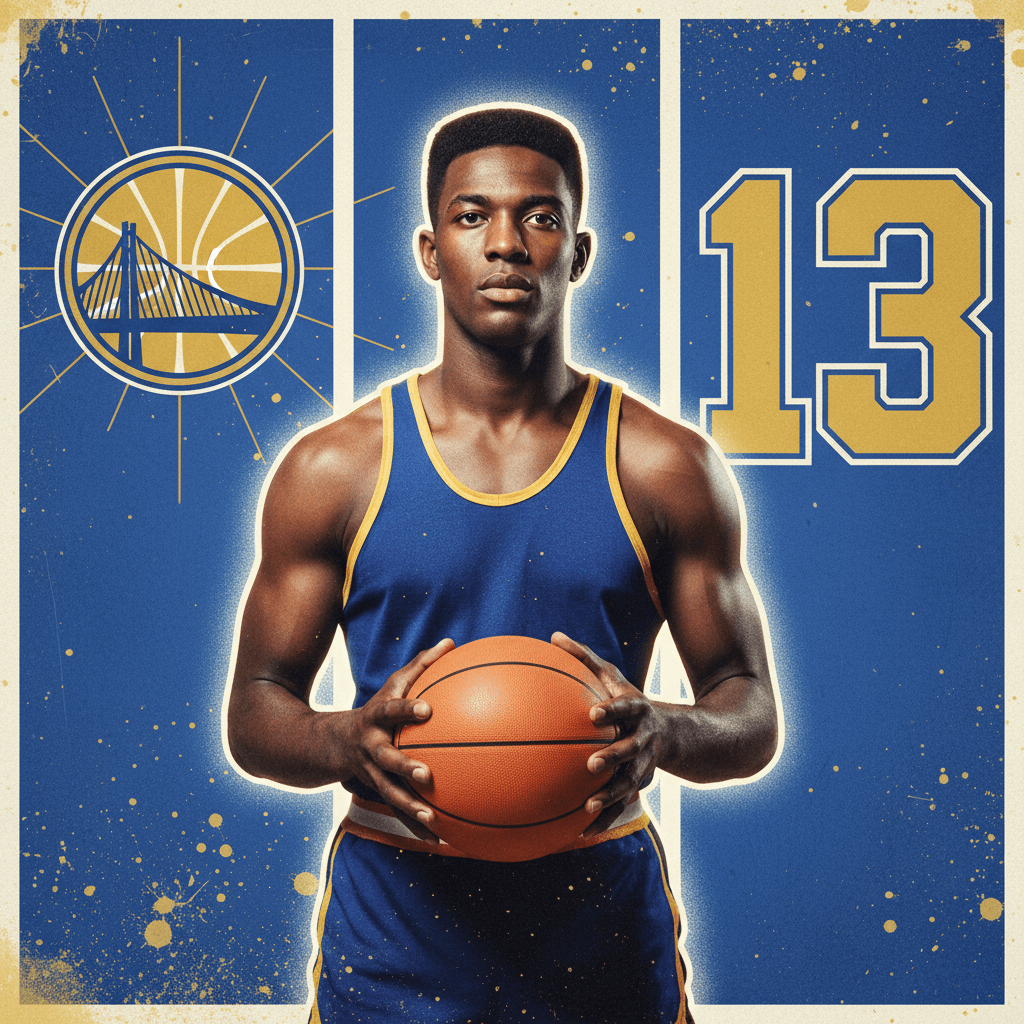
The Warriors retired #13 not to commemorate a championship — there was none during his years with the team — but to acknowledge something rarer and harder to argue with. Some numbers honor a player. This one honors an outer limit. The 100-point game, the 50.4-point season, the 27-rebound rookie year, the seven straight scoring crowns: every one of those things happened in a Warriors uniform, and not one of them is the kind of record that the next generation chips away at. They are sealed. The sport moved on and left them standing.
That is why #13 belongs in the rafters of Chase Center beside the franchise's other permanent names. It hangs in the company of Nate Thurmond's #42, the great center who arrived in San Francisco as a rookie during Chamberlain's final Warriors seasons, and Rick Barry's #24, the scorer who would lead the franchise to the title that eluded Wilt. Each number tells a different story of what it means to have been the best in a Warriors uniform; together they form the spine of the franchise's history. Among them, #13 is the one that measures not greatness against other players, but greatness against the limits of the game.

Wilt Chamberlain wore that number for roughly six seasons and never held the Larry O'Brien Trophy in a Warriors jersey. It did not matter. The franchise raised #13 to the ceiling because the basketball world still has not produced anyone who can stand where he stood — and the men who were in that small Hershey arena on a March night in 1962, with no cameras to prove it, knew they had seen the farthest edge of what one player can do. The number hangs forever because what it witnessed will not come again.
Nagustuhan mo ba ang analysis na ito?
Makakuha ng mas marami pang analysis na tulad nito sa iyong inbox.