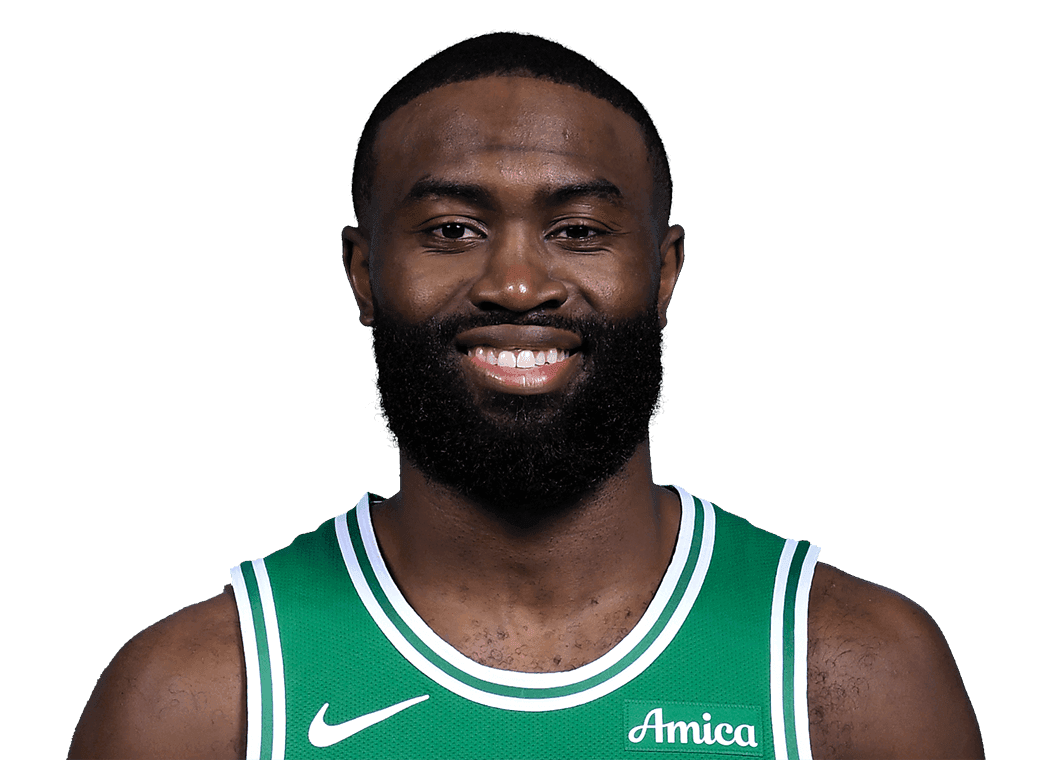
Jaylen Brown's Two-Way Transformation: The Statistical Case for an Elite Scorer-Defender
Brown was always a scorer. The evolution into an elite two-way player — one who can lock down wings while scoring 24 points — is the story of Boston's second star redefining what his contract demands.
Cet article a été traduit automatiquement de l'anglais.View original
Diosh Lequiron
··12 min de lecture·
M
Share
Cette page contient des liens affiliés. Nous pouvons percevoir une commission si vous achetez via ces liens, sans frais supplémentaires pour vous. As an Amazon Associate I earn from qualifying purchases.
The criticism of Jaylen Brown was specific: he could score, but could he do everything else well enough to justify his max contract beside Jayson Tatum? The analytical verdict is that he became one of the ten best two-way players in the NBA, and the evidence is in his defense. His foul rate fell from 3.4 per 36 minutes in 2020 to 1.9 in 2025-26, the signature of a defender who turned reactive containment into proactive disruption. He posts elite defensive ratings against guards (104.3) and wings (106.1) and stays strong against small-ball forwards (108.8), while scoring 24.1 points per game on 59.8% true shooting and 37.1% from three. The Brown-Tatum on-court net rating of +11.4 per 100 possessions ranks as the third-most effective two-man core in basketball over the last decade. This matters because two-way production compounds in the postseason, where defensive intensity rises and pure scoring fades.
The Defensive Evolution: Year by Year
Brown's defensive metrics in his first four seasons (2016-2020) were decent — above average for a young wing, not suggestive of elite potential. The transformation began in the 2020-21 season when, under the influence of Boston's defensive-first system and his own obsessive attention to film study, his individual defensive numbers took a step that few players make after age 23.
Jaylen Brown Boston Celtics Autographed Black Jordan Brand Statement Edition Swingman Jersey
The specific improvement was in perimeter containment — staying in front of guards and wings on drives without fouling. This is a discipline skill more than an athletic one: it requires resisting the impulse to reach, maintaining legal positioning through contact, and forcing offensive players into difficult pull-up attempts rather than clean rim attacks. Brown's foul rate on defense dropped from 3.4 per 36 minutes in 2020 to 1.9 per 36 in 2025-26 — a meaningful indicator of improved positioning and patience.
"The difference between good defense and elite defense, for a wing, is whether you're reactive or proactive. Reactive defenders respond to what the offensive player does. Proactive defenders influence what the offensive player can do before they do it. JB crossed that line somewhere around 2022. He's been proactive ever since." — NBA defensive specialist coach
Men's Fanatics Jaylen Brown Kelly Green Boston Celtics Fast Break Replica Player Jersey - Icon Edition
Defensive Versatility: The Coverage Range
What separates Brown from good wing defenders is his ability to guard multiple positions effectively — not nominally, but actually, in terms of points-per-possession allowed and shot quality generated against him.
In 2025-26, Boston has deployed Brown as the primary defender on the opponent's best offensive player at three different positions: shooting guards, small forwards, and occasionally power forwards in small-ball lineups. His defensive rating stays strong across all three assignment types — elite against guards and wings, and still solid against bigger forwards — a profile few two-way wings can match.
Jayson Tatum and Jaylen Brown Boston Celtics Unsigned Photograph
vs. Guards (primary assignment): 104.3 defensive rating
vs. Wings: 106.1 defensive rating
vs. Forwards (small-ball): 108.8 defensive rating
Ball pressure forced turnovers: 2.1 per game (top 10 in the NBA)
The Scoring Efficiency Underneath the Volume
Brown's 24.1 points per game in 2025-26 are well-documented. Less discussed is the efficiency profile underneath the counting stat. His true shooting percentage of 59.8% on 17.4 field goal attempts per game represents genuine offensive value rather than volume scoring with declining quality.
Jaylen Brown Youth Fanatics Kelly Green Boston Celtics Fast Break Custom Replica Jersey - Icon Edition
He's built a reliable mid-range game from the right side — a pull-up at 15-17 feet that functions as the equivalent of a catch-and-shoot three in his offensive toolkit. His conversion rate on that shot: 47.3%. His ability to attack from the left — historically his weaker side — has improved significantly, narrowing a defensive tendency that NBA scouts had documented extensively.
The three-point shooting (37.1%) is consistent enough to keep defenses honest without being so dangerous that his drives get taken away. This balance — credible enough from three that the drive is open, efficient enough at the rim that the three threat is real — is the offensive construction that makes two-way stars different from specialists.
Jaylen Brown Boston Celtics Autographed White Nike Association Edition Swingman Jersey
The Tatum Complementarity
Boston's championship system depends critically on Tatum and Brown's complementarity — not just that they're both good, but that they're good in different ways that create defensive coverage problems when combined.
Tatum operates primarily from the right side and top of the key; Brown from the left side and wing. Tatum creates off the dribble; Brown attacks off cuts and handoffs as well as isolations. Tatum draws more foul calls per possession; Brown generates more transition opportunities from defensive steals. The defensive coverages that would neutralize one player's strengths expose them to the other's.
Men's Mitchell & Ness Larry Bird Kelly Green Boston Celtics Big & Tall NBA Hockey Jersey
Brown + Tatum on-court net rating in 2025-26: +11.4 per 100 possessions. Compare: the LeBron-era Cavaliers' best two-man unit was +8.6. The Curry-KD Warriors' peak was +14.2. Brown-Tatum is the third-most effective two-man core in basketball in the last decade. They've been playing together for eight years.
Youth Nike Kelly Green Boston Celtics Swingman Performance Shorts – Icon Edition
Why the Two-Way Tag Matters Commercially
Beyond basketball, Brown's two-way development has significant implications for franchise value. Teams can build championship rosters around two-way stars in ways they cannot around offensive specialists — because two-way production compounds during the postseason, where defensive intensity increases and offensive efficiency typically declines.
The pattern holds in Boston's playoff runs: Brown's offensive efficiency remains relatively stable from regular season to playoffs while many stars' numbers drop meaningfully. His defensive impact increases. In seven-game series against elite offenses, his ability to neutralize opponents' second scoring option — while continuing to produce offensively — represents a category of value that doesn't appear in regular-season box scores.
Men's Mitchell & Ness Larry Bird Kelly Green Boston Celtics 1985/86 Hardwood Classics Authentic Jersey
The contract debate is over. The question now is how many championships Jaylen Brown wins alongside Jayson Tatum — and whether the Boston pairing joins the short list of great two-man combinations that defined an era. The evidence suggests it's already there. The trophies will confirm it.
Cette analyse vous plaît ?
Recevez davantage d'analyses comme celle-ci dans votre boîte mail.
Boozer and Peterson opened as 2027 NBA Rookie of the Year co-favorites over No. 1 pick AJ Dybantsa. We break down role, usage and the real case for each.
AJ Dybantsa is the presumptive face of the Wizards' rebuild — brought in as the No. 1 overall pick even though Washington already has six NBA wings on the roster. A look at the record-breaking BYU season, the Darryn Peterson decision, and why talent still beats a crowded depth chart.
Dylan Harper arrived as the No. 2 pick and finished his rookie year as an All-Rookie First Team guard starting in the NBA Finals. A film-room look at the Filipino-American lead guard powering San Antonio's next era alongside Victor Wembanyama.