Questa pagina contiene link affiliati. Potremmo guadagnare una commissione se acquisti tramite questi link, senza costi aggiuntivi per te. As an Amazon Associate I earn from qualifying purchases.
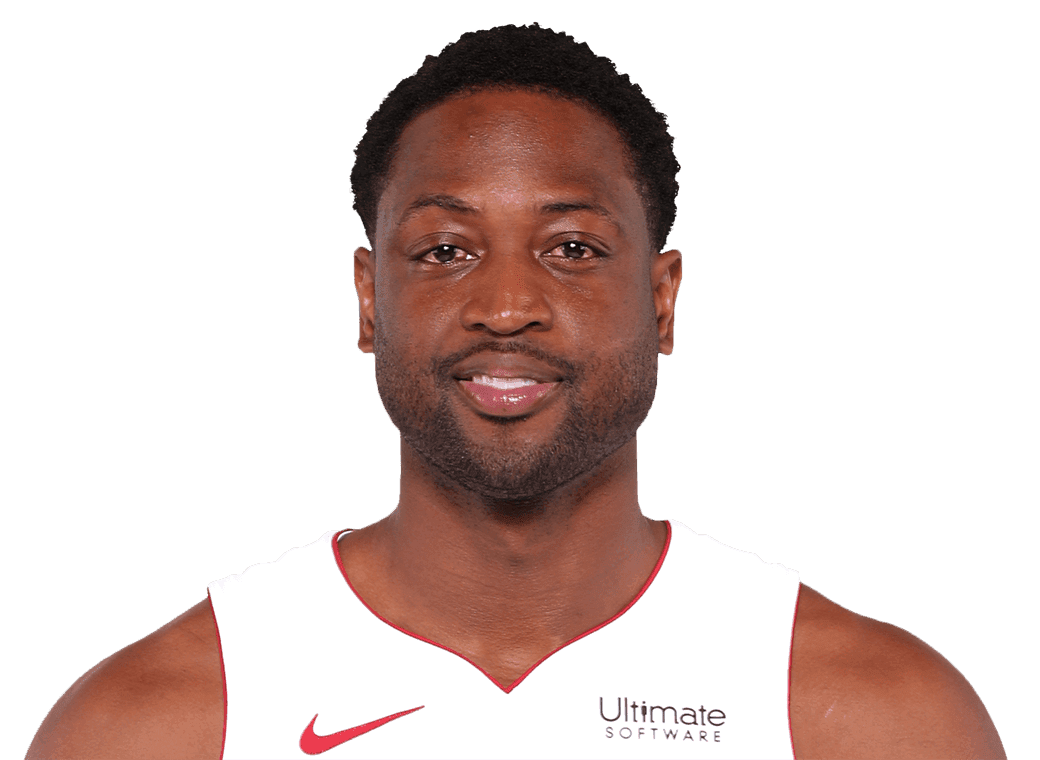
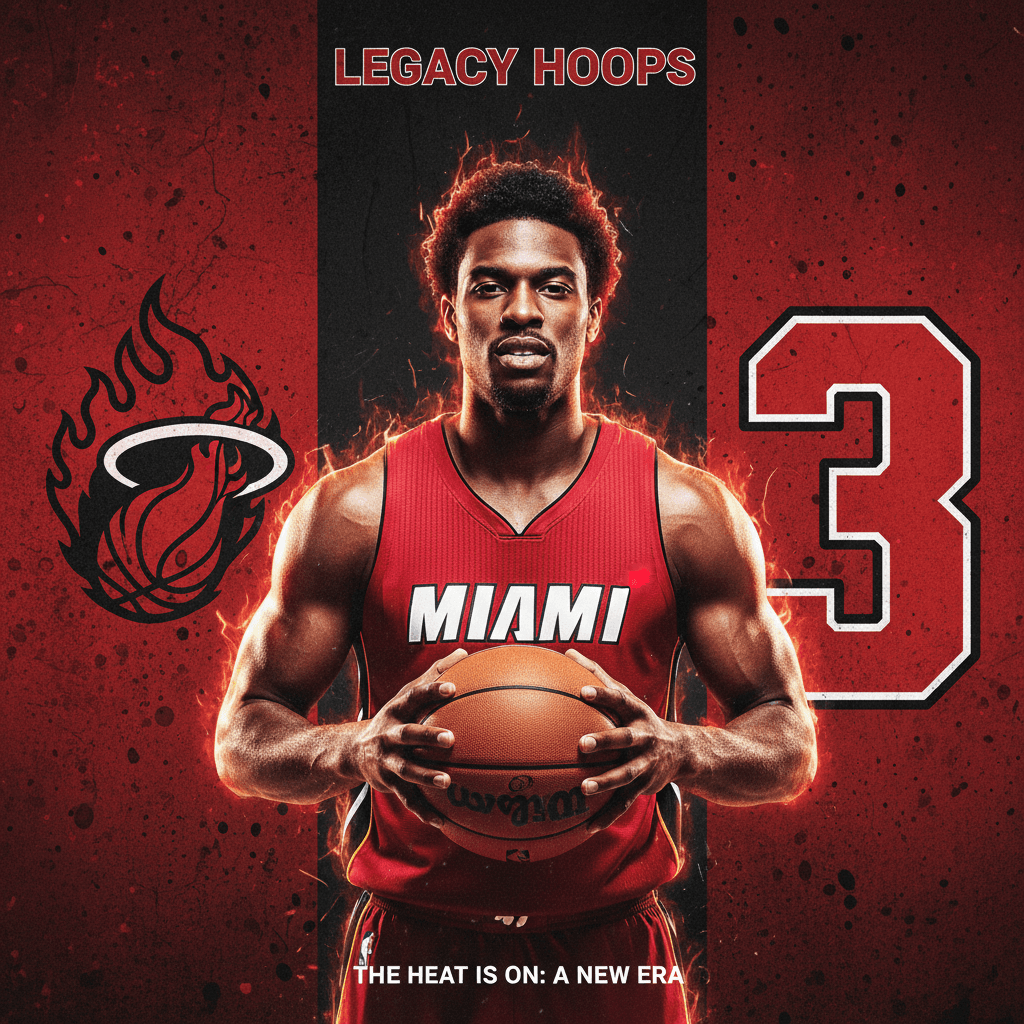
The Miami Heat retired Dwyane Wade's #3 on February 22, 2020, at halftime of a home game against the Cleveland Cavaliers — a ceremony that doubled as a state funeral for an era. Wade was the fifth overall pick in the 2003 NBA Draft out of Marquette, the lowest-drafted member of a class that would define a generation, and across sixteen seasons he became the reason Miami turned from a warm-weather expansion outpost into a basketball city. He carried the franchise to its first championship in 2006, averaging 34.7 points across the Finals while the rest of the league watched a twenty-four-year-old guard refuse to lose. He adapted into a co-equal partner when LeBron James arrived in 2010, won titles in 2012 and 2013, and retired as the Miami Heat's all-time leading scorer. Thirteen All-Star selections, one Finals MVP, three rings. The number went to the rafters because nothing that comes after it should be measured against it.
The most telling detail of that night was who showed up. Shaquille O'Neal flew in. LeBron James flew in. Chris Bosh, Alonzo Mourning, Pat Riley, Erik Spoelstra — the whole architecture of two decades of Heat basketball stood on the floor of an arena that exists, in some real sense, because of the man whose jersey was rising into the dark above them.
The Fifth Pick
The 2003 NBA Draft is remembered for its top of the lottery — LeBron James first overall to Cleveland, Carmelo Anthony third to Denver, Chris Bosh fourth to Toronto. Wade went fifth, to a franchise that had just finished a 25-win season and had not won a playoff series in years. He had come to Marquette as a marginally recruited guard who sat out his first season for academic reasons, then led the Golden Eagles to the 2003 Final Four with a triple-double against top-seeded Kentucky in the regional final — a performance that turned a regional prospect into a top-five pick in a matter of weeks. The basketball world spent draft night talking about the kid from Akron. Pat Riley spent it quietly convinced he had found the foundation of something.

Riley's instinct was specific and, in retrospect, almost unsettling in its accuracy. He did not see a complementary piece or a high-floor rotation guard. He saw a downhill scorer with a competitive temperature that ran hotter than his teammates', a player whose game was built around contact rather than around avoiding it. Dwyane Wade averaged 16.2 points as a rookie and dragged a previously moribund Heat team into the second round of the playoffs. The franchise had drafted, without fully knowing it yet, the most important athlete in its history.
Flash
The nickname came from Shaquille O'Neal, who arrived in Miami in the summer of 2004 in a trade that turned a promising young team into a contender overnight. O'Neal watched Wade move in transition — the burst, the body control through traffic, the way he seemed to accelerate after contact rather than decelerate — and started calling him "Flash," after the comic-book hero. The name stuck because it was accurate. There was a generation of NBA guards who scored from the perimeter; Wade scored from the paint, through bigger men, on a body that he threw at the rim with a recklessness that thrilled crowds and terrified the Heat's training staff.
The 2004-05 season, his second, ended one win short of the Finals. Miami led the Detroit Pistons 3-2 in the Eastern Conference Finals before Wade suffered a rib injury that compromised him for the final two games, both losses. It was the first lesson of his career in the cruelty of the sport's margins: a healthy Wade might have reached the Finals at twenty-three. The injured one went home and spent a summer learning what it would take to finish the job. He came back for his third season and finished it.

2006: The Takeover
The 2006 NBA Finals against the Dallas Mavericks is the single greatest stretch of basketball in franchise history, and it is not particularly close. Dallas won the first two games at home, decisively, and led Game 3 in Miami by thirteen points in the fourth quarter. The series, by every reasonable measure, was over. Two-zero leads in the Finals with the higher seed holding home court do not get overturned by twenty-four-year-olds in their first Finals.
What happened next belongs to the small canon of individual Finals takeovers that the sport keeps returning to. Wade scored 42 points in Game 3 and willed Miami back from the thirteen-point hole. He scored 36 in Game 4. In Game 5, with the series tied, he caught the inbound in the final seconds of overtime, drew a foul, and walked to the free-throw line to win it with 1.9 seconds left — having already tied the game on a driving layup minutes earlier through the kind of contact that would have sent most guards to the bench. He scored 43 that night. He closed Game 6 in Dallas with 36 more, and Miami had its first championship. Across the four straight wins that erased the 0-2 hole, Wade averaged 34.7 points per game and drew 97 free-throw attempts in six games — a number so far beyond normal that it became, fairly or not, the central argument of every debate the series produced.

He was named Finals MVP at twenty-four. The franchise that had never won anything had its banner, and the league had a new name to put beside the established gods of its generation. The 2006 title remains the only championship Wade won as the unquestioned best player on the floor, and the manner of it — the comeback, the volume, the free throws, the refusal — is the reason his number means what it means in South Florida.
The Wilderness Years
What the highlight reels skip is the stretch in the middle. The seasons immediately after 2006 were the hardest of Wade's career. Injuries piled up — shoulder, knee, a dislocated kneecap — and the roster around him aged and thinned. In 2007-08 the Heat won fifteen games. Fifteen. The franchise that had been champions two years earlier finished with the worst record in the league, and Wade, when healthy enough to play, was carrying a team that had no business competing.
He responded with the finest individual season of his career. In 2008-09 he led the entire NBA in scoring at 30.2 points per game — a scoring title for a guard who got most of his points inside the arc, on a team built to lose. It is the season that basketball people who watched closely cite when they argue that Wade's peak is underrated by a public that remembers only the championships. He could not win with that roster. He simply refused to be the reason it lost. The scoring title in a lost season is, in its own way, as revealing a credential as any of the rings.

The Decision, and What It Required
In the summer of 2010, Wade did the thing that franchise players are almost never willing to do. He recruited. He spent the offseason convincing Chris Bosh and, most consequentially, LeBron James to come to Miami and play alongside him — knowing, with full clarity, that it meant surrendering his standing as the best player on his own team. When Wade formed the Big Three with James and Bosh, he was the reason the arrangement was possible at all. Miami had the cap space, the climate, and the championship credibility, and that credibility existed because of what Wade had built since 2003.
The public narrative of that era fixed on LeBron — his arrival, his decision, his eventual coronation. The quieter truth is that none of it happens without Wade's willingness to step back. He went from a 30-point scorer to a secondary creator, from the franchise's gravitational center to the man throwing lob passes to a teammate who would finish them at the rim. The image of the era — Wade tossing an alley-oop off the glass for James to catch and slam in transition — is a perfect compression of the sacrifice. The best player Miami had ever produced spent four years making someone else's greatness easier.

The Heat reached four consecutive Finals from 2011 to 2014. They lost the first, to Dallas, in a rematch that reopened the wound of 2006 from the other side. Then they won two.
Two More Banners
The 2012 championship against Oklahoma City was the validation the whole experiment had been built toward. Wade, no longer the primary option, was still dangerous enough that defenses could not load up on James without paying for it. He averaged in the low twenties across the Finals and defended at a level that the box score never fully captured. The arrangement worked because Wade made it work — because a player who had carried a franchise alone could subordinate that instinct to a structure that needed him to be the second-best player in the building.
The 2013 championship against San Antonio was the harder, stranger one — the series of Ray Allen's corner three in Game 6, of a Miami team that stared down elimination and survived. Wade's body was beginning to betray him by then; his knees were no longer the knees of the Flash. But he gave the 2013 Finals everything that was left, and the banner went up, and the Big Three had its second title in a row. These were championships earned as a partner rather than a sovereign, a different achievement than 2006 and, in some respects, a more difficult one. Carrying a team is a matter of will. Sharing one is a matter of character.

One Last Dance
The end was complicated, the way the ends of long Miami careers tend to be. When James returned to Cleveland in 2014 and the roster turned over, Wade stayed — and then, briefly, did not. A contract dispute sent him to his hometown Chicago Bulls for the 2016-17 season, and a buyout sent him to Cleveland after that, chasing one more run alongside James. Both stops felt like a great player wearing the wrong colors, a museum piece displayed in the wrong gallery. The financial realities of a career past its physical peak had pulled him away from the only city that had ever really been his.
Miami brought him home in early 2018 for the ending the relationship deserved. His final season, 2018-19, became "One Last Dance" — a farewell tour conducted with a self-awareness and grace that the league rarely permits its departing stars. In arena after arena, opponents gave him standing ovations and exchanged jerseys with him after the final buzzer. He hit game-winners that season at thirty-seven, "Father Prime" reaching back into the archive for one more flash of the player he had been. The Heat gave him the send-off, and the city gave it back, and the understanding on all sides was that the return had been the right ending to the right career.

The Numbers Behind the Number
- 3 NBA championships — 2006, 2012, and 2013
- 2006 Finals MVP — at twenty-four, after erasing a 0-2 deficit by averaging 34.7 points across four straight wins
- 2008-09 NBA scoring champion — 30.2 points per game, leading the league on a team built to lose
- Miami's all-time leading scorer, finishing his Heat career with 21,556 points
- 13× NBA All-Star — across a sixteen-season career almost entirely in one uniform
- 3× All-NBA First Team, a perennial fixture on the league's defensive and offensive ledgers in his prime
- One of three players from the legendary 2003 draft class — alongside LeBron James and Chris Bosh — to win a title in Miami
- Naismith Memorial Basketball Hall of Fame, Class of 2023
None of those lines fully holds what Wade meant to the place. He arrived at a franchise with no history of winning and left it a two-time-over dynasty with three banners and a culture that other organizations now study. He drew the league's best free agents to a city they would not otherwise have considered. He defined, more than any coach's speech ever could, the thing the Heat call Heat Culture — the accountability, the conditioning, the refusal to be outworked that Pat Riley preached and Erik Spoelstra inherited. Wade did not just accept that standard. For sixteen years, he was it.
Why #3 Hangs Forever
The Heat retired Dwyane Wade's #3 on February 22, 2020, and the banner now hangs in the rafters of Kaseya Center, in the building where the franchise plays every home game. No Miami player will wear the number again. The decision was never really a debate.
Some numbers are retired to honor a great player. Wade's #3 is retired for a different and rarer reason — because the franchise itself would not exist in its current form without the man who wore it. Before Wade, the Heat were a fact of the schedule. After him, they were a destination, a culture, a basketball institution with three titles and a self-image built around toughness and loyalty. He is the bridge between the franchise that was and the franchise that is.
#3 witnessed all of it. The 42 points in Game 3 of the 2006 Finals with the season slipping away. The 97 free throws that ended an argument by force. The scoring title in a fifteen-win wilderness. The summer he gave away his own primacy to build the Big Three, and the lob passes that made someone else a legend. The two banners earned as a partner. The standing ovations of "One Last Dance." Sixteen seasons, three championships, one city that learned to love basketball because of one player.
The number hangs near the banners of the men who stood on the floor the night it was raised — Shaquille O'Neal's #32, the co-star of 2006; Alonzo Mourning's #33, the warrior who came before; Chris Bosh's #1, the third of the Big Three. Each of those numbers tells a piece of what it means to be a Miami Heat player. None of them, alone, is the franchise. But #3 is the one the whole thing was built around — the last guardian, the first champion, and the standard every Heat player will be measured against long after the last opponent who faced him has left the game.
Ti piace questa analisi?
Ricevi altri approfondimenti come questo direttamente nella tua casella di posta.