Questa pagina contiene link affiliati. Potremmo guadagnare una commissione se acquisti tramite questi link, senza costi aggiuntivi per te. As an Amazon Associate I earn from qualifying purchases.
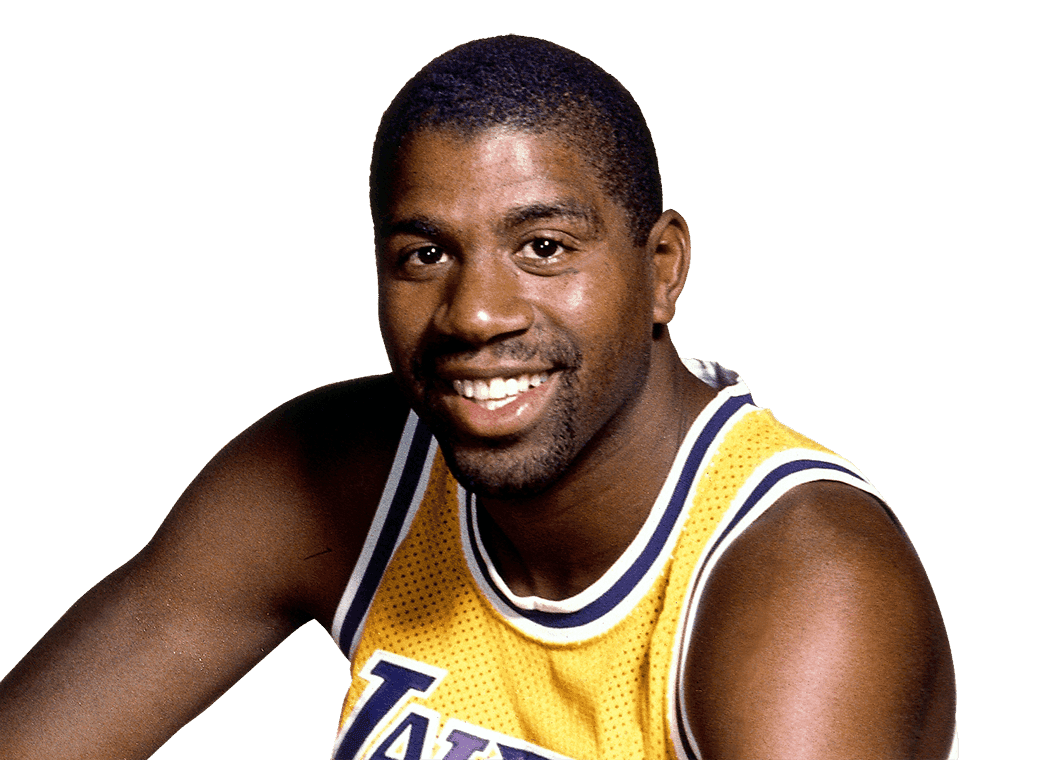
May 16, 1980. The Spectrum in Philadelphia. The Los Angeles Lakers lead the series three games to two, one win from a championship, and they have just lost the one man the whole season was built around. Kareem Abdul-Jabbar — the league MVP, the most unstoppable scorer in basketball — has stayed home in Los Angeles with a sprained ankle. The conventional read is settled before tip-off: the Lakers steal what they can in Game 6, hope to survive, and bring the series back to the Forum for a Game 7 with their center healthy. Then Earvin Johnson, a 20-year-old rookie nine months removed from a college dorm in East Lansing, walks to center circle for the opening jump ball. All 6'9" of him. He is going to play center against the Philadelphia 76ers in a game that can clinch a title, and before the night is over he will have played all five positions, scored 42 points, pulled down 15 rebounds, handed out 7 assists, and been named Finals MVP. He was twenty years old. It remains the most audacious debut in the history of the sport.
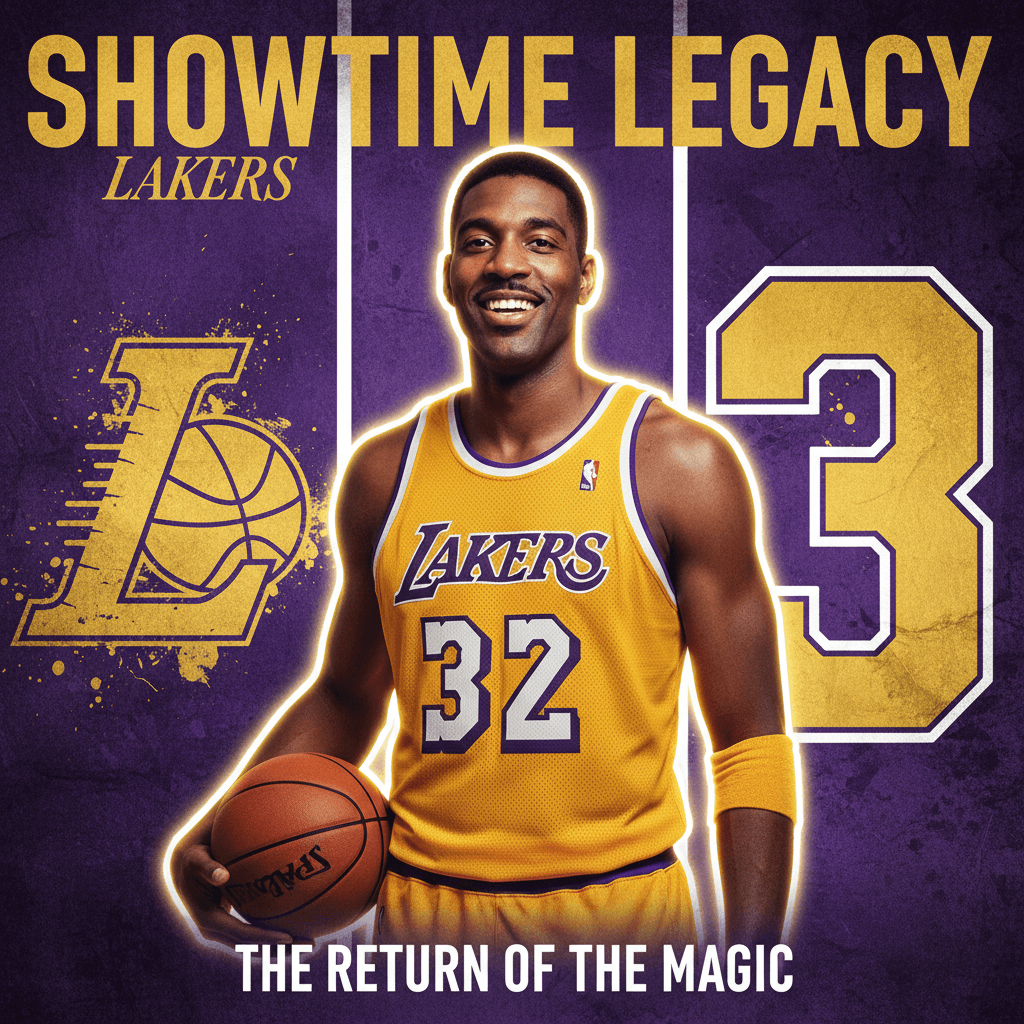
The Lakers won that night, 123–107. They have retired the number he wore, #32, and it has hung in the rafters ever since — a banner for a player who did not so much join a franchise as redefine what the franchise was allowed to feel like. The story of #32 is the story of how the Los Angeles Lakers learned to win while smiling.
Lansing, East Lansing, and a Nickname That Stuck
The nickname came before the legend. A sportswriter named Fred Stabley Jr. watched a 15-year-old Earvin Johnson at Everett High School in Lansing, Michigan, post a triple-double in a single quarter and called him "Magic" in print the next day. Johnson thought it was a temporary gimmick. His own mother disliked it. It outlived everyone's objections because it was the only word that fit what people were watching: a guard the size of a power forward who handled the ball like a point guard half his height and saw passing lanes before they opened.
He stayed close to home for college, choosing Michigan State, and in 1979 he led the Spartans into the NCAA Championship game against an undefeated Indiana State team built around a quiet, deadly forward named Larry Bird. Magic's Michigan State won. The game drew the largest television audience in the history of college basketball to that point, and it was the first chapter of a rivalry that would soon do for the professional game what it had just done for the college one. The Lakers took Johnson first overall in the 1979 draft. He arrived in Los Angeles a 20-year-old who had already beaten the man who would define the rest of his career.

Showtime: The Dynasty That Played Like Jazz
"Showtime" was not a slogan dreamed up by a marketing department. It was a literal description of what your eyes did when the Lakers had the ball. Magic would rip a defensive rebound off the rim and be moving up the floor before the other team had finished celebrating its own missed shot, his head up, reading not where his teammates were but where they were about to be. A no-look feed to James Worthy filling the lane. An alley-oop dropped over a defender's reach to a trailing big man. A behind-the-back dish to Byron Scott spotting up in the corner before the corner knew it needed a shooter. The break was structured enough to function and loose enough to soar, and for most of the 1980s it was the most entertaining basketball the sport had ever produced.
Pat Riley, slicked-back and tailored, took over the bench in 1981 and turned the spectacle into a machine. The titles came in waves. The Lakers won it all in 1980 with the rookie playing center in the clincher, then again in 1982, with Magic taking his second Finals MVP at twenty-two. They were dethroned and reloaded and came back to win in 1985, the first time the franchise had ever beaten the Boston Celtics in the Finals after eight straight losses across three decades — a wound in Lakers history that Magic's generation finally closed. Five championships across the decade. Three Finals MVPs. A point guard who treated the triple-double not as a milestone but as a baseline expectation.

The Rivalry That Saved the League
It is difficult, now, to explain how close professional basketball came to commercial collapse. In the late 1970s the NBA Finals were broadcast on tape delay, after the local news, because the networks did not believe the live games would draw. Attendance was flat. The prevailing story about the league was that it was a niche product with a ceiling.
Then Magic Johnson and Larry Bird entered the league in the same 1979 draft class, carrying the rivalry they had started in that NCAA final straight into the professional game. For most of the decade the road to the championship ran through one of them. Their teams met three times in the Finals. The Lakers-Celtics broadcasts became appointment television; ratings climbed, then doubled, then became the financial engine the league had been missing. Magic and Bird did not simply play great basketball against each other — they made an entire country care about basketball in a way it had not before, and they handed off the league's stewardship to the generation of global superstars who followed.

What began as cold, total competition slowly turned into something else. The two men who spent a decade trying to end each other's seasons became close friends, and the friendship — built on the only kind of respect that is earned across years of trying to win the same trophy — became one of the most enduring narratives in American sports.
The Junior Sky-Hook and the Summit of It All
The single shot that captures Magic at his peak came in the 1987 Finals against those same Celtics. Game 4, Boston Garden, the building loud and certain. With the game on the line, Magic caught the ball on the left side, drove into the lane crowded with Robert Parish and Kevin McHale — two of the best frontcourt defenders alive — and lofted a running hook shot high over their outstretched arms. It was, unmistakably, a junior version of Kareem's sky-hook, borrowed from his own teammate's playbook and used to break his teammate's old tormentors. It dropped. The Garden went silent in the particular way a loud building goes silent when it knows it has just lost. The Lakers won the series; Magic was Finals MVP for the third time and regular-season MVP for the first.

That 1987 team repeated in 1988, fulfilling Riley's famous in-season guarantee of a back-to-back and giving the franchise its fifth title of the Magic era. Across those years he stacked individual honors without ever seeming to play for them — three regular-season MVP awards before he was done, twelve All-Star selections, and a permanent place at the head of the league's all-time list for assists per game. He was, by the consensus of the people who played against him, the greatest passer the sport had yet produced, and he made the act of sharing the ball look like the most thrilling thing a person could do with a basketball.
November 7, 1991
The press conference was hastily called and the room did not yet know why. Then Magic Johnson stepped to the microphones and announced that he had tested positive for HIV and was retiring from the Lakers, effective immediately. In 1991, to most of the public, an HIV diagnosis read as a death sentence, and the disease carried a stigma that had quarantined it in the national imagination to a single demographic. The most joyful, most recognizable athlete on the planet had just told the world he carried it.

The announcement did something no public-health campaign had managed: it forced an honest national conversation in a single afternoon. Magic became one of the most visible HIV/AIDS advocates in the world, and his presence steadily dismantled the assumptions the disease had been wrapped in. Months later he returned to the floor for the 1992 NBA All-Star Game — voted in by the fans, technically retired — and played as if nothing had changed, scoring 25 points and walking off with the game's MVP award while opponents and teammates embraced him at center court and a national audience wept. He came back once more for a brief run with the Lakers in the 1995–96 season, at thirty-six, and was still good enough to start; but the lasting work was no longer on the court. It was in the quiet, year-after-year proof that the diagnosis was not the ending everyone had assumed.
The Numbers Behind the Number
- 5 NBA championships with the Lakers (1980, 1982, 1985, 1987, 1988)
- 3 Finals MVP awards (1980, 1982, 1987) — the first won as a 20-year-old rookie
- 3 regular-season MVP awards (1987, 1989, 1990)
- 12× NBA All-Star
- The all-time leader in assists per game at the time of his retirement
- #1 overall pick in the 1979 draft out of Michigan State, fresh off the 1979 NCAA title over Larry Bird
- The 1980 Finals Game 6 line — 42 points, 15 rebounds, 7 assists, started at center — still without parallel for a rookie
- Architect of the Showtime dynasty; co-author, with Bird, of the league's commercial rebirth
- Naismith Memorial Basketball Hall of Fame inductee
None of those lines, stacked together, quite holds what Magic Johnson meant to the sport. He took a franchise that had moved from Minneapolis with a championship history but a buttoned-up reputation and turned it into the most glamorous brand in professional sports — courtside seats that Hollywood fought over, a style of play that doubled as entertainment, a smile that the cameras could not get enough of. He brought Hollywood to basketball and basketball to Hollywood, and he did it while proving that a 6'9" point guard was not a novelty act but a structural revolution in how the position could be played. Every oversized playmaker who followed runs on a road he paved.

Why #32 Hangs Forever
The Lakers retired Magic Johnson's #32 on February 16, 1992, only months after the diagnosis that had ended his playing career the first time. The ceremony came fast because the franchise was not honoring a stat line — it was acknowledging that something had happened in its building that would not happen again, and that the number which witnessed it deserved to be treated accordingly.
And #32 witnessed all of it. The 42 points at center as a rookie in 1980. The five championships across a single golden decade. The junior sky-hook over McHale and Parish in the Garden. The fast breaks that turned a defensive rebound into three points and a gasp before the other team had crossed half-court. The rivalry that pulled an entire league back from the edge. The afternoon in November when the most joyful man in the sport told the truth and changed how a disease was understood. No banner in that building represents pure happiness the way this one does, because no player ever made winning look so much like joy.

It hangs in the same rafters as the numbers of the men who shared the floor and the franchise with him — Kareem Abdul-Jabbar's #33, the unmovable center who made the break possible; James Worthy's #42, the wing who finished what Magic started; and Kobe Bryant's #8 and #24, the heir who carried the franchise's competitive fire into the next century. Each of those numbers tells its own story of what a Laker is supposed to be. But #32 is the one that taught the franchise its voice — fast, fearless, generous, and grinning. The Lakers raised it to the ceiling because the building has never stopped feeling like the place where Showtime happened, and Showtime started with him.
Ti piace questa analisi?
Ricevi altri approfondimenti come questo direttamente nella tua casella di posta.