Jayson Tatum's Late-Game Excellence: How Boston's Star Became Truly Clutch
Tatum was labeled a disappearing act in big moments. Then he won Finals MVP. A deep dive into the statistical and mechanical transformation that turned criticism into legacy.
本页面包含联盟链接。如您通过这些链接购买,我们可能获得佣金,对您无额外费用。 As an Amazon Associate I earn from qualifying purchases.
The clutch-time criticism of Jayson Tatum was real and fair: across his first four seasons he shot 36.2% in the last five minutes within five points, and the data backed the critics. The player who emerged on the other side is genuinely different. Over the last two full seasons he has posted 44.1% clutch field-goal shooting on a 61.4% true shooting percentage while his clutch usage rose — a combination only elite players manage. The eight-month Achilles rehabilitation, rather than eroding him, produced a more complete offensive player: free-throw shooting climbed from 83.1% to 87.6%, post-up efficiency from 0.89 to 1.08 points per possession, and his pull-up mid-range now hits 48.1%. He has also become a primary playmaker, and his on/off differential of +9.2 points per 100 possessions ranks among the league's top five. He is 27, at the threshold of his prime, and the clutch question has been replaced by harder, fairer ones.
The Clutch-Time Numbers Tell a New Story
Over the last two full seasons, Tatum has posted a 44.1% field goal percentage in clutch time with a true shooting percentage of 61.4%. Those numbers don't just represent improvement — they represent transformation. His usage rate in clutch situations has actually increased while his efficiency went up, a combination that only elite players achieve.
Jayson Tatum Boston Celtics Autographed Green Nike 2022-23 City Edition Swingman Jersey
More telling than the percentages is the shot quality. In his early years, clutch-time Tatum was a volume shooter — he attempted difficult pull-up twos at a rate that made shot chart analysts wince. The current version is a selective clutch performer who attacks free throw opportunities, makes the extra pass when doubled, and saves his toughest shots for moments when he's earned them through the game.
"The biggest change I've noticed is decision-making speed. He used to catch the ball and think. Now he catches the ball and already knows what he's doing. The thought process happened before the catch." — Eastern Conference scout, 2025-26 season
Preschool Nike Jayson Tatum Green Boston Celtics Swingman Player Jersey - Icon Edition
The Achilles Rehabilitation Effect
Tatum's Achilles tear in January 2025 interrupted what was shaping up to be his best statistical season. But the rehabilitation period — roughly eight months of focused individual work — produced something unexpected: a more complete offensive player.
The forced absence eliminated the live-game repetition that all NBA players depend on to maintain rhythm. To compensate, Tatum spent the rehabilitation months drilling the micro-skills that don't get worked on during a season: footwork in the post, free throw mechanics under fatigue, mid-range pull-up timing. The result is visible in his 2025-26 numbers.
Youth Nike Jayson Tatum Kelly Green Boston Celtics Swingman Jersey - Icon Edition
His free throw percentage has improved from 83.1% (already good) to 87.6% (elite). His post-up efficiency — not a primary part of his game previously — jumped from 0.89 points per possession to 1.08 points per possession. His mid-range field goal percentage on pull-ups is at 48.1%, placing him in the top 15 NBA players on that shot type.
The Mechanical Evolution: From Wing to Playmaker
The single biggest tactical shift in Tatum's game is his improved decision-making as a primary ball-handler in pick-and-roll. Early-career Tatum was a wing who received the ball in set positions. Modern Tatum is increasingly the initiator — the player who calls the screen, makes the read at the top of the key, and either attacks the coverage or finds the right receiver.
Jayson Tatum Boston Celtics Autographed WWE Legacy Title Belt with "24 Finals Champ" Inscription - Limited Edition of 10
His assist numbers (5.2 per game in 2025-26) reflect this evolution, but the raw count understates the impact. Watch his film and you'll notice the ball movement that doesn't always generate assists: the extra pass to the shooter who swings it one more time, the kickout that starts the chain of movement that ends in an open three. Tatum's playmaking IQ has grown from "can make the obvious pass" to "understands what the defense is trying to take away and punishes it."
Pick-and-roll ball-handler efficiency: 1.04 PPP (top 20 among high-usage initiators)
Passes leading to open threes: 4.1 per game (8th in the NBA among forwards)
Potential assist rate: 22.3% of possessions (career high)
The Mid-Range Resurrection
Basketball analytics largely killed the mid-range jumper as an efficient offensive weapon. The math is correct: corner threes and rim attempts outperform mid-range twos in points per possession at league-average percentages. But the math has an exception: players who shoot mid-range at an elite enough clip that the shot becomes efficiency-neutral or better.
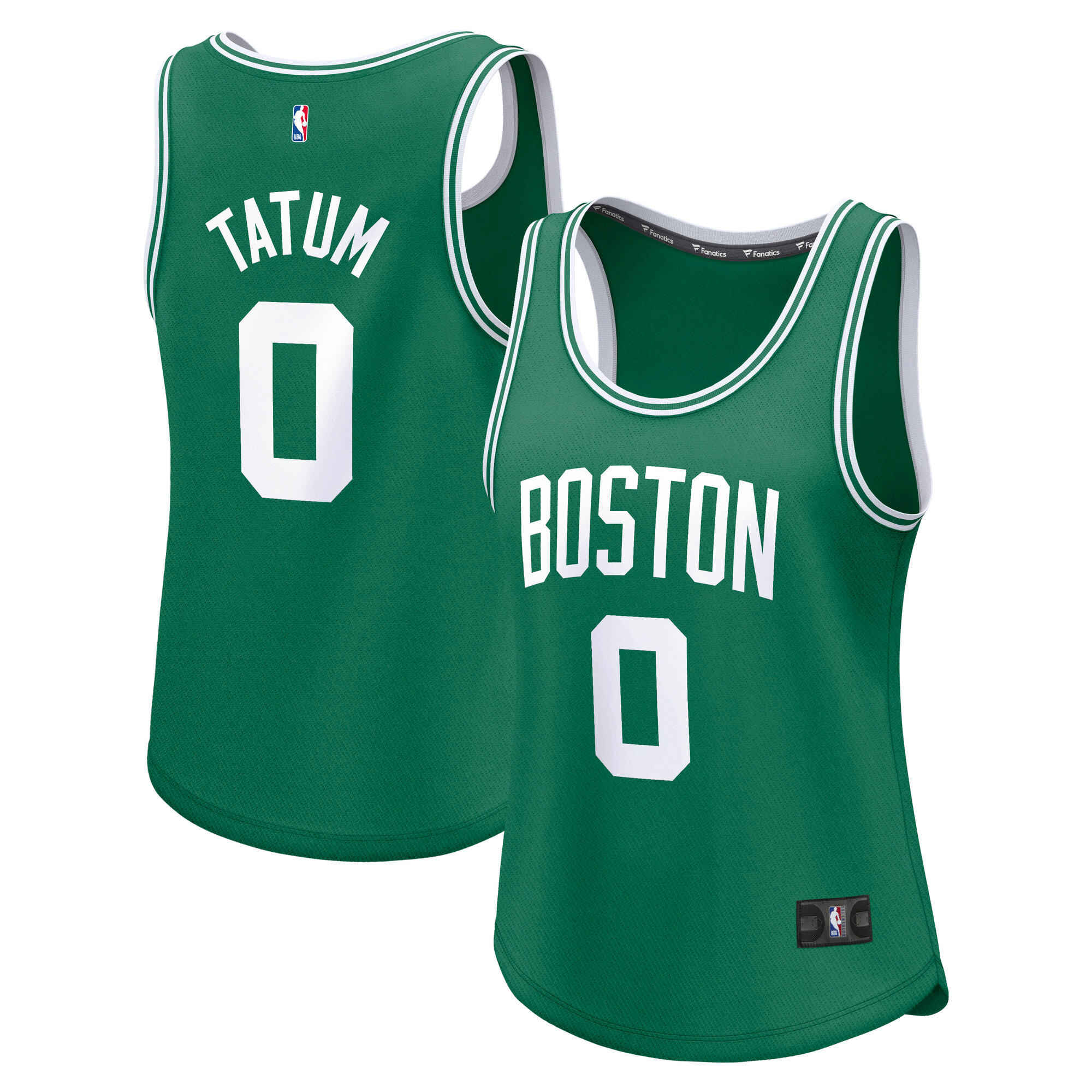
Women's Fanatics Jayson Tatum Kelly Green Boston Celtics Fast Break Player Jersey - Icon Edition
Tatum at 48.1% on pull-up mid-range jumpers makes those shots viable. Defenses that ignore his mid-range to protect the three-point line give up easy twos. Defenses that honor it by closing out hard leave him room to drive. The mid-range game isn't just a shot for Tatum — it's a strategic tool that creates the conditions for every other part of his offense.
This is the Dirk Nowitzki model of offensive creation — not beating you athletically, but forcing the defense to choose between two bad options at the same time. Tatum's athleticism ensures he can win both options, but the mid-range threat is the lever that makes defenders choose.
Jayson Tatum Boston Celtics Autographed Deluxe Framed Kelly Green Nike Icon Edition Swingman Jersey
The Leadership Dimension
Boston won the 2024 championship. Tatum won Finals MVP. These are facts that exist regardless of narrative, and they anchor everything about his current status in the league hierarchy. But what's happened since the championship is perhaps more impressive than the championship itself: Tatum has become the consistent anchor of a Boston team navigating significant roster change without sacrificing competitive standards.
The Celtics' roster around him has evolved substantially — departures, new additions, different supporting casts — and Tatum's on/off numbers have remained remarkable regardless of the lineup around him. His presence makes Boston approximately 9.2 points per 100 possessions better than his absence. That differential ranks among the top five in the NBA and suggests a player who has genuinely learned to elevate teammates rather than just outpace them.
Men's Mitchell & Ness Larry Bird Kelly Green Boston Celtics Big & Tall NBA Hockey Jersey
Tatum in 2025-26 through 52 games: 28.4 PPG, 9.1 RPG, 5.2 APG, 48.8% FG, 39.7% 3P, 87.6% FT. True shooting: 62.1%. On/off differential: +9.2 per 100 possessions.
What Comes Next
Tatum is 27. The conventional understanding of NBA prime places players in their peak between 27-31 — a window that suggests Tatum is at the threshold of his best basketball rather than somewhere past it. His game is built on skill rather than athleticism, which historically ages better than pure explosiveness.
Jaylen Brown Youth Fanatics Kelly Green Boston Celtics Fast Break Custom Replica Jersey - Icon Edition
The clutch criticism won't come back. The question that replaces it — whether Tatum can lead Boston to another championship while the Eastern Conference grows more competitive — is a real one. But it's the right kind of question. The kind that only gets asked of players who've already answered everything that came before.
Boozer and Peterson opened as 2027 NBA Rookie of the Year co-favorites over No. 1 pick AJ Dybantsa. We break down role, usage and the real case for each.
AJ Dybantsa is the presumptive face of the Wizards' rebuild — brought in as the No. 1 overall pick even though Washington already has six NBA wings on the roster. A look at the record-breaking BYU season, the Darryn Peterson decision, and why talent still beats a crowded depth chart.
Dylan Harper arrived as the No. 2 pick and finished his rookie year as an All-Rookie First Team guard starting in the NBA Finals. A film-room look at the Filipino-American lead guard powering San Antonio's next era alongside Victor Wembanyama.