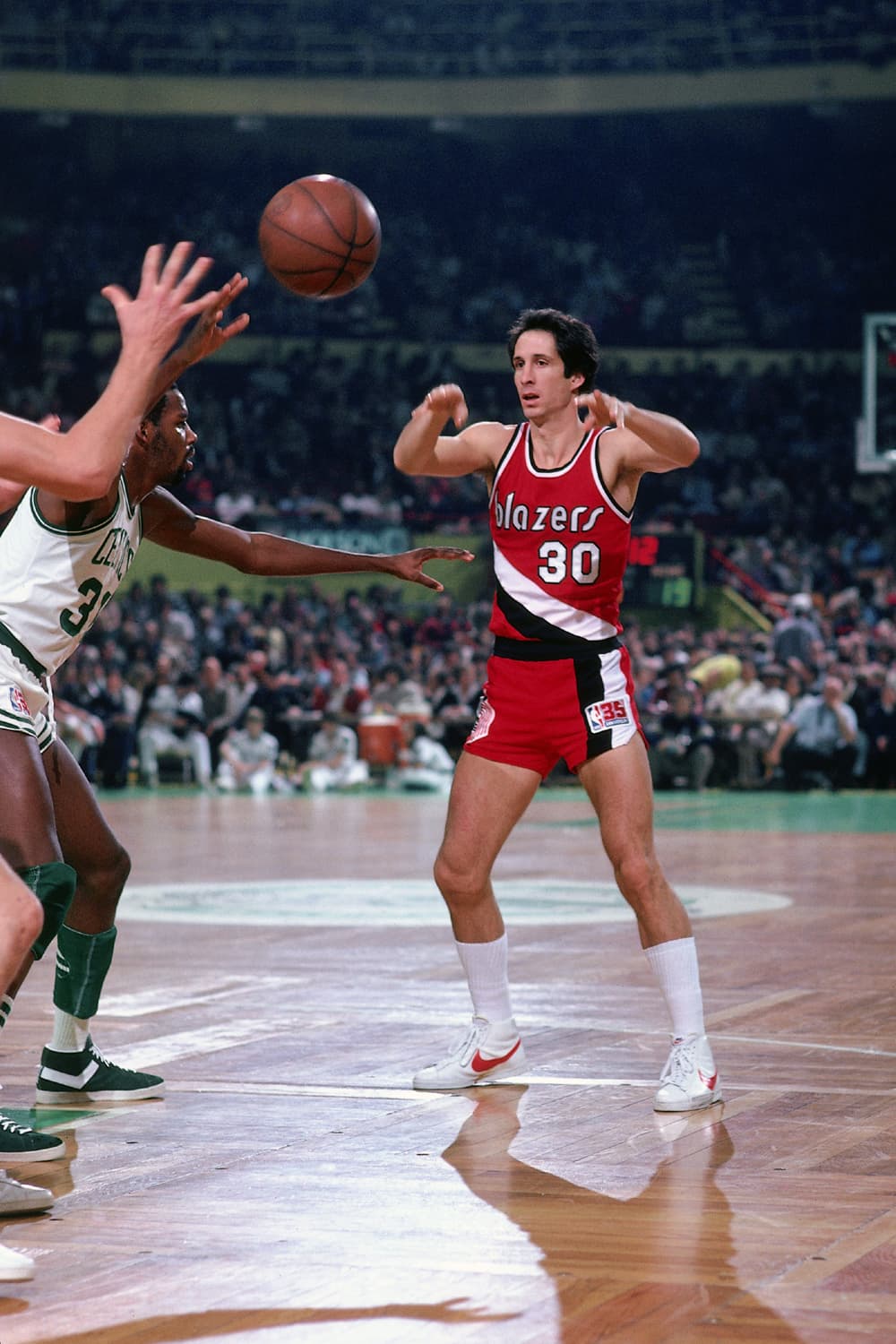
The Portland Trail Blazers retired #30 to honor Bob Gross, the defensive backbone of the 1977 championship team and the greatest team in franchise history. Gross was not the scorer, rebounder, or playmaker, but when the Finals arrived against Julius Erving and the Philadelphia 76ers, coach Jack Ramsay put Gross on Erving and trusted him with a job very few players in basketball could do. Gross accepted the assignment without complaint and made Erving work for everything across six games — changing angles, staying disciplined, refusing to gamble on steals — and Portland won the championship in six games. He gave the franchise seven seasons of steady, professional basketball as a versatile small forward who could guard multiple positions and run the floor, appearing in 530 games from 1975 through 1982. Portland honored that selflessness by hanging his number in the rafters so it would never be forgotten.
The Career
Every championship team has a player whose contributions only make sense to those who watched closely. For the 1977 Portland Trail Blazers, that player was Bob Gross. Beyond the 1977 Finals, Gross gave Portland seven seasons of steady, professional basketball. He was a versatile small forward who could guard multiple positions, run the floor, hit mid-range jumpers, and do whatever the team required. His game never called attention to itself, which made him easy for casual fans to overlook — and impossible for coaches and teammates to undervalue.
Gross played for Portland from 1975 through 1982, appearing in 530 games in a Blazers uniform. He was present at the birth of Portland basketball identity, part of the fabric that made the Rip City brand mean something. His unselfishness was not a strategy — it was simply who he was.
The Moment
He was not the scorer, not the rebounder, not the playmaker — but when the Finals arrived and the opponent was Julius Erving and the Philadelphia 76ers, Jack Ramsay put Gross on Erving and trusted him to do a job that very few players in basketball could do.
Gross accepted the assignment without complaint. Through six games, he made Erving work for everything — changing angles, staying disciplined, refusing to gamble on steals. The 76ers still scored, but Erving did not erupt, and Portland controlled the series. The Blazers won the championship in six games, and Gross was a foundational reason why.
The Legacy
Portland honored that selflessness by retiring #30, hanging it in the rafters alongside the teammates he helped make champions. Bob Gross was the defensive backbone of the greatest team in Trail Blazers history, and the franchise made sure that would never be forgotten.
喜欢这篇分析?
订阅获取更多类似分析,直达您的邮箱。