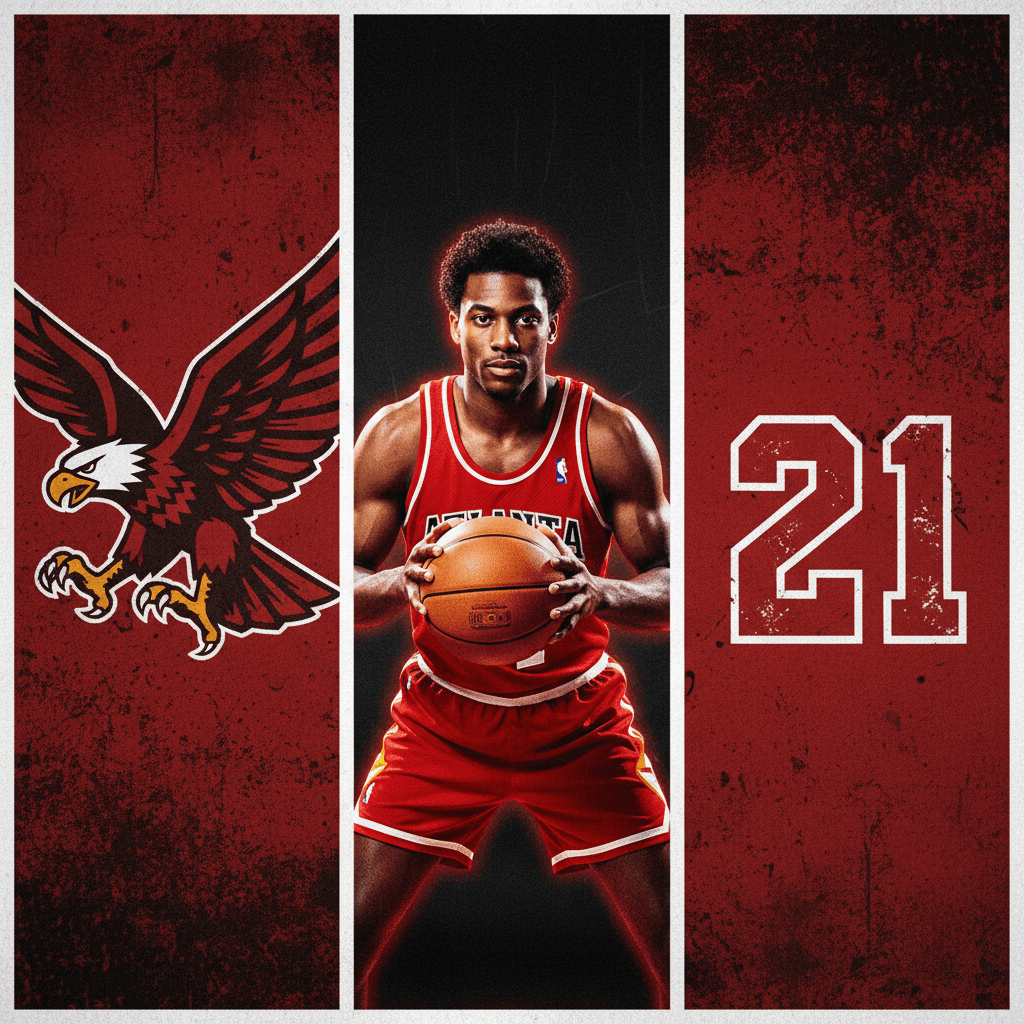
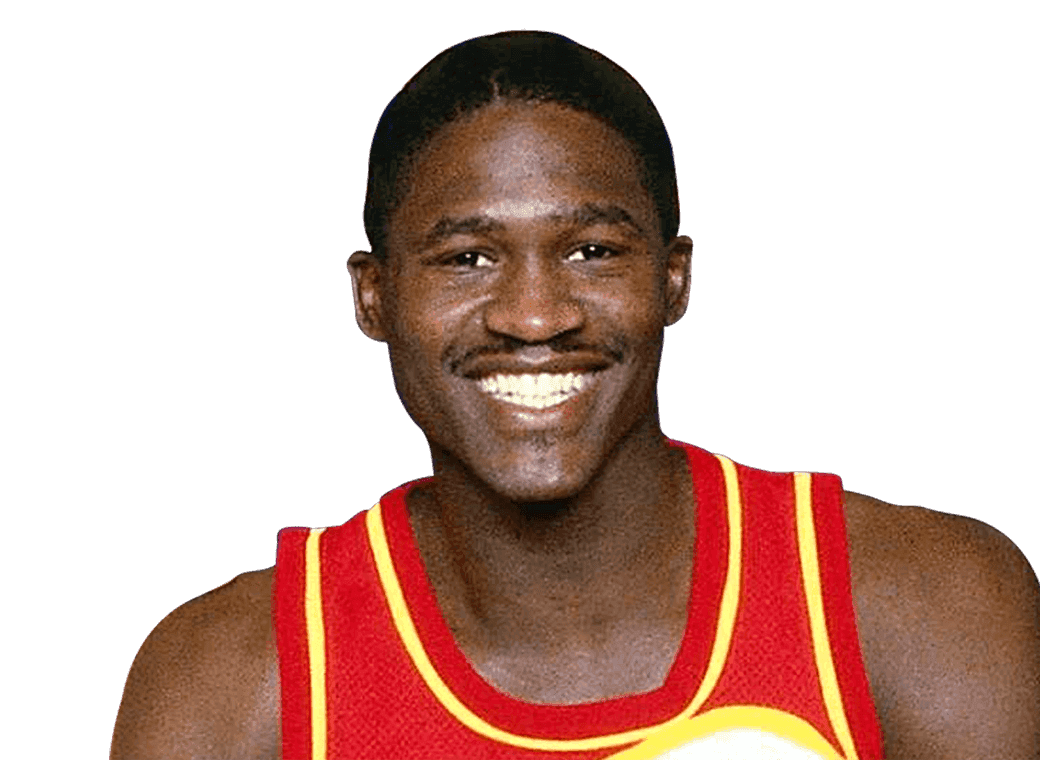
Why the Atlanta Hawks Retired Dominique Wilkins' #21: The Human Highlight Film
The Human Highlight Film. A 1986 scoring title, the 1988 dunk-contest duel with Jordan, 47 points in a Game 7 loss to Bird. Why the Hawks retired Dominique Wilkins' #21.
本页面包含联盟链接。如您通过这些链接购买,我们可能获得佣金,对您无额外费用。 As an Amazon Associate I earn from qualifying purchases.
May 22, 1988. Boston Garden. Game 7 of the Eastern Conference Semifinals, and for one impossible fourth quarter Dominique Wilkins and Larry Bird stopped guarding anyone and simply took turns. Wilkins finished with 47 points on 19-of-33 shooting; Bird answered with 34, twenty of them in that final period, and the Celtics survived 118–116. When the buzzer ended it, Wilkins stood near midcourt of the most hostile building in basketball and wept — not because he had played badly, but because he had played as well as any human being could and lost anyway. That image is the whole story of his Atlanta years compressed into a single frame: individual greatness that could not be questioned, a team ceiling that championships demanded and the Hawks could never quite break through, and a man who cared about winning so visibly that an entire city felt every defeat with him. The Atlanta Hawks would retire his #21 eight years later. The argument for doing so had already been made, in arenas all over the league, for a decade.
Some numbers retire themselves. By the time the Hawks raised #21 to the rafters of what was then the Omni Coliseum, nobody in the building needed the case explained. Nine All-Star selections. A scoring title. Two Slam Dunk Contest crowns. Twenty-six thousand points. And a competitive fire so relentless that opposing coaches drew up defensive schemes built specifically to stop him — which worked about as well as any scheme has ever worked against one of the very best players alive.
Drafted by Utah, Claimed by Atlanta
He arrived almost by accident. The Utah Jazz took Wilkins third overall in the 1982 draft — behind James Worthy and Terry Cummings — out of the University of Georgia, where he had become a regional legend known as "the Highlight Film of Athens" before the nickname ever followed him to the pros. Utah, cash-strapped and skeptical that a small market could keep him, traded him to Atlanta before he ever played a game in their uniform. The deal sent John Drew, Freeman Williams, and roughly a million dollars west, and it remains one of the most lopsided trades in the history of the franchise that gave him away.
Dominique Wilkins Atlanta Hawks Autographed Red Mitchell and Ness 1986 Hardwood Classic Logo Authentic Jersey with "HOF 15" Inscription
What Atlanta received was a 22-year-old who could do the one thing the NBA had never figured out how to teach: leave the floor with intent. Dominique Wilkins did not jump to finish plays. He jumped to make a statement, and the statement was the same every time — that the rim belonged to him and gravity was a suggestion he had chosen, for the moment, to decline.
The Human Highlight Film
The nickname was coined by the Atlanta broadcaster who called those early games, and it was calibrated with rare precision. Every night Wilkins played produced moments that belonged on a greatest-hits reel: windmill dunks launched from angles that looked physically impossible, two-handed tomahawks driven through traffic and contact, baseline reverses that seemed to bend around the defender mid-flight. And then, almost as a rebuttal to anyone who filed him under "athlete," the turnaround jumper — a high, soft, repeatable thing that fell with the inevitability of a shot rehearsed ten thousand times in an empty gym.
Dominique Wilkins Atlanta Hawks Autographed Wilson Official Game Basketball
He led the NBA in scoring in the 1985–86 season at roughly 30.3 points per game, the only scoring title of his career and one earned in a league that still belonged to Bird, Magic, and a young Michael Jordan. Over the full span of his career he averaged close to 25 points a night and finished among the highest-scoring players the sport had produced to that point. None of it came on volume alone. Wilkins shot efficiently for a high-usage wing, drew defenders the way a magnet draws filings, and did the bulk of his damage against game plans drawn up specifically to deny him the ball.
The Dunk Contests and the Argument That Never Ended
He won the NBA Slam Dunk Contest in 1985 and again in 1990 — bookends that framed an era and confirmed him as the most spectacular above-the-rim player of his generation. But the contest that defined him is the one the record book says he lost.
The 1988 Slam Dunk Contest was held at Chicago Stadium, on Michael Jordan's home floor, in front of Michael Jordan's crowd. Wilkins and Jordan traded dunks into a final round that has been replayed more than any other moment in the event's history. Wilkins threw down a two-handed windmill that scored 145 out of a possible 150. Jordan answered by taking off from the free-throw line, tongue out, and the judges — seated in Chicago — awarded him the maximum. Jordan won. Wilkins disagreed. So did most of Atlanta, and a fair share of neutral observers who felt the hometown verdict had quietly tilted the scale. The argument has never fully resolved, which is, in its own way, the most fitting tribute to what Wilkins brought every time he left the ground: he made even his losses feel like a debate worth having thirty years later.
The 1988 dunk contest was basketball theater at its highest register. Jordan won. Dominique disagreed. So did most of Atlanta. The argument has never fully resolved — which is perhaps the most fitting tribute to what Wilkins brought every time he elevated above the rim.
Dominique Wilkins Atlanta Hawks Framed 14" x 20" Player Caricature Art
Game 7, and the Wall Atlanta Could Not Break
The 1988 Hawks were the best team Wilkins ever played on — 50 wins, a deep rotation, Doc Rivers running the point, the veteran Moses Malone anchoring the middle. They drew Bird's Celtics in the conference semifinals, and the series went the full seven games. The finale, in the old Boston Garden, produced the shootout that still anchors every retrospective of his career: Wilkins 47, Bird 34, the two of them combining for an entire quarter of basketball that neither defense could touch. Boston advanced. Atlanta went home.
It was the closest Wilkins ever came to the conference finals, and the pattern of those years is written into that one loss. Through the late 1980s the Hawks ran repeatedly into Bird's Celtics and, later, into the Detroit Pistons — two of the most complete teams of the decade — and could never get past them. Wilkins never reached the NBA Finals. He never won a championship. The teams around him were good, sometimes very good, but never quite built to survive the gauntlet the East demanded. The greatness was individual; the ceiling was collective; and Wilkins carried both with a dignity that fans in Atlanta still talk about as the defining feature of the era.
Dominique Wilkins Atlanta Hawks Autographed Wilson Authentic Series Indoor/Outdoor Basketball
The Achilles, and the Return No One Expected
In January 1992, in the middle of a season in which he was again scoring near 30 points a night, Wilkins ruptured his right Achilles tendon. He was 32 years old and ten seasons into his career. In that era the torn Achilles was the injury that ended explosive players — not slowed them, ended them — and the conventional wisdom held that even a full recovery would return a diminished version of a player whose entire game was built on elevation.
He came back the next season and scored at an elite level almost immediately, averaging close to 30 points per game again in 1992–93 and earning All-NBA recognition for it. The Achilles, the injury that was supposed to subtract the most important thing he had, subtracted nothing that mattered. It became instead one more chapter in a career that seemed engineered to defy the ordinary arithmetic of age and injury — a rare, near-total recovery that the medical and basketball worlds both regarded as remarkable.
Dominique Wilkins Atlanta Hawks Framed 27" x 39" Player Caricature Art
The Trade That Still Feels Wrong
In the spring of 1994, with Wilkins still producing at an All-Star level, the Hawks traded him to the Los Angeles Clippers for Danny Manning. The logic was defensible on paper — Manning was younger, Atlanta was chasing a different kind of roster balance — and it has felt wrong to Hawks fans from the moment it happened to this day. The franchise's most iconic player, the man who had given the city a reason to love professional basketball for twelve seasons, finished the year in another uniform. He bounced through Boston, then a season in Europe, then a brief return to the league, before retiring with 26,668 career points — placing him, at the time he walked away, among the highest-scoring players in the history of the sport.
The Numbers Behind the Number
9× NBA All-Star (1986–1994) — the most by any Hawk of his era
1985–86 NBA scoring champion at roughly 30.3 points per game
2× NBA Slam Dunk Contest champion (1985, 1990)
7× All-NBA selection, including a First-Team honor in 1986
26,668 career points — among the top scorers in NBA history at his retirement
Atlanta Hawks' all-time leading scorer, a franchise record that has stood for decades
Full recovery from a 1992 Achilles rupture, returning to a near-30-points-per-game scoring level
2006 inductee, Naismith Memorial Basketball Hall of Fame
None of those lines contains the thing that made him matter. Wilkins played in the years before highlight packages were a nightly cultural ritual, and he is one of the reasons they became one — a player so reliably spectacular that a city organized its evenings around the chance of seeing the next impossible thing. He never had the ring that validates a career in the league's official memory. What he had instead was a kind of authority over a single act, the leap, that no contemporary could match, and a refusal to let the absence of a title quiet the way he competed. He left every floor he played on, including the ones in hostile cities, having given the crowd a reason to remember the date.
Dominique Wilkins Atlanta Hawks Unsigned 1988 NBA Slam Dunk Contest Photograph
Why #21 Hangs Forever
The Atlanta Hawks retired Dominique Wilkins' #21 in 1996, not long after the trade that sent him west — an acknowledgment that the number had earned its place in the rafters regardless of how the final chapter had been written. No Hawk has worn it since.
Twenty-one hangs there because of the 47 points in Boston Garden in 1988, and the tears that followed them. Because of the two dunk titles and the windmill that should, in the eyes of half the league, have made it three. Because of the 26,668 points accumulated through effort and skill and a competitive will that cannot be coached into anyone. Because of the Achilles that was supposed to end him and instead became a footnote to his durability. And because some players leave a mark on a franchise that transcends the win-loss column entirely — a mark that says: this is who we were when we were at our most electric, this is what we looked like when the lights were brightest.
Jock Landale Men's Fanatics Red Atlanta Hawks Fast Break Replica Custom Jersey - Icon Edition
The Hawks have retired only a handful of numbers across their long history, and the company #21 keeps tells the rest of the story. It hangs near Bob Pettit's #9 — the number of the franchise's lone championship era and its first true superstar — and Lou Hudson's #23, the smooth-scoring wing who bridged the St. Louis and Atlanta years. None of those numbers, on its own, is the franchise. Together they are its spine, and #21 is the one the modern Hawks were built around. The Human Highlight Film still plays in Atlanta. It always will.
Scottie Pippen is the greatest example in basketball history of what it means to be exactly what your team needs. Without Pippen's #33, there is no second three-peat, no dynasty mythology, and arguably no six championships at all.
October 1, 1994: the Bulls retire #23 for the first time. Eighteen months later, Jordan faxed two words and they took it back down. The story of six championships, two three-peats, and the number that bent the gravity of basketball around itself.
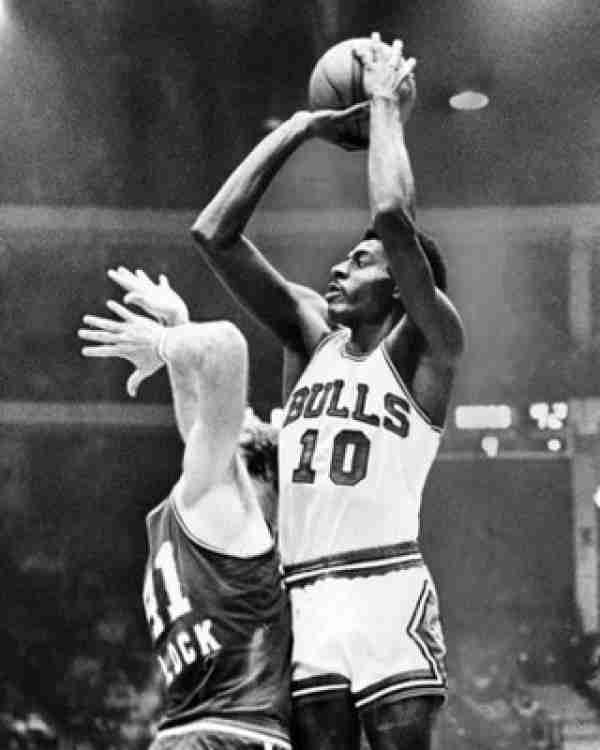
Bob Love was the Chicago Bulls' first great offensive player — a jump-shooting artist who averaged 21 points a game and made three All-Star teams. But the story of why the Bulls retired his #10 has as much to do with what happened after basketball as during it.