本页面包含联盟链接。如您通过这些链接购买,我们可能获得佣金,对您无额外费用。 As an Amazon Associate I earn from qualifying purchases.
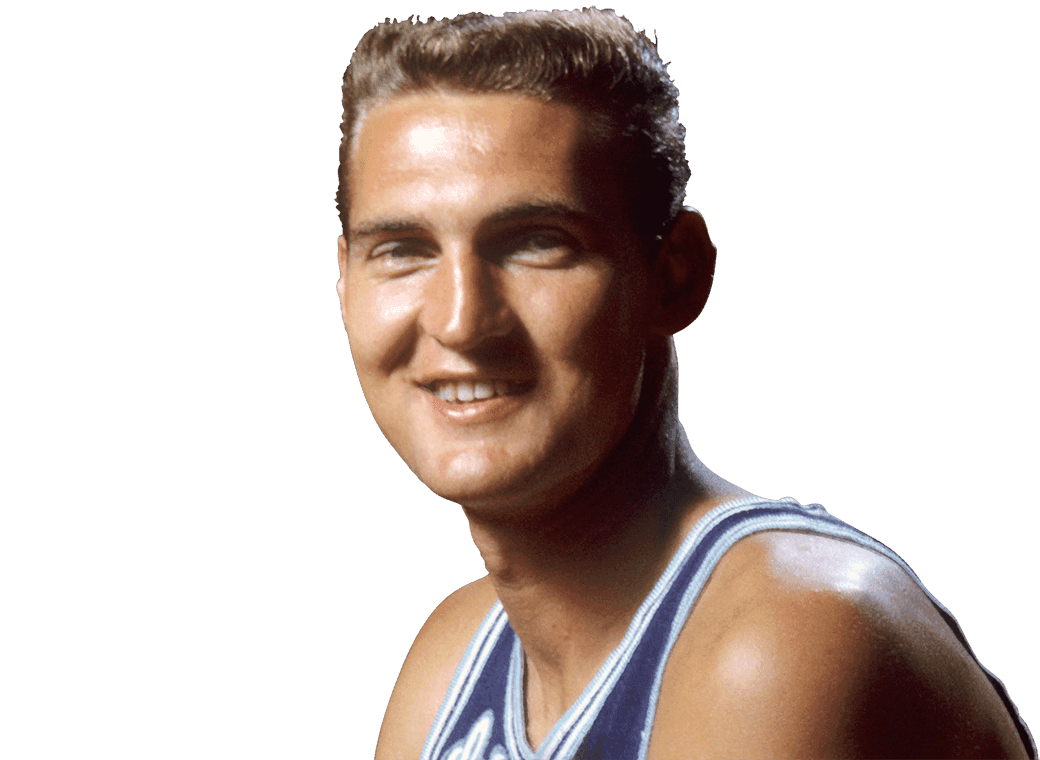
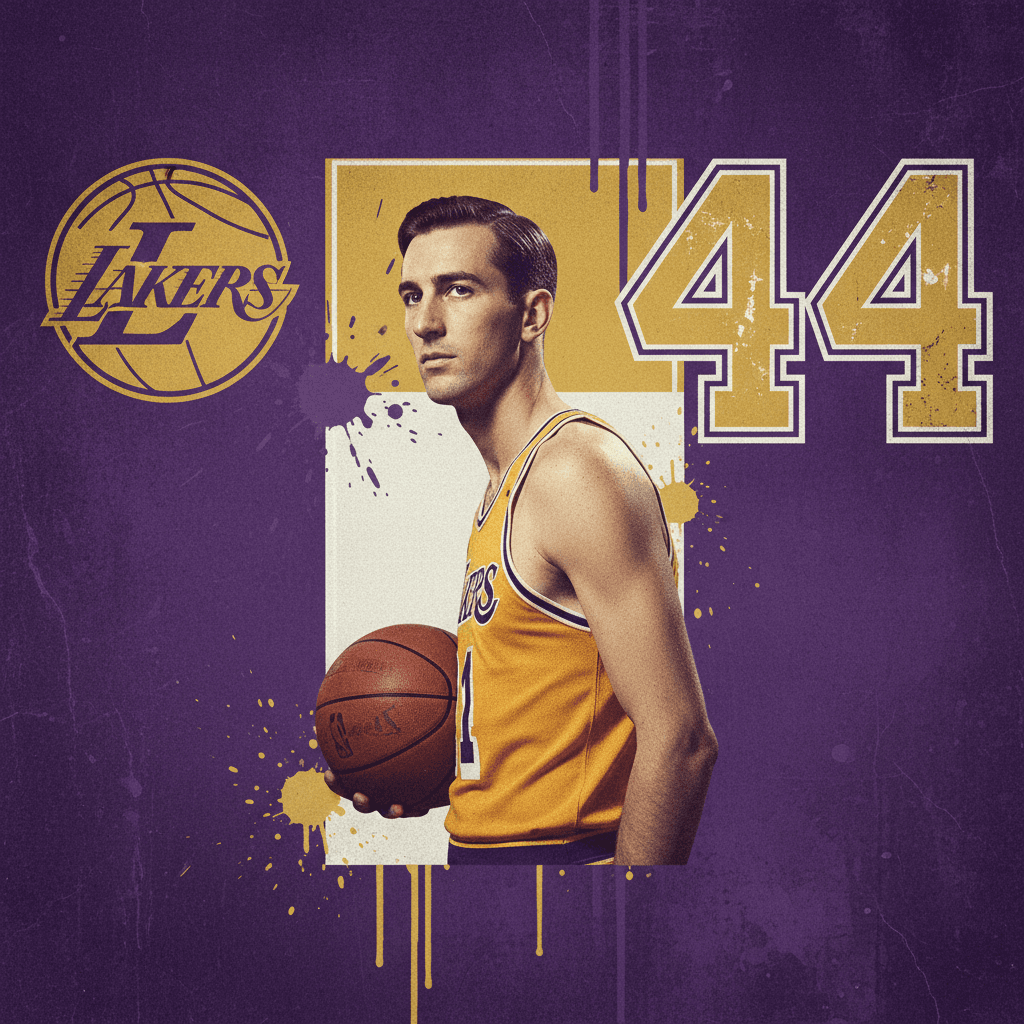
April 29, 1970. Madison Square Garden. Game 3 of the NBA Finals, three seconds on the clock, and the Los Angeles Lakers trail the New York Knicks by two. Jerry West catches the inbounds pass a stride beyond his own free-throw line — roughly sixty feet from the rim he needs to reach — and does not hesitate. He takes one dribble, plants, and heaves the ball the length of the floor with the same upright, leaning form that a designer would soon trace into the most famous silhouette in basketball. The shot travels the entire court. It goes in. There is no three-point line in 1970, so the miracle counts for only two, and it sends Game 3 to overtime. The Lakers lose in overtime anyway. That single sequence — impossible brilliance answered by heartbreak — is the truest sentence anyone can write about Jerry West, and it is why the Los Angeles Lakers hung his #44 in the rafters and never let it down.
They called him Mr. Clutch. The basketball world would later call his outline the Logo. He was both at once: the man whose body became the symbol of the sport, and the man whose career became a meditation on how much a person can win and still be denied.
Cabin Creek to the Coliseum
West grew up in Cabin Creek, West Virginia, a coal-country hollow so small that for years his nickname in the press was simply "Zeke from Cabin Creek." He was a thin, shy, almost painfully introverted kid who shot baskets alone for hours into the dark, on a hoop nailed to a neighbor's outbuilding, in a place where the winters were long and the distractions were few. The solitude built the jump shot. The jump shot built everything else.
At West Virginia University he became a national figure, carrying the Mountaineers to the 1959 NCAA championship game — a one-point loss in which he was named the tournament's Most Outstanding Player despite his team falling short, an early rehearsal for the cruel pattern that would define his professional life. In 1960 he co-captained the United States Olympic team to a gold medal in Rome, a roster so loaded it is still regarded as one of the greatest amateur teams ever assembled. That same year the Minneapolis Lakers, about to become the Los Angeles Lakers, selected him with the second overall pick. He arrived on the West Coast a reserved man from the mountains, and he spent the next fourteen seasons turning a transplanted franchise into the glamour institution of American sport.
Mr. Clutch
The nickname was not a marketing invention. It was documentary evidence, accumulated one impossible moment at a time. By his second season West was averaging around 30 points a game and earning the first of what would become ten All-NBA First Team selections across fourteen years — a level of sustained excellence that placed him in the conversation with any guard who had ever played. But raw scoring was never the point with West. The point was when he scored.

He had a gift, rare and a little frightening, for shrinking in the biggest moments — shrinking the noise, the stakes, the defenders — until all that remained was the shot. Opponents knew exactly where the ball was going in the final seconds and could not stop it anyway. He once poured in 53 points in a single playoff game against the Baltimore Bullets. In the 1965 playoffs he averaged roughly 40 points a night across an entire postseason, a sustained scoring run through the games that matter most that has never been seriously approached since. The sportswriter who first called him "Mr. Clutch" was not reaching for a headline. He was describing a documented fact.
The Cruelest Math in the Sport
West reached the NBA Finals nine times. He won once. State those two numbers next to each other and you have the central tragedy of his career, and the detail that makes him unlike any other all-time great: almost no one has ever been that good, that often, and walked away empty so many times.
Most of the heartbreak wore green. Bill Russell's Boston Celtics, the most relentless dynasty the league has ever known, stood between West and a title again and again through the 1960s, several times in a seventh game decided by a possession or two. West would play brilliantly — he almost always played brilliantly — and the final buzzer would still go Boston's way. When it wasn't the Celtics it was the Knicks, who beat his Lakers in 1970 and again in 1973. Eight times he reached the summit and was turned back. For a competitor wired the way West was wired — a man who admitted late in life that the losses haunted him far more than the wins ever consoled him — the arithmetic was a kind of slow torture.
And yet he kept coming back. He could have asked out after the third Finals loss, or the fifth. Stars of his magnitude had leverage even in that era. He stayed in purple and gold, returned to the same stage that kept breaking his heart, and bet every season that this would finally be the one.
The Finals MVP Who Lost
The single most astonishing entry on West's résumé belongs to 1969, and it doubles as the most poignant. The NBA awarded its Finals MVP for the very first time that year, and the man it went to was on the losing team. West averaged just under 38 points a game across that seven-game series against the Celtics, and in Game 7 he produced a triple-double — points, rebounds, and assists all in double figures — on a leg so damaged he could barely push off it. Boston won the series. The award committee looked at the two rosters, looked at what West had just done, and could not in good conscience hand the trophy to anyone in a Celtics uniform.

To this day, Jerry West is the only player in NBA history named Finals MVP while playing for the team that lost the series. The honor exists, in a sense, because of him — a recognition the league had to invent and then immediately award against its own grain, because no other choice was defensible. Even in defeat, West was the best player on the floor.
That paradox — supreme individual greatness coexisting with team defeat — is West's signature. Other legends are remembered for what they won. West is remembered, at least in part, for how magnificently he lost, and for refusing to let it diminish him.
The Two-Way Standard
The scoring is what made the headlines, but reducing West to a shooter misreads the player. He was a complete, two-way guard in an era that did not yet have the vocabulary or the statistics to fully measure such a thing. When the league finally created its All-Defensive teams late in his career, West earned the honors immediately and repeatedly, despite having only a handful of seasons left in which to qualify. He guarded the opposing team's best perimeter scorer, studied film obsessively, anticipated passing lanes before they opened, and used long arms and a relentless motor to turn defense into offense.

He was also, quietly, one of the great playmakers of his generation. As his career advanced and his role shifted, West became a primary distributor as readily as a primary scorer — a guard who could lead the league in points in one season and contend for the assist title in another. Very few players in the history of the game have shown that kind of range at the highest level. He averaged better than six assists a game for his career, a figure that would be impressive for a pure point guard and is remarkable for a man who spent so many nights as his team's leading scorer.
1972: The One That Finally Fell His Way
Redemption arrived in his thirteenth season, when most of his peers were long retired. The 1971-72 Lakers were a juggernaut, and they authored one of the most staggering stretches in the history of team sport: a 33-game winning streak — still the longest in major North American professional sports — on the way to 69 regular-season victories. West, now in his thirties and no longer the explosive scorer of his youth, reinvented himself as the engine of the operation, running the offense and setting up Gail Goodrich and Wilt Chamberlain while still producing when the team needed a bucket.

The Lakers closed out the Knicks to win the 1972 NBA championship — West's first and only title, captured on his ninth trip to the Finals, alongside Wilt Chamberlain anchoring the middle. The most telling thing about that championship is how West described the feeling afterward. He said he felt relief more than joy. A decade of heartbreak had conditioned him to brace for loss, and even in the moment of finally winning, the old wound shaped the celebration. One ring, earned through more accumulated suffering than perhaps any champion the sport has produced.
The Logo
There is a reason Jerry West's name surfaces every time someone looks at a basketball card, a league broadcast, or the painted center of an NBA court. In the late 1960s the league set out to design a new emblem, and the designer worked from a photograph of West in motion — upright, leaning, dribbling toward the basket with that unmistakable balance. The silhouette that resulted became the official NBA logo and has remained so for more than half a century.
For years the league declined to officially confirm that the figure is West, and West himself was characteristically uneasy with the honor. He said more than once that he wished the symbol represented the game rather than any single person, and that he found it awkward to be stitched onto every jersey and stenciled onto every floor. But everyone knows. The most recognizable mark in professional basketball is the outline of the most foundational Laker, frozen forever in the act of doing the thing he did better than almost anyone alive.

The Numbers Behind the Number
- 1 NBA championship — the 1972 title, captured on his ninth Finals appearance after eight losses
- The only Finals MVP in NBA history awarded to a player on the losing team (1969, the award's inaugural year)
- 14× NBA All-Star across fourteen seasons — an All-Star in every season he played
- 10× All-NBA First Team — sustained, decade-long elite recognition
- A career scoring average around 27 points per game, with more than 25,000 career points
- Led the league in scoring (1970) and in assists (1972) — a two-way, two-end distinction few have matched
- Multiple NBA All-Defensive First Team selections, earned in the brief window after the award was created
- 1959 NCAA Final Four Most Outstanding Player; 1960 Olympic gold medalist; Naismith Hall of Fame inductee
And even that list leaves out the second act, because West's basketball life did not end when he stopped playing. As an executive he became one of the greatest team-builders the sport has known, constructing the Showtime Lakers around Magic Johnson and later engineering the Shaquille O'Neal and Kobe Bryant dynasty that would carry the franchise into a new century. His fingerprints reach further still — into the front office of a championship Golden State era decades after his playing days ended. The man who could not stop losing in June as a player spent the rest of his life teaching other people how to win.
Why #44 Hangs Forever
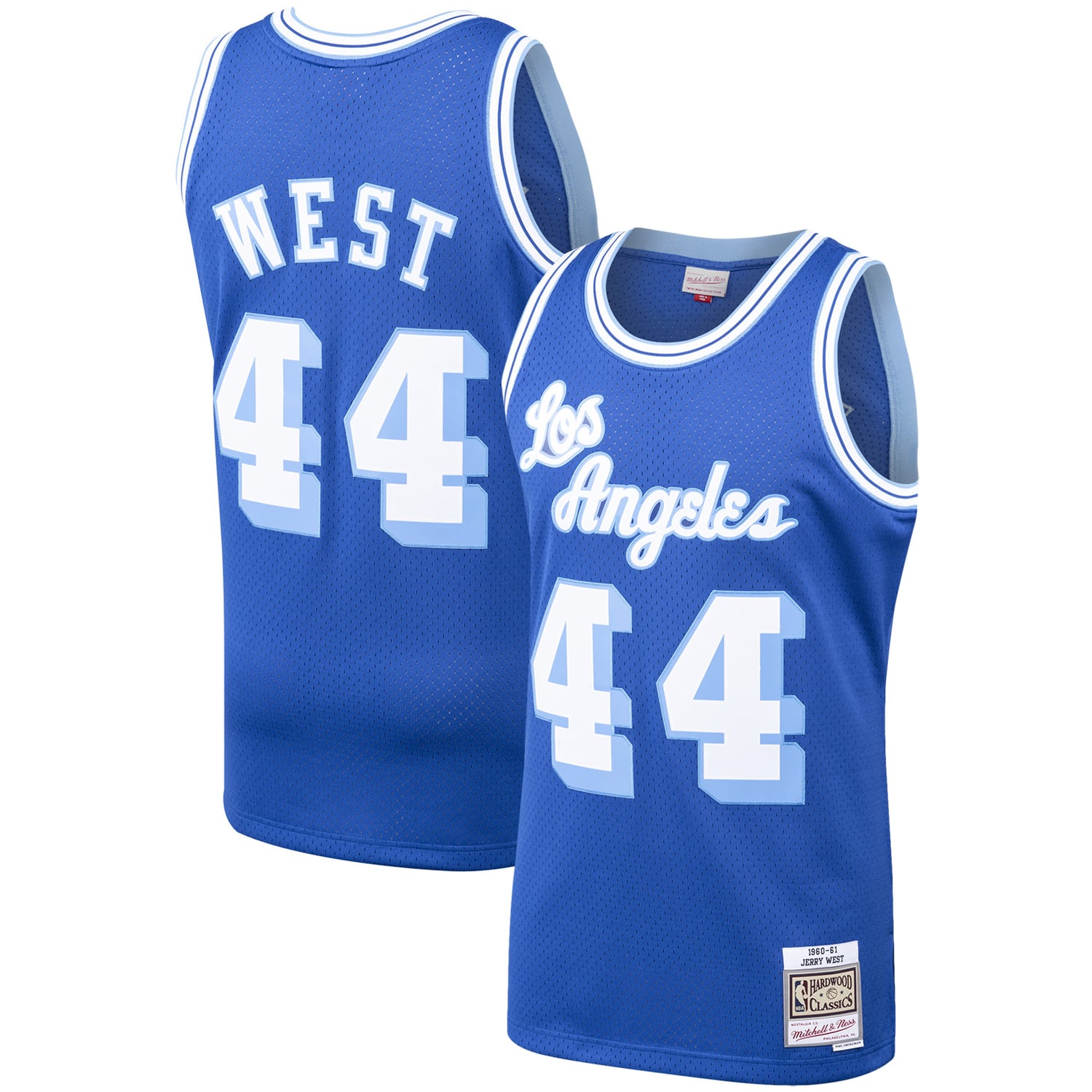
The Lakers retired Jerry West's #44 in 1983, and the decision was never in doubt, because #44 is not really a tribute to a great player. It is an acknowledgment that the franchise's entire identity rests on a foundation he poured. Fourteen seasons. Nine Finals. One championship wrung from more heartbreak than any other champion has carried. The first Finals MVP ever, awarded to a loser because losing could not diminish what he had done. The silhouette on every jersey in the league.

West could have demanded a trade after his sixth Finals defeat. He stayed. He could have coasted into a diminished role as his body aged. He reinvented himself into a playmaker and a champion instead. He could have let the losing define him. He let it forge him — and then he spent a second career forging dynasties for everyone else.
His number hangs in the same rafters as Elgin Baylor's #22, his brilliant longtime co-star and Finals companion through so many of those Boston heartbreaks, and alongside the later giants of the franchise he helped assemble — Magic Johnson's #32 and Kareem Abdul-Jabbar's #33. None of those numbers, on its own, is the Lakers. Together they are the spine of the most decorated franchise in the sport. And #44 is the number that came first — the standard against which every player who pulls on the purple and gold is still measured, and a standard that, more than half a century later, has yet to be matched.
喜欢这篇分析?
订阅获取更多类似分析,直达您的邮箱。