
1994
Houston Rockets
Series Flow
4
Wins
3
Losses
Regular Season
58–24
Win–Loss
Playoff Record
15–7
Win–Loss
Finals
4–3
vs New York Knicks
Finals MVP
Olajuwon
Hakeem
Houston Rockets
58–24New York Knicks
57–25The 1993-94 New York Knicks were one of the great defensive teams in NBA history — Pat Riley's most physically imposing construction. They had eliminated the Chicago Bulls in the second round (in Michael Jordan's absence) and were legitimate championship contenders led by Patrick Ewing. The seven-game series they delivered was one of the most intense and physically demanding Finals of the modern era — a worthy opponent that made Houston earn every win.
Finals MVP
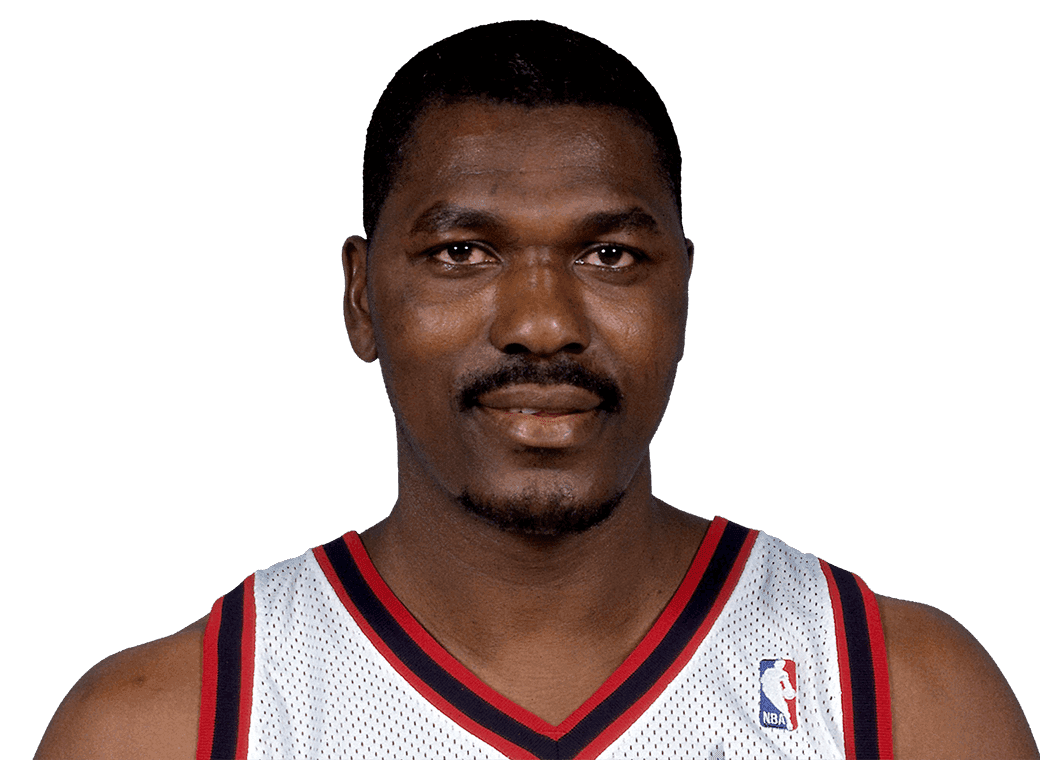
Hakeem Olajuwon
#34 · Center
26.9
PPG
9.1
RPG
3.6
APG
3.9
BPG
1.7
SPG
52.5
FG%
In a seven-game Finals defined by defense and physicality, Hakeem Olajuwon averaged 26.9 points, 9.1 rebounds, and an astonishing 3.9 blocks per game — making him the most dominant player on the court in every single game. His Dream Shake post moves were simply unguardable; Patrick Ewing, New York's All-Star center, had no answer for a player who combined the footwork of a dancer with the physical dominance of a true center. This was the performance that announced Hakeem as a legitimate all-time great.
First Houston Rockets Finals MVP in franchise history
Averaged 26.9–9.1–3.6 with 3.9 blocks per game — the most complete Finals performance by a center since Kareem Abdul-Jabbar
Led the Rockets to their first NBA championship after 27 years as a franchise
Outplayed Patrick Ewing — the center matchup billed as the key to the series — in every game of the seven-game battle
How the Series Unfolded
G1 · W
1–0
G2 · L
1–1
G3 · W
2–1
G4 · L
2–2
G5 · W
3–2
G6 · L
3–3
G7 · W
4–3
85
HOU
78
NYK
Hakeem Olajuwon introduced the Dream Shake to the Finals stage with 28 points and 10 rebounds, and the Houston crowd understood immediately that they were watching something historically special. Patrick Ewing arrived as New York's formidable anchor but could not decipher Hakeem's combination of footwork, misdirection, and explosiveness from the post. The Rockets' defense was equally dominant — holding Pat Riley's physical Knicks to just 78 points in a controlled, grinding opener that established Houston's physical identity for the series.
Houston Rockets
Hakeem Olajuwon
28 pts · 10 reb · 5 blkThe Dream Shake was unstoppable from the first possession — Ewing had no answer for Hakeem's speed and post artistry.
Clyde Drexler
17 pts · 7 astThe Glide attacked off the dribble and created open looks that kept New York's defense scrambling in multiple directions.
NYK
Patrick Ewing
23 pts · 16 rebDominant in defeat — Ewing's sheer size and skill kept the Knicks within range, but Hakeem was operating at a different level entirely.
83
HOU
91
NYK
Pat Riley's defensive machine clicked into gear and the Rockets could not escape the Knicks' physical perimeter pressure on their own floor. John Starks and Derek Harper harassed Kenny Smith and Vernon Maxwell all night, and Patrick Ewing controlled the paint with 26 points and 13 rebounds. The Knicks equalized the series with a disciplined defensive performance and proved this would run the full distance — New York was not here to lose.
Houston Rockets
Hakeem Olajuwon
22 pts · 7 rebAnother quality performance, but the Rockets couldn't generate enough from the supporting cast to match New York's collective defensive effort.
NYK
Patrick Ewing
26 pts · 13 rebCommanding and relentless — his interior presence forced the Rockets into a half-court battle they could not win without significant guard play.
John Starks
19 pts · 5 astCreated off the dribble and helped disrupt Houston's guard rotation — his relentless pressure set the tone for New York's defensive approach.
93
HOU
89
NYK
Sam Cassell delivered one of the most memorable rookie Finals performances in NBA history. On Madison Square Garden's hallowed floor, with the crowd in full voice and the series tied 1-1, the first-year guard scored 24 points, talked trash to the New York crowd, and drained enormous shots in the fourth quarter with the calm of a ten-year veteran. His fearlessness changed the conversation about this Rockets team — they had more than just Hakeem. Kenny Smith ran the offense with precision, and the Rockets silenced MSG to take a 2-1 series lead on the road.
Houston Rockets
Sam Cassell
24 pts · 5 astRookie brilliance at its most electric — talked trash on MSG's floor and backed it up with shot after big shot in the fourth quarter.
Hakeem Olajuwon
20 pts · 11 rebControlled the paint throughout and gave the Rockets the interior foundation Cassell needed to operate with freedom.
NYK
John Starks
24 ptsFired up the Garden crowd and nearly kept the Knicks in it — his fourth-quarter push made Houston earn every possession.
82
HOU
91
NYK
Patrick Ewing produced one of his finest Finals performances — 17 points and 17 rebounds — while the Knicks' defense was at its Pat Riley best. Houston's perimeter game went cold on the Garden's floor, and New York's physical frontcourt outworked the Rockets in the paint. Charles Oakley was a bruising presence that made Houston's interior uncomfortable at every turn. The Knicks tied the series 2-2 and returned to the brutal defensive identity that had made them the most feared team in the East all season.
Houston Rockets
Hakeem Olajuwon
19 pts · 9 rebContinued his quality play but the Rockets' supporting cast had no answers for New York's suffocating defensive scheme on the road.
NYK
Patrick Ewing
17 pts · 17 rebA double-double for the ages — his rebounding completely denied Houston second chances and his post presence disrupted their defensive rotations.
Charles Oakley
12 pts · 12 rebThe enforcer set the physical tone — relentless and bruising, Oakley gave New York the rebounding margin that decided Game 4.
91
HOU
84
NYK
Back at The Summit with a 3-2 lead in reach, Hakeem Olajuwon produced his most artistically complete game of the Finals. The Dream Shake appeared in its purest form — each pump fake, pivot, and drop step a demonstration of post skill that basketball coaches would study for decades. His 25 points, 10 rebounds, and 3 blocks were complemented by Clyde Drexler's best performance of the series. The Summit crowd roared, and Houston could smell history approaching.
Houston Rockets
Hakeem Olajuwon
25 pts · 10 reb · 3 blkThe Dream Shake in full bloom — his post game was poetry in motion and Patrick Ewing had exhausted every defensive adjustment.
Clyde Drexler
21 pts · 6 astHis best game of the series — perimeter creation opened the floor and gave Hakeem even more room to operate from the post.
NYK
Patrick Ewing
19 pts · 14 rebFought with everything he had but could not slow Hakeem's brilliance — the Dream was simply operating at a level beyond reach.
84
HOU
86
NYK
John Starks was brilliant in a must-win Game 6 — 27 points in a performance that saved the Knicks' season and elevated Madison Square Garden to the kind of noise that only a championship moment generates. The Rockets had a chance to close the series on the road but fell two points short. After six games and more than a week of the most physical basketball of the decade, a seventh game would decide everything. Starks' brilliance tonight made his Game 7 all the more haunting.
Houston Rockets
Hakeem Olajuwon
28 pts · 9 rebGave everything but the Rockets couldn't get enough supporting contributions on the road against a desperate New York team.
NYK
John Starks
27 pts · 6 astHis finest game of the series — clutch shooting and fearless aggression kept the Knicks' championship hopes alive for one more night.
Patrick Ewing
18 pts · 17 rebAnother dominant rebounding performance — Ewing absolutely refused to let his final true championship chance end at MSG.
90
HOU
84
NYK
John Starks's Game 7 is one of the most analyzed individual collapses in Finals history. The guard who was so brilliant in Game 6 shot 2-18 from the field and 0-11 from three-point range — the most consequential shooting implosion in a deciding game of the championship series. The Rockets didn't need to dominate: Hakeem's 25 points and 10 rebounds were masterful, Sam Cassell made huge plays in the clutch, and The Summit erupted when the final buzzer sounded. Houston had its first NBA championship, and Hakeem Olajuwon had proven himself the best player on Earth.
Houston Rockets
Hakeem Olajuwon
25 pts · 10 reb · 3 blkMasterful in the championship moment — the Dream Shake closed the series just as it opened it, with artistry that had no equal.
Sam Cassell
22 pts · 4 astThe rookie who talked trash on MSG's floor delivered in the clutch — his big plays and free throws sealed Houston's first championship.
NYK
John Starks
8 pts (2-18 FG, 0-11 3P)One of the great Game 7 collapses — Starks' shooting implosion remains one of the most discussed individual performances in Finals history.
The Champions
Clyde Drexler
#22 · Shooting Guard
20.1
PPG
6.3
RPG
4.8
APG
The Glide arrived from Portland in a mid-season trade and gave the Rockets the second superstar they needed. Drexler's combination of athleticism, shooting, and playmaking drew defensive attention from Hakeem and created the two-headed threat that made Houston impossible to scheme against. His Finals participation fulfilled a championship dream he had been chasing since the 1992 Portland Finals.
Won NBA championship in his 12th professional season — had been to the Finals twice with Portland and believed it might never happen
Mid-season arrival transformed the Rockets from a one-man show into a legitimate championship contender
Sam Cassell
#10 · Guard
18.6
PPG
5.2
APG
50.3
FG%
The rookie from Florida State was the revelation of the 1994 Finals — fearless, clutch, and completely unbothered by the stage. Cassell talked trash to Madison Square Garden's crowd in Game 3 and backed it up with 24 points. His ability to make enormous shots in pressure moments and deliver big free throws in Game 7 defined championship DNA before the term became common.
Kenny Smith
#30 · Point Guard
12.4
PPG
5.8
APG
45.2
3P%
The Jet ran Houston's offense with precision and provided the three-point shooting that stretched New York's physical defense. Smith's ability to push pace in transition and find Hakeem in post-up sets gave the Rockets a rhythm that the Knicks struggled to disrupt across seven grinding games.
Robert Horry
#25 · Power Forward
9.2
PPG
5.8
RPG
1.6
BPG
Before the legend of Big Shot Bob was fully formed, Horry showed why the Rockets valued his defensive versatility and calm in big moments. His shot-blocking, rebounding, and willingness to take big shots when open were hallmarks of the championship DNA that would later earn him seven rings across three franchises.
They Pushed Us to the Limit
The 1993-94 New York Knicks were one of the great defensive teams in NBA history — Pat Riley's most physically imposing construction. They had eliminated the Chicago Bulls in the second round (in Michael Jordan's absence) and were legitimate championship contenders led by Patrick Ewing. The seven-game series they delivered was one of the most intense and physically demanding Finals of the modern era — a worthy opponent that made Houston earn every win.
Patrick Ewing
#33 · Center
18.9
PPG
13.7
RPG
1.9
BPG
The Knicks' franchise center was magnificent across seven games — elite rebounding, commanding post presence, and the kind of performance that deserved a ring. He simply faced the greatest center of his generation at the peak of his powers.
John Starks
#3 · Shooting Guard
17.0
PPG
4.2
APG
35.1
FG%
The volatile, brilliant guard was the emotional engine of the Knicks — brilliance in Game 6 forever bookmarked by the most famous shooting collapse in Game 7. His 0-11 from three in the deciding game defined what might have been.
Derek Harper
#12 · Point Guard
11.7
PPG
4.2
APG
2.1
SPG
The veteran guard brought defensive toughness and experience to the Knicks' backcourt — his full-court pressure on Kenny Smith and the Houston guards was a constant irritant throughout all seven games.
History Written in 1994
Houston Rockets
First NBA championship in franchise history — 27 years after the franchise was founded in San Diego in 1967
Hakeem Olajuwon
First player from Africa to win an NBA championship and Finals MVP award — a landmark for the global game
Houston Rockets
First championship from a Texas professional sports franchise in any of the four major leagues
Sam Cassell
Won the NBA championship as a rookie — one of the most impactful first-year Finals performances in the modern era
Clyde Drexler
Won his first NBA championship in his 12th professional season after two Finals appearances with Portland
Rudy Tomjanovich
First NBA championship as head coach — 15 years after surviving a near-fatal punch from Kermit Washington as a player
Hakeem Olajuwon
Averaged 3.9 blocks per game across the Finals — the highest Finals block average in the modern tracking era
John Starks
Shot 2-18 from the field (0-11 from three) in Game 7 — one of the most studied individual performances in Finals history
Beyond the Box Score
The 1993-94 NBA season unfolded in the long shadow of Michael Jordan's first retirement. In October 1993, Jordan — the three-time defending champion who had defined professional basketball for a generation — announced he was walking away from the game. What followed was the most genuinely open NBA title race in years, with a field of legitimate contenders finally freed from the weight of inevitability that Jordan had imposed on every season since 1991.
Hakeem Olajuwon had been the most skilled center in the league for years, but his greatness had been consistently overshadowed by Jordan's supreme dominance. The Dream Shake — his combination of post footwork, pump fakes, and explosive pivots — was already considered the most technically brilliant individual skill set in the game. Without Jordan in the conversation, 1994 was the year Hakeem could finally claim what his talent deserved, and the Houston front office's mid-season trade for Clyde Drexler gave him the second star he needed.
The Rockets' February trade for Drexler changed everything. By acquiring his childhood friend from Portland — where Drexler had desperately chased a championship ring through two Finals appearances — Houston suddenly had a two-headed attacking threat that no defense could completely contain. Drexler's arrival was the front-office move that transformed the Rockets from Hakeem's team into a genuine championship contender.
The 1994 Finals against New York gave basketball one of its great seven-game series. Pat Riley's Knicks were one of the most physically imposing teams ever constructed — bruising, relentlessly defensive, and intensely competitive. The series produced Cassell's fearless rookie moments, Ewing's series-long dominance, Starks' Game 6 brilliance and Game 7 collapse, and Hakeem's consistent masterpiece. It was the kind of championship that reminded basketball that great stories didn't require Michael Jordan — sometimes they required a center from Lagos who had spent a decade perfecting the most beautiful footwork the sport had ever seen.
The Full Story
October 1993: Michael Jordan retired, and with him went the sense of basketball inevitability that had defined a decade. What remained was a league full of contenders and one center from Lagos, Nigeria, who had spent his entire career being the best player on the court whenever Jordan wasn't in the building. Hakeem Olajuwon had been great for years. Now, for the first time, the path to a championship was genuinely open.
The Rockets' February trade for Clyde Drexler was the move that changed everything. Houston gave up Otis Thorpe to bring in Drexler — one of the league's best shooting guards, a childhood friend of Hakeem's, and a player desperate for the ring that had eluded him in Portland. Suddenly the Rockets had two superstars, and suddenly the championship picture had come into focus.
The 1994 NBA Finals was a seven-game masterpiece of defensive basketball. Pat Riley's Knicks were physical, intense, and genuinely dangerous — Patrick Ewing was magnificent throughout, John Starks was often brilliant, and the series was legitimately in doubt until the final minutes of Game 7. Sam Cassell's rookie fearlessness became the subplot of the series. Hakeem's Dream Shake became the defining image.
John Starks's Game 7 collapse — 2-18 from the field, 0-11 from three in the most important game of the season — is one of the great individual implosions in Finals history. But it cannot diminish what Hakeem Olajuwon built: 26.9 points, 9.1 rebounds, 3.9 blocks per game across seven games, the most dominant center performance in the championship round since Kareem Abdul-Jabbar. When the final buzzer sounded at The Summit, Houston had its first NBA championship, and Hakeem Olajuwon had answered every question about his place among the all-time greats.
Share the Legacy
Send this page to a fellow Houston Rockets fan. Let them relive every moment — game by game, play by play.
More Houston Rockets Championships