
1971
Milwaukee Bucks
Series Flow
4
Wins
0
Losses
Regular Season
66–16
Win–Loss
Playoff Record
12–2
Win–Loss
Finals
4–0
vs Baltimore Bullets
Finals MVP
Abdul-Jabbar
Kareem
Milwaukee Bucks
66–16Baltimore Bullets
42–40The 1971 Baltimore Bullets were a competitive team — they would win the championship three years later — but in this series they had no answer for Kareem Abdul-Jabbar. Wes Unseld and Gus Johnson took turns guarding Kareem and neither could contain him. The Bullets were outmatched at the center position and the sweep reflected that reality completely.
Finals MVP
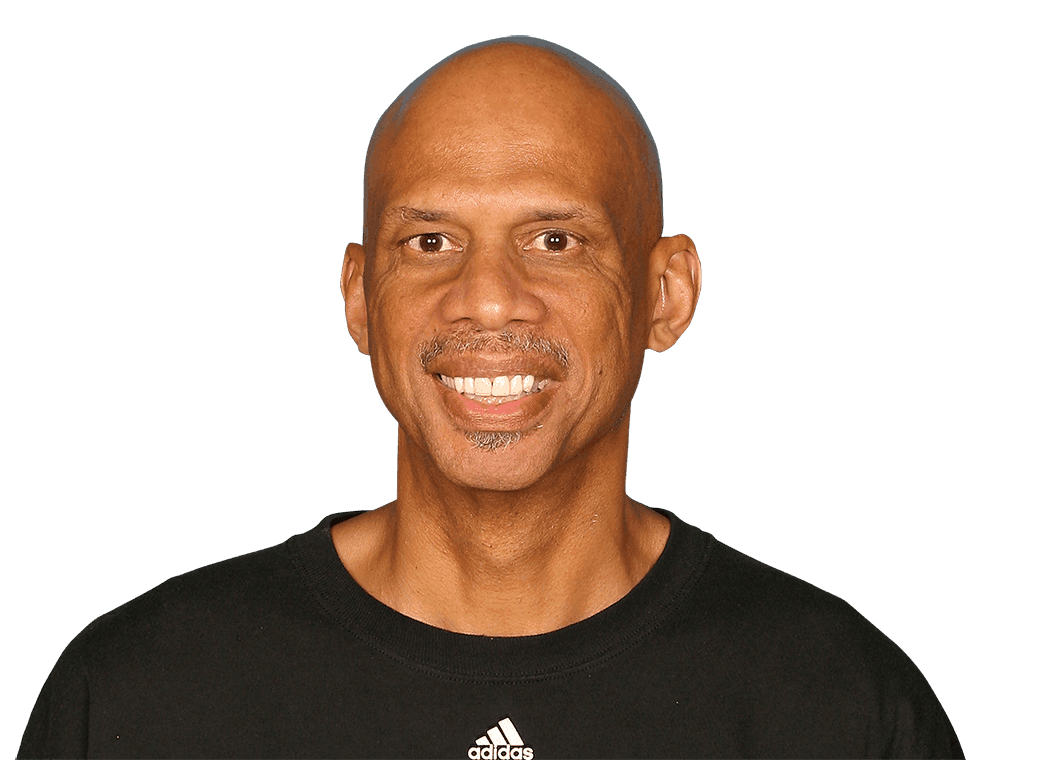
Kareem Abdul-Jabbar
#33 · Center
27.0
PPG
14.5
RPG
3.5
BLK
53.2
FG%
Kareem Abdul-Jabbar — who had changed his name from Lew Alcindor just weeks before the Finals after converting to Islam — was 24 years old and already the most physically dominant player the NBA had ever seen. The skyhook was not yet the fully developed weapon it would become over two decades of refinement, but even in 1971 it was unguardable. Wes Unseld, Gus Johnson, and Jack Marin took turns trying to slow him in Baltimore's frontcourt. None succeeded. Kareem averaged 27 points per game while grabbing 14.5 rebounds and protecting the rim with a combination of length and timing that eliminated Baltimore's interior attack entirely. The series was not competitive after Game 2. The Bullets had a talented team — they would win the championship three years later — but in 1971, against Kareem and the Bucks' machine, they had no answer. The sweep was complete, thorough, and delivered with an authority that announced a new standard for what a dominant center in a functional system could accomplish. Milwaukee's first championship was won before most fans understood how good this team actually was.
Named Finals MVP at just 24 years old — one of the youngest championship centers in NBA history
Averaged 27 points and 14.5 rebounds per game while holding Baltimore's frontcourt to below their season averages in both points and rebounds
The sweep — only 4 games required — remains the most dominant Finals performance in Bucks franchise history
Won the championship in the same year he changed his name to Kareem Abdul-Jabbar — one of sport's most historic personal milestones overlapping with its greatest professional achievement
How the Series Unfolded
G1 · W
1–0
G2 · W
2–0
G3 · W
3–0
G4 · W
4–0
98
MIL
88
BAL
The 1971 NBA Finals opened in Baltimore with the Bucks imposing their will immediately. Wes Unseld and the Bullets were a physical, defensive team — they would finish the decade as champions — but in this series, against this Milwaukee team, their physicality met a bigger problem. Kareem caught the ball in the post on the first few possessions and the game's outcome became apparent quickly. His combination of size, footwork, and the emerging skyhook was simply beyond the Bullets' frontcourt capacity to contain. Oscar Robertson controlled the tempo with veteran authority, limiting Baltimore's transition opportunities. Milwaukee led at every quarter break and won by 10 without their full offensive output. The tone had been set.
Milwaukee Bucks
Kareem Abdul-Jabbar
31 pts · 17 reb · 4 blkAnnounced his Finals presence immediately — his post combinations and skyhook attempts gave Unseld no sustainable answer from the opening tip.
Oscar Robertson
22 pts · 9 ast · 6 rebControlled the game's pace entirely, limiting Baltimore's transition attempts and ensuring Milwaukee played their preferred half-court style where Kareem dominated.
102
MIL
83
BAL
Game 2 in Baltimore confirmed that the Bullets had no adjustment available for the Kareem problem. Baltimore attempted to double-team and front Kareem with multiple defenders, and Milwaukee responded with ball movement that found open shooters — Dandridge in the mid-range, Robertson from the elbow, McGlocklin on the perimeter. Every double team created a vacancy and Milwaukee was disciplined enough to find it. The margin grew throughout the game. By the fourth quarter, with the Bucks ahead by double digits, the series narrative had shifted from competition to anticipation — Milwaukee was going to win this championship, and the only question was whether it would take four games or five.
Milwaukee Bucks
Bob Dandridge
19 pts · 8 reb · 3 stlThe beneficiary of every defensive collapse toward Kareem — Dandridge punished every double team with a mid-range touch that Baltimore had no individual answer for.
Kareem Abdul-Jabbar
26 pts · 16 rebDrew double teams on every possession, generating open looks that Milwaukee converted at an efficient rate throughout the game.
107
MIL
99
BAL
The series returned to Milwaukee for Game 3 with the Bucks one win from the championship their performance had made inevitable. Baltimore was not without weapons — Earl Monroe was brilliant on the offensive end, and the Bullets pushed back with the desperation of a team facing elimination. The game was more competitive than the first two, and Baltimore's defense found some temporary success limiting Robertson's opportunities. But Kareem was unmovable. He scored efficiently in the post through every adjustment the Bullets tried, and Milwaukee's collective execution — the movement, the discipline, the pace control — simply reflected a team operating at the peak of what coach Larry Costello had built. The arena was electric and the Bucks delivered on every moment of crowd expectation.
Milwaukee Bucks
Kareem Abdul-Jabbar
27 pts · 12 reb · 4 blkContinued his unchallenged dominance in the Milwaukee paint — his presence at the rim on defense eliminated Baltimore's drives entirely.
BAL
Earl Monroe
25 pts · 5 astEarl the Pearl kept Baltimore alive with his characteristic improvisation, but Milwaukee's defense contained enough of the supporting cast to prevent a serious upset.
118
MIL
106
BAL
Milwaukee closed out the 1971 NBA Championship on their home floor with a performance as decisive as the three that preceded it. Baltimore was simply overwhelmed. Kareem scored from every angle and distance the post allows, Robertson orchestrated with the composure of a man delivering on a decade of elite play, and Dandridge provided the consistent secondary scoring that made every defensive adjustment futile. The final buzzer triggered a celebration that Milwaukee had been building toward since Kareem's arrival in 1969 — a young franchise with a young superstar winning a championship in just its third season of existence. The 4-0 sweep was not an upset. It was the fulfillment of what the most dominant big-man performance in basketball history made inevitable.
Milwaukee Bucks
Kareem Abdul-Jabbar
27 pts · 13 reb · 3 blkClosed out Milwaukee's first championship with a performance that confirmed his status as the most dominant player in basketball — at 24 years old, with decades of excellence still ahead.
Oscar Robertson
18 pts · 9 ast · 6 rebDelivered the championship exit his career deserved — every assist, every decision, every moment of veteran leadership that the Bucks required was exactly what Robertson provided.
The Champions
Oscar Robertson
#1 · Guard
19.4
PPG
8.0
APG
5.5
RPG
Oscar Robertson had sued the NBA in 1970 in a landmark antitrust case that would eventually reshape player free agency. He had already averaged a season triple-double in 1961-62. He had been the game's best point guard for a decade in Cincinnati before a trade brought him to Milwaukee at 31. What he gave the 1971 Bucks was everything that statistics do not capture — the poise of a man who had waited his entire career for this moment and was not about to mishandle it. Robertson averaged 19.4 points and 8 assists in the Finals, orchestrating Milwaukee's pace control with the kind of veteran mastery that eliminated Baltimore's ability to run their preferred transition game. His partnership with Kareem lasted only three years but produced one of the most lopsided championship seasons in NBA history. Robertson finally had his ring. He had earned it three years earlier.
Delivered his only NBA championship in his 32nd year — ending a career defined by individual excellence with its most meaningful team achievement
His veteran leadership and pace control neutralized Baltimore's athleticism in transition, turning the series into a half-court execution where Kareem was simply unstoppable
One of only six players in NBA history to average a triple-double for an entire season (1961-62) — his championship validated both individual excellence and team commitment simultaneously
Bob Dandridge
#10 · Forward
18.4
PPG
6.6
RPG
1.5
STL
Bob Dandridge was the essential third piece that transformed Milwaukee from a duo into a dynasty-level team. At 23 years old, this fourth-round pick from Norfolk State averaged 18.4 points per game in the Finals with a fluid, multi-level offensive game that gave Baltimore a matchup problem they were not equipped to solve. Every defensive resource Baltimore dedicated to Kareem created opportunities for Dandridge. Every defensive resource dedicated to Robertson created opportunities for Dandridge. He was the mathematical inevitability that the Bucks' offensive system produced — and he was excellent enough to punish every opening. His 1971 performance is among the most underappreciated third-man contributions in Finals history.
Averaged 18.4 PPG at just 23 years old — one of the youngest players to average 18+ in a Finals sweep
His ability to score from mid-range and post positions gave Baltimore a three-headed offensive problem that their defense could not contain simultaneously
A Basketball Hall of Fame inductee decades later, his 1971 performance was the foundation of a career-long record of excellence that history has finally begun to properly acknowledge
Jon McGlocklin
#14 · Guard
9.5
PPG
51.0
FG%
—
3PM
Jon McGlocklin was Milwaukee's founding player — the face of the Bucks in their first two seasons before Kareem arrived, and an original Buck who understood what the franchise had been before it became a championship contender. In the 1971 Finals, he provided the floor spacing and perimeter scoring that kept Baltimore's help defense from collapsing entirely onto Kareem. His efficiency — over 50% from the field — demonstrated the value of a smart, well-positioned shooter who does not force the game beyond his capabilities. McGlocklin is the soul of the Bucks' early identity, a point of organizational continuity between the franchise's humble beginning and its first title.
One of the original Milwaukee Bucks — a founding player who bridged the franchise from its first season to its first championship
His floor spacing in the 1971 Finals created the perimeter gravity that gave Kareem and Robertson room to operate at their peak
Jersey #14 retired by Milwaukee — one of only seven numbers honored by the franchise across its entire history
They Pushed Us to the Limit
The 1971 Baltimore Bullets were a competitive team — they would win the championship three years later — but in this series they had no answer for Kareem Abdul-Jabbar. Wes Unseld and Gus Johnson took turns guarding Kareem and neither could contain him. The Bullets were outmatched at the center position and the sweep reflected that reality completely.
Wes Unseld
C
7.0
PPG
11.5
RPG
Earl Monroe
G
20.5
PPG
4.5
APG
History Written in 1971
Kareem Abdul-Jabbar
Youngest Finals MVP at 24 — averaged 27 PPG, 14.5 RPG in a four-game sweep
Oscar Robertson
Won his only NBA championship at 32 in his first season with Milwaukee
Milwaukee Bucks
Only franchise in NBA history to win a championship in its third season of existence
Beyond the Box Score
The 1971 Bucks had the best record in the NBA at 66–16 — the franchise's single greatest regular season.
Kareem Abdul-Jabbar changed his name from Lew Alcindor earlier that same year after converting to Islam.
The four-game sweep remains the most dominant Finals performance in Bucks franchise history.
The Full Story
The 1971 Milwaukee Bucks championship is one of the most dominant title runs in NBA history. A franchise in only its third season, operating with a 24-year-old center who had been the first overall pick two years earlier, swept the entire Finals without dropping a game and lost only two games throughout the entire playoff run. Kareem Abdul-Jabbar — who changed his name from Lew Alcindor during that same year — was simply beyond the Bullets' capacity to contain. Oscar Robertson, in the twilight of a career defined by individual excellence, provided the veteran orchestration that translated physical supremacy into consistent execution. Bob Dandridge was the third dimension that made the Milwaukee offense impossible to schematically solve. Larry Costello's system was disciplined, patient, and devastating. The 66-16 regular season record was the best in the NBA. The playoffs confirmed it completely. Milwaukee has always known it had one of the most perfect championship seasons in the sport's history — a team assembled around arguably the most physically dominant center to ever play, operating at the peak of what that kind of talent produces when surrounded by the right basketball intelligence.
Share the Legacy
Send this page to a fellow Milwaukee Bucks fan. Let them relive every moment — game by game, play by play.
More Milwaukee Bucks Championships