Diese Seite enthält Affiliate-Links. Wir erhalten möglicherweise eine Provision, wenn Sie über diese Links kaufen, ohne zusätzliche Kosten für Sie. As an Amazon Associate I earn from qualifying purchases.
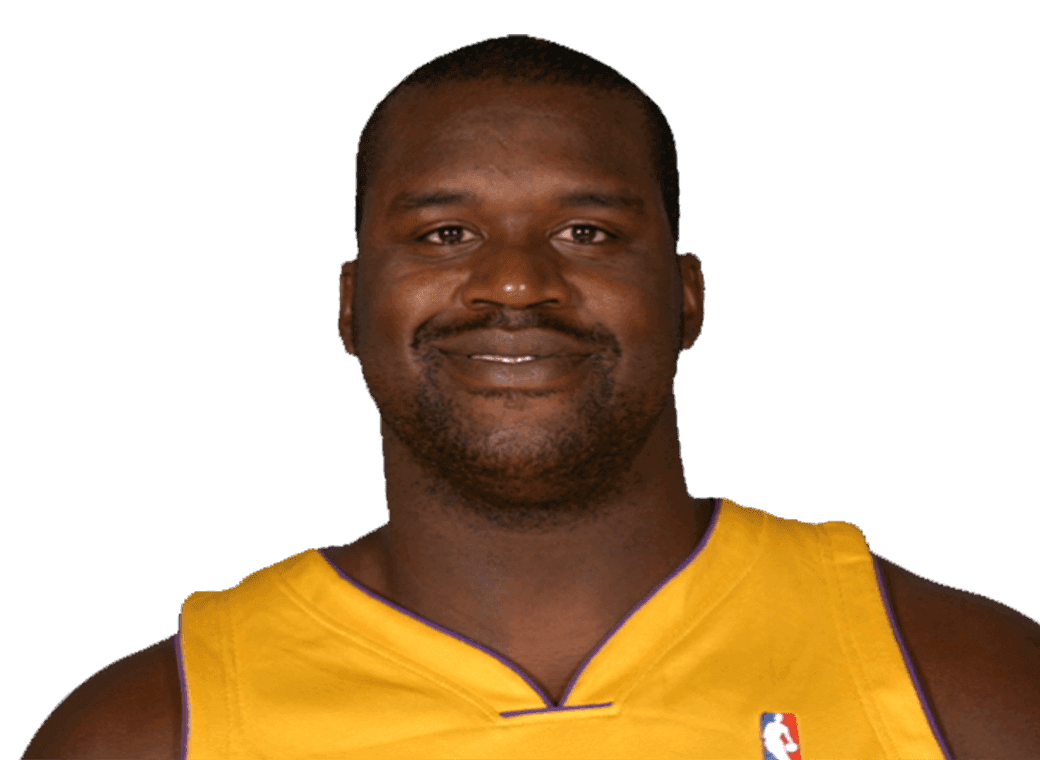
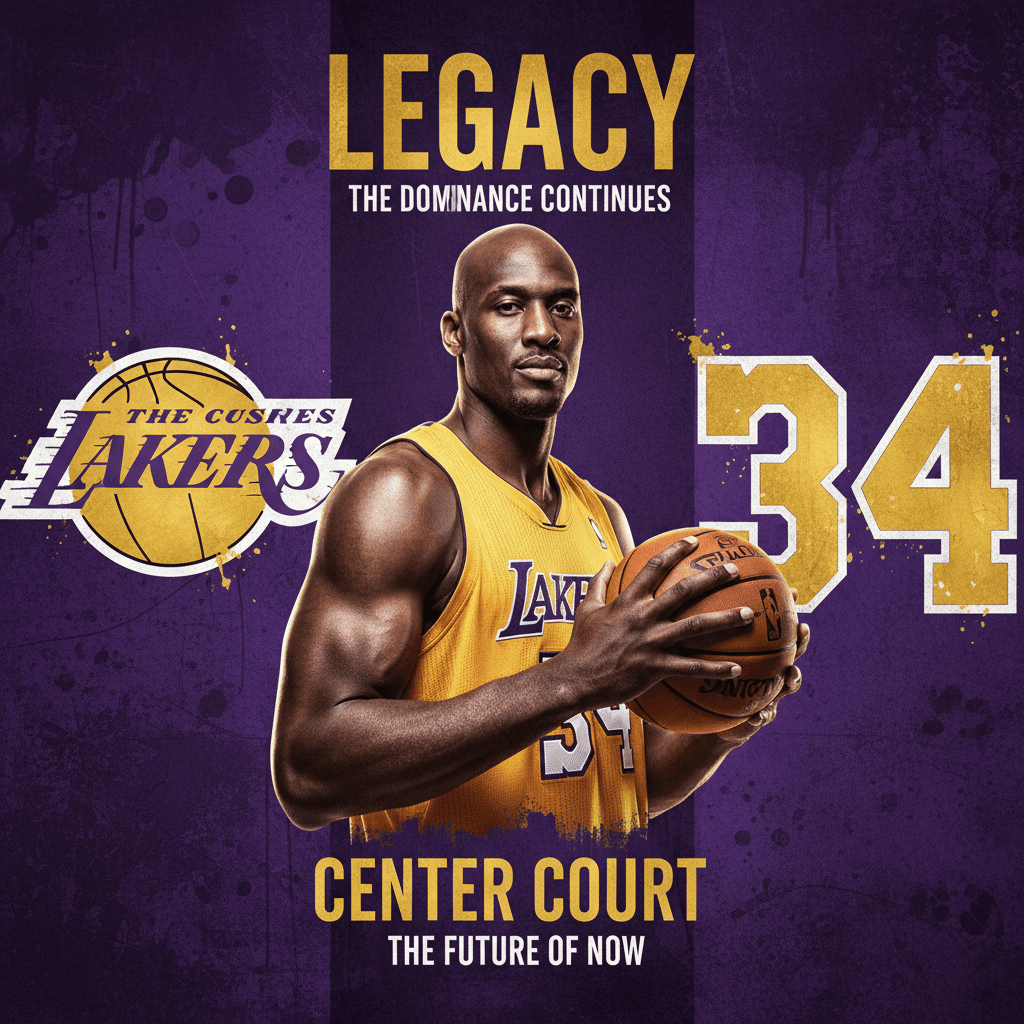
May 26, 2001. Game 1 of the Western Conference Finals, Staples Center, and Dikembe Mutombo has spent eighteen years building toward exactly this assignment. He is 7'2", the reigning Defensive Player of the Year, a four-time winner of the award, owner of one of the most feared shot-blocking instincts the sport has produced. Shaquille O'Neal catches the ball on the left block, feels Mutombo's forearm in his spine, and drop-steps baseline. Mutombo holds his ground the way he has held it against every great center of his era. It does not matter. Shaq gathers all 325 pounds of himself, rises, and slams the ball through the rim with enough force to make the stanchion shudder and the best rim protector alive stumble backward like a man who walked into a moving truck. Then Shaq turns to the bench and flexes. The number on his back is 34, and over the next three weeks it would author the most physically dominant postseason any modern fan had ever seen.
The Los Angeles Lakers would go 15-1 in those 2001 playoffs. The reigning Defensive Player of the Year would look, for stretches, like a spectator.
That is the paradox of #34. The Lakers have hung banners for longer-tenured legends, for men who gave the franchise a decade or more. Shaq gave them eight seasons. But inside a four-year window, he was a force the sport had no honest answer for — and the rafters of the building eventually had to admit it.
Orlando Built the Myth; Los Angeles Built the Dynasty
The story of #34 in purple and gold begins, as so many Lakers stories do, with somebody else's heartbreak. Drafted first overall by the Orlando Magic in 1992 out of LSU, Shaquille O'Neal arrived in the NBA as a finished physical product in a way no rookie had since Wilt Chamberlain — 7'1", already pushing past 300 pounds, with a center of gravity that rewrote the geometry of the paint. He dragged the young Magic to the 1995 Finals before he turned twenty-four. Then he ran into a wall every great player eventually meets: the gap between individual dominance and an organization built to win.
In the summer of 1996, Orlando could not put the championship infrastructure around him. Los Angeles could. The Lakers signed Shaq to a seven-year, roughly $120 million contract — and in the same offseason, general manager Jerry West traded for the draft rights to a seventeen-year-old guard named Kobe Bryant. The two acquisitions, made within weeks of each other, were the seed of everything. Shaq came west chasing a championship infrastructure and a major market. He found a teenage co-star who would become his greatest collaborator and his greatest friction, sometimes in the same week.
It took the right coach to convert the talent into titles. Phil Jackson arrived in 1999 carrying six rings from Chicago and Tex Winter's triangle offense in his binder. The triangle demanded a low-post anchor who could read a double-team and punish it. Shaq was the most punishing anchor the league had. The system did not slow him down — it organized everyone else around the gravity he generated.

The Numbers That Broke the Sport: 2000
The 1999–2000 season was Shaq's coronation. He won the regular-season MVP — the only one of his career, and a near-unanimous vote — averaging close to 30 points and 14 rebounds while leading the Lakers to 67 wins. He had always been dominant. That year he was dominant and disciplined, dragging Jackson's system to the precipice of a title.
The 2000 NBA Finals against the Indiana Pacers were less a series than a demonstration. Across six games, Shaq averaged roughly 38 points and 17 rebounds on better than 60 percent shooting. Those are not Finals numbers. They are video-game numbers, posted against a genuine defensive team in the highest-pressure round of the year. The Pacers had Rik Smits, a deep and disciplined roster, and a championship-caliber game plan. None of it mattered. Shaq did not so much beat Indiana as render it irrelevant, and he was named Finals MVP in a vote that required no deliberation.
It was the first leg of a three-peat that would define a franchise era and cement a number in the rafters.

The 2001 Run: The Most Dominant Postseason in Memory
If the 2000 title was a coronation, the 2001 playoff run was a rampage. The Lakers went 15-1 across four rounds — sweeping Portland, sweeping Sacramento, sweeping a 58-win San Antonio team that had the best regular-season record in the league, and dropping only a single game to Allen Iverson's Philadelphia 76ers in the Finals. That lone loss is remembered for Iverson's step-over of Tyronn Lue. The rest of the postseason is remembered, by anyone who watched it, as the closest a modern team has come to walking through a playoff bracket untouched.
Shaq's averages across that run hovered around 30 points, 15 rebounds, and better than 2 blocks a game, with a rim-protecting presence the box score never fully captured. The Mutombo dunk was not an outlier; it was a thesis statement. The reigning Defensive Player of the Year, the man specifically engineered by two decades of basketball to defend exactly this player, had no functional answer. Shaq won his second straight Finals MVP. There was, again, nothing to debate.
Phil Jackson — who had coached Michael Jordan to six titles in Chicago before he ever coached O'Neal — repeatedly described Shaq during this stretch as the most dominant player in the game, and he was not given to overstatement about anyone.

The Three-Peat Closes: 2002
The 2002 Finals against the New Jersey Nets sealed the dynasty with a four-game sweep. Shaq averaged better than 36 points and 12 rebounds, claimed a third consecutive Finals MVP, and joined an exclusive register of players to win the award three years running. Stack the three championship Finals together and the composite line is staggering: roughly 36 points and 15 rebounds a game on nearly 60 percent shooting, with three Finals MVP trophies to show for it.
No player has sustained that level of Finals production across three straight years. Not Bill Russell, not Jordan, not LeBron James. For thirty-six games spread across three Junes, against the best defenses each conference could assemble, Shaq existed in a statistical universe of his own. The man they called "the Diesel" — and, when he was feeling theatrical, "Shaq Diablo" — did not have a peer at his peak. He had victims.

A Problem With No Answer
What made Shaq impossible was not any single attribute. It was the combination. At 325 pounds he still moved with real foot speed. He had a soft touch around the basket and a passer's vision out of the double-team that forced defenses to respect his kickouts. Put those together and you create a structural impossibility for a coaching staff.
Guard him with one man and he overpowers the defender at will. Send a second and he reads the rotation and feeds an open shooter on the wing. Send a third and the Lakers simply have four men open. There was no clean defensive coverage — only a choice of which way you preferred to lose.
So opponents stopped playing defense and started breaking the game on purpose. "Hack-a-Shaq" — fouling him intentionally and far from the ball to send him to the line — became a recognized strategy because his free-throw shooting, hovering around 52 percent for his career, was the lone exploitable seam in an otherwise seamless player. Sit with the strangeness of that. The optimal way to defend the most dominant force in basketball was to commit a deliberate foul and pray at the stripe. No other player has compelled the opposition to subvert the basic logic of the sport just to keep a game close.

The Partnership and Its End
The engine of the three-peat was also its central drama. On the floor, Shaq and Kobe were almost perfectly complementary: Shaq drew the double-teams that pried open the perimeter, and Kobe's isolation scoring made it suicidal for defenses to fully commit inside. It was the most dominant tandem of its era — and the most volatile. The two men differed on ego, on hierarchy, on preparation, on lifestyle, and the fractures widened across all three title seasons. Three championship rings could not weld them together.
The end came after the 2004 Finals, an upset loss to the Detroit Pistons that exposed how far the relationship had eroded. That summer, the Lakers traded Shaq to the Miami Heat. He won a fourth championship there in 2006, his only ring without Los Angeles; Kobe stayed and eventually won two more of his own. It remains the great what-if of modern basketball. Had the two coexisted, the Lakers might have stacked five or six titles instead of three. Instead the franchise chose to dissolve a dynasty to preserve two careers — and both men, in time, vindicated the gamble apart.
For all the noise of the breakup, the basketball remains the record. Across his career Shaq scored roughly 28,600 points, made fifteen All-Star teams, anchored three straight champions, and was inducted into the Hall of Fame in 2016. The friction is a story. The dominance is a fact.

The Numbers Behind the Number
- 4 NBA championships — three with the Lakers (2000, 2001, 2002) and one with Miami in 2006
- 3 Finals MVP awards (2000, 2001, 2002) — won in three consecutive seasons, all in Los Angeles
- 1 regular-season MVP (2000), a near-unanimous selection
- 15× NBA All-Star across a nineteen-year career
- Roughly 38 points per game in the 2000 Finals — among the highest single-series Finals scoring averages of the modern era
- A 15-1 team playoff run in 2001, anchored by averages near 30 points and 15 rebounds with elite rim protection
- Around 28,600 career points, with a career field-goal percentage among the best in league history
- 1st overall pick, 1992 NBA Draft (Orlando Magic), out of LSU
- Naismith Memorial Basketball Hall of Fame, Class of 2016
None of these figures fully holds what Shaq meant. He was a cultural event as much as an athlete — a rapper, a pitchman, a movie star, a personality whose grin sold the sport to people who had never watched a possession of it. But the numbers are the spine of the case, and the case for #34 is the case for a peak so steep that the league had to invent rule-bending strategies just to survive it.
Why #34 Hangs Forever
On April 2, 2013, the Lakers raised Shaquille O'Neal's #34 to the rafters of Staples Center. Eight seasons in purple and gold is a short tenure by the franchise's exacting standard — shorter than the eras given to most of the legends whose numbers surround it. The brevity never entered the conversation. Impact density made the duration irrelevant: three straight championships, three straight Finals MVPs, and individual performances so overwhelming that opposing coaches rewrote their strategic philosophy to cope with him.
Shaq's banner went up beside Wilt Chamberlain's #13, and the pairing reads like a thesis the franchise wanted preserved — the two most physically dominant centers the sport has produced, both Lakers, both forever overhead. It is a fitting bookend, and a deliberate one.

A number in the rafters is rarely about counting seasons. It is about acknowledging that something happened inside your building that will not happen again. #34 witnessed all of it: the Mutombo dunk, the 38-a-game demolition of Indiana, the 15-1 march through 2001, the three rings, the unsolvable post-up that forced an entire league to foul on purpose. It hangs in the same Lakers tradition as Kobe Bryant's #8 and #24 — the dynasty partner whose friction and brilliance were inseparable from Shaq's own — and in the longer lineage of Magic Johnson's #32 and Kareem Abdul-Jabbar's #33, the showtime spine on which the franchise's modern identity was built.
None of those numbers, alone, is the Lakers. Together they are what the word means. And for a four-year stretch at the turn of the century, #34 was the most immovable object the sport had ever tried, and failed, to move.
Gefällt Ihnen diese Analyse?
Erhalten Sie weitere Analysen wie diese direkt in Ihr Postfach.