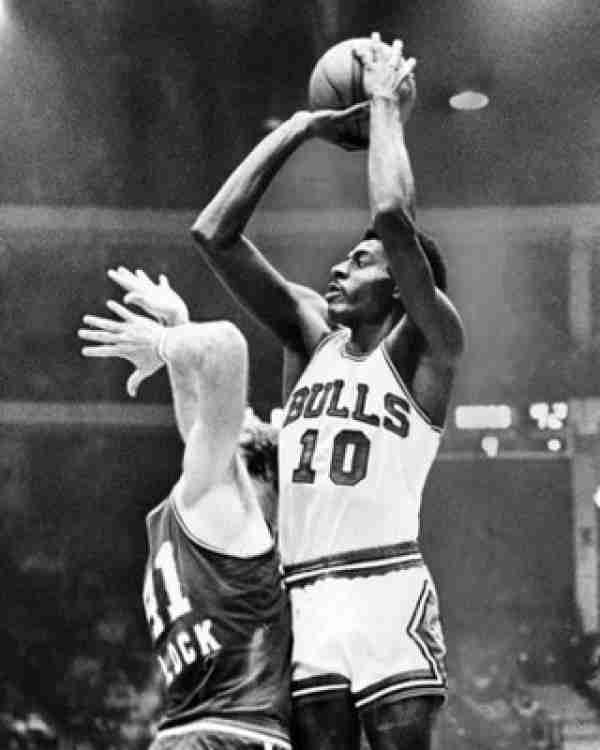
The number 432 is not a jersey number in any traditional sense. It is a win total — the exact number of games Doug Moe won as head coach of the Denver Nuggets between 1980 and 1990, more than any coach in franchise history. When the Nuggets retired that number in his honor, they were doing something unusual and entirely appropriate: acknowledging that the man who built their offensive identity deserved a place alongside the players whose names and numbers define the franchise.
Moe did not play for the Nuggets. He coached them. He coached them into one of the most entertaining, high-scoring, chaotically brilliant teams in NBA history. He coached Alex English into the decade's leading scorer and Dan Issel into a Hall of Famer's final years. He coached teams that no one could stop from scoring and sometimes no one could keep from giving up points. He coached Denver basketball into an identity that the city still recognizes decades later.
The Philosophy: Score First, Score Often, Score Again
Doug Moe's offensive philosophy was radical for the NBA of the 1980s and is now recognized as prescient. He believed that pace was an advantage, that spacing created shots, that the right offensive system could extract more production from talented players than any elaborate set play design. His teams ran. They ran in transition, they ran their half-court offense at pace, they ran the opponent into fatigue and high-scoring defeats.
The Moe offense was motion-based before motion offense became the dominant NBA paradigm. Players moved constantly, cutting and screening not on predetermined patterns but on reads — reacting to where the defense was and where the space existed. It demanded high basketball IQ from his players and rewarded intelligent off-ball movement with open shots and easy baskets. Alex English thrived in this system. Dan Issel thrived. The entire roster of the 1980s Denver Nuggets thrived because Moe built an environment where skilled players could express themselves freely.
The results were spectacular and occasionally anarchic. Denver Nuggets games in the Moe era regularly featured both teams scoring over 130 points. In 1983-84, the Nuggets scored 123.7 points per game — still one of the highest single-season team scoring averages in NBA history. Opponents who came to Denver knowing they had to outscore the Nuggets, not just stop them, found that both tasks were often impossible simultaneously.
The Record: 432 Wins in Denver
Moe took over as Nuggets head coach in 1980 and held the position through 1990 — ten years, the same decade that Alex English was the NBA's leading scorer, the same decade that defined Denver basketball for a generation of fans. During those ten years, Moe compiled a record of 432 wins and 357 losses, a winning percentage of .547, and led Denver to the playoffs in eight of his ten seasons.
The 1985 Western Conference Finals, where Denver pushed the eventual champion Los Angeles Lakers to five games, represented the Moe-era Nuggets at their ceiling — a team capable of competing with the best franchise in basketball. That the Nuggets fell short of a championship during the Moe era is more a testament to the Lakers' own dynasty-level quality than to any deficiency in what Moe built.
The Character Behind the Philosophy
Moe was as distinctive a personality as his offense. Gruff, direct, unconventional — he was not a coach who ran a tight ship in the traditional sense. He trusted his players, communicated honestly, and created an environment where individual expression was not just tolerated but required. Players who needed rigid structure sometimes struggled under him. Players who had basketball intelligence and wanted freedom flourished.
His relationship with his players was one of mutual respect built on his willingness to let them play. Moe did not micromanage talent. He identified what his players did well, built a system that maximized it, and got out of the way. The results across a decade validated the approach in ways that made him one of the most influential offensive coaches of his era.
Why the Nuggets Honored #432
The franchise's decision to retire a coaching win total as if it were a jersey number is unconventional — and that unconventionality perfectly suits Doug Moe. He was not a conventional coach. He did not run a conventional offense. He did not produce a conventional decade of Nuggets basketball. He produced something memorable, something distinctively Denver, something that defined a franchise identity so thoroughly that it outlasted his tenure.
When fans remember the great Nuggets eras, they remember the run-and-gun 1980s almost as often as they remember the Jokic championship years. That era has Moe's fingerprints on every possession. English's silky mid-range game worked because Moe put him in positions to succeed. Issel's final productive seasons came because Moe built an offense that let him score efficiently into his mid-30s.
432 wins. Ten seasons. Eight playoff appearances. An offensive philosophy that still influences how the game is coached today. Doug Moe did not play for the Denver Nuggets. He built them. The number in the rafters is not a jersey — it is a record. And the record is as legitimate a reason to retire a number as any scoring title or All-Star selection that hangs alongside it.
Gefällt Ihnen diese Analyse?
Erhalten Sie weitere Analysen wie diese direkt in Ihr Postfach.