Diese Seite enthält Affiliate-Links. Wir erhalten möglicherweise eine Provision, wenn Sie über diese Links kaufen, ohne zusätzliche Kosten für Sie. As an Amazon Associate I earn from qualifying purchases.
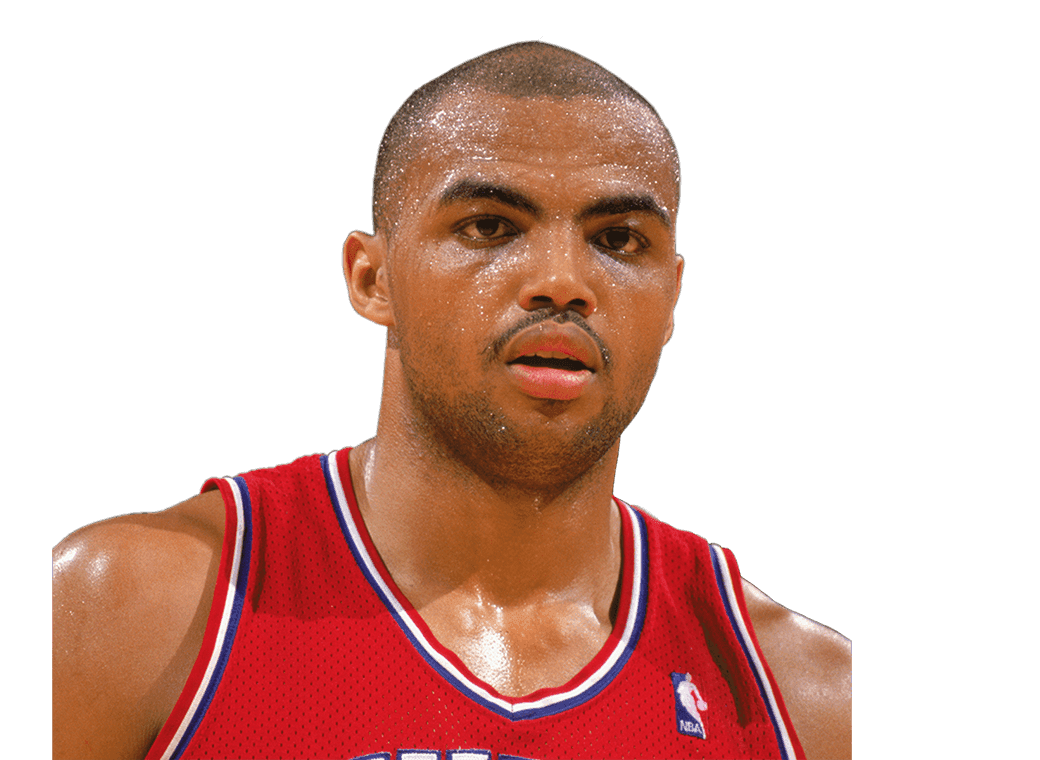
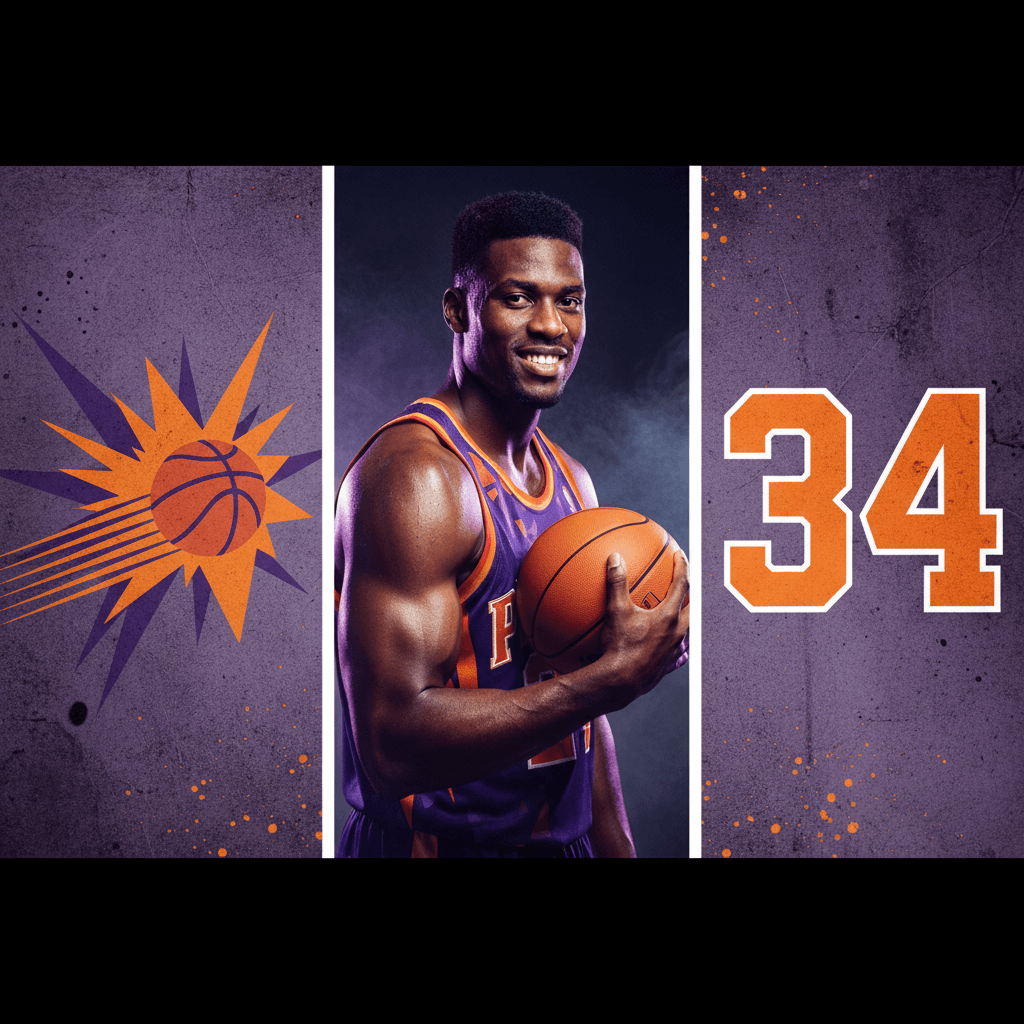
June 20, 1993. America West Arena, Phoenix, late in the fourth quarter of Game 6 of the NBA Finals. The Suns trailed the Chicago Bulls by two with the season running out, and Charles Barkley stood at the elbow with the ball, drawing the eyes of a building that had waited a quarter-century for exactly this — a home Game 6 with a championship still alive in the air. He had been the best player on the floor for stretches of all six games. He would finish the series averaging better than 27 points and 13 rebounds against the most feared team of the era. And then John Paxson rose from the perimeter for the Bulls, released, and the building went silent before the ball had finished its arc. The shot fell. The title went to Chicago. The closest Phoenix has ever come to a championship ended in the space of one possession, and the man at the center of that season wore #34 — a number that now hangs forever in the rafters of the franchise he transformed.
Barkley played only four seasons for the Phoenix Suns. That brevity is the first thing people notice and the last thing that matters. In those four years he delivered the most celebrated stretch in the team's history, won a Most Valuable Player award in his very first season in the desert, and dragged a franchise that had spent decades knocking on the door all the way to the final possession of the final game of the season. Some players pass through a team. Barkley rebuilt one in his own image.
The Round Mound of Rebound
Charles Wade Barkley was born in February 1963 in Leeds, Alabama, a small city southeast of Birmingham where nothing about his path suggested what was coming. He was listed at 6'6" — short for a power forward in any era, comically so for one who intended to lead the NBA in rebounding. He did exactly that. At Auburn he earned the nickname that followed him for life, "The Round Mound of Rebound," a phrase that started as a joke about his frame and ended as a description of one of the most improbable physical talents the sport has ever produced. He boxed out men four and five inches taller and won. He chased loose balls down like a guard. The body looked wrong for the job; the results never were.

The Philadelphia 76ers took him fifth overall in the 1984 NBA Draft, one of the deepest in league history — Hakeem Olajuwon went first, and a guard named Michael Jordan went third, the two men whose careers would later intersect with Barkley's at the highest possible stakes. In Philadelphia he became one of the three or four best players alive: a perennial All-Star, a scoring and rebounding force who posted seasons in the 23-to-28-point, 11-to-12-rebound range, and in 1987 a rare sub-6'7" player to lead the entire league in rebounding. What Philadelphia could not give him was a roster built to win it all. By the summer of 1992 he had decided he was done waiting.
The Trade to the Desert
The deal that sent Barkley to Phoenix ahead of the 1992-93 season is the kind of transaction franchises build statues around. He arrived to join a roster already stocked with talent — Kevin Johnson running the point, Dan Majerle stretching the floor and defending the perimeter, all of it assembled and coached by Paul Westphal, himself a Suns legend whose own #44 hangs in those same rafters. What the team lacked was a singular gravitational force. Barkley was that force from the first practice.

That same summer he had played for the 1992 Dream Team in Barcelona, the most dominant collection of basketball talent ever assembled, and he led that legendary roster in scoring at the Olympics — playing with a freedom and ferocity that announced he was entering the prime of his life. He brought that energy to Phoenix intact. The chemistry was immediate. A team that had been very good became, almost overnight, the best in the sport.
The 62-Win Season and a Unanimous Coronation
The 1992-93 Suns finished 62-20, the best record in the NBA, and the transformation was not subtle. Barkley's numbers that season — roughly 25.6 points, 12.2 rebounds, and 5.1 assists per game — described a player operating at the absolute peak of his powers, the most complete power forward in basketball. But the box score was the smallest part of it. His will to win was audible in the trash talk, visible in the way he physically punished defenders, and contagious in a way that lifted everyone around him.

Kevin Johnson played like a man possessed. Majerle attacked the three-point line with new conviction. The whole organization seemed to operate at a higher frequency because of the player wearing #34. When the MVP voting came in, Barkley took the award in his first season in Phoenix — the rare honor that felt less like a debate than an acknowledgment of the obvious. He was not merely the best player on the best team. He was the reason the best team existed. For a player who had spent eight years in Philadelphia carrying rosters that could not quite get there, the timing carried its own kind of justice.
The 1993 Run: The Closest Phoenix Has Come
The 1993 playoffs were Barkley distilled. Phoenix survived an early scare, then worked through the Western bracket — past the Lakers, past the Spurs, past Seattle in a grueling Western Conference Finals — to reach the NBA Finals for only the second time in the franchise's history. Waiting there was Michael Jordan and the Chicago Bulls, hunting a third straight championship, riding the most untouchable individual performer the game has ever seen.
What followed was six games of a great player refusing to lose quietly. Barkley averaged better than 27 points and 13 rebounds across the series. He fought Jordan, Scottie Pippen, and Horace Grant possession by possession, conceded nothing, and gave the Suns everything they had. Jordan answered with a Finals output that has never been equaled — better than 40 points a game — and that, in the end, was the difference. Two of the era's defining forces collided for the title, and only one could carry it home.
It came down to Game 6 in Phoenix, and to a single shot. With the Suns clinging to a narrow lead in the closing seconds, the ball found Paxson on the perimeter, and he buried the three that gave Chicago the championship. Years later Barkley would say the 1993 Suns were good enough to win it all on most nights — and the memory of those six games supports him. On a different evening, with one possession breaking the other way, the banner hangs in Phoenix. It did not. But the Suns had pushed the greatest team of their generation to the final possession of the final game, and the man who took them there had nothing left to prove.
"I've got two minds. One says, 'Chuck, you can't win every night.' The other says, 'Why not? Why can't you win every night?'" — Charles Barkley, on the competitive standard that defined his Phoenix years
The Years After Phoenix
Barkley played four seasons in the desert before a 1996 trade sent him to the Houston Rockets, where he chased the ring alongside Olajuwon and a late-career Clyde Drexler. It never came. He retired in 2000 as one of the greatest players never to win a championship — a fact that basketball historians treat less as a footnote than as one of the sport's enduring injustices. He had played for the 76ers, the Suns, and the Rockets, and across all three he had been, on any given night, capable of being the best player in the building.

The career that followed the playing career only enlarged the legend. Barkley became one of the most recognizable broadcasters in the history of sports, a studio voice whose honesty and humor reached audiences far beyond the people who had watched him play. But the basketball came first, and the four years in Phoenix remain the white-hot center of it — the stretch where everything he was as a player aligned with a team built to match him.
The Numbers Behind the Number
- 1993 NBA Most Valuable Player — won in his first season in Phoenix
- Led the Suns to a 62-20 record, the best in the NBA, and the 1993 NBA Finals
- 11× NBA All-Star across his career
- 5× All-NBA First Team — the mark of sustained, top-tier dominance
- Led the entire NBA in rebounding in 1987 as a sub-6'7" forward, one of the rarest feats at the position
- Career averages of roughly 22 points and 11.7 rebounds per game
- #5 overall pick in the 1984 NBA Draft — the same legendary class as Olajuwon and Jordan
- Two-time Olympic gold medalist with the 1992 and 1996 Dream Teams
- Naismith Memorial Basketball Hall of Fame, Class of 2006
- Named to the NBA's 75th Anniversary Team in 2021
None of those lines contains the thing Barkley actually meant to Phoenix. Before he arrived, the Suns had reached the Finals exactly once in their first twenty-four years of existence. With him, they posted the best record in the league, claimed the MVP trophy, and produced the most dramatic Finals appearance the franchise has ever had. He gave the team an identity it had never possessed — physical, fast, combustible, and joyful — and a standard of excellence the organization has been chasing ever since. That is not something a stat sheet records.

Why #34 Hangs Forever
The retirement of Barkley's #34 is not a reward for longevity. Four seasons is a blink by the standard of franchise icons, shorter than the careers of the men whose numbers hang beside his — Steve Nash's #13, the two-time MVP who came later, and Paul Westphal's #44, the player-turned-coach who built the roster Barkley joined. The case for #34 rests on transformation instead. Barkley did not extend a tradition. He created one.
That is why the number could never belong to anyone else in Phoenix. Some retired jerseys honor a career of steady service. This one acknowledges a force of nature who passed through for four years and rearranged everything he touched — who took a franchise that had spent decades almost getting there and carried it, on his back and his will, to the doorstep of a title. The fact that the door did not open does not diminish the journey. It defines it. Phoenix has chased that 1993 feeling for more than thirty years and has never quite found it again.
So #34 stays in the rafters, retired in perpetuity, hanging in the same building as Johnson's #7, Majerle's #9, Westphal's #44, and Nash's #13 — the constellation of numbers that together tell the story of what a Phoenix Sun is supposed to be. None of them, alone, is the franchise. But for four unforgettable seasons, one of them came closer than any to delivering the one thing the franchise has never had. The Suns retired Charles Barkley's #34 because for those four years, against the greatest team of its time, they had the best player in the world — and everyone who was in the building still remembers exactly what that felt like.
Gefällt Ihnen diese Analyse?
Erhalten Sie weitere Analysen wie diese direkt in Ihr Postfach.