LeBron James at 41: A Statistical Deep Dive Into Basketball's Greatest Longevity Story
In his 23rd NBA season, LeBron James continues to defy aging curves that every other player in history has followed. The numbers reveal a player who has rewritten the rules of athletic decline.
Diosh Lequiron
··13 min read·
M
Share
This page contains affiliate links. We may earn a commission if you purchase through these links, at no extra cost to you. As an Amazon Associate I earn from qualifying purchases.
The play happens in the second quarter of a Tuesday night game against the Sacramento Kings — the kind of game that used to mean nothing on the schedule but now carries the weight of history every time LeBron James steps on the floor. He catches the ball at the three-point line, surveys the defense for a beat, then attacks the closeout with a first step that, while no longer the fastest in the league, is still fast enough to turn the corner on a 24-year-old defender.
He gets to the paint, absorbs contact from the help defender, and finishes with a left-handed scoop layup that kisses off the glass. Two points. Routine. Except that the man who just did it turned 41 three months ago and is in his 23rd NBA season.
There is no precedent for what LeBron James is doing. Not approximate precedent. None.
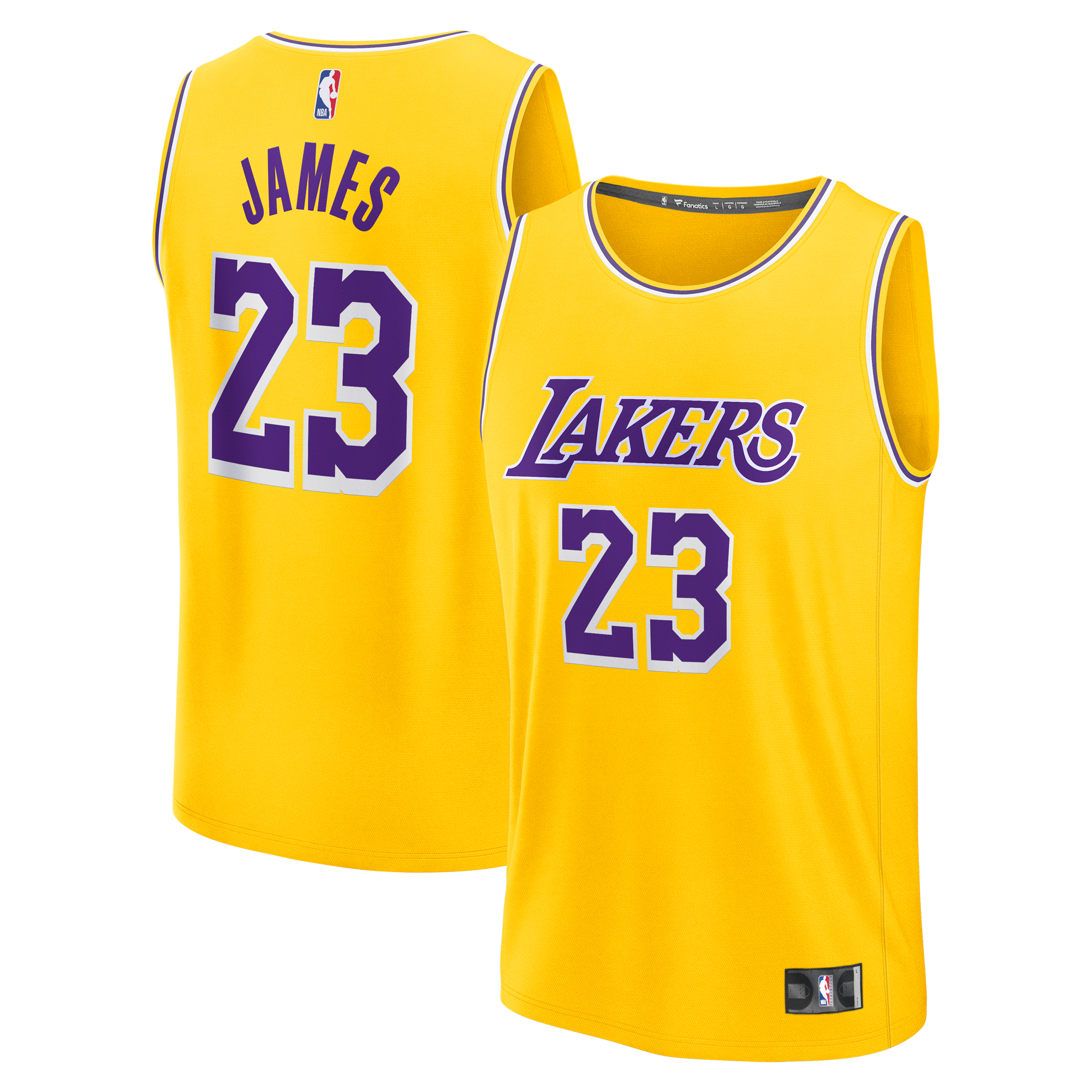
Men's LeBron James Gold Los Angeles Lakers Fast Break Replica Jersey - Icon Edition
The Aging Curve That Doesn't Apply
In professional basketball, player performance follows a predictable arc. Production peaks between ages 25-28, plateaus briefly, and declines steadily thereafter. By 35, most players have either retired or accepted reduced roles. By 38, the player pool in NBA history shrinks to a handful of names. At 40+, you can count the meaningful contributors on one hand: Robert Parish, Kareem Abdul-Jabbar, Karl Malone, Vince Carter, Udonis Haslem.
Of those, only Kareem maintained a significant scoring role past 40, averaging 10.1 points per game at age 41 during his final season. It was considered one of the greatest longevity achievements in sports history.
Dwyane Wade Miami Heat Autographed 8" x 10" Alley-Oop to Lebron James Photograph
LeBron's current season: 22.4 points, 7.1 rebounds, 7.8 assists per game.
That's more than double Kareem's age-41 output. The gap isn't narrow. It's a canyon.
LeBron's 22.4 points per game at 41 would be career-best numbers for most NBA players at any age. That he's producing them in year 23 of his career doesn't bend the aging curve — it breaks the axis.
Youth Jordan Brand LeBron James Navy 2024 NBA All-Star Game Swingman Jersey
What the Advanced Metrics Say
Raw counting stats can be misleading — they don't account for efficiency, context, or impact. The advanced metrics paint an even more striking picture:
PER (Player Efficiency Rating): 23.1 — top 15% of all NBA players this season. Not among 40-year-olds. Among everyone.
True Shooting %: 59.2% — actually higher than his career average of 58.6%, suggesting he's compensating for decreased athleticism with improved shot selection
Box Plus-Minus: +5.2 — the Lakers are approximately 5 points better per 100 possessions with LeBron on court
Win Shares per 48: .188 — comparable to All-Star-caliber production from any player at any age
The BPM figure deserves emphasis. LeBron's impact metric has remained remarkably stable throughout his career, hovering between +5 and +10 for over a decade. The number hasn't cratered with age the way it does for every other player in history. It's just... stayed. Year after year. The consistency might be more impressive than any individual peak.
Dwyane Wade Miami Heat Autographed 16'' x 20'' Alley-Oop to Lebron James Photograph
The Physical Reinvention
Early-career LeBron was a force of nature — perhaps the most physically overwhelming perimeter player the sport has ever produced. At 6'9", 250 pounds, with a 4.4-second 40-yard dash and a 40+ inch vertical leap, he combined size, speed, and power in a way that had no historical comparison at the wing position. He didn't play basketball so much as impose his physical will on it.
Current LeBron has rebuilt his game from the foundation up. The changes are visible on film:
Drive speed: Down approximately 12% from his Miami Heat peak (2012-14), per player tracking data
Drive finishing %: Down only 3% despite the speed reduction — better angles, more effective footwork, and a significantly improved floater allow him to score without absorbing rim contact
Three-point shooting: 38.1% over the last three seasons — the best extended stretch of his career, driven by more catch-and-shoot attempts and less contested pull-up creation
Post-up frequency: Up 40% from his peak athletic years — he's shifted scoring burden from athletic attacks to positional, skill-based scoring
The transformation is systematic, not cosmetic. LeBron hasn't just gotten older and slowed down. He's rebuilt his offensive identity around what his 41-year-old body can still do exceptionally well — read defenses, make decisions, shoot efficiently, and leverage his size in the post — while reducing his reliance on the speed and explosion that age inevitably takes.
Men's Mitchell & Ness LeBron James White/Blue 2006 NBA All-Star Game Authentic Jersey
The Playmaking Constant
The one area of LeBron's game that shows zero decline is playmaking. His court vision, passing accuracy, and ability to read defenses remain at the exact same elite level they've been at since his mid-twenties. This isn't surprising — playmaking intelligence, unlike speed or vertical leap, is a cognitive skill that doesn't decline with age. If anything, it deepens.
His assist-to-turnover ratio of 2.8 is the best of his career. He makes fewer mistakes, takes fewer risks with the ball, and finds open teammates with a pattern-recognition ability that only improves with 23 years of reading NBA defenses. Every defense he faces, he's seen a hundred times before. Every rotation, he's anticipated before it happens. Experience doesn't compensate for physical decline in LeBron's playmaking — it compounds his advantage.
Unisex Nike LeBron James White Los Angeles Lakers Swingman Jersey - Association Edition
The $1.5 Million Investment
LeBron's annual investment in body maintenance — estimated at $1.5 million per year on personal trainers, cryotherapy, hyperbaric chambers, nutrition, and sleep optimization — is the most-cited aspect of his longevity strategy. It matters. But it's not the real story.
The real story is intellectual. LeBron has continuously adapted his playing style, shot selection, and physical approach to match his changing capabilities. He didn't wait until his body forced changes — he anticipated them and evolved proactively. The post game developed before he lost his first step. The three-point shooting improved before he needed it as a primary weapon. The reduced minutes came before his body demanded them.
This willingness to evolve — rather than clinging to the playing style that made him dominant in his twenties — is what truly separates LeBron's aging curve from every other player in NBA history. He hasn't just maintained his career. He's reinvented it, multiple times, before the reinvention became necessary.
Men's Fanatics LeBron James Gold Los Angeles Lakers Fast Break Replica Jersey - Icon Edition
The Record Book
LeBron holds the NBA's all-time scoring record (41,000+ points), the all-time minutes played record, and ranks fourth in career assists. These cumulative records are partly a function of longevity — play long enough, and you pile up counting stats.
But the efficiency records aren't products of lasting long. They reflect sustained excellence:
Bronny James Los Angeles Lakers 10.5" x 13" Jersey Number Sublimated Player Plaque
Top 5 all-time in career PER
Top 5 in career Win Shares per 48 minutes
Top 5 in career Box Plus-Minus
You don't rank in the top five of every career efficiency metric by simply playing a lot of seasons. You do it by being great in each of them. LeBron didn't just last. He lasted at a level the sport has never seen sustained for this long.
Whether LeBron continues beyond this season remains uncertain. What's certain is that his age-41 production has set a standard that may never be matched. The greatest longevity story in basketball history continues to add chapters — and the record book continues to run out of room.
Enjoying this analysis?
Get more breakdowns like this delivered to your inbox.
Boozer and Peterson opened as 2027 NBA Rookie of the Year co-favorites over No. 1 pick AJ Dybantsa. We break down role, usage and the real case for each.
AJ Dybantsa is the presumptive face of the Wizards' rebuild — brought in as the No. 1 overall pick even though Washington already has six NBA wings on the roster. A look at the record-breaking BYU season, the Darryn Peterson decision, and why talent still beats a crowded depth chart.
Dylan Harper arrived as the No. 2 pick and finished his rookie year as an All-Rookie First Team guard starting in the NBA Finals. A film-room look at the Filipino-American lead guard powering San Antonio's next era alongside Victor Wembanyama.