This page contains affiliate links. We may earn a commission if you purchase through these links, at no extra cost to you. As an Amazon Associate I earn from qualifying purchases.
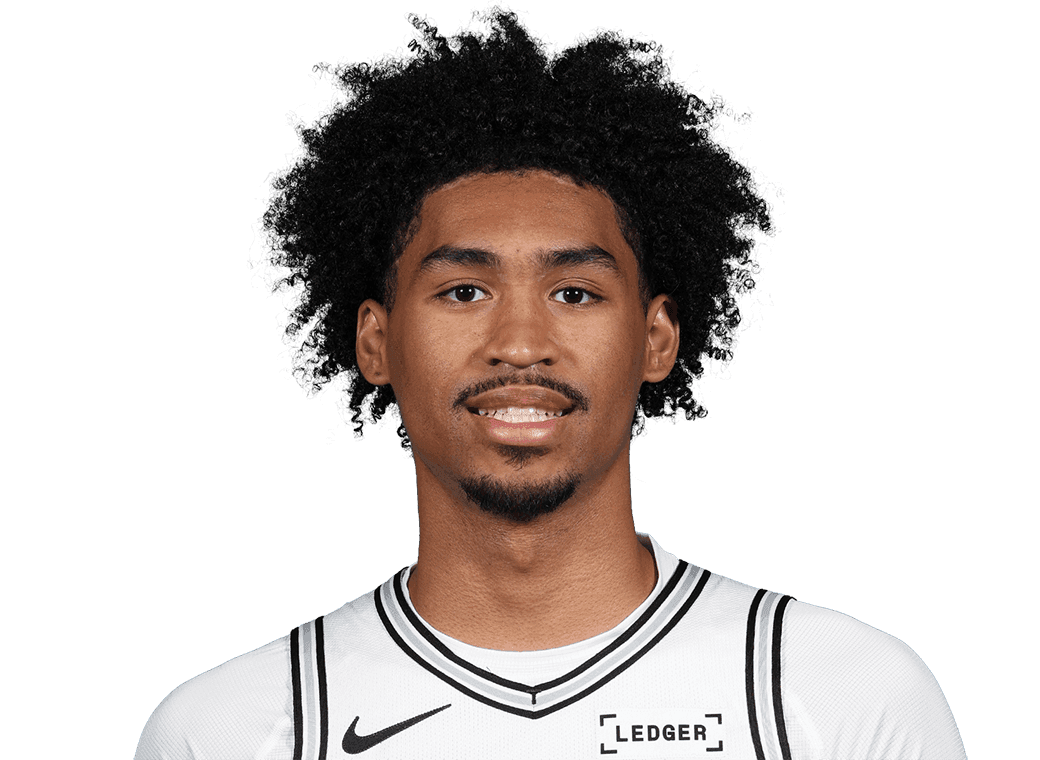
Dylan Harper spent his rookie postseason doing what most first-year players watch: starting, defending, and creating offense in the NBA Finals. With San Antonio facing elimination in Game 5, the 20-year-old finished with 25 points, five rebounds and four assists without a single turnover, attacking New York downhill and finishing through contact at the rim. The Spurs lost the game and the series 4-1, but the night confirmed what the league had watched build for months — the No. 2 pick in the 2025 draft was already a Finals-caliber lead guard. He made All-Rookie First Team and established himself as the Filipino-American guard powering San Antonio's next era alongside Victor Wembanyama. This piece traces the path from Don Bosco to the No. 2 pick, the season that climbed into a playoff leap, how his game fits next to Wembanyama, and the jump shot that will decide his ceiling.
The Closeout That Announced Him
With the San Antonio Spurs facing elimination in Game 5 of the 2026 NBA Finals, the player who looked most at ease was the 20-year-old rookie. Dylan Harper finished with 25 points, five rebounds, and four assists and did not commit a single turnover, attacking the New York Knicks downhill and finishing through contact at the rim. San Antonio lost the game and the series 4-1, but the night confirmed what the league had watched build for months: the No. 2 pick in the 2025 draft was already a Finals-caliber lead guard.

That is a rare thing to write about a first-year player. Most rookies spend the postseason watching. Harper spent it starting, defending, and creating offense on the sport's biggest stage next to Victor Wembanyama, and he looked like he belonged. His full player profile tracks the season-by-season picture; this piece is about how he got here and why his game fits.
From Don Bosco to the No. 2 Pick
Harper was born March 2, 2006, in Englewood, New Jersey, into one of basketball's most credentialed families. His father, Ron Harper, won five NBA championships across 15 seasons; his older brother, Ron Harper Jr., reached the league as a wing. By the time Dylan was starring at Don Bosco Preparatory High School in Ramsey, New Jersey, he was the No. 1 overall recruit in the class of 2024.

He spent one season at Rutgers and produced immediately: 19.4 points, 4.6 rebounds, and 4.0 assists per game across 29 games on 48.4% shooting (Basketball Reference, 2024-25), earning third-team All-Big Ten honors. The profile that emerged was a 6-foot-5, 215-pound combo guard (NBA.com) who could get downhill at will, manipulate ball screens, and finish with either hand. When San Antonio used the second overall pick on him in 2025, the fit was clean: a primary perimeter creator to pair with a franchise center.
A Rookie Season That Climbed
Harper's first NBA season was a study in steady escalation rather than instant stardom. He played 69 games and averaged 11.8 points, 3.9 assists, and 3.4 rebounds on 50.5% from the field and 34.3% from three (Basketball Reference, 2025-26). The efficiency is the tell: a 50% field-goal mark from a first-year creator means he was choosing good shots and finishing them, not forcing volume.

He started only four regular-season games, but the trend line mattered more than the role. As the season wore on, San Antonio handed him more on-ball reps, more late-clock possessions, and tougher defensive assignments against opposing guards. By the end of the year he had earned a place on the NBA All-Rookie First Team — formal acknowledgment that he had been one of the best first-year players in the league.
The Playoff Leap
The postseason is where Harper's value jumped. Across 23 playoff games he averaged 14.1 points and 5.6 rebounds, his role expanding into a full-time starting job as San Antonio made its run. The Spurs won 62 regular-season games, Wembanyama claimed Western Conference Finals MVP in his first trip to the playoffs, and San Antonio reached the NBA Finals well ahead of most projections for a team built around a second-year center and a rookie guard.
The Finals were punishing. San Antonio fell to the Knicks in five games — a series New York controlled despite the Spurs' leads, including a Game 4 in which San Antonio surrendered a 29-point advantage in the largest collapse in Finals history. (For the other side of that series, read our look at how Jalen Brunson ended the Knicks' 53-year title wait.) But Harper's individual arc only pointed up. A rookie who averaged double figures in the Finals, capped by a 25-point, zero-turnover closeout, has cleared the hardest developmental hurdle in the sport: producing efficiently when the defense is dialed in and the lights are brightest.
How Harper Fits Next to Wembanyama
Harper's game answers San Antonio's most important structural question. Wembanyama is a center who can do nearly everything except generate easy half-court offense entirely on his own; a defense can load up on him when there is no second engine forcing rotations. Harper is that second engine. His downhill pressure collapses defenses and creates the exact short-roll and lob windows where Wembanyama is most dangerous, and his improving pull-up keeps drop coverages honest. It is a different flavor of the two-way frontcourt-plus-creator model that defines the modern league, the same template explored in our analysis of Anthony Davis's unicorn skillset.

It is also the inverse of his father's career. Ron Harper won titles as a complementary defender and spot creator next to Michael Jordan and Shaquille O'Neal; Dylan has arrived as the featured initiator, the one bending defenses so a star big can punish the help. For a franchise that built dynasties on disciplined two-man chemistry — and a center already redefining his position — a 20-year-old who can run a pick-and-roll in June is the piece that was missing. You can see the rest of the roster on the San Antonio Spurs team page.
The Swing Skill: A Jump Shot That Decides His Ceiling
If there is one number that will determine how high Harper climbs, it is his three-point percentage. He shot 34.3% from deep as a rookie (Basketball Reference, 2025-26) — respectable for a first-year guard, but not yet the figure that forces defenses to chase him over screens. That distinction matters enormously next to Wembanyama. When a help defender can sag off Harper to wall up the paint, it shrinks the very driving lanes his game depends on and gives the big man less room to operate.
The encouraging signs are in the supporting numbers. His 75.6% mark from the free-throw line and his overall 50.5% from the field suggest a clean release and sound shot selection rather than a broken stroke — the profile of a shooter who tends to improve with NBA reps, not one fighting his mechanics. If that percentage climbs into the high 30s, Harper stops being a downhill threat defenses can scheme against and becomes a two-level creator they cannot, which is the difference between a good starter and an All-Star-tier guard.
The Filipino-American Story
Harper's rise carries meaning well beyond Texas. His mother, Maria (née Pizarro), is from Bataan in the Philippines and played college basketball at the University of New Orleans. That makes Dylan one of the most prominent players of Filipino descent in the modern NBA — and his deep Finals run, as a starter rather than a bench piece, registered as a milestone for basketball fans across the Philippines and the broader Filipino diaspora.
For a country that follows the sport as intensely as anywhere on earth, representation at that level is not a footnote. It is the kind of story that turns a casual viewer into a lifelong follower of a player and a team, and it is a thread we will keep tracking as Harper's career grows.
What Comes Next for Dylan Harper
The Spurs lost the 2026 Finals, but they walked away with the league's most enviable young foundation: a 22-year-old franchise center who won Conference Finals MVP and a 20-year-old All-Rookie guard who started in the Finals. Most rebuilds hope to find one of those. San Antonio has both, under team control, with the experience of a Finals loss already behind them.

Harper still has shooting consistency to sharpen and an off-ball game to round out, and a full offseason of opposing scouting reports will test him. But the floor is high and the ceiling is the kind teams build a decade around. The rookie who took the Spurs to the Finals is only getting started.
Enjoying this analysis?
Get more breakdowns like this delivered to your inbox.