This page contains affiliate links. We may earn a commission if you purchase through these links, at no extra cost to you. As an Amazon Associate I earn from qualifying purchases.
When Giannis Antetokounmpo arrived in Milwaukee as an 18-year-old from Athens, he weighed 196 pounds and looked like a physics experiment in human form — all limbs, no muscle, a wingspan that belonged on a condor. By his first MVP season in 2019, he weighed 242 pounds. By his second MVP in 2020, 248. The weight didn't just add mass; it transformed how he played. He went from a player opponents could bump off his line to a force of nature that drew three defenders on every drive and still finished through all of them.
But the Bucks' strength staff wasn't just adding weight. They were adding the right kind of weight, in the right muscle groups, for the right basketball reasons. The story of Giannis's physical development is a case study in what basketball-specific strength training actually means — and it's a very different program than what most players follow when they hit the gym in the off-season.
The Basketball Strength Hierarchy
Not all muscle groups contribute equally to basketball performance. Understanding the hierarchy determines what you train first, heaviest, and most often:
- Tier 1: Posterior chain (glutes, hamstrings, lower back) — generates all explosive movement: drives, jumps, defensive slides, acceleration. The single most important muscle group for basketball athletes.
- Tier 2: Hip flexors and single-leg stability — controls deceleration, change of direction, and balance through contact. Often undertrained because it doesn't feel impressive to work on.
- Tier 3: Core (360° bracing, not just abs) — transfers power from lower body to upper body. A weak core makes you a passenger in your own athletic movement.
- Tier 4: Upper body (shoulders, chest, arms) — finishing through contact, setting screens, defensive positioning. Important, but the last tier for a reason — basketball is a lower-body sport.
The typical recreational player's gym program inverts this hierarchy: heavy bench press, bicep curls, light leg work. This builds a body that looks strong and plays weak.
The Essential Lifts
Trap Bar Deadlift — the most important exercise for basketball athletes:
If you can only do one lower-body compound lift, make it the trap bar deadlift. The neutral grip and centered load position the body more naturally than a conventional barbell deadlift, the range of motion closely mimics a jump takeoff, and the full posterior chain fires simultaneously. NBA strength coaches use this lift more than any other. Build to 1.5× bodyweight for 5 reps as your intermediate benchmark.
Bulgarian Split Squat — basketball's unsung hero:
Every cut, every defensive slide, every jump landing is a single-leg event. Yet most players train bilaterally (two feet) almost exclusively. The Bulgarian split squat builds single-leg strength and stability that transfers directly to every explosive basketball movement. It also reveals and corrects leg strength imbalances that bilateral squats compensate around. Work up to bodyweight in each hand (dumbbells) for 8 reps as your intermediate target.
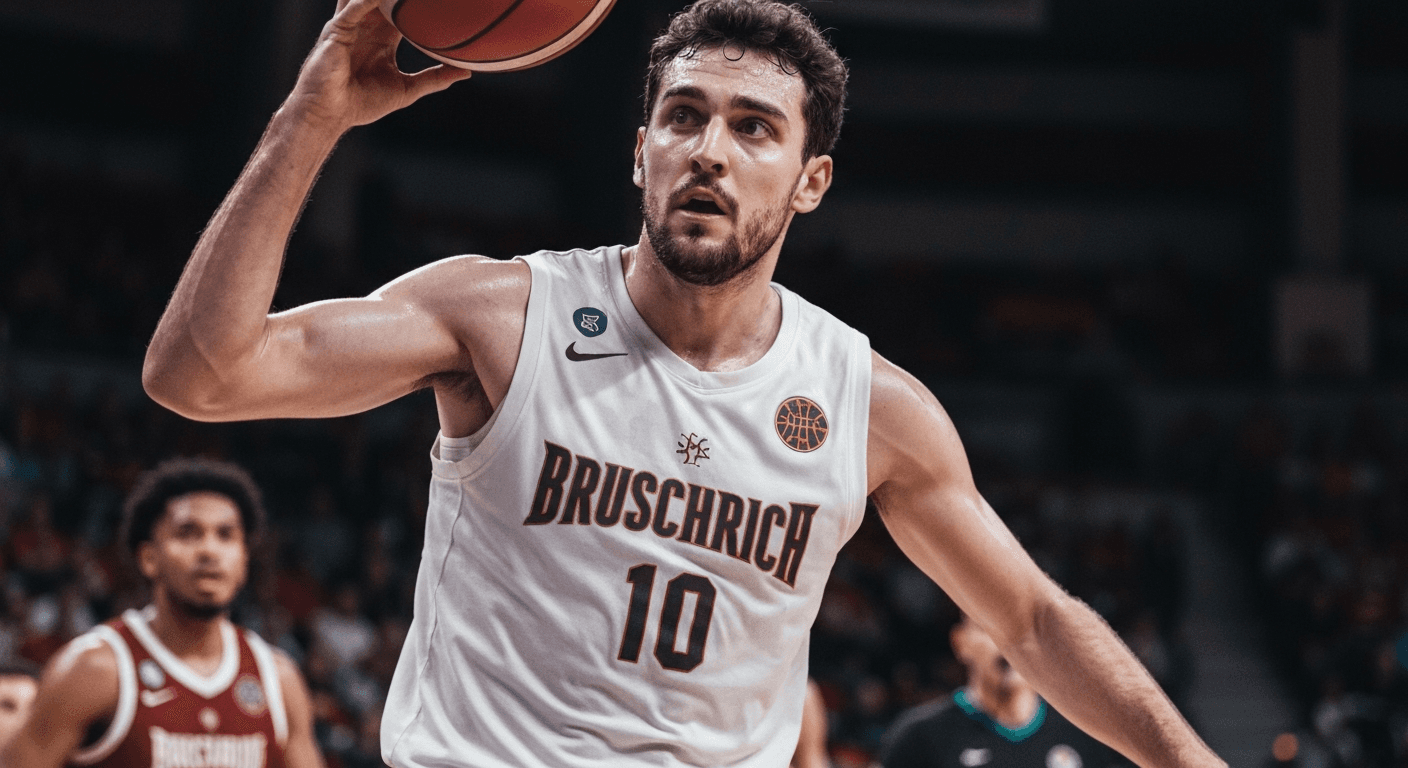
"The split squat is the exercise I'd keep if I could only keep one. It builds single-leg power, exposes weaknesses, and improves hip mobility simultaneously. Every player I've worked with who committed to it for eight weeks saw court performance gains they could feel in the first week of the season." — Phil Donley, NBA strength and conditioning coach
Romanian Deadlift — hamstring insurance:
Hamstring strains are the most common soft-tissue injury in basketball. The Romanian deadlift trains hamstrings eccentrically — through the lengthening phase — which is specifically where injuries occur. Consistent RDL training is one of the most well-documented injury prevention tools in sports medicine. Three sets of 10-12, controlled descent, full stretch at the bottom.
Single-Leg Hip Thrusts — glute isolation:
The glutes drive jumping, accelerating, and decelerating. Most players' glutes are underactivated because prolonged sitting compresses the hip flexors and turns the glutes off neurologically. Single-leg hip thrusts isolate and reactivate the glutes in a position that directly trains the hip extension pattern of a jump. Use bodyweight first, then add a dumbbell across your hip when the bodyweight version is easy for 3×12.
What Not to Train (Or to Deprioritize)
This is where most basketball players waste off-season time:
- Heavy barbell back squat: Highly compressive on the spine, requires significant technical mastery, and provides less basketball specificity than split squats or trap bar deadlifts. Not harmful, but low-value relative to alternatives.
- Leg press: Trains legs in a fixed, seated position with no core stabilization requirement. Strength gained doesn't transfer well to standing athletic movement. Use it for low-level rehab, not primary training.
- Machine work above compound movements: Isolation machines build individual muscles in positions that don't match basketball's athletic demands. They have a place, but only after your compound work is done.
- Chest and arms above everything else: A player with a 315-pound bench press and a 150-pound deadlift will be pushed around in the post and have no legs in the fourth quarter. Basketball is built on your bottom half.
Position-Specific Priorities
Strength training emphasis should shift based on what your position demands:
- Guards: Relative strength (strength-to-bodyweight ratio) matters most. Heavy trap bar deadlifts, split squats, and core stability work. Avoid mass gains that slow your first step.
- Wings/Forwards: Balance of lower-body explosiveness and upper-body strength for finishing through contact. Add single-arm dumbbell rows and standing shoulder press to the core lower-body program.
- Bigs/Centers: Absolute strength and mass are assets. Heavier loading on all lower-body lifts. Upper body: band pull-aparts, face pulls, and rows to maintain shoulder health under heavy post contact.
Frequently Asked Questions
What are the most important lifts for basketball players?
Four lifts cover almost everything: the trap bar deadlift (the single most important exercise for basketball athletes — it loads the body in a position that closely mimics a jump takeoff and fires the full posterior chain simultaneously), the Bulgarian split squat (every cut, slide, and jump landing is a single-leg event, and this is the lift that trains that), the Romanian deadlift (eccentric hamstring work — the most well-documented soft-tissue injury prevention tool in basketball), and the single-leg hip thrust (glute isolation that reactivates muscles weakened by hours of sitting). If you can only train two days a week, those four lifts plus core bracing work cover the basketball-specific essentials.
Should basketball players bench press?
It is the last tier of the hierarchy, not the first. Basketball is a lower-body sport, and the typical recreational gym program inverts the right hierarchy: heavy bench press, bicep curls, light leg work. That builds a body that looks strong and plays weak. A player with a 315-pound bench and a 150-pound deadlift will be pushed around in the post and have no legs in the fourth quarter. The right order is posterior chain first (Tier 1), single-leg stability second (Tier 2), 360-degree core bracing third (Tier 3), upper body fourth (Tier 4). Bench press fits in Tier 4 — useful but secondary, never primary.
Can lifting weights hurt my shot or jump?
Only if you train wrong for the sport. Heavy lifting that builds basketball-specific strength — trap bar deadlifts for jump-pattern hip extension, split squats for single-leg control, RDLs for hamstring health — translates directly into court performance. What hurts your game is loading the wrong patterns: heavy barbell back squats that compress the spine for less basketball transfer, leg press that builds strength in a seated position that does not match athletic movement, and bench-press-dominant programs that add upper-body mass without lower-body support. Giannis Antetokounmpo added 50+ pounds from 2013 to 2020 and got faster, not slower, because the Bucks' S&C staff added the right kind of weight in the right muscle groups.
How much should I be able to lift as a basketball player?
Two intermediate benchmarks from the body of this guide: a 1.5× bodyweight trap bar deadlift for 5 reps, and a Bulgarian split squat with a bodyweight dumbbell in each hand for 8 reps each leg. Hitting both means your lower-body strength foundation is sufficient to support high-intensity plyometric work and game-speed acceleration. As Phil Donley, an NBA strength and conditioning coach quoted earlier in this guide, puts it: every player he has worked with who committed to the split squat for eight weeks saw court performance gains they could feel in the first week of the season. The split squat is the single best diagnostic — it exposes leg-strength imbalances that bilateral squats hide.
How should strength training differ for guards versus bigs?
Guards prioritize relative strength — strength-to-bodyweight ratio. Heavy trap bar deadlifts, split squats, and core stability work, but avoid mass gains that slow your first step. Wings and forwards balance lower-body explosiveness with upper-body finishing strength: add single-arm dumbbell rows and standing shoulder press to the core lower-body program. Bigs and centers can train for absolute strength and mass — heavier loading on all lower-body lifts, plus band pull-aparts, face pulls, and rows to keep shoulders durable under heavy post contact. The lifts themselves stay the same. The volume, loading, and supplementary work shift with position demands.
The off-season window is finite. Players who spend it building the right strength, in the right muscle groups, through the right exercises arrive at training camp with a physical foundation that shows up in their first week of practice. Players who spend it on bench press and curls arrive stronger on the outside and unchanged on the court. Choose the former.
Enjoying this analysis?
Get more breakdowns like this delivered to your inbox.