This page contains affiliate links. We may earn a commission if you purchase through these links, at no extra cost to you. As an Amazon Associate I earn from qualifying purchases.
The Nike Sabrina 2 is our pick for the best basketball shoe for guards in 2026 — RunRepeat's lab measured a very low 17.3 mm forefoot stack, and both RunRepeat and The Hoops Geek's review roundup rate its traction highly. For guards who want maximum impact protection there is the Nike KD 17; for ball-dominant creators, the Adidas Harden Vol. 8; for anyone on a budget, the New Balance TWO WXY v5 is the value pick at a street price under $100. The Puma MB.04 rounds out the five for guards who want a cushioned indoor ride. Every shoe below is judged on the four things guards actually feel possession to possession: traction response, court feel, lateral containment, and weight. We did not wear-test these shoes; the notes below come from brand specs, published lab data, and expert and user reviews. No brand hype.
Related: Best Basketball Shoes for Guards 2026
How We Picked
We did not wear-test these shoes. Each write-up starts from the brand's own specs, checked against RunRepeat's published lab data: its scale, stack-height calipers, and friction tests. For how a shoe handles dust, outdoor wear, fit, and width, we rely on the expert and user reviews aggregated by The Hoops Geek, plus WearTesters where named.
Four metrics drove the rankings, in the order guards feel them on the floor: traction response (how fast the outsole bites when you plant and push, not just static grip), court feel (floor feedback through the midsole during slides and crossovers), lateral containment (whether the foot stays over the footbed on hard cuts without the upper choking it), and weight (because three ounces over 35 minutes is real). Cushioning was scored last on purpose: guards trade plushness for ground connection more than any other position, and an over-cushioned shoe that kills court feel fails the position regardless of how comfortable it is for the first ten minutes.
The Top 5 Guard Shoes for 2026, Ranked
1. Nike Sabrina 2 — Best Overall for Guards
Best for: quick, lighter guards who live on change-of-direction. Not for: heavier players or anyone who needs plush impact protection.
Start with traction, the metric guards feel first. The Hoops Geek's review roundup describes a sticky bite on clean courts that holds up on dusty floors, and RunRepeat lists great outsole traction as a pro, even though its lab friction score (0.71) sits just under the 0.76 average. RunRepeat's scale put it at 12.0 oz, below the 13.9 oz average across the 65 basketball shoes it compared. The low Cushlon 3.0 midsole with a forefoot Zoom unit keeps you close to the floor, and RunRepeat credits it with lots of court feel.
Fit & sizing: RunRepeat and The Hoops Geek's roundup both call it true to size, though some players went a half-size up for extra room; wide-footed guards should look at the New Balance instead. The tradeoff: that low-to-the-ground setup trades away impact protection — RunRepeat lists it as not the best for bigger players and The Hoops Geek's roundup notes limited impact protection, so bigger guards should drop to the KD 17.

~$140 · 12.0 oz (RunRepeat lab) · Check current price on Amazon
2. Nike KD 17 — Best for Impact Protection
Best for: bigger combo guards and high-mileage players who need joint protection without losing perimeter response. Not for: pure speed guards chasing maximum ground feel.

The KD 17 is the shoe for guards who pound the paint. It pairs a heel Air Strobel with a forefoot Zoom Air unit, and RunRepeat measured above-average shock absorption from what is still a low-stack, grounded shoe with nice court feel. RunRepeat also praises its support and foot containment, built on a TPU exoskeleton, though The Hoops Geek's roundup calls the upper's lockdown inconsistent. On traction, RunRepeat says its wavy outsole won even on dusty courts (friction score 0.74), while The Hoops Geek's reviewers found it picks up dust that needs wiping.
Fit & sizing: true to size per RunRepeat and The Hoops Geek's roundup, but they split on width: RunRepeat measured a narrow toebox and calls it not for wide feet, while The Hoops Geek's reviewers found extra forefoot volume that suits wide feet. The tradeoff: RunRepeat's scale put it at 13.8 oz, 1.8 oz more than the Sabrina 2, and its 20.5 mm forefoot stack sits higher than the Sabrina's 17.3 mm; speed-first guards will feel both.

~$160 · 13.8 oz (RunRepeat lab) · Check current price on Amazon
3. Adidas Harden Vol. 8 — Best for Ball-Dominant Creators
Best for: primary handlers who play a deceleration-heavy, step-back-driven game. Not for: guards who win with tight on-ball defense and quick slides.
The Harden Vol. 8 is purpose-built for the hesitation-and-stepback guard. The Hoops Geek's review roundup credits its double heel counter, EVA sidewall, and wide base with strong lateral containment and stability, which is what a creator needs on a hard stop into a stepback. Reviewers there describe the full-length Jetboost midsole as plush, protective, and bouncy. Per the same roundup, traction is excellent on clean indoor courts, but dust builds up and needs wiping.
Fit & sizing: generally true to Adidas size per The Hoops Geek's roundup, but it tapers toward the forefoot and fits narrow-to-regular feet best, so wide feet may need a half-size up; reviewers also say the upper traps heat, so thin socks help. The tradeoff: that stability comes with weight — The Hoops Geek's roundup lists it as a heavy shoe by modern performance standards — and it rewards a specific offensive style rather than every guard.

~$140 · 15.9 oz (The Hoops Geek listing) · Check current price on Amazon
4. New Balance TWO WXY v5 — Best Budget Pick
Best for: guards on a budget, wider feet, and players who split time between indoor and outdoor courts. Not for: players who want maximum court feel.

Street-priced under $100, the TWO WXY v5 carries the highest expert traction rating of these five on The Hoops Geek (9.4), where reviewers call the grip elite on clean and dusty courts; RunRepeat lists optimal and consistent traction as a pro. RunRepeat also found a generous fit for a D-width shoe, with an above-average 71.2 mm toebox. The FuelCell forefoot and Fresh Foam heel lean toward protection over court feel, which suits guards who want cushioning for heavy minutes.
Fit & sizing: true to size per RunRepeat and The Hoops Geek's roundup, with a generous D-width fit and a 2E wide option — a big reason it earns the budget crown for a broader range of players. The tradeoff: the cushioning sits high off the ground (RunRepeat measured a 32.4 mm heel stack), and RunRepeat lists no court feel and a possible break-in period as cons.

~$95 · 13.8 oz (RunRepeat lab) · Check current price on Amazon
5. Puma MB.04 — Best for a Cushioned Indoor Ride
Best for: guards who want a plush, impact-focused ride on indoor courts. Not for: outdoor courts or dusty floors.
Puma describes the outsole as a high-abrasion tread pattern with non-slip rubber compounds. Published reviews do not back it as an outdoor shoe, though: The Hoops Geek's roundup calls the thin, soft rubber ill-suited for outdoor play, and WearTesters' review of the MB.04 Low lists outdoor longevity as a con. The NITROFOAM midsole draws better marks, with The Hoops Geek's reviewers describing a plush, impact-focused ride. Indoors, they report a strong bite on clean courts, but dust pickup makes the grip inconsistent for some players.
Fit & sizing: true to size for most players per The Hoops Geek's roundup, but it fits narrow-to-regular feet best, so wide or long feet may need a half-size up; WearTesters lists break-in time as a con. The tradeoff: the traction is dust-sensitive, and the loud colorways are not for everyone.

~$125 · Check current price on Amazon
Indoor vs. outdoor: pick by surface, not just style
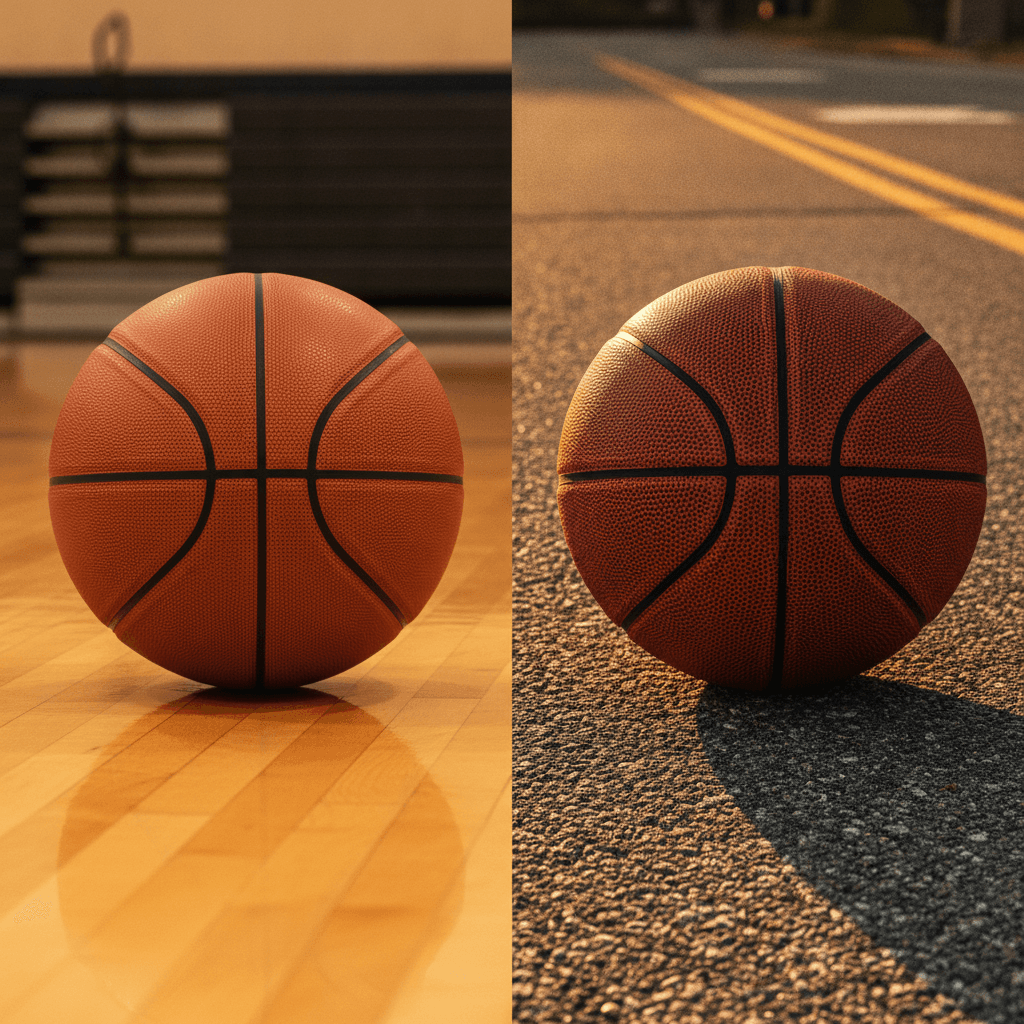
The single biggest mistake guards make is buying an elite indoor shoe and wearing it outdoors. Indoor compounds are tuned soft for grip on polished wood and shred on concrete — RunRepeat and The Hoops Geek's review roundup both say the Sabrina 2's outsole is not built for regular outdoor play. If 50% or more of your basketball is outdoors, lean toward the New Balance TWO WXY v5: The Hoops Geek's roundup calls its hard rubber outsole durable enough for outdoor courts, and RunRepeat names it a top pick among outdoor basketball shoes. If you play almost entirely indoors, ignore durability worries and buy on traction response and weight. Guards who genuinely split time should own two pairs and rotate — it is cheaper than replacing a $140 indoor shoe every two months.

Why "traction response" beats raw grip for guards
Most shoe reviews score traction by how hard it is to slide the shoe across a floor by hand. That measures static grip, not what a guard actually needs. Traction response is the lag between the instant you plant and the instant the outsole fully bites — and for guards it is the single biggest separator between shoes. On a hard crossover, a shoe with 90% of the grip but a half-beat of engagement delay is worse than a shoe with 80% grip that bites instantly, because the defender reads the hesitation. None of the reviews we used measure response time directly, so treat it as a buying lens rather than a lab score. If you take one idea from this guide, make it this: for a guard, how fast a shoe grips matters more than how much it grips.
At-a-glance comparison
Break-in and replacement
Reviews split on break-in: RunRepeat reports no break-in period for the Sabrina 2 but lists a possible break-in period as a con for the TWO WXY v5, and WearTesters flags break-in time on the MB.04 Low. For a guard playing three to four times a week, plan on replacing an indoor pair every four to six months — traction response degrades before the upper visibly fails, and a slipping outsole is both a performance and an injury problem. The cheapest way to extend any of these is to keep an outdoor pair separate from your indoor pair and wipe the outsole when grip starts to fade mid-session.
The verdict: which guard shoe should you buy?
If you want the best shoe and you're a lighter, quicker guard, buy the Nike Sabrina 2 — it is the lightest of the shoes RunRepeat weighed here, and reviewers rate its grip highly. Bigger guards and high-mileage players should take the KD 17 for the impact protection without giving up perimeter response. Step-back-heavy creators get the most from the Harden Vol. 8. If money matters, the New Balance TWO WXY v5 is the rare budget shoe that does not feel like a compromise — and it is also the pick for wide feet. If your game lives outdoors, the New Balance TWO WXY v5 has the strongest published outdoor durability of these five. Match the shoe to how and where you actually play, not to the logo on the side.
Frequently Asked Questions
What is the best basketball shoe for guards in 2026?
The Nike Sabrina 2 (~$140) is our pick for the best overall guard shoe, especially for lighter, quicker players. RunRepeat's lab weighed it at 12.0 ounces with a 17.3 mm forefoot stack and credits it with lots of court feel, and both RunRepeat and The Hoops Geek's review roundup rate its traction highly.
What is the lightest guard basketball shoe?
Of the four shoes here with published weights, the Nike Sabrina 2 is the lightest. RunRepeat's lab weighed it at 12.0 ounces, versus 13.8 ounces for both the Nike KD 17 and the New Balance TWO WXY v5, and The Hoops Geek lists the Adidas Harden Vol. 8 at 450 grams (about 15.9 ounces). We could not find a verified published weight for the Puma MB.04.
Which guard shoe is best for wide feet?
The New Balance TWO WXY v5. RunRepeat found a generous fit for a D-width shoe with an above-average toebox, The Hoops Geek notes a 2E wide option, and at a street price under $100 it's also the budget pick.
Which guard shoe is best for outdoor courts?
Of these five, the New Balance TWO WXY v5. The Hoops Geek's review roundup calls its hard rubber outsole durable enough for outdoor courts, and RunRepeat names it a top pick among outdoor basketball shoes. Skip the Puma MB.04 outdoors: the same roundup says its thin, soft rubber is not suited for outdoor play. Indoor-first shoes like the Sabrina 2 also wear quickly outdoors, per RunRepeat and The Hoops Geek.
Do heavier guards need a different shoe?
Yes. RunRepeat lists the Sabrina 2 as not the best for bigger players, and The Hoops Geek's review roundup notes its limited impact protection. Bigger combo guards should choose the Nike KD 17 (~$160), which pairs a heel Air Strobel with a forefoot Zoom Air unit; RunRepeat measured above-average shock absorption while still crediting it with nice court feel.
How often should guards replace their shoes?
Playing three to four times a week indoors, plan on a new pair every four to six months. Traction response degrades before the upper visibly fails, and a slipping outsole is both a performance and injury problem. Keep an outdoor pair separate and wipe the outsole when grip fades mid-session.
Related guides
Enjoying this analysis?
Get more breakdowns like this delivered to your inbox.