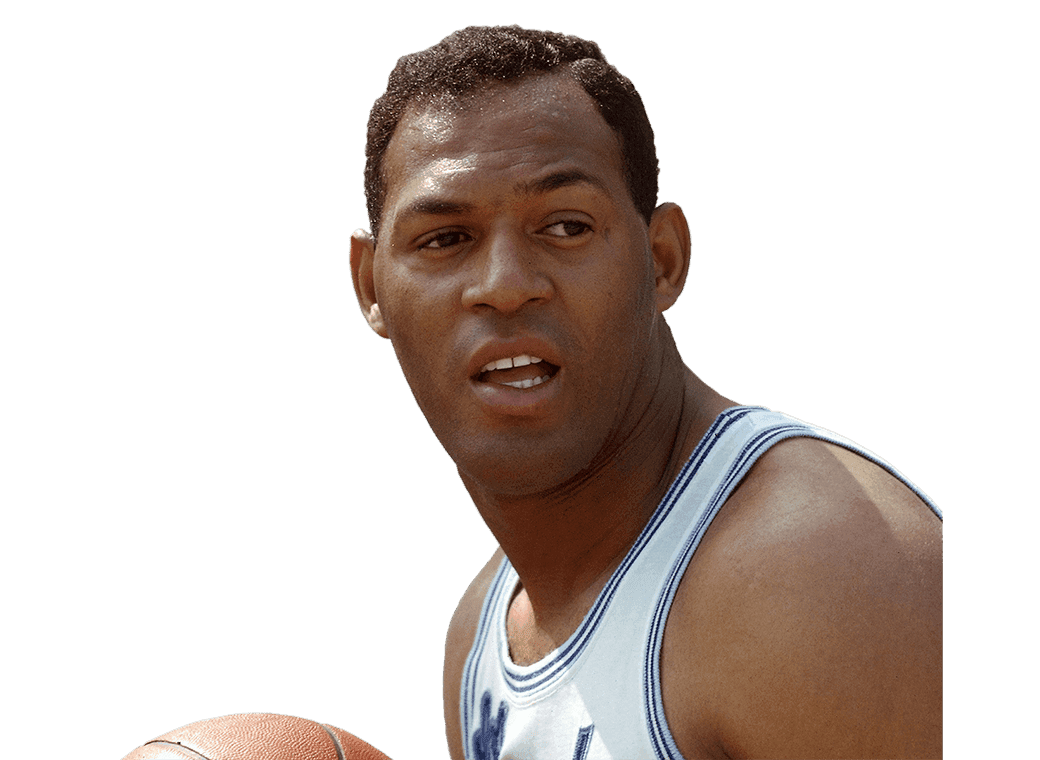
Offensive Game
Averaged 27.4 PPG over his career and invented moves — finger rolls, mid-air body adjustments, fearless drives — that Jordan and Kobe would later master. Arguably the first true scorer in NBA history.
Career Journey
Minneapolis/Los Angeles Lakers
1958-1971
11x NBA All-Star
1959-1965, 1967-1970
Rookie of the Year
1959 — 24.9 ppg, 15.0 rpg
71-Point Game
Nov 15, 1960 vs New York Knicks — NBA record at the time
61 Points in NBA Finals
1962 Finals Game 5 vs Boston — still a Finals record
10x All-NBA First Team
1959-1965, 1967-1969
23,149 Career Points
27.4 ppg career average
Pioneer of Above-the-Rim Play
Revolutionized basketball with aerial artistry before the modern era
Tragic Irony
Retired 9 games into 1971-72 season — Lakers then won 33 straight and the championship
Career Earnings
~$1.5M (pre-modern era)
Estimated total NBA career salary
Endorsements
LA Clippers
General Manager and VP of Basketball Operations
1986-2008
Basketball Pioneer
Instrumental in establishing the NBA Players Association and free agency
1960s
Elgin Baylor averaged 38.3 points and 18.6 rebounds per game in 1961-62 — the third-highest single-season scoring average in NBA history — for a Los Angeles Lakers team that lost to the Boston Celtics in the Finals. He also scored 71 points in a single game against New York in 1960, a record that stood until Wilt Chamberlain scored 100 two years later. Baylor's greatness was continuous and extreme; it simply existed alongside the most dominant player and the most dominant team in the sport's early history simultaneously.
What Baylor pioneered was the physical vocabulary of the modern small forward. In an era when wings were expected to spot up or play catch-and-shoot roles, Baylor drove, hung in the air, changed hands at the rim, and found contact-absorption techniques that anticipate the Euro step and floater language of modern offense by decades. Both Jerry West and his coaches credited Baylor with a level of improvisational creativity above the rim that the NBA had simply not seen at that position before him.
He appeared in eight NBA Finals and won zero championships — not because of his performance, but because Boston had Bill Russell and a dynasty that no team in the league was structured to beat. Baylor retired nine games into the 1971-72 season; the Lakers won the championship that year without him, a biographical irony that the sport has not produced again.
Baylor attended Seattle University before the Minneapolis Lakers selected him 1st overall in 1958. He is considered the prototype for the modern small forward position and one of the most important innovators in the game's playing history.
Offensive Game
Averaged 27.4 PPG over his career and invented moves — finger rolls, mid-air body adjustments, fearless drives — that Jordan and Kobe would later master. Arguably the first true scorer in NBA history.
Defensive Game
Above-average defender for his era. Physical and competitive on defense, though not remembered primarily for that end of the floor.
Intangibles
One of the most innovative basketball minds of his era. Self-taught moves that were entirely original. His ability to improvise and solve defensive problems in real time was unmatched in the late 1950s and 1960s.
Personal Life & Family
Partner
Elaine Baylor
Children (2)
Off the Court
Los Angeles community outreach
Did You Know?
Scored 71 points in a single game in 1960 — an NBA record at the time
Served in the U.S. Army Reserve during his playing career and still averaged 38 PPG in the 1961-62 season while on weekend military leave
Never won an NBA championship despite 8 Finals appearances — retired 9 games into the 1971-72 season, the year the Lakers finally won
Widely considered one of the most influential players in basketball history for pioneering the above-the-rim style
Career Honors
11x NBA All-Star
10x All-NBA First Team
1959 Rookie of the Year
Jersey #22 retired by Lakers
Basketball Hall of Fame 1977
Official Jerseys

179.99
Check Price on NBA Store
249.74
Check Price on NBA Store
81.75
Check Price on NBA Store
105.00
Check Price on NBA Store
676.49
Check Price on NBA Store
99.99
Check Price on NBA Store
86.50
Check Price on NBA Store
107.00
Check Price on NBA Store

105.00
Check Price on NBA StoreLos Angeles Lakers · Official
89.99
Check Price on NBA StoreAffiliate link · Disclosure
99.99
Check Price on NBA StoreAffiliate link · Disclosure
168.75
Check Price on NBA StoreAffiliate link · Disclosure
41.24
Check Price on NBA StoreAffiliate link · Disclosure
Shop · Worldwide
This page contains affiliate links. We may earn a commission if you purchase through these links, at no extra cost to you. As an Amazon Associate I earn from qualifying purchases.
All articles
Elgin Baylor never won a championship, yet his #22 was the first number the Lakers ever retired. His aerial artistry, scoring records, and loyalty through a decade of heartbreak made the decision inevitable.
Los Angeles Lakers
Los Angeles Lakers
Subscribe for in-depth player analysis and stat breakdowns delivered to your inbox.