Esta página contiene enlaces de afiliados. Podemos ganar una comisión si compras a través de estos enlaces, sin costo adicional para ti. As an Amazon Associate I earn from qualifying purchases.
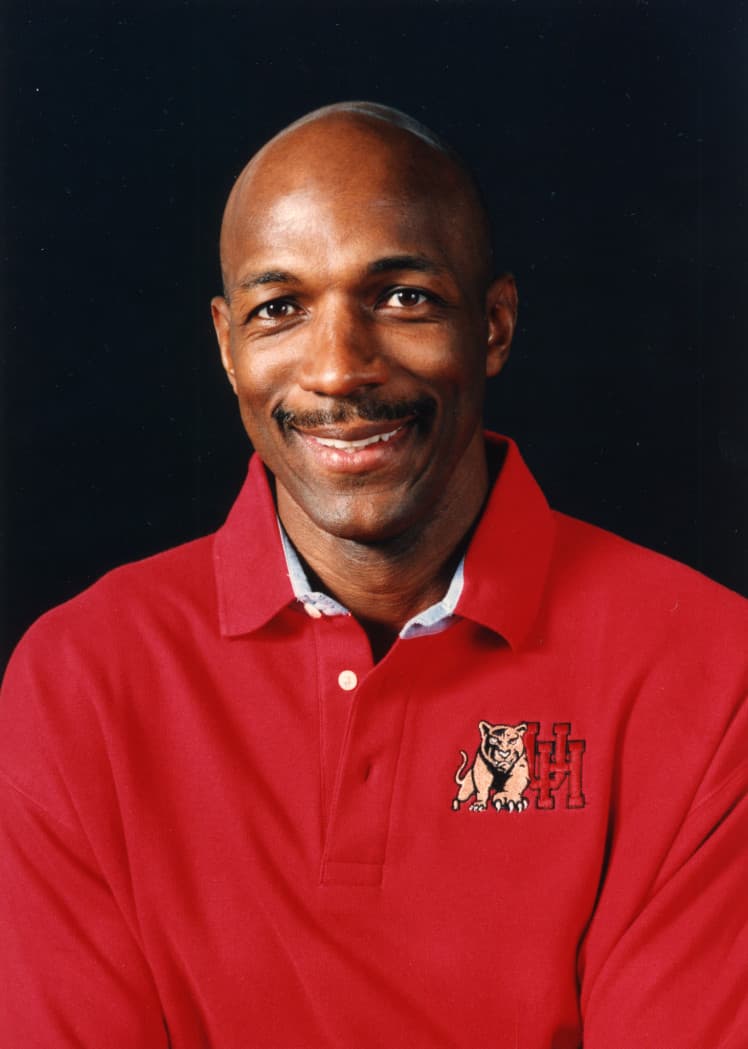
The #22 retired in the Moda Center rafters is Portland's declaration that Clyde Drexler — "The Glide" — was the greatest player the Trail Blazers produced in the modern era. Portland selected Drexler 14th overall in the 1983 NBA Draft out of the University of Houston, where he played alongside Hakeem Olajuwon on the "Phi Slama Jama" teams. Across twelve seasons he became one of the premier two-guards in basketball, leading Portland to the 1990 NBA Finals against Detroit and the 1992 Finals against Michael Jordan's Chicago Bulls. Traded to Houston in February 1995, he reunited with Olajuwon and finally won a championship. Drexler was named to the NBA's 50th Anniversary All-Time Team in 1996 and inducted into the Hall of Fame in 2004, finishing with 22,195 points, ten All-Star appearances, and nine All-Defensive selections. Portland retired #22 to honor what he accomplished and what he meant to the city for over a decade.
Phi Slama Jama: Where the Legend Was Born
Clyde Austin Drexler was born June 22, 1962, in New Orleans, Louisiana, and grew up in Houston, Texas, where basketball became his obsession. At the University of Houston, Drexler played alongside Hakeem Olajuwon on a team so athletically spectacular — all dunks, full-court pressure, relentless athleticism — that it earned the nickname "Phi Slama Jama" and transformed college basketball's national profile. Those Houston teams lost two NCAA championship games in heartbreaking fashion, but the talent on display announced to the NBA that something extraordinary was coming.

Portland selected Drexler 14th overall in the 1983 NBA Draft — a pick that, in hindsight, looks like one of the most valuable in franchise history. He developed steadily, becoming a starter and then a star and eventually one of the premier two-guards in basketball. By his peak seasons in the late 1980s and early 1990s, Drexler was widely considered one of the five best players in the NBA — regularly mentioned alongside Magic Johnson, Larry Bird, Michael Jordan, and his old college teammate Hakeem Olajuwon.

The Finals Years: How Close Portland Came
The 1990 NBA Finals against the Detroit Pistons remains one of the most agonizing near-misses in Blazers history. Portland won 59 games in the regular season and pushed Detroit — the Bad Boys, perhaps the most physically intimidating team of their era — to five games before losing. Drexler was brilliant throughout, but Bill Laimbeer, Dennis Rodman, and Isiah Thomas had a championship system that proved just difficult enough to overcome.

The 1992 Finals against Michael Jordan's Chicago Bulls told a different kind of story. Portland held a 2-1 series lead after three games. The Blazers had Jordan exactly where they wanted him heading into Game 4. What followed — four consecutive Bulls wins, Jordan's performance in Game 1 still generating conversation thirty years later — was one of the great collapses in Finals history, though "collapse" may be too harsh for a team that lost to arguably the greatest player who ever played. Drexler performed admirably across the series. The outcome did not diminish his legacy; it simply reflected the reality that his generation featured one player — Jordan — who was marginally better than everyone else when championships were on the line.

Houston, Hakeem, and the Championship He Deserved
In February 1995, the Trail Blazers traded Drexler to the Houston Rockets — a trade that Portland made with sadness and that Houston made with certainty. Reunited with his college teammate Hakeem Olajuwon, Drexler finally captured the championship that twelve years of excellence in Portland had earned him. The 1995 Houston Rockets, sweeping Shaquille O'Neal's Orlando Magic in the Finals, gave Drexler his ring and completed one of the great narrative arcs in basketball history: the two Phi Slama Jama teammates, separated by a decade of NBA competition, finally winning together at the highest level.

Drexler was named to the NBA's 50th Anniversary All-Time Team in 1996 and inducted into the Naismith Memorial Basketball Hall of Fame in 2004. He finished his career with 22,195 points, ten All-Star appearances, and nine All-Defensive Team selections — numbers that placed him definitively among the elite players of his era. Portland retired his #22 jersey in a ceremony that acknowledged not just what he had accomplished, but what he had meant to the city for over a decade.

Why the Trail Blazers Retired #22
There is a version of basketball history in which Clyde Drexler is mentioned first and Michael Jordan second — in which 1992 goes differently, in which Drexler gets his championship in Portland rather than Houston, in which "The Glide" is the defining name of his generation rather than a footnote to Jordan's dominance. That version didn't happen. But the version that did happen — twelve seasons of transcendent basketball in Portland, two Finals appearances, ten All-Star selections, and a Hall of Fame career — is extraordinary enough.

The #22 in the rafters is Portland's answer to the what-if. It says: whatever the historical narrative decides about Drexler's place relative to his contemporaries, this franchise knows what it had. It had the most gifted athlete in its history, a player whose movement through the air gave the nickname "The Glide" the weight of an accurate description rather than mere marketing. It had twelve seasons of someone who made Rip City feel like a place where great basketball was always possible.

When the Blazers honor #22, they honor the standard against which every player who has worn the uniform since has been measured — and found, almost universally, wanting. That standard belongs in the rafters. That player belongs in the conversation about the greatest Trail Blazer who ever lived. Clyde Drexler earned both, completely.
¿Te gusta este análisis?
Recibe más análisis como este en tu bandeja de entrada.